




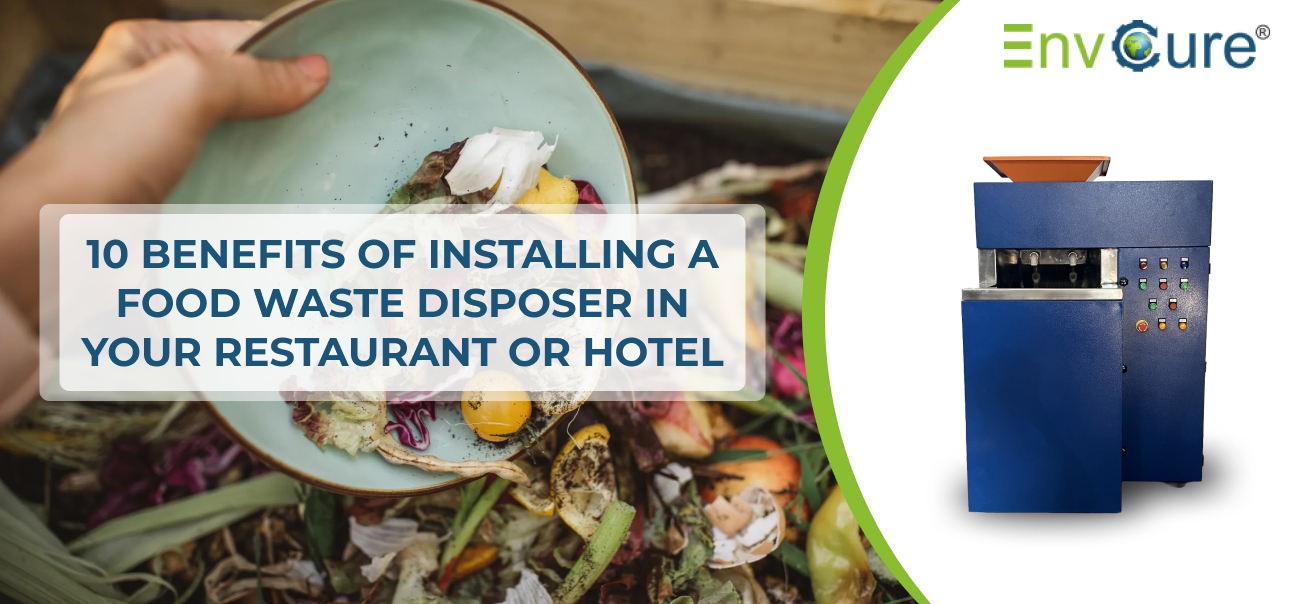

Running a busy restaurant or hotel means tackling mountains of food scraps daily. A food waste disposer cuts this challenge in half by grinding waste into bits that flush away. Here we discuss 10 benefits of kitchen crusher installation from hygiene to sustainability. Whether you are curious about the best food waste disposer in India or weigh food waste disposer vs manual composting, find out how EnvCure Technocrat LLP solutions improve efficiency & eco-friendly practices in your business.
Overview: Food Waste Disposer
- Food Waste Disposer units grind kitchen scraps into small particles for easy drain disposal, less landfill use and sustainability.
- Ils save time & money on waste hauling and increase hygiene by reducing odors and pests in commercial kitchens.
- Ideal for restaurants and hotels, these machines process high volumes, are eco-friendly and improve operational efficiency.
- Compared to food waste disposer vs manual composting, disposers process food waste faster and require no extra space or maintenance.
- Food waste crusher with corrosion resistant parts from EnvCure Technocrat LLP are long lasting.
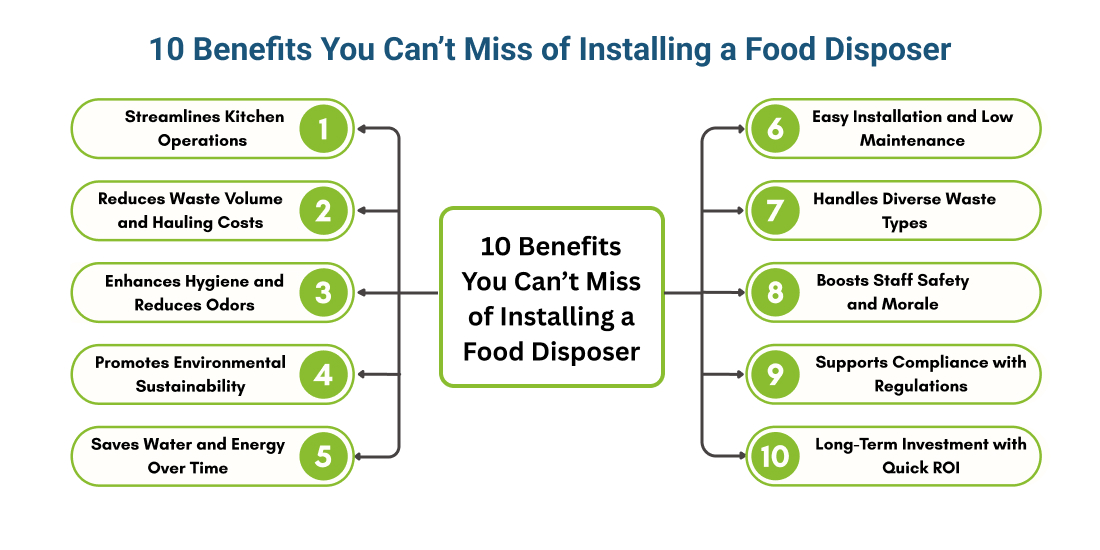
10 Benefits You Can’t Miss of Installing a Food Disposer
1. Streamlines Kitchen Operations
A crowded kitchen needs efficiency. Scraping plates, tossing peels and managing leftovers take staff time. A food waste disposer processes scraps at the sink and not in the dumpster. This keeps workflows smooth during peak hours so chefs can cook and servers can take guests. The key to quick cleanup after events is different for hotels with banquet halls.
- Time Savings: Staff spend less time handling waste – time on more important tasks.
- Seamless Workflow: High horsepower kitchen waste disposers like EnvCure’s 3 HP models handle tough scraps without jamming.
- Scalability: Great for smaller restaurants or large resorts with high waste volumes.
2. Reduces Waste Volume and Hauling Costs
Fast food scraps fill trash bins and raise hauling costs. Ground particles flowing down the drain cut waste volume by up to 80 percent in a commercial food waste disposer. This reduces pick up frequency & bag usage. In a mid-sized restaurant, thousands a year in waste fees can be saved and hotels save on operational costs across multiple kitchens.
- Cost Efficiency: More pickups mean lower bills whereas some businesses can save up to 30 percent.
- Space Optimization: Smaller waste volumes open storage areas for other uses.
- Complementary Systems: Combines well with wet waste management strategies.
3. Enhances Hygiene and Reduces Odors
Rotted scraps create foul odors and attract pests to bins. A food waste disposer grinds waste to send it to wastewater systems before smells develop. That keeps kitchens clean & safe – especially in India’s warm climate where odors build quickly. Guests see the difference, and staff work in a fresher environment.
- Odor Control: Sealing kitchen crusher units prevents leaks and lingering smells.
- Pest Reduction: No exposed scraps = fewer flies, rodents or insects.
- Cleaner Workspaces: Immediate processing inhibits bacteria growth on surfaces.
Learn how a commercial food waste disposer can help hotels and restaurants manage kitchen waste more efficiently.
4. Promotes Environmental Sustainability
Organic waste strains landfills and releases methane, a greenhouse gas. A food waste disposer sends scraps to wastewater treatment to become biogas for energy. This supports environmental benefits and green certifications. Unlike food waste disposer vs manual composting that requires space and effort, disposers fit in busy kitchens.
- Reduced Landfill Use: Up to 70 percent of organic waste is diverted from dumps.
- Biogas Potential: Treated waste produces renewable energy.
- Eco-Certifications: Hotels & restaurants meet sustainability standards.
5. Saves Water and Energy Over Time
Resource use questions are not unheard of, but modern industrial food waste disposers are efficient. Flush particles require minimal water and low-power motors are used. Rather than hauling waste to landfills that burns fuel, disposers are a better long-term choice. Utilities and sustainable practices are saved at restaurants.
- Low Water Usage: Needs little more than a trickle which is often less than dishwashing.
- Energy Efficiency: Units like EnvCure’s use little electricity and are good for large kitchens.
- Long-Term Savings: Reduced transport emissions outweigh initial water use..
6. Easy Installation and Low Maintenance
Installing a food waste disposer can be as simple as a few hours job for a plumber. Once installed, maintenance is minimal. Corrosion resistant parts like stainless steel grinders withstand daily use. Regular cleaning with ice or citrus keeps units running smoothly – an easy addition to any kitchen.
- Quick Setup: It fits without major retrofitting under standard sinks.
- Durable Design: Heavy duty construction requires little maintenance.
- Simple Care: Weekly cleaning prevents buildup and extends unit life.
7. Handles Diverse Waste Types
Restaurants and hotels handle vegetable peels, meat bones, bread crusts and more scraps. A food waste crusher processes all of them into uniform waste pieces for disposal. This versatility can be used for Indian thalis or continental buffets so kitchens remain efficient whatever the cuisine.
- Broad Compatibility: Most food scraps except fibrous items like corn husks are handled.
- High Capacity: Commercial units handle large volumes of banquets or catering.
- Consistent Output: Fine particles form for easy drain flow.
8. Boosts Staff Safety and Morale
Wet bins and heavy loads into dumpsters cause slips, spills and injuries. A kitchen crusher prevents spills while waste is processed at the sink. No staff members take late-night trips or handle muddled bins in bad weather. This safer, cleaner setup boosts morale so workers can do what they enjoy that is cook or serve guests.
- Fewer Injuries: Ridiculous trips with heavy loads are eliminated.
- Improved Morale: Cleaner, safer workspaces increase staff satisfaction.
- Easy Operation: Simple controls (water on, switch flipped) reduce training time.
9. Supports Compliance with Regulations
Waste management rules are strictly followed in many regions including Indian cities. A commercial food waste disposer separates organics from recyclables at source to simplify compliance. This meets municipal mandates and avoids fines. For chains, disposers standardize waste handling across locations to simplify reporting/auditing.
- Regulatory Alignment: Meeting organic waste diversion requirements.
- Audit-Friendly: Waste reduction is tracked for sustainability reports.
- Standardized Operations: Assures consistency across sites.
Discover key factors to consider when choosing the right food waste disposer for your business operations.
10. Long-Term Investment with Quick ROI
Quick returns offset the initial cost of a food waste disposer. Savings on hauling, labor & utilities add up fast – some restaurants see ROI in less than one year. Durable units last over a decade with proper care, like those from EnvCure. For green markets, sustainable kitchen appliances also generate green customers.
- Fast Payback: Reduced hauling & labor costs.
- Long Lifespan: Built with corrosion resistant parts.
- Market Appeal: Rewarding eco-conscious diners.
Why EnvCure’s Food Waste Disposers Stand Out
At EnvCure Technocrat LLP, we make kitchens more efficient and green. This guide lists 10 reasons why a food waste disposer is essential for restaurants and hotels – from cost savings & hygiene to sustainability & compliance. Our commercial kitchen waste disposers simplify operations while supporting wet waste management.
So you want to simplify waste management and increase your profit? EnvCure industrial food waste disposers are corrosion resistant parts built for performance and durability. Visit www.envcure.com/or contact us for a customised consultation. Let us make a cleaner & greener kitchen together with the best food waste disposer in India. Book your demo now!
FAQs Related to Food Waste Disposer:
Q.1. What types of food waste disposer are there?
Ans. Food waste disposers come in continuous feed (runs as food is added) and batch feed (operates when the cover is in place) models, suitable for both commercial and residential kitchens.
Q.2. Which materials / foods should and shouldn’t be put into a disposer?
Ans. You can safely put soft food scraps, fruit peels, cooked leftovers, and small bones. Avoid fibrous foods (corn husks, celery), large bones, oil, grease, plastic, glass, and metal.
Q.3. What is the typical power consumption / energy usage?
Ans. A food waste disposer typically uses 500–1,500 watts per use. Average energy cost is minimal, usually less than ₹50–₹100 per month for commercial kitchens.