


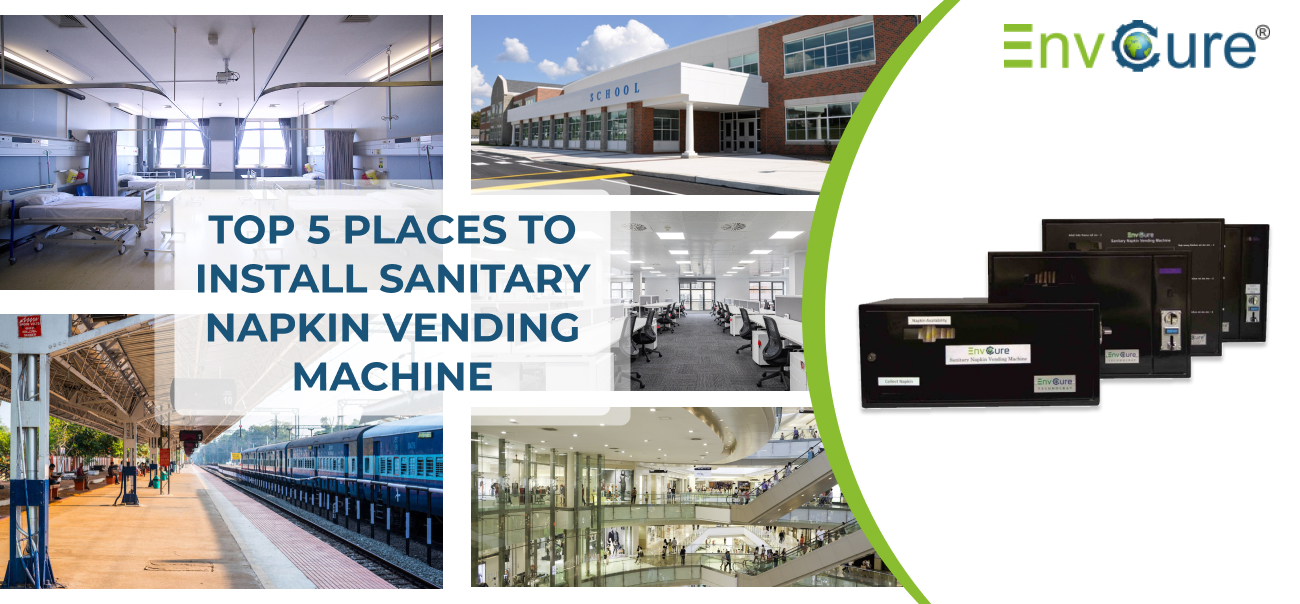

Women and girls have unexpected difficulties with menstrual cycles sometimes in public or shared spaces where supplies are not readily available. Here are the top five places to install sanitary napkin vending machine. Why each location matters and how it helps users. From noisy educational settings to peaceful healthcare settings -we explain the practical reasons, installation tips and ways these machines create a supportive atmosphere. Find out how sanitary napkin vending machine usage affects everyday life and how solutions offered by EnvCURE Technocrat LLP including complementary tools such as commercial food disposers, waste composter, incinerators and many more, contribute to health & sustainability.
Overview: Sanitary Napkin Vending Machine
- Menstrual products are made available in public and private areas through sanitary napkin vending machine allowing women to manage periods comfortably and dignified.
- Ideal spots include schools for students, offices for employees, transport hubs for travelers, hospitals for patients and staff, and malls for shoppers.
- These machines support hygiene, eliminate awkward situations & daily routines.
- Sanitary pad vending machine from EnvCure Technocrat LLP are combined with eco-friendly options like kitchen waste solutions.
Why Sanitary Napkin Vending Machine Matters
Before we go exploring locations, though, consider what makes a sanitary napkin vending machine useful. They dispense pads quickly and discreetly sometimes via coin slots, touch free sensors. They come in small sizes that fit on walls or counters and are therefore not bulky.
Imagine a young woman surprised by the busiest day. She might be stressed or embarrassed without easy access to products. A nearby sanitary vending machine changes that immediately. Such machines also allow menstrual health conversations to break down old taboos. In shared spaces they signal that the organization values everyone’s needs.
They are paired with other hygiene tools (industrial food crushers in kitchens for instance). Sanitary pad vending machine help businesses and institutions build trust and loyalty with their users.
Explore our latest post on using sanitary napkin vending machines as a CSR initiative to empower women in workplaces and public spaces
Top 1: Educational Institutions
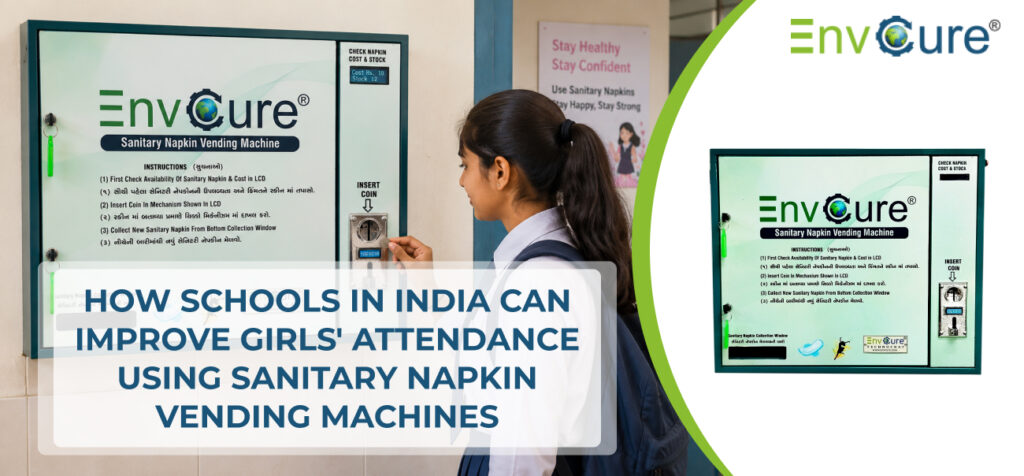
- Schools, colleges and universities tend to be prime places for students that spend several hours in classrooms, dormitories and libraries.
- Sanitary pad vending machine in restrooms or common areas keep girls from missing classes or exams because they lack supplies.
- They instil confidence and independence in young learners during stressful times such as exams or projects.
- Administrators may install them under clear signage for easy access.
- Beyond convenience, they foster equality and supportive environments for all students.
- EnvCure’s easy-to-use models offer free dispensing options making them more inclusive.
- Educators often report reduced disruptions and improved participation when these machines are available.
Top 2: Workplaces and Offices
- Offices and workplaces gain from employees juggling deadlines and meetings.
- Installing sanitary napkin vending machine in busy restrooms keeps staff from walking out during critical tasks.
- Sanitary napkins help women stay hydrated during long strategy sessions/meetings.
- Encourages inclusivity especially on diverse teams and corporate wellness programs.
- Demonstrates employer interest in health and wellbeing beyond sick leave policies.
- Small satellite offices & hybrid work hubs also get such thoughtful provisions.
- They often bring up feelings of improved job satisfaction and reduced stress among employees when they are installed.
Top 3: Public Transport Hubs
- Bus terminals, train stations & airports are areas of high-traffic where often travelers are confronted with long delays.
- Sanitary Vending Machine make it possible to get menstrual hygiene products at any time for those who forget or run out.
- Perfect for commuters on rush hour trains or passengers in large airport terminals.
- Placement in well-lit, visible and secure areas provides safety and convenience.
- Makes travelling more pleasant, because basic hygiene needs are met.
- Frequent flyers and especially daily commuters appreciate these machines for turning potentially stressful situations mundane.
Read more about how vending machines are making feminine hygiene products more accessible and convenient for women everywhere.
Top 4: Hospitals and Healthcare Facilities – Caring for Patients and Staff
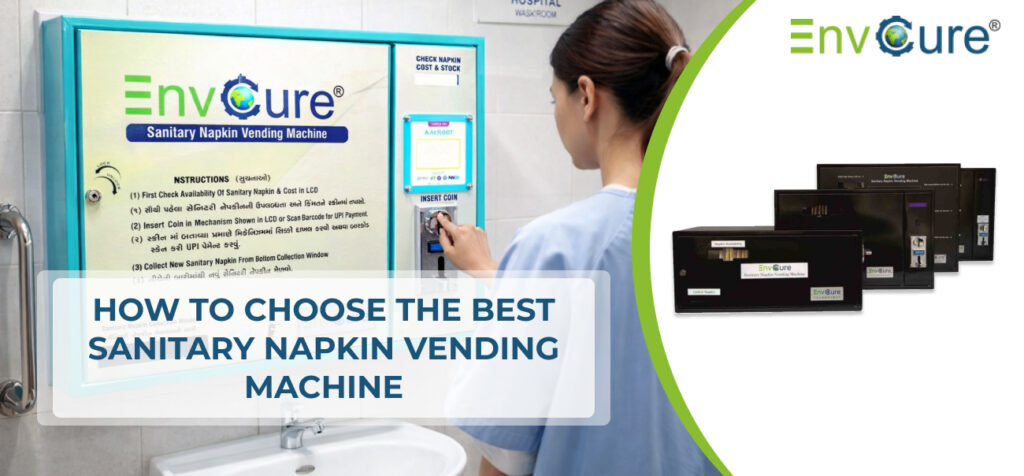
- Hospitals and other healthcare facilities serve patients and long-shift staff.
- Product access is quick for nurses and healthcare workers working stressful shifts.
- Patients undergoing treatment or surgery also get discreet access.
- Placements are available in waiting areas, wards or staff restrooms during stressful times.
- Hygienic features such as antibacterial surfaces of machines are in line with infection control protocols.
- Demonstrates care of patients and healthcare staff whilst supporting hygiene practices.
- When those machines are available, healthcare workers report feeling better supported in their demanding roles.
Top 5: Shopping Malls and Public Restrooms
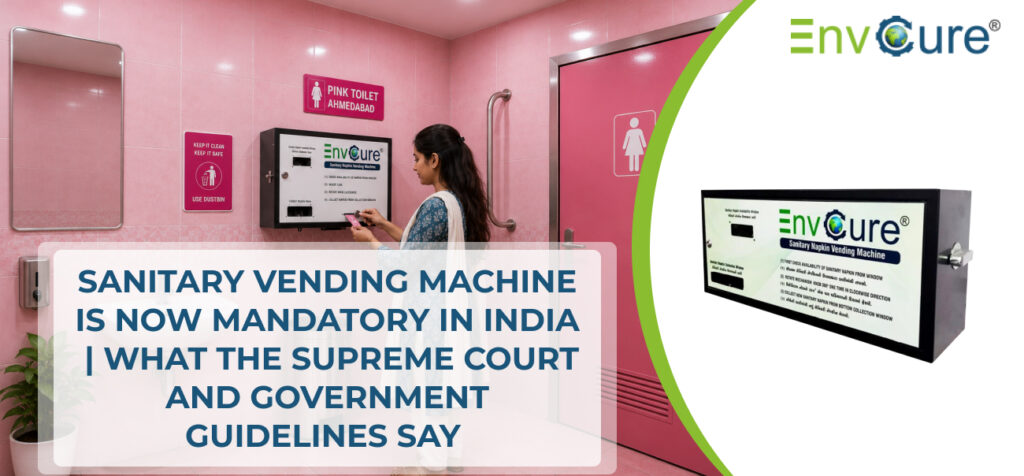
- Malls, parks and public restrooms draw large crowds every day and are important installation sites.
- Shoppers spend hours in such places and access to sanitary napkin vending machine prevents sudden interruptions.
- A quick stop in a restroom is comfortable on family outings or shopping trips.
- Public parks and events venues are another beneficiary, making experiences more inclusive.
- Placement of central restroom with easy payment options for users convenience.
- Hygiene is provided in food courts and public kitchens in addition to these setups.
- Often visitors give good responses with longer stays and repeat visits due to this convenience.
Practical Tips for Installing and Maintaining These Machines
Sanitary napkin vending machines work best with smart placement & care. Assess foot traffic to find visible but private spots. Steps include:
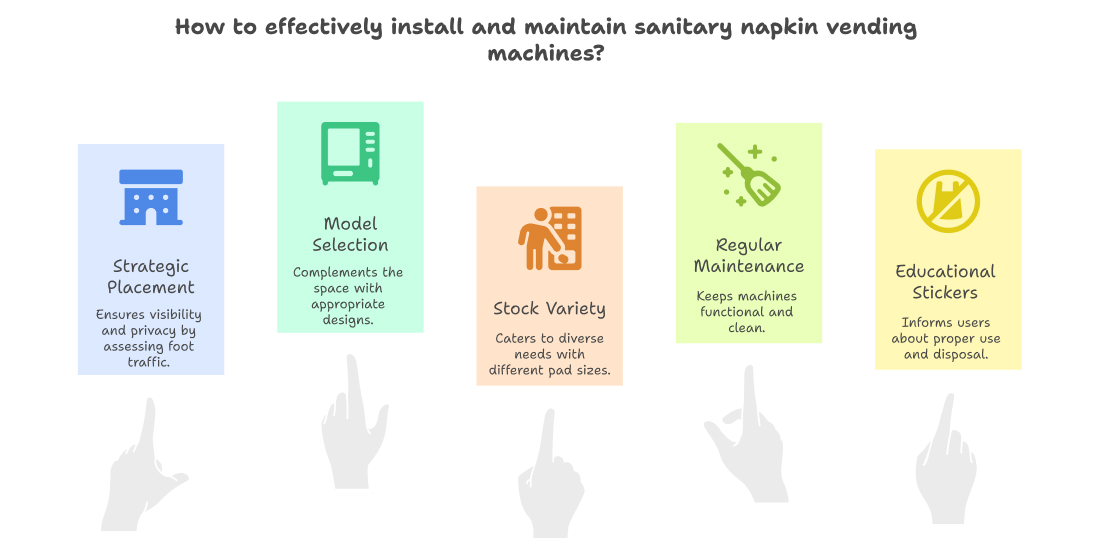
- Choose models that complement the space.
- Stock different pad sizes for different purposes.
- Plan regular refills and cleanings.
- Add educational stickers about use and disposal.
Getting around minor hurdles like space constraints requires compact designs. Stronger builds reduce vandalism risks.
EnvCure’s Dedication to Hygiene and Innovation
EnvCure’s Dedication to Hygiene and Innovation At EnvCure Technocrat LLP, we craft solutions that will handle real world requirements with care and efficiency. Exploration of top-five locations (schools, offices, transport hubs, hospitals and malls) for installing sanitary napkin vending machine demonstrates where strategic placement adds to daily life and dignity.
Looking to apply these suggestions? Reach out to us for customized guidance and installations that fit your space. Visit our site or contact the team right now to take the initial step toward an inclusive environment.
FAQs Related to Sanitary Napkin Vending Machine
Q: Where are these machines usually installed?
A: Schools, colleges, workplaces, malls, airports and other public restrooms are the most cited locations to ensure access during emergencies
Q: How often do they need refilling and what maintenance is typical?
A: Refill frequency depends on usage; guidance from industry explainers suggests about every 1–2 weeks for moderate traffic, with simple cleaning and restocking as routine maintenance.
Q: Do sanitary napkin vending machines need electricity?
A: Some models work manually, while others are powered by electricity with battery backups to ensure uninterrupted service.