



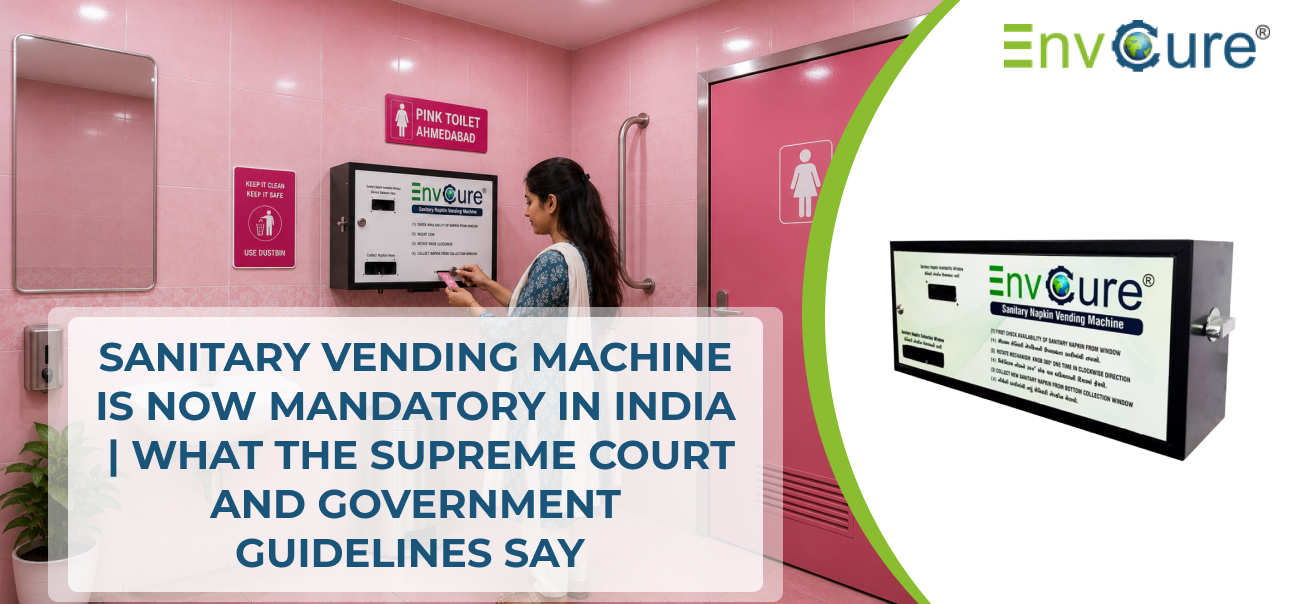

Menstrual hygiene is a major concern in India today. For example, a study found nearly 1 in 4 adolescent girls in India miss school during menstruation because of inadequate facilities. To address this issue, legal and policy momentum is building around solutions like the sanitary vending machine. Various courts and states are now urging that institutions install napkin dispensers and disposal units for women.
This blog explains exactly what “mandatory” means in India, outlines key Supreme Court orders and state mandates, and tells your school, office, or factory how to comply with the latest guidelines on menstrual hygiene.
Is a sanitary vending machine mandatory in India? In short, not yet by a single national law, but the direction is clear. Several states and the Supreme Court have effectively made machines compulsory in their domains. For example, Kerala’s She Pad program (2017) requires machines in schools, and the Supreme Court ordered machines in court buildings and urged free pads in school toilets. Draft national policies and education schemes are also moving toward wider mandates. As a result, every institution should start planning the installation of sanitary napkin vending and napkin dispenser machine now.
What Does “Mandatory” Actually Mean in the Indian Context?
India’s federal system means “mandatory” can come from different sources. A Central Act or Rule passed by Parliament applies nationwide. Individual State governments can issue orders or building regulations for institutions under their control. The Supreme Court, through its judgments, can direct compliance as a matter of law. Finally, policy guidelines or committee recommendations may urge action but are not legally binding.
For sanitary machines, there is no single national law yet. Instead, courts and agencies have issued orders (e.g., SC 2017 order, see below) that institutions are expected to follow. In other words, mandates today are a patchwork of court directives and state rules rather than one central requirement.
Supreme Court Directives on Sanitary Vending Machines
- October 2017: A Supreme Court bench (CJI Dipak Misra) ordered that its own headquarters install three sanitary napkin vending machines and an equal number of incinerators to serve women lawyers, interns, and staff. The Court released ₹10 lakh for this project, making it the first judiciary building with on-site machines.
- July 2024: The SC directed the Union Government to consider a model menstrual hygiene policy after a PIL. The bench suggested examining menstrual leave and other benefits for women, essentially signaling that workplace and institutional menstrual welfare should be framed into law.
- January 2026: In a landmark ruling, the SC held menstrual hygiene integral to the right to life. It directed all States/UTs to ensure every school provides free sanitary napkins, “preferably through vending machines” in girls’ toilets. The Court also asked state governments to submit their menstrual health policies. In short, the SC has made clear that educational institutions must have ready access to low-cost sanitary pads, ideally via a sanitary vending machine.
The Supreme Court’s orders are factual and prescriptive, making institutions take notice. The 2017 and 2026 rulings in particular are cited as de facto mandates for sanitary pad vending machine in the judiciary and schools.
State-Wise Mandate – Who Has Made It Compulsory?
| State/Authority | Mandate | Year | Applies To |
| Kerala (She Pad) | Compulsory under the state program | 2017 | All govt/aided schools (VI–XII) |
| Jammu & Kashmir (UT) | ~1000 schools covered | 2023 | Government schools in J&K |
| Central Govt (Samagra) | Supports state projects for machines | Ongoing | Govt schools (nationwide) |
| NCW (Recommendation) | Advised the HRD Ministry to mandate | 2018 | All schools and universities |
| Supreme Court | Directed machines at the court premises | 2017 | Supreme Court premises only |
- Kerala: The She-Pad Project was launched on 8th November 2017 by the Minister for Health, Social Justice, and Women and Child Development. It is run by the Kerala State Women’s Development Corporation (KSWDC) and covers girl students in classes 6 through 12 in government and government-aided schools.
- J&K: Under the centrally sponsored Samagra Shiksha scheme, the Ministry of Education approved the installation of sanitary pad vending machines and incinerators in 1,025 designated government schools in J&K, including 74 Kasturba Gandhi Balika Vidyalayas and 951 high and higher secondary schools.
- Samagra Shiksha (Central Scheme): The national integrated school scheme allows state projects to include “installation of sanitary pad vending machine and incinerators”. This means the Central Government is funding machines in state-run schools on a case-by-case basis.
- NCW: In 2018, the National Commission for Women wrote to the HRD Minister recommending that all schools and universities install vending machines and disposal units. Though not a law, this was a strong policy push from a statutory body.
- Supreme Court: The 2017 Court order effectively mandates machines on its premises. Future SC judgments may similarly compel installations in other institutions.
What Do Central Government Guidelines Say?
The Central Government has been strengthening menstrual hygiene programs across ministries:
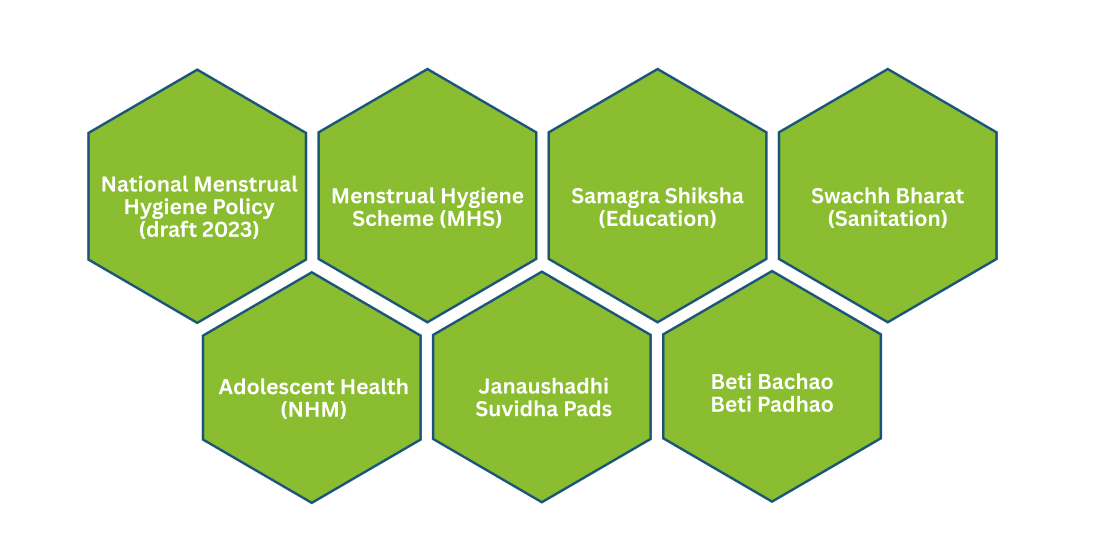
- National Menstrual Hygiene Policy (draft 2023): The Health Ministry has circulated a draft policy aiming to ensure all women and girls have access to safe, affordable menstrual products and facilities. It emphasizes free/subsidized products, gender-segregated toilets, sanitary disposal, and awareness in schools and communities.
- Menstrual Hygiene Scheme (MHS): An existing Health Ministry program (since 2011) provides education, low-cost napkins, and disposal methods for girls. Its goals include menstrual awareness, access to sanitary pads, and sanitary waste disposal promotion.
- Samagra Shiksha (Education): Under Swachh Bharat, the School Education Dept. created MHM guidelines and now approves state projects for incinerators and sanitary pad vending machine in schools. Several Kendriya Vidyalayas and Navodaya schools already have machines installed under this scheme.
- Swachh Bharat (Sanitation): The Ministry of Jal Shakti issued National Guidelines on Menstrual Hygiene Management (2015), focusing on awareness and girl-friendly toilets. These guidelines promote the use of sanitary vending machine and safe disposal in rural sanitation programmes.
- Adolescent Health (NHM): Menstrual hygiene is a key part of the Adolescent Girls’ scheme under NHM, which provides free or low-cost pads to reach 10–19 year olds nationwide. In 2021–22, about 34.9 lakh girls per month got pad packs through this route.
- Janaushadhi Suvidha Pads: The Pradhan Mantri Bhartiya Janaushadhi Pariyojana sells ‘Suvidha’ oxo-biodegradable sanitary pads at ₹1 each through ~16,000 Janaushadhi Kendras nationwide, improving access to quality pads at low cost.
- Beti Bachao Beti Padhao: The Mission Shakti component of this scheme includes menstrual health education for adolescent girls, part of the drive to improve girls’ education and hygiene.
Together, these policies form a comprehensive framework supporting machine installation. For example, Samagra Shiksha explicitly funds the purchase and setup of sanitary vending machine and incinerators in schools, and advisory circulars (June 2024 and March 2025) urge all schools and colleges to provide menstrual hygiene facilities.
Is a Sanitary Vending Machine Mandatory for Workplaces and Offices in India?
In the private sector, there is currently no blanket law requiring sanitary vending machine. Labor laws like the Factories Act and the Working Women’s Acts require clean toilets and creches for women, but do not specifically mention pad dispensers. The POSH Act (Prevention of Sexual Harassment) mandates a safe workplace, which implies hygiene facilities, but it does not explicitly require vending machines.
Compliance trends are moving fast. In November 2024, Odisha’s Deputy CM Pravati Parida inaugurated sanitary napkin vending and disposal machines at the Loka Seva Bhawan secretariat for women employees. Separately, the Supreme Court’s July 2024 directive asked the Centre to consult stakeholders on a menstrual leave policy, without mandating anything itself.
For now, private employers are not legally penalized for lacking machines. Still, many forward-thinking companies are installing them voluntarily and documenting it as part of their welfare or CSR initiatives. Starting early avoids future compliance rushes.
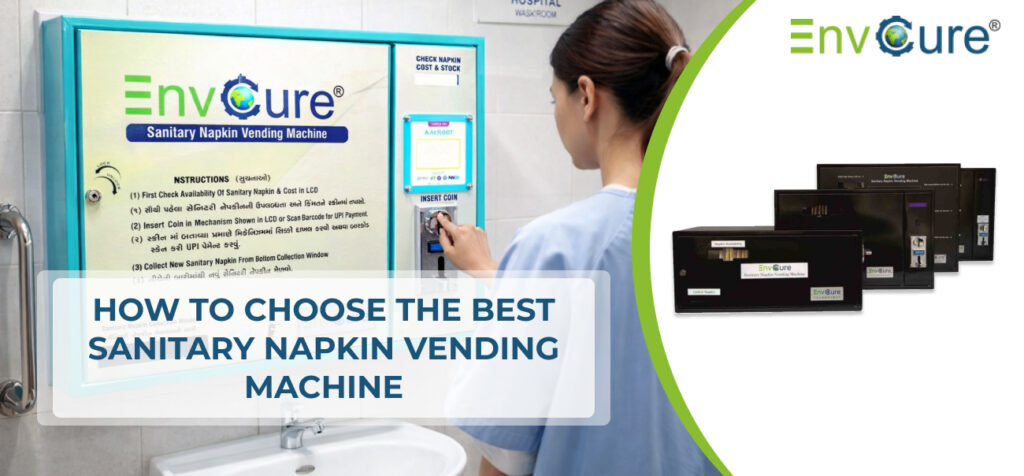
Know more here about how to choose the best sanitary napkin vending machine.
Types of Sanitary Vending Machines and Which Is Right for Your Institution
Sanitary pad vending machine comes in manual and electronic variants. Manual (mechanical) machines operate without electricity: you insert a coin or token and turn a knob or press a button. Electronic machines have sensors, digital payment options (QR/UPI, RFID, etc.), and LCD displays.
For example, EnvCure’s product range shows this variety: the ECV-25M is a 25-pad coin-operated machine (rotating knob), while the ECV-25MF is a free-vend rotating-knob version. For push-button free vending, the ECV-25E PB is the relevant model. The ECV-25E QR model accepts any UPI app on smartphones. All machines are wall-mounted (space-saving) and dispense one pad per use for hygiene.
Choosing by institution type:
- Schools: Free-vend or low-cost coin machines (manual or simple electronic) are ideal so that any girl can access them. Example: one machine per girls’ toilet block. Many state programs use free-vend models.
- Offices / Corporate: Electronic machines (with QR/UPI payment, RFID, or tokens) fit corporate environments. These can provide pads in multi-story office buildings with staff swipe-cards or UPI phones.
- Hospitals & Malls: High-capacity electronic machines (sensor or push-button, 50–100 pad capacity) work best in large public spaces with heavy footfall.
- Rural / Low-power Areas: Manual, coin or token-operated machines (no power needed) are recommended where electricity is unreliable.
Each option has pros and cons; the right choice depends on power availability and who will pay. EnvCure’s product range (ECV-25 to ECV-100 models) illustrates the range of 25–100 pad capacity sanitary vending machine across all payment types.
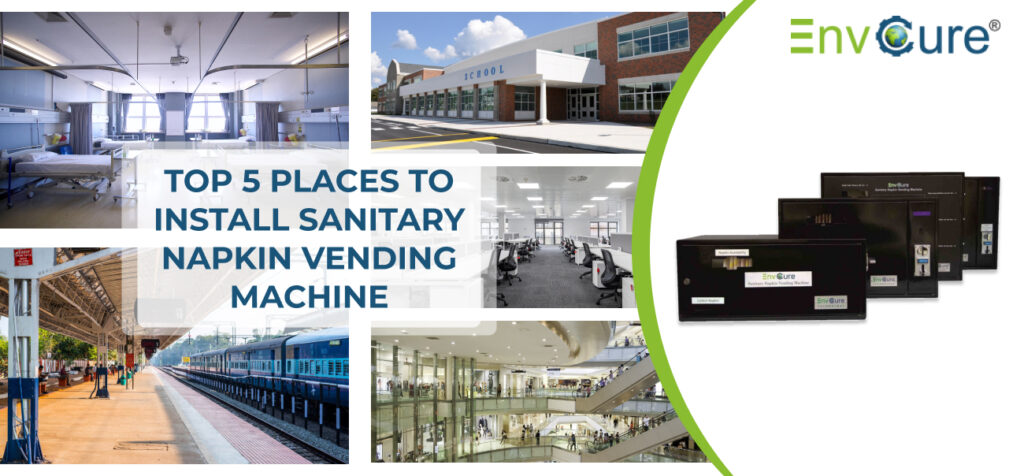
Explore the top 5 locations for installing a sanitary napkin vending machine.
How to Comply – A Step-by-Step Checklist for Institutions
- Identify your institution type (school/workplace/public facility). Different mandates or schemes may apply (e.g., Samagra Shiksha for schools).
- Check relevant mandates. Consult your state or local laws: does your state require machines in certain settings? Are you eligible for central funding (e.g., under Samagra Shiksha or menstrual schemes)?
- Calculate the machines needed. Determine the female population (students or staff). A rough benchmark is 1 sanitary vending machine per 200–500 women, or at least one per large building or toilet block.
- Choose machine type. Base it on power and payments. Inconsistent electricity? Choose manual (coin/token) models. If cashless convenience is preferred (e.g., in offices), opt for UPI/QR or RFID-enabled machines.
- Ensure proper installation. Mount machines on walls in accessible yet private spots (typically girls’ or women’s restrooms, or a women’s room near offices).
- Add disposal facilities. Pair each sanitary vending machine with a sanitary pad incinerator or disposal unit. This completes compliance with MHM norms and ensures safe waste handling (composting units or sealed bins are alternatives).
- Document for records. Log the installation details, usage stats and maintenance as part of your compliance report or CSR portfolio. Include it in HR/Industrial Safety audits, POSH (since it shows attention to women’s safety), and CSR narratives.
By following these steps, your institution will not only stay on the right side of upcoming regulations but also demonstrate a commitment to women’s health and hygiene.
Conclusion
India’s regulatory environment is clearly moving toward making sanitary vending machine a standard requirement. Courts have ruled on menstrual rights, and states like Kerala and J&K have already mandated machines in schools. National programs under Samagra Shiksha and health schemes actively fund these installations. In short, the era of optional napkin dispensers is ending: institutions should treat them as essential infrastructure.
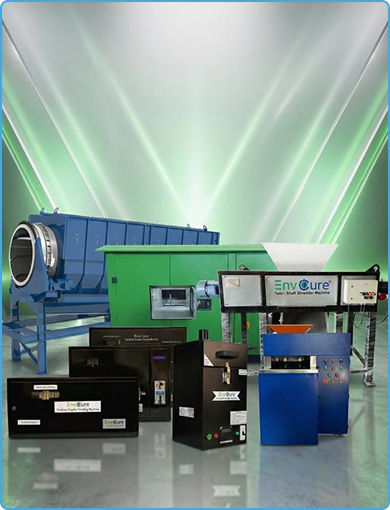
For organizations looking to stay ahead of compliance, EnvCure Technocrat LLP offers a complete range of sanitary napkin vending machines. EnvCure (Ahmedabad) manufactures wall-mounted machines in 25–100 napkin capacities, available in both manual (coin/token) and electronic (QR/UPI, RFID, sensor) models. Visit EnvCure’s sanitary napkin vending machine product page to explore options. For tailored advice, [get in touch with EnvCure Technocrat LLP] to find the right sanitary vending machine for your institution.
Frequently Asked Questions Related to Sanitary Napkin Vending Machines
Q1. Is a sanitary vending machine mandatory in India?
A. No single national law makes it universally mandatory yet. However, the Supreme Court and several states like Kerala and J&K have effectively enforced them. Most authorities now treat sanitary vending machines as compulsory, even without a dedicated national statute.
Q2. Which state made sanitary napkin vending machines compulsory first?
A. Kerala was the first, launching the “She Pad” scheme in 2017. It provided free sanitary pads via vending machines in all government and aided schools for girls in grades 6-12, making Kerala a pioneer in mandating machines for students.
Q3. What did the Supreme Court say about sanitary vending machines in India?
A. The Supreme Court has consistently promoted menstrual hygiene. In January 2026, it declared menstrual hygiene a fundamental right and directed all states to provide free sanitary pads in schools, preferably through vending machines installed in toilets.
Q4. Is it compulsory to have a sanitary pad vending machine in schools?
A. Central law doesn’t yet make it universally compulsory. However, the Supreme Court’s 2026 order effectively requires all government schools to provide free pads via machines. States like Kerala and J&K already mandate installations, and Samagra Shiksha funds such setups.
Q5. Does the Factories Act require a sanitary napkin vending machine?
A. No. The Factories Act mandates basic welfare amenities like toilets and drinking water for women workers but does not explicitly require sanitary pad vending machines. There is currently no specific Factories Act rule mandating vending machine installation in workplaces.
Q6. How many sanitary vending machines are required per school?
A. There is no fixed national ratio. The Supreme Court directs schools to provide pads in toilets, preferably via machines. In practice, states install one machine per girls’ restroom or one per 300–500 girls, ensuring easy access during school hours.
Q7. What is the difference between a free-vend and coin-operated sanitary vending machine?
A. A free-vend machine dispenses pads at no cost via a button push, commonly used in government schools. A coin-operated machine requires a small payment (usually ₹5) to dispense a pad, helping institutions manage costs and regulate usage.
Q8. Can a sanitary vending machine work without electricity?
A. Yes. Mechanical manual machines require no electricity and operate by turning a knob or pushing a lever. These are ideal for areas with unreliable power supply. Electronic machines with sensors or UPI payment options, however, do require a power connection.
Q9. What is the She Pad scheme and which states follow it?
A. She Pad is Kerala’s menstrual hygiene initiative launched in 2017, providing free sanitary pads through vending machines in government and aided schools for classes VI–XII. Over 10 lakh girls have benefited. Other states run similar programs but under different names.