

Is a Food Waste Disposer Worth the Investment? Calculating ROI and Savings

Food Waste Disposer

If you run a restaurant, commercial kitchen or other food-related business, then you must be going through the problem of food waste. Investing in a food waste disposer is one of the smartest ways to handle this problem efficiently while also saving money in the long run.

In this article, we will talk about how a high-quality food waste disposer pays for itself and how it can also help you save money.

Calculating Your ROI (Return on Investment)

Buying a food waste dispenser should not be seen as an expense, but as an investment. Calculating the ROI on this investment helps you understand how quickly it can cover its costs by generating profit and also by saving to cover its own costs.

Want to manage kitchen waste more efficiently? Read this guide on What Is a Food Waste Disposer? How It Works and Should You Install One?

The Payback Period

In a commercial kitchen or restaurant, a kitchen crusher can recover your investment in a surprisingly short amount of time. To calculate your payback period, simply divide the cost of the machine and the installation charges by your monthly savings on waste hauling and labor.

In most of the busy commercial kitchens, a food waste disposer can recover its cost within a few months to a couple of years. After that period, every rupee you’ll save will be your profit.

Equipment Longevity

ROI is also related to how long the machine lasts. A cheap unit built for residential use might break down under heavy commercial use, which would definitely ruin your investment. But on the other hand, a heavy-duty food waste grinder machine manufactured with industrial-grade stainless steel would run for many years. Such a heavy-duty food waste disposer would require minimal maintenance, thereby maximizing your ROI.

Asset Value

If you use modern facilities, it will add value to your business property. A commercial kitchen installed with a high-performing commercial food waste crusher will work more efficiently, bring more hygiene to the place and it will also attract more potential customers. 

Machines with modern technologies show that your facility is built with modern standards.

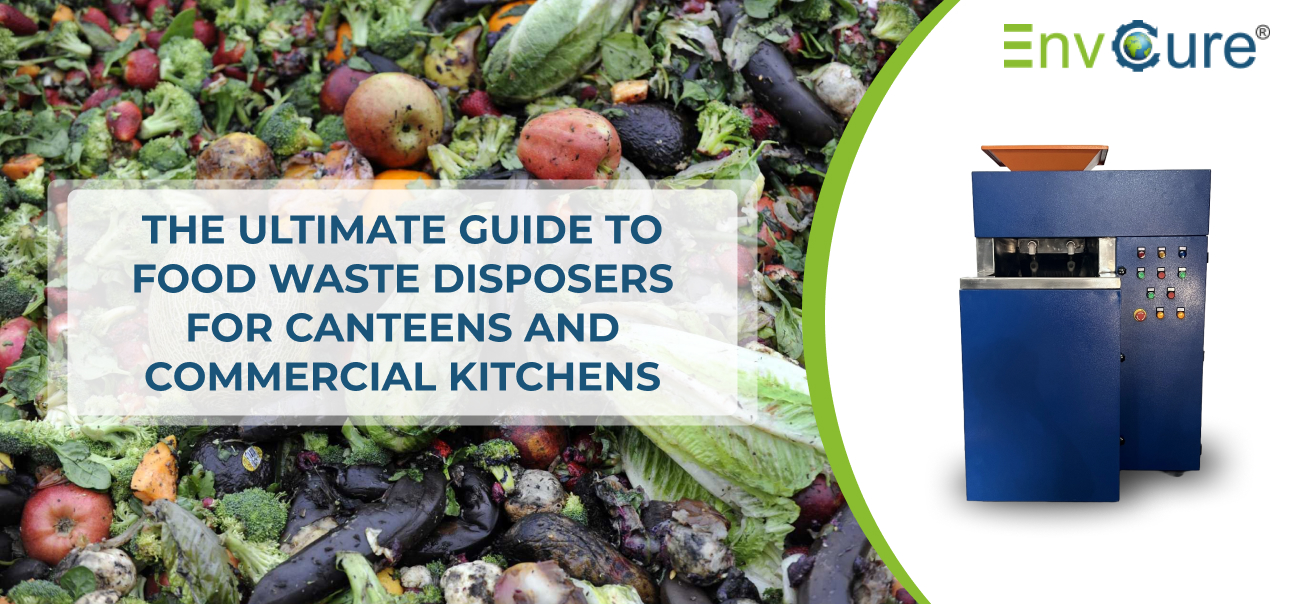
Running a busy kitchen or canteen? Don’t miss The Ultimate Guide to Food Waste Disposer for Canteens and Commercial Kitchens

Where You’ll See Instant Savings with a Food Waste Disposer

True ROI can only be calculated after a few months or after a couple of years. But with a food waste disposer, you will experience instant savings in your monthly budget immediately after installation.
Food Waste Crusher

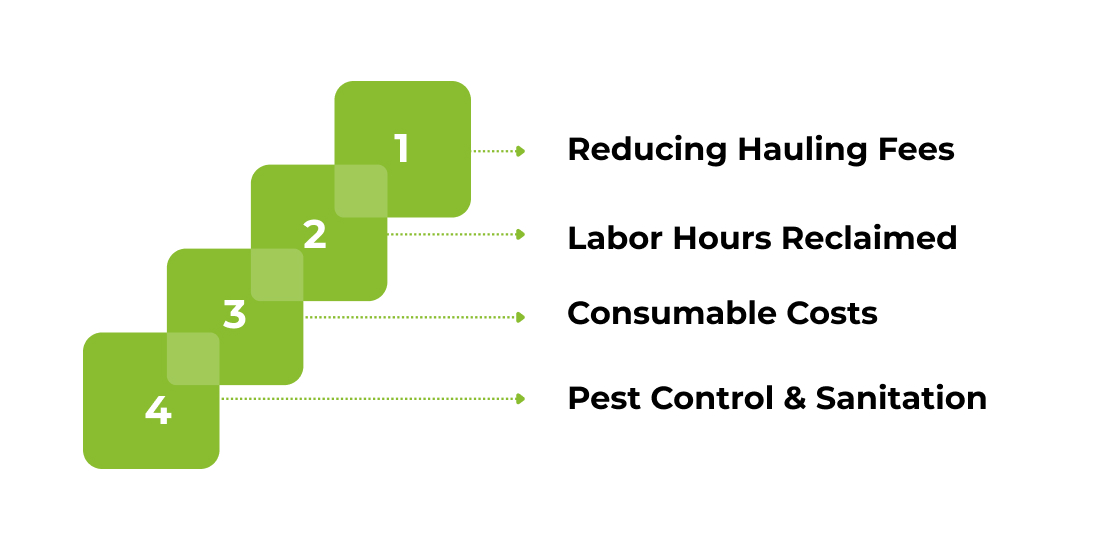
Reducing Hauling Fees

In waste management, the amount you pay to send your waste to a landfill or an outside waste management facility directly depends on the weight of the waste. Food waste is generally wet. That means they are heavy and more expensive to transport. 

By using a food waste disposer, you can grind your food and send it through your wastewater drainage system. It will result in reduced weight and volume of the trash bags, which also means fewer monthly pickups and bills from the waste management contractor.

Labor Hours Reclaimed

It takes a lot of time for your staff to fill the trash bags with wet food waste, carry those heavy bags to outdoor bins and clean the leaked liquid. A kitchen crusher removes these steps from your food waste management process. With a food waste disposer machine, your staff can dispose of the waste right at the sink, saving around 30 to 60 minutes of labor every single day.

Consumable Costs

Heavy-duty trash bags are expensive. When you don’t have to fill wet food waste, you require fewer such bags and also require fewer chemical deodorizers to cover the smells in the bin area.

Pest Control & Sanitation

Rotting food attracts mice and insects. By disposing of food waste instantly with the help of a food waste crusher, you remove the very thing that was attracting such pests. This reduces the expenses of extermination services and the risk of health department fines.

Looking to reduce food waste and operational costs? Check out 10 Benefits of Installing a Food Waste Disposer in Your Restaurant or Hotel

Benefits Beyond Money: Hygiene and Sustainability

The “Odor-Free” Advantage

Food waste lying in the bin spreads its unpleasant smell all around it. By disposing of waste immediately, a food waste disposer ensures that your organic waste does not just lie there in the bin to rot. In this way, your kitchen stays smelling fresh, creating a better environment for your staff and a more pleasant atmosphere for your guests.

Eco-Friendly Impact

Landfills are one of the biggest sources of methane gas. With the help of a food waste grinder machine, you can send less waste to landfills and more to wastewater treatment plants or biogas plants, where it can be converted into fertilizer or renewable energy fuel.

Regulatory Compliance

Since the environmental laws have become stricter, many municipalities are choosing better ways to manage their organic waste. In this regard, investing in a food waste disposer ensures that your business stays ahead of future laws and regulations.
Commercial food waste crusher

Why EnvCure Technocrat LLP is Your Best Financial Partner for Waste Management

When it comes to food waste management, EnvCure Technocrat LLP stands out as one of India’s most trusted names. Our purpose-built food waste disposer range is designed specifically to meet the demands of commercial kitchens, restaurants, social clubs, supermarkets and industrial canteens.

Here are a few of the many points that show why EnvCure Technocrat LLP offers reliable food waste management solutions:

Engineered for Efficiency

Our food waste crusher units are built to perform effectively in the toughest environments. Using high-grade stainless steel and carbon steel, our machines are designed to withstand long operational hours in hotels, restaurants and kitchens. This ensures that you will not be wasting money on frequent repairs and replacements.

High-Capacity Models

EnvCure Technocrat LLP offers different types of models, from 2 HP for small cafes to 7.5 HP for massive industrial units. Our EC FWD series is capable of processing up to 400 kg of waste per hour, ensuring your kitchen never slows down.

The Shredder Advantage

In the EC FWD series, EnvCure Technocrat LLP has provided a shredder that can cut through hard items like bones and fibrous materials, which would have clogged the standard machines.

Financial Reliability

Along with our best-in-class products, we also offer reliable support. Our team of experts help you choose the right machine that matches perfectly with your specific needs. With our commitment to quality, we ensure that your commercial food waste crusher stays a high-performing asset for years to come.

Along with a food waste disposer, EnvCure Technocrat LLP is also a premier manufacturer of a range of high-quality waste management machines. We have extensive experience in serving various industries like hospitals, restaurants, temples, market yards and more.

Conclusion

Is a food waste disposer worth the investment? The numbers speak for themselves. Between the reduction in hauling fees, saved labor hours and the high efficiency of an EnvCure Technocrat LLP system, the machine eventually pays for itself and starts saving you money.

FAQs Related to Food Waste Disposer

Q. How does a food waste disposer save money for businesses?

A. A food waste disposer reduces overall operational costs by minimizing waste collection, transportation, and landfill expenses. Businesses also save on labor since staff spend less time handling and disposing of food waste manually. Over time, these savings contribute significantly to improved profitability.

Q. What is the ROI of installing a food waste disposer?

A. The ROI (Return on Investment) of a food waste disposer is typically high due to reduced waste management costs, lower labor expenses, and improved operational efficiency. Most businesses recover their investment within months to a couple of years, depending on waste volume and usage frequency.

Q. How long does it take for a food waste disposer to pay for itself?

A. In commercial kitchens such as hotels and restaurants, a food waste disposer can pay for itself within 6 to 18 months. This depends on factors like daily waste generation, current disposal costs, and labor savings. Higher waste volumes usually result in faster payback.

Q. How long does it take for a food waste disposer to pay for itself?

A. In commercial kitchens such as hotels and restaurants, a food waste disposer can pay for itself within 6 to 18 months. This depends on factors like daily waste generation, current disposal costs, and labor savings. Higher waste volumes usually result in faster payback.

Q. Does a food waste disposer improve kitchen hygiene and reduce odors?

A. Yes, it significantly improves hygiene by eliminating food waste accumulation in bins. This reduces foul odors, pest infestations, and bacterial growth. A cleaner kitchen environment also helps businesses maintain better health and safety standards.

Q. Is a food waste disposer safe for commercial use?

A. Yes, modern food waste disposers are designed with safety features such as overload protection and enclosed grinding systems. Since they use grinding plates instead of sharp blades, they are safe when used according to guidelines.

Q. Is a food waste disposer environmentally friendly?

A. A food waste disposer helps reduce landfill waste and lowers greenhouse gas emissions. By efficiently managing organic waste, it supports sustainable waste practices and contributes to a cleaner environment.
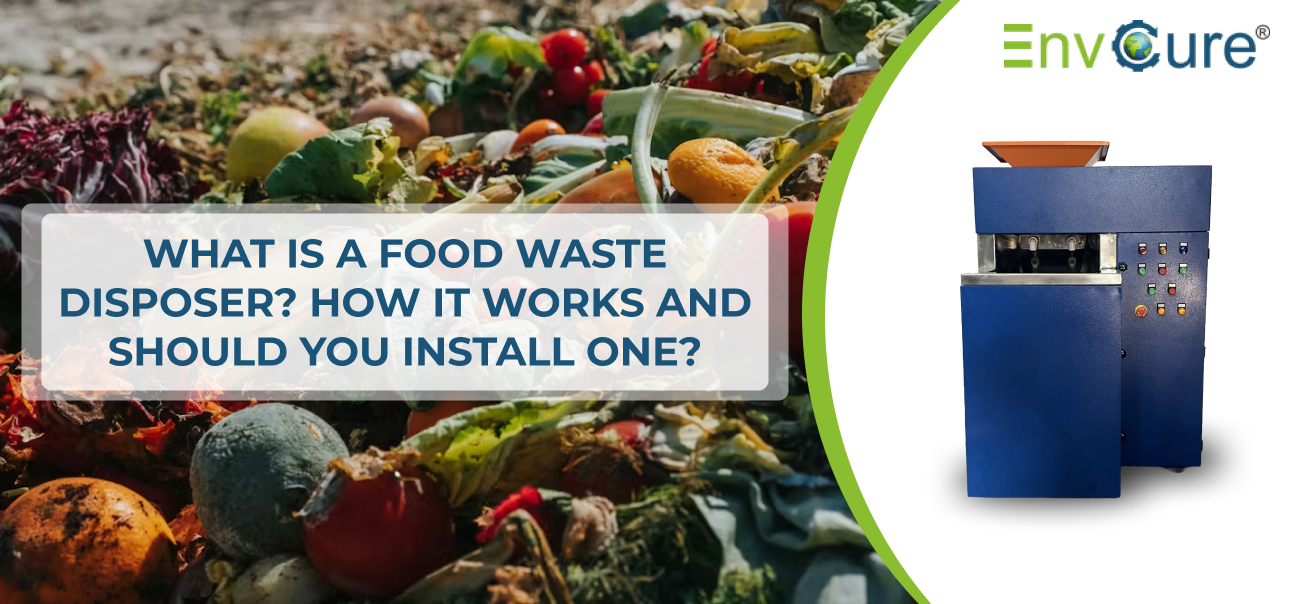
What Is a Food Waste Disposer? How It Works and Should You Install One?

Food Waste Disposer

In peak hours in any major commercial kitchen, a hotel providing breakfast for 300 guests in a corporate cafeteria serving lunch or a bustling restaurant turning over tables is busy. The dishwasher becomes clogged with crumbs, plates return with leftover food, vegetable waste builds up during preparation, and the need for an efficient food waste disposer becomes evident. Food waste is one issue that seems to be getting worse during all of this. 

Bins manual sorting and regular waste pickup are still widely used in the majority of kitchens. Because of this, there will be problems with cleanliness, bad odors, pests, and overflowing bags. Employees frequently take time away from their real work to deal with waste, which has a negative impact on productivity and customer service. 

As time went on commercial kitchens started to ask a straightforward question: 

How can we dispose of food waste in a more efficient and less disruptive way?

Yes, using the Food Waste Disposer, also known as a Food Waste Crusher Kitchen Crusher or Food Waste Grinder Machine for commercial applications. 

What Exactly Is a Food Waste Disposer? 

Food Waste Disposers ground organic waste into a fine slurry that may be properly dumped through drainage pipes. Commercial systems like EnvCure’s are constructed of stainless-steel powerful motors and high RPM grinding mechanisms to withstand continuous loads all day long.  

Commercial food waste disposers are meant for restaurants cafés hotels industrial canteens supermarkets biogas and STP plants unlike household under sink devices. At an impressively rapid pace it breaks down vast quantities of food waste including soft bones, plate scraps and fruit and vegetable peels. 

A Real Kitchen Scenario: Before and After a Food Waste Disposer

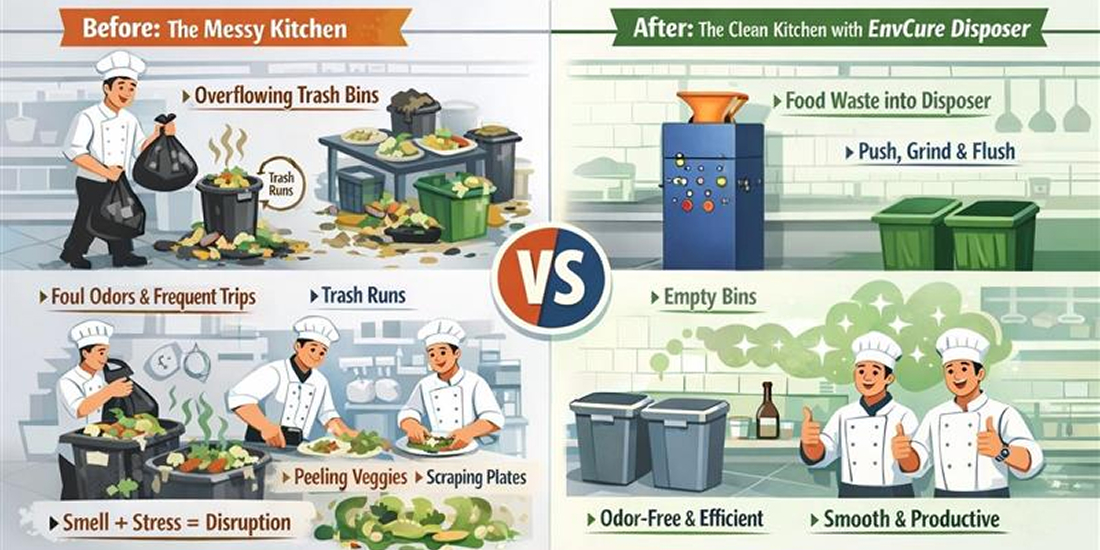
Go back in time to a restaurant prep area before the disposal was commonplace. Bins are emptied hourly teams responsible for preparation of peel vegetables and dishwashers to scrape dishes. Only for the cycle to resume a worker must take a break from their task carry the trash out wash their hands once again and then return. During peak hours the stench intensifies, and waste starts to overflow. 

Commercial food waste crusher

Now picture the identical kitchen with the professional food waste disposer from EnvCure installed. Personnel are able to bypass waste containers by simply pushing leftovers into a connected sink. The waste is ground quickly by the machine and flushed down the toilet. Empty bins only. Perfectly odor free. I will not be conducting any more waste runs. There is a general sense of calm efficiency and order throughout the kitchen. That is the everyday impact of a disposer in large scale food environments. 

This ultimate guide to food waste disposers for canteens and commercial kitchens covers everything from functionality to best-use cases. 

How Does a Food Waste Disposer Work?

When waste is added to the stainless-steel hopper, the procedure starts. The motor starts the grinding chamber as soon as the machine is turned on. Powerful grinding rings are pushed against food waste by a massive steel impeller that spins at high speeds within. As opposed to what most people think, the mechanism really uses force and friction to crush waste rather than blades. 

The food is grind into a fine slurry as it breaks down in the water-fed grinding chamber. All day long this slurry will keep the pipes clear, and the drainage system runs smoothly removing waste without interruption. 

A sophisticated food waste disposer with a shredder is available from EnvCure and is commonly utilized in bigger establishments. It is perfect for biogas plants for STP systems and big industrial kitchens since it incorporates a twin shaft shredder into the main disposer allowing for the rapid processing of even massive organic waste. 

Why Commercial Kitchens Are Switching to Food Waste Disposers

  • Cleaner Fresher and More Hygienic Spaces 

Especially in warm climates, food waste may quickly accumulate and emit foul odors. The disposer completely gets rid of exposed waste. Cleanliness freshness and professional hygiene are maintained in kitchens due to the fast processing of waste. Particularly in establishments with stringent hygiene regulations such as hospitals, restaurants, and hotels, this is crucial. 

  • Better Workflow and Operational Speed

The kitchen becomes more efficient when employees are not required to lift overflowing bins or repetitively empty waste during busy periods. As a result, prep spaces remain organized during dishwashing takes less time, and service is more streamlined. You can now devote more time to food preparation and customer service because you no longer must handle waste. 

  • Impressive Waste Handling Capacity

You may get commercial disposers from EnvCure in a range of capacities to suit any kitchen. Models range from 75 to 100 kg/h for the smallest to 400 kg/h for the largest. Disposer with shredder processes up to 500 kg/h, making it ideal for big waste producers like supermarkets and biogas facilities. 

  • A Machine Built to Last

Commercial food waste crushers use strong motors that range from 2 HP to 7.5 HP and are constructed from high quality carbon and stainless steel. Their long lifespan and low maintenance requirements make them ideal for commercial kitchens with heavy traffic. The intuitive interface makes it easy for even those without technical backgrounds to operate. 

  • Supporting Sustainability and Eco-Friendly Practices

Garbage from food waste is decomposed in landfills producing dangerous greenhouse gas methane. A disposer helps with sustainability by digesting waste in the kitchen instead of sending it out for collection. As part of their waste management plan, several organizations now use food waste systems while attaining environmental certifications. 

Learn more from this guide on the benefits of installing a food waste disposer in your restaurant or hotel. 

Industries That Benefit Most from Food Waste Disposers

Machines manufactured by EnvCure have found extensive use in many different industries due to their adaptability. They are used for daily operations in commercial kitchens such cafes, restaurants, hotels, cloud kitchens and industrial canteens. You can find them in supermarkets where organic goods that have gone bad are processed. During events banquet venues depend on them to handle huge plate returns. Supporting energy generation and large-scale waste reduction is found in biogas plants and STP facilities. A food waste disposer greatly enhances cleanliness efficiency and general waste handling in areas with high volumes of organic waste. 

commercial food waste disposer

Do You Really Need a Food Waste Disposer?

If your kitchen creates a lot of waste daily, it has poor cleanliness or clogged drains and overflowing bins then probably. Disposers quickly become one of the most important kitchen appliances for commercial kitchens that run around the clock or serve a huge crowd. Their use lessens the need for physical effort to eliminate undesirable smells and ensures that work environments are always clean. The disposal is the missing link in your waste management system. If you’ve ever desired, it could match the pace of your kitchen. 

Overview of EnvCure’s Food Waste Disposer Models

EnvCure has a variety of options to accommodate kitchens of varying sizes. Models that process 100 kg/hour are available for smaller kitchens while 200–400 kg/hour machines are available for bigger facilities. Places like biogas plants and industrial canteens which require very high throughput are ideal for the disposer with a shredder system. The sturdy build effective performance and intuitive control panel are the defining characteristics of all models. 

Choosing the Right Food Waste Disposer for Your Facility

Choose a model based on your daily waste volume kitchen layout, waste kind and electrical arrangement. Companies that produce a lot of fibrous or heavy plate waste could benefit from using the shredder combo. Due to continuous service hours, hotels and hospitals may need higher end versions whereas smaller cafés may pick a compact device with low capacity. Buyers may make an informed selection with the full comparison provided on EnvCure Technocrat LLP‘s product page. 

Final Thoughts: A Small Machine Making a Big Difference

When thinking about kitchen upgrades, a Food Waste Disposer might not be the first thing that springs to mind, but it is one of the most revolutionary. Workstations are kept clean workflow is improved bad odors are eliminated and sustainable waste practices are supported. Businesses who prioritize efficiency cleanliness and repeatability in their operations will find this equipment to be an important tool. 

Commercial kitchens in today’s hotels, restaurants, biogas plants and corporate cafeterias all benefit from food waste disposers because of their strong and dependable performance.  

FAQs Related to Food Waste Disposer

Q. Can a commercialfoodwaste disposer manage all kinds of waste?

Ans. It can break down nearly all types of organic waste including cooked foods, soft bones and vegetables and fruit leftovers. Stay away from anything that might break your skin, such as metal plastic or big bones.

Q. Will using a disposer clogmy drainagesystem?

Ans. No. When fitted appropriately, the machine grinds waste into a thin slurry that runs readily through pipes.

Q. Can you tell me how loud afoodwaste grinder is?

Ans. Machines from EnvCure are engineered with insulated chambers and robust motors to reduce operational noise.

Q. Will it work in kitchens that are medium orsmall?

Ans. Yes. For cafes, cloud kitchens, and small restaurants, smaller versions are best. 

Q. Is maintenance difficult?

Ans. No, the machine’s stainless-steel construction makes it simple to clean, and minimal maintenance is required very seldom. 

The Ultimate Guide to Food Waste Disposer for Canteens and Commercial Kitchens

Food Waste Disposer

Food Waste Disposer, often referred to as Food Waste Crusher or Commercial Food Waste Grinder Machines, are heavy-duty devices capable of handling large-scale organic waste generated in commercial kitchens, canteens, and restaurants. On a day-to-day basis, these appliances are used in busy commercial kitchens and canteens to dispose of vegetable peels, meat trimmings, leftover plates, etc. They grind the waste and flush it down the drain into sewage or the digester.  

This guide talks about the procedures industrial food waste disposers follow, their advantages (like hygiene, cost, and environmental benefits), and the aspects to consider when selecting the proper model (such as capacity, motor, and durable material), also including installation and maintenance directions, projected investment cost versus ROI, and problems along with their solutions. 

The Process of Food Waste Disposers in Commercial Kitchens

  • A commercial food waste disposer is a standalone machine that grinds organic waste using a high-power motor and a robust grinding chamber. 
  • Kitchen staff can drop food scraps directly into the disposer opening of continuous-feed models, while running water helps flush them down the drain. 
  • Inside the unit, a high-torque motor spins a turntable or impeller fitted with stainless steel blades, crushing waste into 1–5 mm. 
  • These fine particles are either: 
    • Washed through the plumbing system (usually via a grease interceptor or sewer), or 
    • Collected separately for composting or biogas production. 
  • Premium models are built with stainless steel components for durability and include safety features such as overload protection and anti-jamming mechanisms. 
  • Modern food waste disposers are designed to minimize water consumption, up to 70% less than older models, and to operate quietly. 
  • The entire grinding process typically takes just a few seconds, allowing high-volume kitchens and canteens to dispose of large quantities of waste almost instantly. 

Key Benefits of Food Waste Disposer for Restaurants and Canteens

The installation of a food waste disposer results in the kitchens of food service and institutions reaping numerous benefits:  

  • Reduced waste: The disposal of scraps reduces the volume of waste produced by up to 50% thereby minimizing he space and frequency needed for waste bins to a great extent.  
  • Hygienic: The process of instantly removing scraps eliminates the presence of spilled and leftover food in bins. The foul smell is cut, and pests (rats, flies) are discouraged; thus, the result is a cleaner, safer kitchen.  
  • Cost of disposal lowered: The reduction in the volume of waste leads to a decrease in the number of dumpster pick-ups and thus lower tipping fees. In fact, waste hauling might be a costly affair, consuming several percent of a restaurant’s budget. Therefore, cutting it down to half can mean significant savings.  
  • Salaries of workers saved: The staff have to spend less time on food waste handling, transporting, and cleaning up. The machine does the source separation automatically, thus allowing the workers to concentrate on cooking. This process eliminates heavy lifting and messy tasks, enhancing productivity.  
  • Speed in operation: The cleanup after the service of meals is quicker. In cases of buffet or banquet settings, the kitchen crusher disposers allow the staff to clear plates and prep stations at once, which is of utmost importance during rush hours or big events.  
  • Environmental Impact: Disposing of organic scraps in landfills is one of the major actions that dispensers do, which really helps in achieving sustainability. The landfills’ volume is reduced, hence less methane is released, and makes waste is pre-ground for easier recycling in anaerobic digesters or composters. For example, up to 1,400 homes may get their annual energy from the conversion of 100 tons of food waste per day to biogas.  

The collection of these benefits indicates that disposers are an intelligent investment. Research indicates that the return on every dollar invested in food waste crusher cutting remains high. 

Want to know why more restaurants and hotels are investing in this technology? Explore our post on 10 Benefits of Installing a Food Waste Disposer in Your Restaurant or Hotel for key insights. 

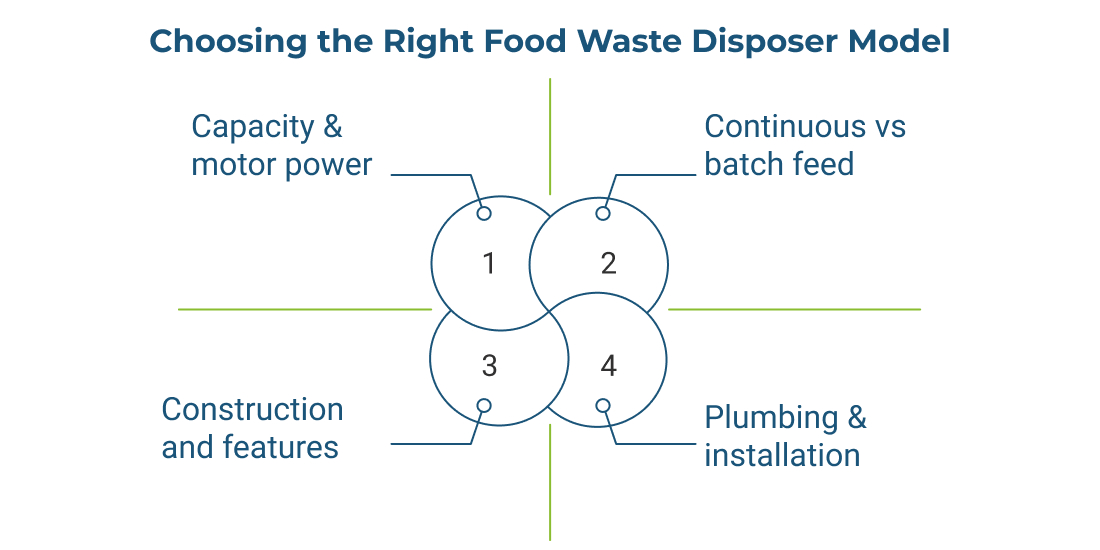
Choosing the Right Food Waste Disposer Model: Capacity, Motor & Build

Picking the best food waste disposer depends on your kitchen’s size and workload: 

Food Waste Crusher

  • Capacity & motor power: Estimate your daily food waste volume. Small cafés might get by with a 1–2 HP unit, whereas hotels and large canteens often need 2–3 HP (or higher) continuous-feed disposers to run all day. In general, larger kitchens or 24/7 operations require high-horsepower, three-phase motors to handle nonstop grinding. Many commercial food waste crushers are rated by grinding capacity (kg/hour) or horsepower (HP); match these to peak usage. 
  • Continuous vs batch feed: Continuous-feed models allow staff to feed scraps on the fly (ideal for large flows). Batch-feed units have a lid that must be locked in place (safer for smaller or lower-volume kitchens). Consult with manufacturers to determine the best feed style for your scenario. 
  • Construction and features: Look for a long-lasting build, usually a thick stainless steel or cast aluminum body that resists corrosion and wear. Besides, a solid motor base and heavy blades are critical for grinding bones and fibrous waste. Ensure safety measures such as overload protection, anti-jamming cutouts, and splash guards are in place. Consider also additional features like auto-reverse cycles or quiet motors. A quieter model might be very important in a busy kitchen; noisy disposers can be very annoying. 
  • Plumbing & installation: Ensure the disposer’s discharge is compatible with your sink/drain arrangement. Most of the big disposers require an extra-strength sink and a different power supply. It is a good idea to check if you need a grease interceptor or special venting to comply with local regulations. Most units come with standard mounting hardware for easy under-sink installation, but larger-capacity machines might still need professional plumbing support. 

Always match the specification sheet (motor HP, RPM, amperage) to your electrical and physical setup. In summary, choose a food waste disposer whose rated daily capacity and motor horsepower comfortably exceed your kitchen’s demand, in a rugged package designed for continuous use. 

To make an informed decision before purchasing, check out our blog on How to Choose the Right Food Waste Disposer for Your Business. 

Installation & Maintenance Checklist

Installation:

  • Professional plumber/electrician: A commercial food waste disposer usually requires a hardwired power connection (single or three-phase) and solid mounting. It is best to let the certified trades install the unit and connect it to a water source and drain/interceptor. 
  • Water supply: Disposers must have a continuous cold-water flow when operating. Either a flow switch is installed, or the sink faucet is used during grinding. 
  • Grease management: Even through grinding, fats should not go down the drain in large amounts. If necessary, use a grease trap or interceptor. 
  • Ventilation: Under the sink, provide ventilation to keep the motor cool and prevent overheating. 

Commercial food waste crusher

Daily/Weekly maintenance:

  • Run water before/after use: Cold water must flush in the food waste disposer before waste loading, and also run for 15 seconds after grinding stops. This clears the pipes and prevents clogs. 
  • Keep it used: The internal parts are made to move, and corrosion is prevented. The disposers remain “maintenance-free” when used together with water. 
  • Clean with care: Avoid strong chemicals; if needed, use mild dish soap or a citrus-based cleaner. Do not use bleach or caustic drain cleaners. The blades can be sharpened by periodically grinding ice cubes and citrus peels. 
  • Safety checks: Leaks, loose fittings, or worn parts should be checked regularly. In case there’s a reset button (overload protector) on the unit, ensure it is not tripped. 

For instance, the unit stopping mid-cycle likely triggered an overload. Turn off the power, remove any jam or large debris from the chamber, and then press the red reset button (usually at the bottom) to restart operation. 

If you manage a restaurant or hotel kitchen, don’t miss our in-depth article on Commercial Food Waste Disposer for Hotels and Restaurants 

Sustainability & Integration with Waste Systems

A food waste disposer fits into green kitchen strategies by diverting organic scraps from landfills and recycling them to useful ends. Instead of rotting in a bin, ground waste can be sent to anaerobic digesters to make biogas (renewable energy) and biofertilizer. In fact, EESI reports that anaerobic digestion of 100 tons of food waste daily can power 800–1,400 homes. Even smaller kitchens contribute when combined with municipal waste treatment; crushed organics generate methane for energy rather than emitting uncontrolled landfill gas. 

For in-house or municipal composters, a food waste disposer provides pre-shredded feedstock that speeds up decomposition. Some commercial food waste crushers and kitchen pipe disposal effluent into on-site composting or digestion tanks, turning a kitchen cost center into a biogas source. All this helps meet sustainability goals and increasingly strict food waste regulations. (In fact, some regions may soon mandate in-sink disposers as a way to meet landfill diversion targets.) Overall, integrating a disposer is a step toward a circular waste system, conserving resources while reducing the carbon footprint of disposal. 

Conclusion

A well-chosen food waste disposer can transform how canteens and commercial kitchens handle scraps – cutting waste volume, improving hygiene, and even turning organic waste into energy. By sizing the unit to your kitchen capacity and maintaining it properly, you’ll gain operational efficiencies and cost savings while supporting eco-friendly practices. To explore solutions tailored to your facility, contact EnvCure Technocrat LLP today for a quote or demo. Discover how EnvCure’s industrial food waste disposer can make your kitchen cleaner, greener, and more profitable. 

FAQs Related to Commercial Food Waste Crusher:

Q.1. How does a commercial food waste disposer work?

Ans: Commercial units use high-torque motors and rotating blades to pulverize food waste. Cold water runs through while grinding, flushing the particles into drains or collection tanks for compost or biogas processing.

Q.2. What can I put in a food waste disposer?

Ans: Most biodegradable kitchen waste is suitable: vegetable and fruit peelings, small bones, eggshells, coffee grounds, dairy clippings, etc. Essentially any wet organic scrap (leftovers, meat scraps, produce) can go in.

Q.3. What should NOT go into a food waste disposer?

Ans: Non-food items (plastic, glass, metal, diapers, etc.) and very fibrous or starchy waste (e.g. large corn husks, celery strings, thick grease) should be avoided. These can clog or damage the machine. Only biodegradable, flushable scraps should be used.

Q.4. How much motor power (HP) do I need?

Ans: It depends on the volume. As a rule, higher-volume kitchens need larger motors. For example, a small restaurant might use a 1–2 HP unit, whereas large hotels or canteens may require 3 HP or more continuous-feed disposers. Larger motors handle heavier loads and longer run times without tripping.

Q.5. What are the main benefits of using a disposer?

Ans: Disposers reduce waste volume, improving sanitation and cutting disposal costs. They eliminate messy bins, decrease odors/pests, free up labor, and support eco-friendly practices. Simply put, they save money and time while boosting kitchen hygiene.

10 Benefits of Installing a Food Waste Disposer in Your Restaurant or Hotel

Food Waste Disposer

Running a busy restaurant or hotel means tackling mountains of food scraps daily. A food waste disposer cuts this challenge in half by grinding waste into bits that flush away. Here we discuss 10 benefits of kitchen crusher installation from hygiene to sustainability. Whether you are curious about the best food waste disposer in India or weigh food waste disposer vs manual composting, find out how EnvCure Technocrat LLP solutions improve efficiency & eco-friendly practices in your business.

Overview: Food Waste Disposer

  • Food Waste Disposer units grind kitchen scraps into small particles for easy drain disposal, less landfill use and sustainability.
  • Ils save time & money on waste hauling and increase hygiene by reducing odors and pests in commercial kitchens.
  • Ideal for restaurants and hotels, these machines process high volumes, are eco-friendly and improve operational efficiency.
  • Compared to food waste disposer vs manual composting, disposers process food waste faster and require no extra space or maintenance.
  • Food waste crusher with corrosion resistant parts from EnvCure Technocrat LLP are long lasting.

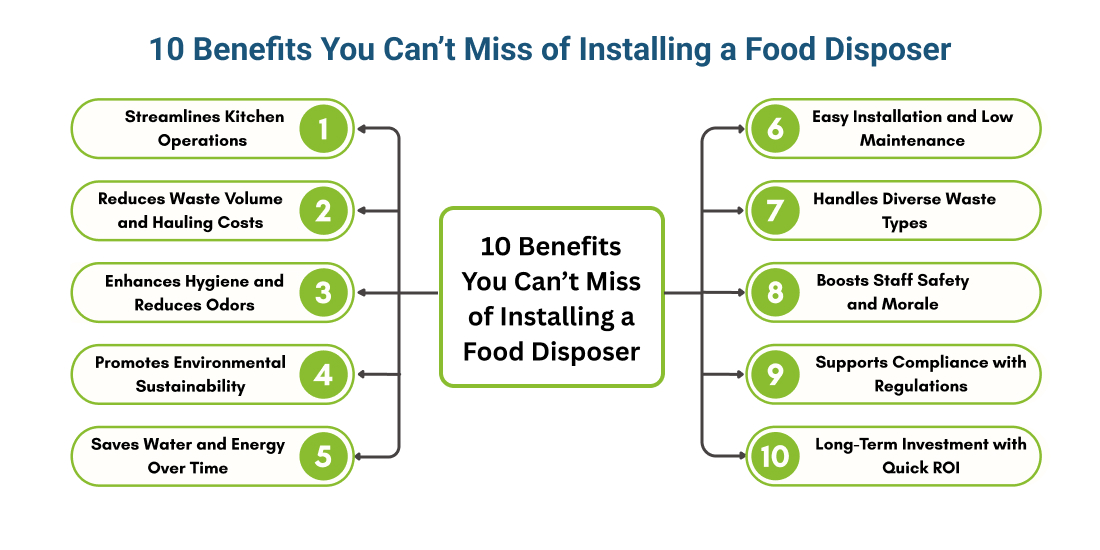
10 Benefits You Can’t Miss of Installing a Food Disposer

Kitchen Crusher

1. Streamlines Kitchen Operations

A crowded kitchen needs efficiency. Scraping plates, tossing peels and managing leftovers take staff time. A food waste disposer processes scraps at the sink and not in the dumpster. This keeps workflows smooth during peak hours so chefs can cook and servers can take guests. The key to quick cleanup after events is different for hotels with banquet halls.

  • Time Savings: Staff spend less time handling waste – time on more important tasks.
  • Seamless Workflow: High horsepower kitchen waste disposers like EnvCure’s 3 HP models handle tough scraps without jamming.
  • Scalability: Great for smaller restaurants or large resorts with high waste volumes.

2. Reduces Waste Volume and Hauling Costs

Fast food scraps fill trash bins and raise hauling costs. Ground particles flowing down the drain cut waste volume by up to 80 percent in a commercial food waste disposer. This reduces pick up frequency & bag usage. In a mid-sized restaurant, thousands a year in waste fees can be saved and hotels save on operational costs across multiple kitchens.

  • Cost Efficiency: More pickups mean lower bills whereas some businesses can save up to 30 percent.
  • Space Optimization: Smaller waste volumes open storage areas for other uses.
  • Complementary Systems: Combines well with wet waste management strategies.

3. Enhances Hygiene and Reduces Odors

Rotted scraps create foul odors and attract pests to bins. A food waste disposer grinds waste to send it to wastewater systems before smells develop. That keeps kitchens clean & safe – especially in India’s warm climate where odors build quickly. Guests see the difference, and staff work in a fresher environment.

  • Odor Control: Sealing kitchen crusher units prevents leaks and lingering smells.
  • Pest Reduction: No exposed scraps = fewer flies, rodents or insects.
  • Cleaner Workspaces: Immediate processing inhibits bacteria growth on surfaces.

Learn how a commercial food waste disposer can help hotels and restaurants manage kitchen waste more efficiently.

4. Promotes Environmental Sustainability

Organic waste strains landfills and releases methane, a greenhouse gas. A food waste disposer sends scraps to wastewater treatment to become biogas for energy. This supports environmental benefits and green certifications. Unlike food waste disposer vs manual composting that requires space and effort, disposers fit in busy kitchens.

  • Reduced Landfill Use: Up to 70 percent of organic waste is diverted from dumps.
  • Biogas Potential: Treated waste produces renewable energy.
  • Eco-Certifications: Hotels & restaurants meet sustainability standards.

5. Saves Water and Energy Over Time

Resource use questions are not unheard of, but modern industrial food waste disposers are efficient. Flush particles require minimal water and low-power motors are used. Rather than hauling waste to landfills that burns fuel, disposers are a better long-term choice. Utilities and sustainable practices are saved at restaurants.

  • Low Water Usage: Needs little more than a trickle which is often less than dishwashing.
  • Energy Efficiency: Units like EnvCure’s use little electricity and are good for large kitchens.
  • Long-Term Savings: Reduced transport emissions outweigh initial water use..

6. Easy Installation and Low Maintenance

Installing a food waste disposer can be as simple as a few hours job for a plumber. Once installed, maintenance is minimal. Corrosion resistant parts like stainless steel grinders withstand daily use. Regular cleaning with ice or citrus keeps units running smoothly – an easy addition to any kitchen.

  • Quick Setup: It fits without major retrofitting under standard sinks.
  • Durable Design: Heavy duty construction requires little maintenance.
  • Simple Care: Weekly cleaning prevents buildup and extends unit life.

7. Handles Diverse Waste Types

Restaurants and hotels handle vegetable peels, meat bones, bread crusts and more scraps. A food waste crusher processes all of them into uniform waste pieces for disposal. This versatility can be used for Indian thalis or continental buffets so kitchens remain efficient whatever the cuisine.

  • Broad Compatibility: Most food scraps except fibrous items like corn husks are handled.
  • High Capacity: Commercial units handle large volumes of banquets or catering.
  • Consistent Output: Fine particles form for easy drain flow.

Food waste crusher

8. Boosts Staff Safety and Morale

Wet bins and heavy loads into dumpsters cause slips, spills and injuries. A kitchen crusher prevents spills while waste is processed at the sink. No staff members take late-night trips or handle muddled bins in bad weather. This safer, cleaner setup boosts morale so workers can do what they enjoy that is cook or serve guests.

  • Fewer Injuries: Ridiculous trips with heavy loads are eliminated.
  • Improved Morale: Cleaner, safer workspaces increase staff satisfaction.
  • Easy Operation: Simple controls (water on, switch flipped) reduce training time.

9. Supports Compliance with Regulations

Waste management rules are strictly followed in many regions including Indian cities. A commercial food waste disposer separates organics from recyclables at source to simplify compliance. This meets municipal mandates and avoids fines. For chains, disposers standardize waste handling across locations to simplify reporting/auditing.

  • Regulatory Alignment: Meeting organic waste diversion requirements.
  • Audit-Friendly: Waste reduction is tracked for sustainability reports.
  • Standardized Operations: Assures consistency across sites.

Discover key factors to consider when choosing the right food waste disposer for your business operations.

10. Long-Term Investment with Quick ROI

Quick returns offset the initial cost of a food waste disposer. Savings on hauling, labor & utilities add up fast – some restaurants see ROI in less than one year. Durable units last over a decade with proper care, like those from EnvCure. For green markets, sustainable kitchen appliances also generate green customers.

  • Fast Payback: Reduced hauling & labor costs.
  • Long Lifespan: Built with corrosion resistant parts.
  • Market Appeal: Rewarding eco-conscious diners.

Why EnvCure’s Food Waste Disposers Stand Out

At EnvCure Technocrat LLP, we make kitchens more efficient and green. This guide lists 10 reasons why a food waste disposer is essential for restaurants and hotels – from cost savings & hygiene to sustainability & compliance. Our commercial kitchen waste disposers simplify operations while supporting wet waste management.

So you want to simplify waste management and increase your profit? EnvCure industrial food waste disposers are corrosion resistant parts built for performance and durability. Visit www.envcure.com/or contact us for a customised consultation. Let us make a cleaner & greener kitchen together with the best food waste disposer in India. Book your demo now!

FAQs Related to Food Waste Disposer:

Q.1. What types of food waste disposer are there?

Ans. Food waste disposers come in continuous feed (runs as food is added) and batch feed (operates when the cover is in place) models, suitable for both commercial and residential kitchens.

Q.2. Which materials / foods should and shouldn’t be put into a disposer?

Ans. You can safely put soft food scraps, fruit peels, cooked leftovers, and small bones. Avoid fibrous foods (corn husks, celery), large bones, oil, grease, plastic, glass, and metal.

Q.3. What is the typical power consumption / energy usage?

Ans. A food waste disposer typically uses 500–1,500 watts per use. Average energy cost is minimal, usually less than ₹50–₹100 per month for commercial kitchens.

Commercial Food Waste Disposer for Hotels and Restaurants

Food Waste Disposer

Hotels and restaurants generate substantial food waste daily, creating challenges for hygiene, cost, and sustainability. A food waste disposer grinds scraps into smaller pieces for disposal or recycling. The mechanics of commercial food disposers, and benefits to hospitality businesses are discussed. Find out how EnvCure Technocrat LLP’s kitchen waste solutions create cleaner, greener kitchens.

Overview: Food Waste Disposer

  • What is it?: A food waste disposer grinds food scraps into small particles for hotels and restaurants.
  • Key Benefits: Waste volume reduced, hygiene improved, disposal costs reduced and eco-friendly practices supported.
  • Applications: Ideal for large kitchens in hotels, restaurants and catering services.

Understanding the Food Waste Disposer

A food waste disposer is also called a food waste crusher or kitchen crusher. It grinds food scraps like vegetable peels, meat bones and leftovers into fine powder, installed under sinks. These particles are flushed through plumbing or processed for composting reducing waste volume. Unlike residential models, industrial food disposers can handle high volumes of waste with robust motors and blades. Key features include:

  • High-Powered Motors: Pick up tough material like bones and fibrous vegetables.
  • Stainless Steel Components: Stable, resistant to corrosion.
  • Automatic Operation: Safety features make use simpler in busy kitchens.
  • Low Water Usage: Some models can save up to 70% water.

They simplify kitchen operations and are therefore essential equipment for hotels or restaurants wishing to remain hygiene and productive.

The Challenge of Food Waste in Hospitality

The hospitality industry produces about 1.3 billion tons of food waste per year, UN estimates. Hotels and restaurants face challenges like:

  • High Waste Volumes: Buffets, banquets and catering leave lots of scraps.
  • Hygiene Concerns: Food waste in dumpsters draws pests and creates odors.
  • Cost Pressures: Waste disposal and landfill fees strain budgets.

A food waste disposer handles these issues by reducing waste volume, improving sanitation and supporting recycling or composting in line with eco-conscious hospitality trends.

Learn what factors to consider in our detailed guide on how to choose the right food waste disposer for your business.

How Commercial Food Disposers Work

An industrial food disposer handles food waste precisely in high-pressure kitchens. Installed beneath a sink or as a standalone unit, the machine processes food scraps in several mechanical steps. Here’s how it works:

How Commercial Food Disposers Work

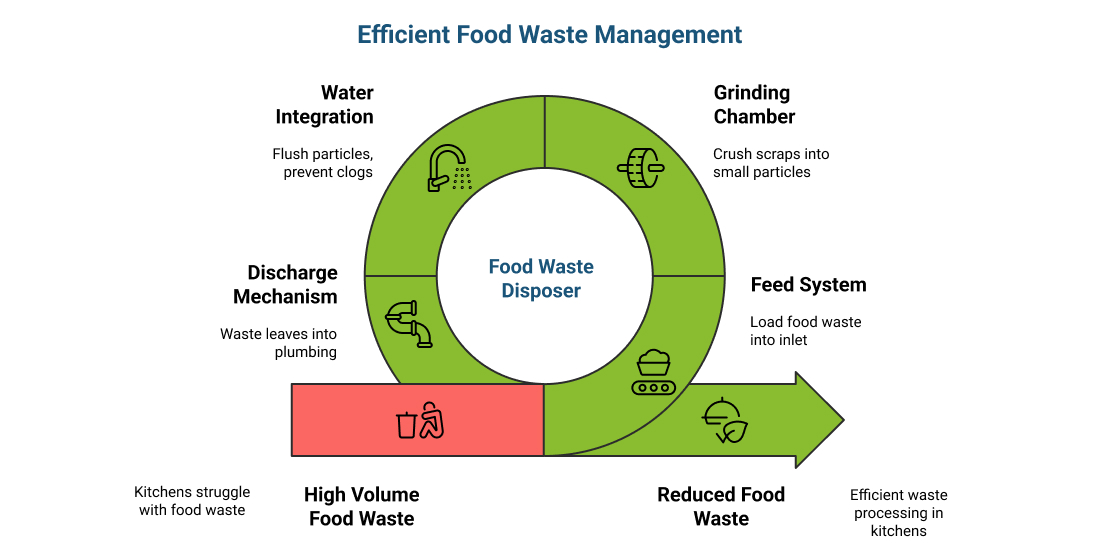
  • Feed System:

    Kitchen staff load food waste like vegetable trimmings, meat scraps, or leftover plates into the disposer’s inlet. Some models use continuous feed for continuous processing while batch feed units process fixed amounts for safety.

  • Grinding Chamber:

    On top of the machine is a high-torque motor driving a turning turntable or impeller with stainless steel blades or grinding rings. They crush food scraps to particles of 1-5 millimeters. 

  • Water Integration:

    Water flows through the chamber to flush the ground particles to prevent clogs and help with waste transport. Advanced models optimize water use systems  save up to 70% compared to traditional disposers.

  • Discharge Mechanism:

    Pulverised waste leaves the discharge pipe into the plumbing system (connected to a grease interceptor for compliance) or into a collection system for composting or waste-to-energy processing. 

  • Safety and Control Features:

    Modern kitchen crushers have overheating sensors, overload protection and automatic shut-off. Safe operation with touchless controls or foot pedals reduces risk of accidents.

The process takes seconds and lets kitchens handle large volumes of waste without interfering with workflow. So a food waste crusher in a hotel kitchen might process scraps from a 500-person banquet in less than a minute.

Benefits of Food Waste Disposers for Hotels and Restaurants

A food waste disposer gives hospitality businesses tangible benefits in terms of operation, financial and environmental terms:

  • Significant Waste Reduction: Grinding food scraps into fine particles reduces waste volume up to 50%. This reduces space needed for waste storage and dumpster trips and thus hauling fees.
  • Enhanced Kitchen Hygiene: Food waste left in bins attracts rats and flies and has unpleasant odors. A kitchen crusher removes this problem by processing scraps immediately in a cleaner and safer kitchen.
  • Cost Efficiency: Reducing waste volume lowers disposal costs which can be up to 4% of an operating budget for a restaurant. Also, industrial food crushers reduce waste handling labor so staff can concentrate on food preparation and service.
  • Operational Streamlining: Best kitchen waste disposer speeds cleanup. Staff need not do waste sorting or transport themselves. This is critical in high volume settings such as hotel buffets where guest satisfaction requires rapid waste management.

Using an industrial food disposer for example can save thousands of dollars annually on waste management while projecting a greener brand image to eco-conscious customers.

Applications in Hospitality Settings

The food waste disposer is adapted to hospitality waste challenges:

  • Restaurants: High-turnover kitchens have continuous-feed kitchen crushers for various scraps including vegetable peels, meat trimmings and plate leftovers.  
  • Hotels: Large scale operations like buffets and room service produce different wastes. From fruit rinds to banquet scraps, industrial food crushers handle all hygiene standards and reduce landfill contributions.
  • Biogas Plants: Crushed food waste is more productive than raw waste in terms of energy generation inputs for biogas Plants. That makes biogas plant owners and installation companies target customers of EnvCure for its food waste disposer solutions.
  • Catering Services: Mobile and event caterers use compact commercial food disposers to process waste on site reducing cleanup time and transport. This is useful for outdoor/large events.
  • Cafeterias: High throughput settings like hospital or university dining halls use food waste crushers to process thousands of servings daily. 
  • Food Trucks & Small Kitchens: Small waste volumes from compact kitchen waste solutions fit under tight countertops in space-constrained operations. 
Food Waste Crusher
Food Waste Crusher

Partner with Envcure for Greener Kitchens 

At EnvCure Technocrat LLP, we are redefining how food waste is managed across hotels, restaurants, and bio gas plants. Our food waste disposers simplify operations, lower costs and help the environment as you’ll read here. By integrating industrial food disposers into a hub-and-spoke content strategy we educate & engage businesses on the value of our kitchen waste solutions. 

With global presence of over 1500 installations EnvCure Technocrat LLP brings you tailor made kitchen crushers. Are you upgrading your waste management? Find out more about our best kitchen waste disposers and request a consultation. Let’s build a cleaner, better kitchen together!

FAQs Related to Food Waste Disposer:

Q: What are the benefits of installing a commercial food waste disposer?

A: The benefits of installing a commercial food waste disposer are:

  • Reduces kitchen waste volume
  • Improves hygiene by preventing food waste build-up
  • Saves space otherwise used for waste storage
  • Reduces odor and pest problems
  • Supports eco-friendly waste management

Q: How do I choose the right capacity for my business?

A: The capacity depends on your kitchen size, the number of meals served daily, and the type of food waste generated. Larger establishments require high-horsepower models for efficient performance.

Q: Can it handle continuous operation?

A: Yes. Many commercial models are designed for continuous feed, meaning you can keep adding food waste while the machine is running, which is ideal for busy kitchens.

How to Choose the Right Food Waste Disposer for Your Business?

Food Waste Disposer

Have you ever stopped to think about how much food waste your business generates daily?  

Whether you’re running a busy restaurant, a hotel, or even a small café, managing food waste is a challenge.  

But here’s the thing – how you handle food waste doesn’t just affect your operations; it also impacts the environment. 

For food, one tool that’s been a real game-changer is the Food waste disposer. This machine can take the burden off your team and make waste disposal much more efficient.  

But with so many food waste crusher options available out there, how do you figure out which one’s right for you? 

Let’s get answers to that question by breaking down everything you need to know about choosing the best food waste disposer machine for your business. 

In this blog post, we have discussed everything about commercial kitchen crushers like what factors you need to consider when choosing a food waste crusher, the top features to look for in a food waste machine grinder, a comparison of various food waste crushers, and how you can maximize the efficiency of your kitchen crusher.  

So, let’s get started without any further delay!  

First of all, if you’re new to food waste crushers and food waste grinder machines, don’t worry; let’s clear things up.

What Are Food Waste Disposers? Meaning and Definition

food waste disposer machine..

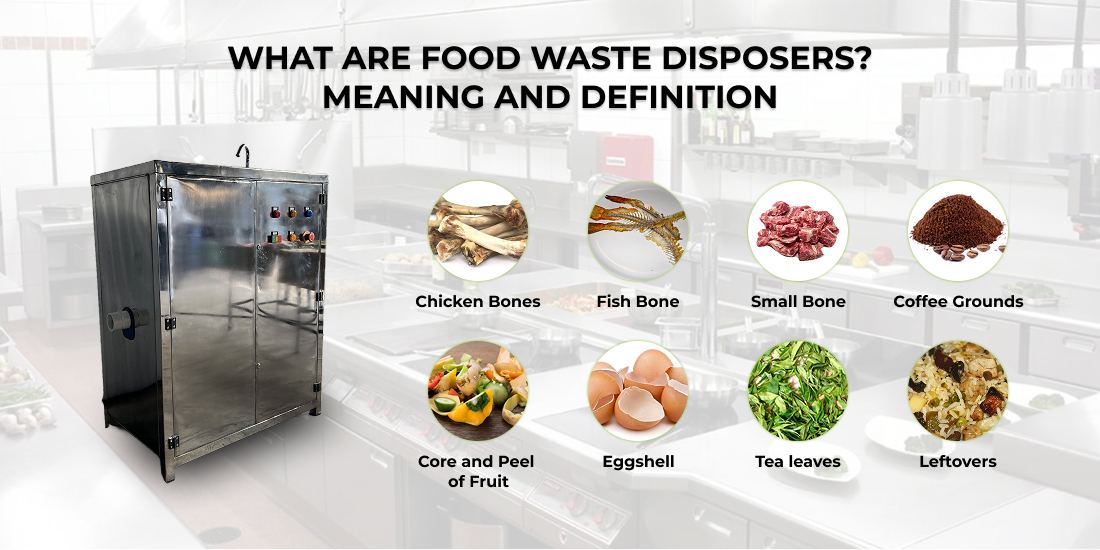
In simple terms, a food waste disposer is a device that’s installed under your kitchen sink. It grinds up food waste into smaller pieces, which can then be flushed away easily through your plumbing.

Now, not all food waste disposers are created equal. You’ll find various models with different capacities, grinding mechanisms, and features.

Some are built as high-demand commercial kitchen crushers while others cater to smaller operations.  

But whether you’re looking for a heavy-duty food waste grinder machine or a compact option, the goal is the same: reduce the volume of food waste and make disposal quicker, easier, and more sustainable.

Now, let’s have a look at the key aspects you should look at while buying a food waste crusher in the following section.  

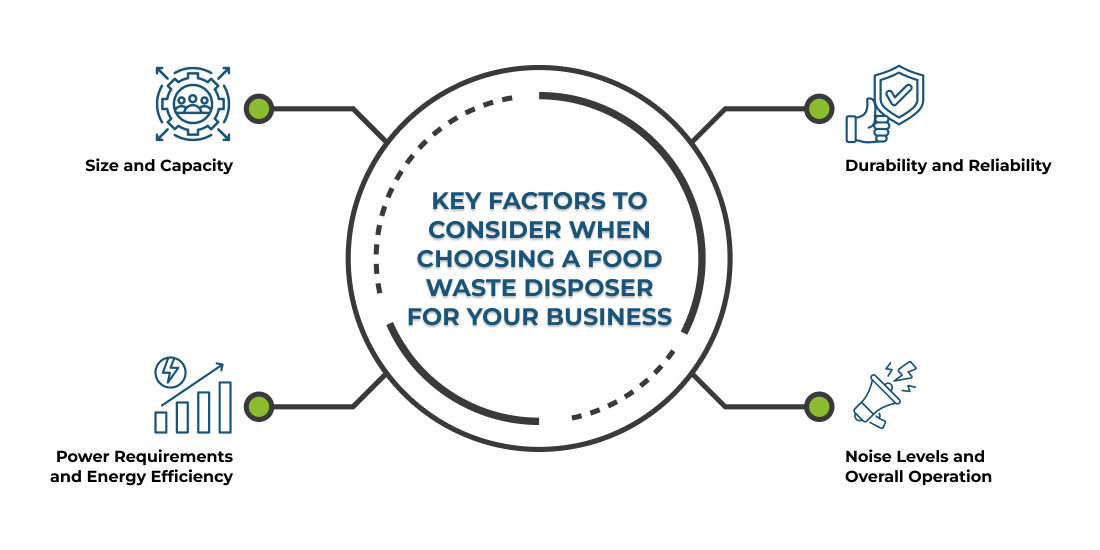
Key Factors to Consider When Choosing a Food Waste Disposer for Your Business

food waste grinder machine

When choosing the right food waste grinder machine for your business, a few key factors can make all the difference.

Here we have listed some of the most important ones –  

  1. Size and Capacity

Think about how much food waste your kitchen/business produces each day.  

If it’s huge in terms of volume, buying a small unit may not help you to keep up with your requirements.  

Or if you buy a too big unit when your waste is limited, it could waste the energy and space of your business.  

So, figure out your average food waste volume and pick a food waste crusher that can handle it without overkill.

  1. Durability and Reliability

In a busy kitchen, equipment takes a beating. And that’s why you need a kitchen crusher that’s built to last.

Look for a food waste disposer machine with a solid build and a good warranty. Trust us, there’s nothing worse than a machine that breaks down in the middle of a busy shift.

  1. Power Requirements and Energy Efficiency

Moving next, nobody wants to see their electricity bill spike because of a machine that consumes too much power.  

So, when you are considering a food waste grinder machine, go for one that balances power with efficiency.

Look at the energy ratings and make sure you’re investing in a model that’s as kind to your budget as it is to the planet. 

  1. Noise Levels and Overall Operation

Finally, a noisy food waste disposer can be a real nuisance, especially in a kitchen that’s already buzzing with activity. So, it’s always recommended to opt for a commercial kitchen crusher that’s comparatively quiet.

A machine that runs smoothly and quietly not only improves your staff’s working conditions but also prevents distractions in the kitchen. 

Top Features to Look for in a Food Waste Disposer Machine 

So, now that we know the basics, let’s talk about the features you should prioritize when buying a food waste disposer machine for your business, as listed below!

  1. Strong Grinding Capabilities and Motor Strength

The motor is the heart of any food waste crusher. Without a powerful motor, your disposer won’t be able to handle tougher food scraps like bones or fibrous vegetables.  

So, make sure that the motor of the food waste machine grinder you choose is strong enough to handle your kitchen’s needs without jamming or stalling. 

  1. Easy Installation and Maintenance

Going next, the last thing you want is to waste hours trying to install your new food waste grinder machine. Ideally, it should be simple to install, with clear instructions.

Also, think about the long-term upkeep. You want a machine that’s easy to clean and maintain to ensure it lasts as long as possible. 

kitchen crusher

  1. Safety Features and User-Friendly Design

A food waste disposer machine should be safe to operate, especially in a busy kitchen environment. Look for features like overload protection and anti-jamming mechanisms. Plus, a design that’s easy to operate means your staff can get the job done faster without any hiccups.

Now, after getting a fair understanding of the key factors and features of a commercial kitchen crusher, let’s address the next big question – should you stick with traditional waste disposal methods, or is it time to upgrade to a food waste crusher?

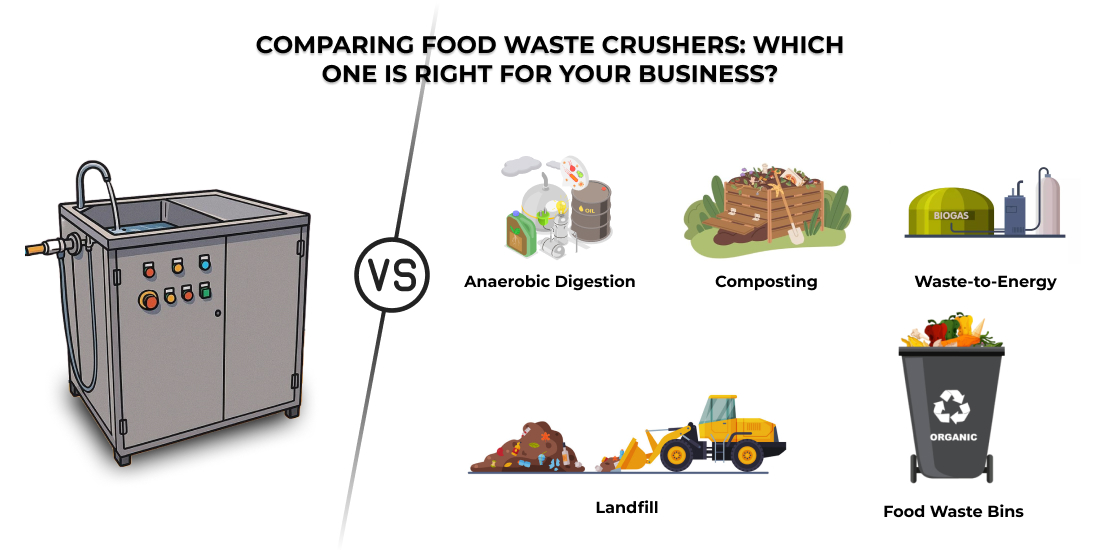
Comparing Food Waste Crushers: Which One Is Right for Your Business? 

food waste disposer machine

If you are not sure which food disposal method is the best way for you – keep reading further to get your answers of whether you should stick with traditional waste disposal methods, or is it time to upgrade to a food waste crusher?

Food Waste Crusher vs. Traditional Waste Disposal Methods 

Traditional waste disposal can be messy, inefficient, and harmful to the environment. On the other hand, a food waste disposer machine can be more efficient, hygienic, and environmentally friendly.

By breaking down food scraps, you can contribute to reducing landfill waste and waste-to-energy programs. 

One of the most important factors you need to keep in mind while comparing different food waste disposers is the specific needs of your business.  

For example, if you own a high-end restaurant with constant food prep, you will need a robust food waste crusher, but if you own a smaller café, you might get by with a more compact unit.

How to Maximize the Efficiency of Your Food Waste Disposer? 

Once you’ve got your food waste disposer machine in place, you’ll want to keep it running smoothly. Here are some tips to make sure your machine stays in top shape.

  1. Use Wisely and Avoid Hard Food 

It’s tempting to dump everything in at once, but overloading the machine can cause problems.  

So, it’s always a good idea to feed food scraps slowly and make sure you’re using cold water to help break down the waste.  

Also, avoid things like grease or large pieces of hard food, which can jam up the grinder. 

  1. Maintain a Good Condition of the Kitchen Crusher

Remember, regular cleaning is crucial and thus make sure to clear out any buildup inside the machine and check the grinding components for wear.  

Also, always follow the manufacturer’s cleaning instructions to avoid damaging the food waste disposer.

  1. Avoid Common Mistakes 

One common mistake many people make with food waste crushers is not separating the waste properly. Never put hard-to-grind materials (like bones or large chunks of food) into the food waste grinder machine.

It’s also important to avoid using too much soap, as this can cause a mess in the plumbing. 

After learning about how you can maximize the efficiency of food waste disposer, let’s have a look at the environmental impact of food waste grinder machines.  

Also discover, How Does Our Food Waste Crusher Works? 

What Is the Environmental Impact of Using a Food Waste Disposer? 

Kitchen waste crusher machine

Here’s a cool thing to think about: When you use a Food Waste Crusher, you’re actually helping the environment.

Food waste that goes to landfills can release methane, a potent greenhouse gas. By using a food waste disposer machine, you’re reducing that methane and contributing to a more sustainable waste management system.

When used properly, a food waste grinder machine helps divert food waste from landfills and supports recycling efforts, like composting and energy production.

It’s this small step for your business that can have a big impact on the planet.  

What is The Cost of a Food Waste Disposer Machine? 

The price of a food waste disposer machine varies depending on its features and capacity.

So, at first glance, it might seem like a hefty investment at first, but in the long run, it pays for itself by helping you lower labor costs, reduce waste disposal fees, and have a more efficient kitchen that saves both – time and money!  

Conclusion: Buy The Best Food Waste Disposer with EnvCure Technocrat LLP 

Choosing the right food waste disposer machine can make a world of difference for your business. Not only will it save you time and energy, but it’ll also make your kitchen more sustainable and efficient.

So, take your time, consider your needs, and invest in the right food waste crusher to keep your operations running smoothly.

Ready to take the next step? If you’re looking for a top-quality food waste disposer, we at EnvCure Technocrat LLP are here to help you make the right choice for your business.

Frequently Asked Questions

Q.1 How do I know if my business needs a high-power Food Waste Disposer?

Ans. If your business generates a high volume of food waste, like in restaurants or hotels, a food waste crusher with a powerful motor is ideal. Smaller kitchens can benefit from a more compact food waste grinder machine.

Q.2. Can a Food Waste Disposer be used in a small café or food truck?

Ans. Yes, a food waste disposer machine works well in smaller spaces like cafes or food trucks. Choose a compact food waste crusher that fits your space and can handle your waste volume efficiently.

Q.3 How can I reduce odors from my Food Waste Disposer?

Ans. To reduce odors, regularly clean your food waste disposer machine and flush it with cold water. Avoid putting grease or overly moist food scraps and consider using citrus peels for a fresh scent. 

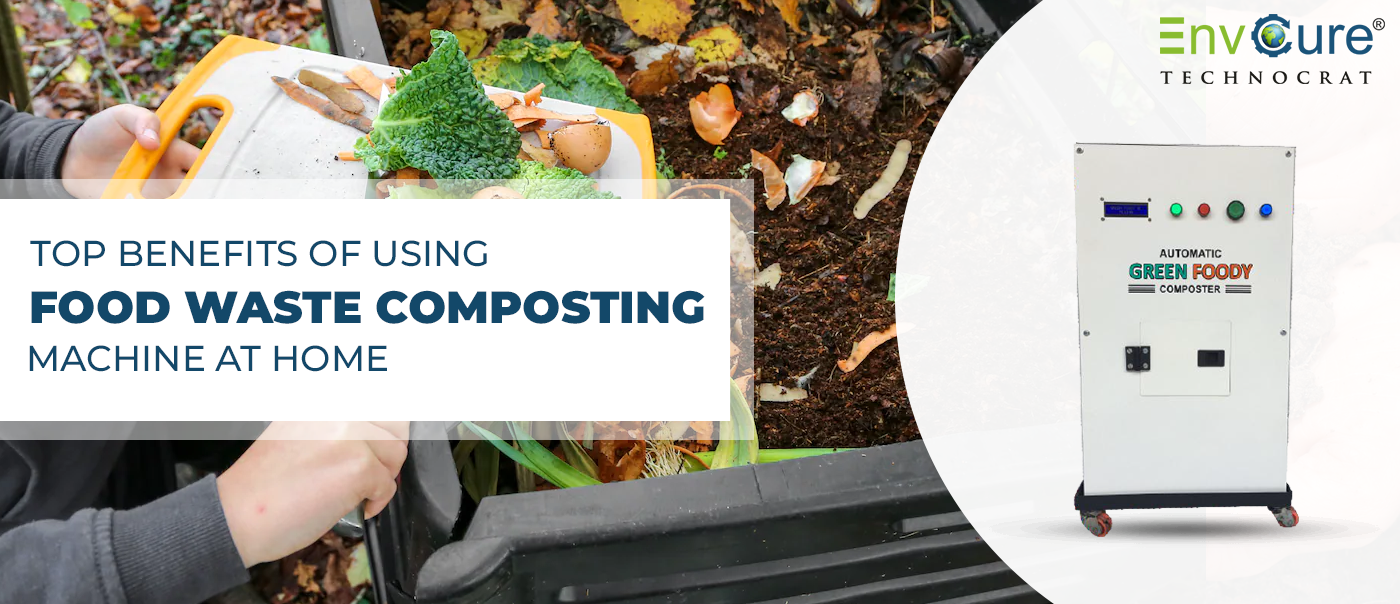
TOP BENEFITS OF USING FOOD WASTE COMPOSTING MACHINE AT HOME

Food Waste Composting Machine

Composting is the process of breaking down and recycling biodegradable waste material into compost which is very useful. However, natural composting takes a long time. It also invites microbes and bacteria.

Food Waste Composting Machine for Home

People started using technology to fasten the process in a very organized and clean way. Today, food waste composting machine is used in commercial spaces. These machines are now being installed at home as well. Having an organic waste machine at home has many advantages. Some of them are listed below:

1. Natural pesticide

We use chemical pesticides to grow a kitchen garden and sow plants on farms. Unfortunately, these chemicals do not have a positive impact on the yield. This is the reason we are paying extra for chemical-free food products. A food wastage composting machine can help create natural pesticides for your plants.

2. Sustainability

A waste composting fertilizer enables you to contribute to the green environment. You also eliminate carbon dioxide emissions from the environment by reducing waste. In addition, you can keep your home sanitized by recycling the trash at a faster pace.

3. Clean home

Different food products compost at different paces. Again, different types of waste give out different dour. Meat, bones, and various dairy products take more time to decompose. Waste composting fertilizer is a great way to escalate decomposition. It can help you eliminate the unpleasant smell generated by slow decomposition. Along with nourished plants, you can also maintain a clean home.

4. Cost efficiency

Food waste collection and recycling without many machines can be tedious and clumsy. You would need a separate space to store and recycle the waste. This space will be occupied for a long time, and you might waste money or purchase chemicals for decomposition and odor removal. Food wastage composting machine comes with a low operating cost and less space. It can be installed in a tiny area. It is a one-time investment and can be a very cost-effective option in the long run. If your budget is meager or you do not want this long-term, you can hire it for a specific period.

5. Safe compost

The natural composting process keeps on adding microbes and bacteria. Handling the waste after complete decomposition can be a monumental task. The food wastage composting machine has a pasteurization process. This process ensures that the harmful microbes from the compost make it safe for handling. There are different features for safety. The machine stops without any spillage or malfunction in case of an overload. You can not only decompose the material but also handle it alone without help.

6. Easy operation

The composting machine is automatic, and all the processes take place on their own. You can set the time of composting and stay relaxed. The mixing blades inside the machine automatically stop opening the removal door. So, you need to put the food waste and start the machine.

A food waste composting machine can be said to be a breakthrough in composting. It is an environment-friendly technology that can be used for residential and commercial use. We are one of the leading waste composting machine manufacturers. You can find affordable and quality machines with use. Our experts will review your requirements and analyze your problems to suggest the best solution. Contact us to get cheap food waste composting machine suitable for residential use.

Frequently Asked Questions:

Q.1. How does a compost machine work?

A. A composting machine has an inbuilt shredder, mixing blades, heating chamber, and other units that efficiently shred and trim the mix, making it ready for composting. In addition, heat and other inputs are provided to escalate the composting process.

Q.2. What are some don’t of using a food waste composting machine?

A. You should always segregate the waste and process only biodegradable waste in the compost machine. Carefully remove glass, metals, and other materials from the input feed.

Q.3. How can we get the compost machine installed at our home?

A. You can contact us. Our professionals will collect the requirement and other details such as compost machine installation size and purpose. The experts will visit your space and install the machine. You will be given a demo of the device. Contact us today to get more details.

Different Ways to Compost Food Waste in Hotels

Different Ways to Compost Food Waste in Hotels

What is Hotel Food Waste?

When people think of waste, they often think of garbage. Meanwhile, hotel food waste often referred to as kitchen waste, refers to food that hotels and restaurants discard. However, in many hotels, the food is not discarded. Instead, it is left in a bin and is not utilized.

Food waste is a big problem in the hospitality industry. Every day, hotels discard enormous amounts of food you could use to feed people in need. Unfortunately, this wasted food often ends up in landfills, emitting greenhouse gasses and contributing to climate change.

How to reduce hotel food waste?

Restaurant food handling and consumption activities are bound to generate alarming amounts of food waste. However, even though food waste reduces restaurant profitability, there is a slew of other issues to be concerned about. Such difficulties include offensive odors in restaurants and the production of greenhouse gasses.

  • Organize food according to expiry dates

The easiest way to reduce your hotel food waste is to check the expiration date on your leftovers and only keep food items that are still good.

  • Give any leftovers to a local charity

If you have any leftover food from your event, please consider donating it to a local charity. Many organizations would be happy to receive your donations, which would be a great way to help those in need.

  • Practicing composting of food waste

The best alternative to eliminate food waste is to compost your leftovers. Composting is a simple and effective way to reduce food waste in your hotel. All you have to do is to put your bits in a pile and let them decompose. The breakdown of food waste is a natural process in the soil. Therefore, you can easily use this compost in the landscape of the hotel or restaurant. The article further discusses composting in detail.

Tips for composting Food Waste

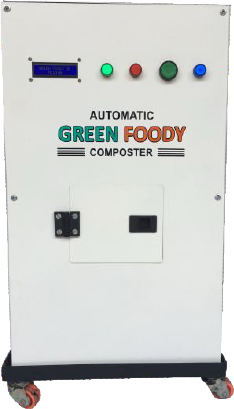
Automatic Green Foody Compost

Let’s get started on how to compost hotel food waste, which will help determine the type of material that goes into the compost pile and the approximate cost of the compost. Gather the Materials. These could include Kitchen scraps, food waste, and Coffee grounds. Other organic materials. Composting can be done in several different ways. These include:

  • Using an organic matter digester to break down kitchen waste
  • Using an enzymatic digestion process to break down hotel food waste
  • Using a bio-digester to break the waste
  • Using a combination of these processes to break down food waste

Things to ensure while collecting food waste and composting:

Collecting food waste and composting is pretty simple to do actually; all you have to do is take care of these essential tips:

1. Sort and Prepare Food Properly: All types of food waste should be sorted into different piles according to type.

2. Keep Food Waste Cool: Do not put food waste in the compost pile if it is too warm. This slows down the process of composting and reduces the quality of the compost.

3. Add Fresh Vegetables: Fresh vegetables help maintain the compost quality and add nutrients to the soil.

4. Do Not Overdose on Nitrogen: Too much nitrogen in the compost will make it acidic and unpleasant to handle. Add only about 1/4 of a nitrogen-based fertilizer per 1,000 square feet of composting area.

You have to be also mindful of the timings; it takes at least some months to get a final compost that can be used as a fertilizer. A lot of things have to be taken care of when it comes to naturally compost. For beginners, it’s advised that you try organic or food waste composter machines. The further article discusses the food waste composting machine and the advantages of using it.

What is a food waste composting machine?

The food waste composting machine is a practical device that converts waste into manure in a shorter time compared to the domestic methods. This machine recycles all types of garbage into compost that may apply in various ways. The waste composter machine is one of the most commonly used machines for producing fertilizers from organic waste for hotels.

You can then use the food waste composting machine to mix it up and finish composting. It generates food waste; you can easily break down this organic material into high-quality compost. Organic waste composters naturally convert biodegradable waste or food waste into compost with the help of bacteria. Contact us to select a wide range of Compost Machines from one of the leading food waste composting machine manufacturers.

Benefits of using a composting machine for food waste:

Using a machine to compost organically has a lot of advantages for the environment and economy, which are listed below:

  • Compost preparation takes less time because of the composting machine’s accelerated composting process.
  • You can manage garbage effectively and cut transportation expenses with the aid of this equipment.
  • Using this machine to compost can help keep insects and rodents at bay.

Conclusion

In conclusion, composting hotel food waste is the best way to eliminate food leftovers in hotels. Therefore, hotel staff should start composting today to reduce food waste going to landfills, which will help reduce environmental pollution.

Frequently Asked Questions:

Q.1. What is the difference between compost and fertilizer?

Ans. Compost is a mixture of organic material and fertilizer. Fertilizer is a mixture of chemical fertilizer and organic material. Composting is a natural way to break down organic material used as fertilizer.

Q.2. What organic waste do I need to put in the composter machine?

Ans. You can put wet organic waste like fruit peels, vegetable peels, eggshells, and coffee grounds into the composter machine. You can also put dry organic waste like coffee grounds, tea leaves, grass clippings, and paper in the composter machine.

Q.3. How often should I turn my pile?

Ans. The frequency of turning depends on the size of your pile and your location. For example, you might need to turn your bank weekly if you live in a hot climate. If you live in a cold climate.

Q.4. What type of composting method should I use?

A. If you’re part of a hotel or restaurant, it’s advisable to try food waste composting machines instead of traditional composting methods. Food waste composting machines are more efficient than conventional composting methods.

Q.5. How long will the composting process take?

Ans. The composting process takes about 4 to 6 months to complete. During this time, you will need to turn your pile every week or so. If you do not turn your stack, it will begin to smell. However, if you turn your pile too often, it will become too dry and will not compost properly. Therefore, it will help if you turn your pile once or twice a week.

Q.6. How do I know if my compost is finished?

Ans. When your compost turns into brown, thick, earthy-smelling dirt, it’s ready to use as fertilizer. 

Q.7. When is the best time to turn my compost?

Ans. The best time to turn your compost is when it is dry. When you turn your compost, you will need to add water to keep it moist. If you turn your compost too often, it will dry out, and your compost will not be as adequate. You should turn your compost every week.