

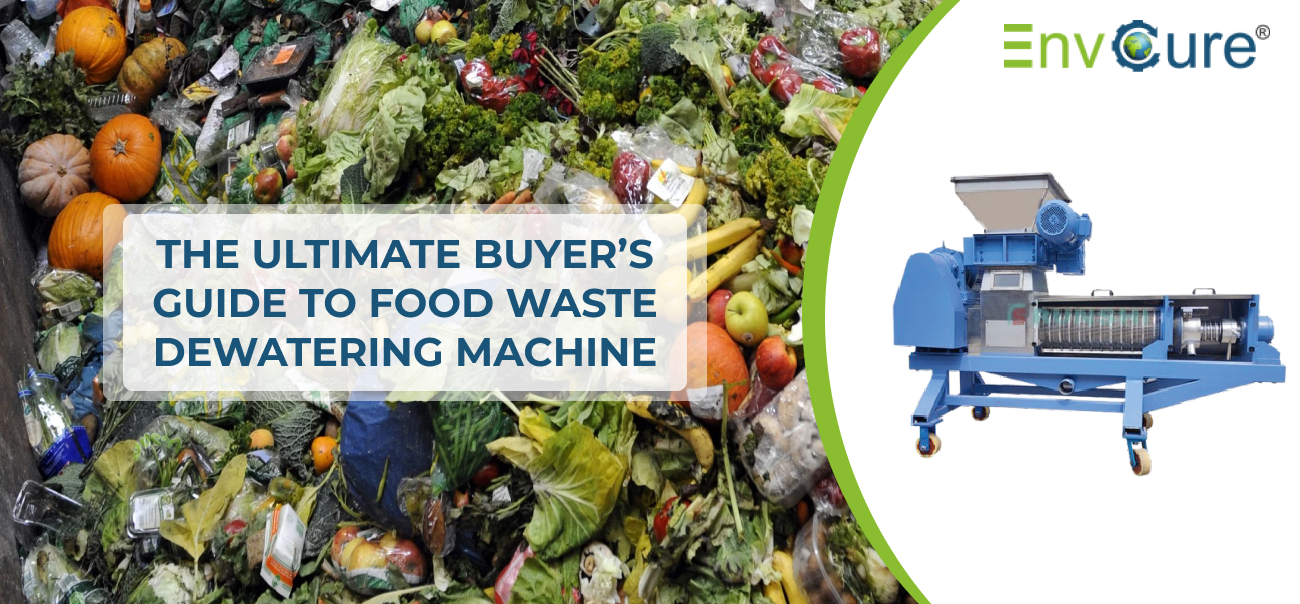
The Ultimate Buyer’s Guide to Food Waste Dewatering Machine

Food Waste Dewatering

Food waste becomes a challenge when every day, kitchens, food processing plants, and municipal facilities handle huge amounts of food scraps such as vegetable peels, spoiled dairy, or meat trimmings that pile up, stink, and cost a fortune to dump away. A food waste dewatering machine squeezes out excess water so you get compact, manageable solids for composting, biogas production or disposal. This guide explains Food Waste Dewatering, the different types available, their benefits and how to buy one. Find solutions with EnvCure Technocrat LLP that save money, streamline operations and meet environmental standards. 

Overview: Food Waste Dewatering

  • Food Waste Dewatering removes moisture from organic waste to reduce volume , weight for easy handling and processing.
  • Machine types include screw presses, centrifugal dewaterers, belt presses and vacuum systems for specific operational scales.
  • The advantages are low cost disposal, low environmental impact from reduced landfill use and high resource recovery for composting or biogas.
  • Best selection depends on capacity, material durability, energy efficiency and maintenance needs of buyers.
  • Food waste dewatering machines designed for sustainable operations are offered by EnvCure TechnoCRAT LLP. 

What Is Food Waste Dewatering?

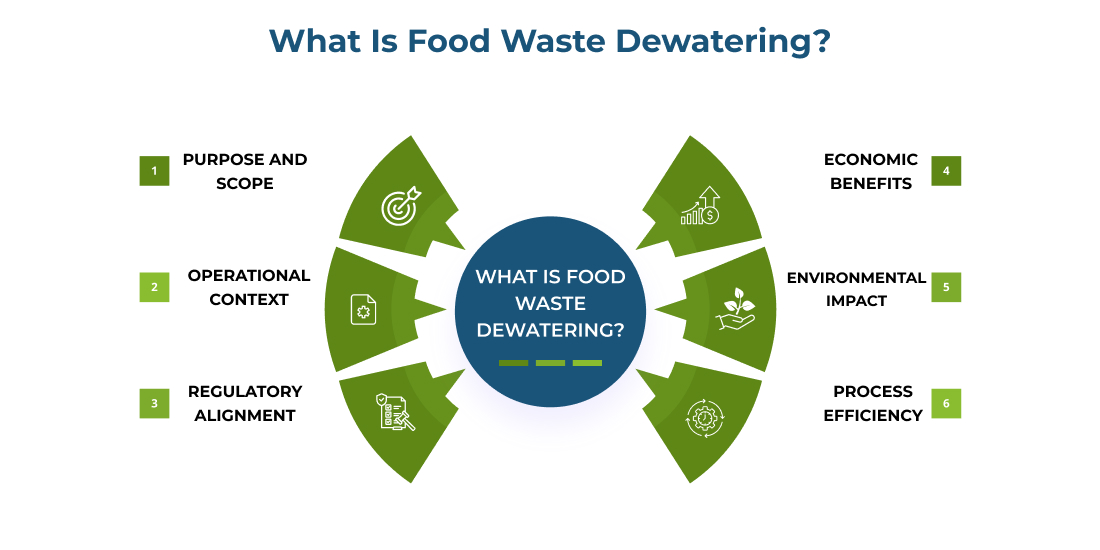
Food waste dewatering consists in the separation, by mechanical ways, of liquids from organic solids (vegetable scraps, meat residues, dairy byproducts, etc.). High moisture content upto 70-80% in food waste causes rapid spoilage, odors and high disposal costs. Dewatering lowers that moisture to 20-40%, producing compact solids for processing.
food waste dewatering machine

  • Purpose and Scope: Prepares waste for composting, anaerobic digestion or disposal with minimum volume and weight.
  • Operational Context: Used in restaurants, food processing plants and municipal facilities for waste handling automation.
  • Regulatory Alignment: Supports waste reduction mandates like those from the EPA that target landfill diversion.
  • Economic Benefits: Lowers transport costs because waste fees are often weight based.
  • Environmental Impact: Methane emissions from decomposing wet waste reduce in landfills.
  • Process Efficiency: Odor control & pest attraction reduces odors for hygiene. 

How Food Waste Dewatering Machines Operate

These machines force water out of food wastes to make soggy materials manageable solids. It involves feeding waste in either a pressure or centrifugal motion system that separates liquids from solids for separate handling.

  • Input Mechanism: Waste enters from an open hopper often pre-shredded by an industrial shredder.
  • Separation Technology: Compresses (e.g. screw presses) or rotates (e.g. centrifugal systems to expel liquids from filters or screens.
  • Output Management: All solids are discharged for collection, and all liquids are treated or reused.
  • Automation Features: Includes moisture sensors which alter operations as necessary.
  • Safety Protocols: Protective guards, emergency stops and enclosed chambers for operators.
  • Energy Considerations: Low-power motors balance performance with cost in modern designs.

Type of Food Waste Dewatering Machine

At present, we specialize exclusively in Screw Press Deaterers, which are highly efficient for handling various types of organic and food waste. Unlike other dewatering technologies used across different scales of operation, our focus remains on screw press systems due to their superior performance and versatility for diverse waste compositions.

  • Screw Press Dewaterers: Compresses waste with helical screw; ideal for processing pulpy, fibrous, and high-volume organic materials such as fruit residues, vegetable waste, and food slurry.

Benefits of Organic Waste Dewatering

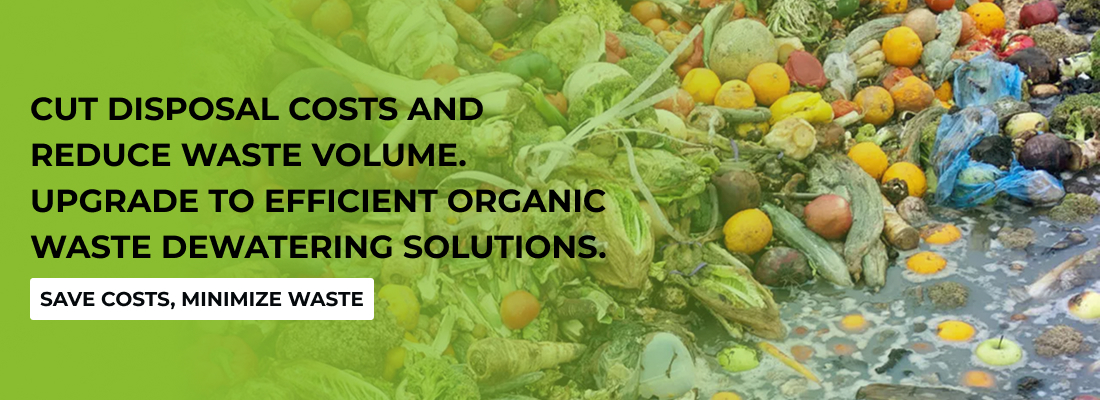
Organic waste dewatering brings considerable operation & environmental benefits. It reduces moisture, so waste management becomes more economic and more ecological.

  • Volume Reduction: Reduces waste mass by 70%, reducing storage and transport requirements.
  • Cost Efficiency: Hastening costs are reduced because hauling weight is related to disposal fees; Especially in light of rising landfill costs.
  • Environmental Gains: Decreases landfill methane emissions, the main cause of global warming. 
  • Resource Recovery: Focused organic solids improves composting and biogas production.
  • Improved Hygiene: Odors and pests are reduced and work environments are kept clean.
  • Regulatory Compliance: Supports waste diversion policies and municipal/corporate sustainability goals.
  • Operational Streamlining: Downstream processes like sorting or digestion become simpler.  

Key Considerations for Purchasing a Food Waste Dewatering Machine

The selection of the right food waste desalinating machine depends on the operation requirements and machine specifications. Key factors set your facility goals.

  • Processing Capacity: Optimal performance is 50-1,000 kg/hour throughput divided by daily waste output.
  • Material Quality: For acidic food waste, choose stainless steel construction.
  • Energy Efficiency: Give preference to low-wattage motors for lowest overall-cost operation.
  • Maintenance Requirements: Select models with accessible parts for cleaning and repairs to minimize downtime.
  • Safety Standards: Automatic shut-offs, enclosed systems for operator protection are some of the features.
  • Budget Planning: Weigh initial costs against long-term savings due to lower disposal fees.
  • Vendor Support: Pick providers with solid warranties and quick technical help.

Integrating Dewatering with Waste Management Systems

Ideally a food waste dewatering machine fits into an overall waste management concept. It fits together with other waste management equipment.

  • Pre-Processing Synergy: Waste shredder machine or twin shaft shredder machine for municipal waste – break down materials before dewatering.
  • Shredding Compatibility: Add a twin shaft shredder for plastic recycling to separate the non-organic streams.
  • Capacity Optimization: Evaluate twin shaft shredder capacities and rotor / shaft speed / rpm to suit dewatering requirements.
  • Specialized Equipment: For complete waste handling add an e-waste shredder or system for tire shredding or rubber waste shredding.
  • Systematic Workflow: Connect dewatering with composting/anaerobic digest units for resource recovery. 
organic waste dewatering

Maintenance Strategies for Optimal Performance

Proper maintenance keeps a food waste dehydrating machine working for many years. Consistent care prevents breakdowns & maintains efficiency.

  • Daily Cleaning Protocols: Screens and chambers should be rinsed to remove organic residues to prevent clogs & corrosion.
  • Regular Inspections: Check screws, belts and motors for wear or damage weekly.
  • Lubrication Schedules: Apply manufacturer specified lubricants to moving parts to decrease friction.
  • Empty Operation Cycles: Run machine briefly without waste after use to remove residual materials.
  • Operator Training: Train staff on correct usage to prevent overloading or improper handling.
  • Annual Servicing: Proactively check for problems with professional technicians.
  • Documentation: Log maintenance activities to predict performance & repairs.

Choosing the Right Machine: A Step-by-Step Approach

Food waste dewatering machine selection is a process tied to operation goals. Watch these steps to make a sound decision.

  • Assess Waste Volume: Find required capacity by calculating waste output daily or weekly.
  • Analyze Waste Composition: Identify food waste types (e.g., pulpy, fibrous) with respect to machine type.
  • Evaluate Space Constraints: Make sure the machine fits in your facility’s layout and operation flow.
  • Compare Energy Usage: Review power consumption specs, trade efficiency for cost.
  • Check Compatibility: Confirm integration with existing equipment – for example an industrial shredder.
  • Request Demonstrations: Verify machines against test machines or review performance data from suppliers.
  • Secure Financing: Check out buy/lease options that meet your budget constraints.

EnvCure: Your Partner in Sustainable Waste Solutions

We at EnvCure Technocrat LLP believe Food waste Dewatering is an important tool for Waste management. This guide reviewed the mechanics, types, benefits, purchasing considerations, integration strategies, & maintenance of food waste dewatering machines. You’re armed with insights to select equipment which cuts costs, boosts sustainability and streamlines operations. Ready to transform your waste management? The food waste dewatering machines are durable & efficient. For tailored solutions all our team. Join us to build a sustainable future. 

FAQs Related to Food Waste Dewatering

Q: What is a food waste dewatering machine?

A: A food waste dewatering machine separates liquids from solid food waste, reducing volume and weight by removing free and bound moisture to produce a drier, easier-to-handle solid fraction and a liquid effluent.

Q: What types of food waste can it process?

A: They handle kitchen scraps, fruit & vegetable peels, meat trimmings, dairy residues, and restaurant or catering waste. Some heavy-duty models can also process bones or large fibrous material after pre-shredding.

Q: What are the main benefits of dewatering food waste?

A: Reduced landfill costs, lower transport volumes, easier composting/anaerobic digestion feedstock, less odor, reduced leachate, and improved workplace hygiene.

Q: What power and utilities are required?

A: Requirements depend on the model: small units may run on single-phase electricity, larger industrial machines need 3-phase power. Some systems need water for washing and compressed air for controls. Always check the spec sheet.
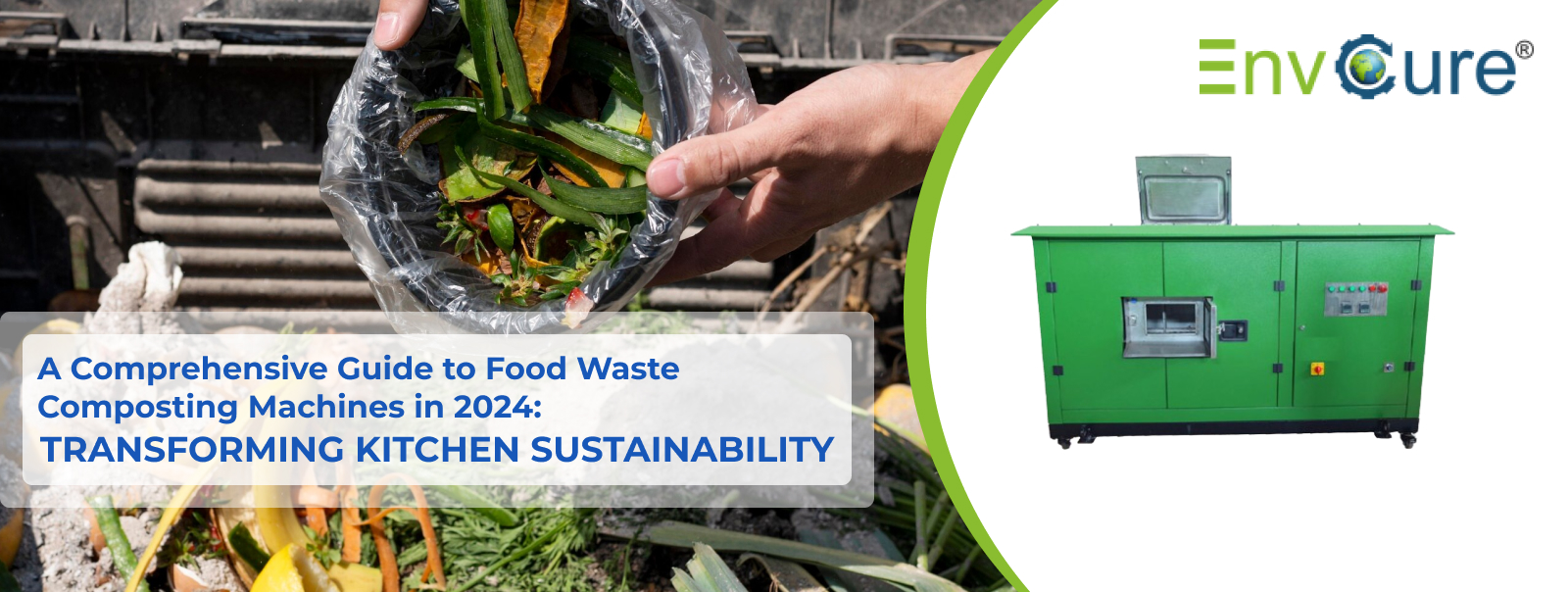
Food Waste Composting Machines in 2024: Transforming Kitchen Sustainability

A Comprehensive Guide to Food Waste Composting Machines in 2024_ Transforming Kitchen Sustainability

In 2024, the food waste composting machine market is experiencing a surge, underscored by an increasing global commitment to sustainability. With a projected market growth from $2.88 billion in 2023 to $3.1 billion in 2024, and further to $3.98 billion by 2028, these machines are becoming pivotal in tackling food waste in kitchens across residential and commercial settings.  

Understanding Food Waste Composting Machines

Food waste composting machines represent a crucial development in managing organic refuse by transforming kitchen leftovers into valuable compost. This not only mitigates the impact on landfills but also enriches soil quality, fostering a healthier environment. As urban populations swell and environmental sustainability becomes a pressing concern, the role of these machines in waste management is becoming increasingly vital. Their ability to process organic waste effectively helps in reducing the release of methane, a significant greenhouse gas, and turns everyday waste into a resource.

  • How They Work: These devices utilize aerobic digestion, a process where microorganisms break down food waste in the presence of oxygen. This method is highly efficient in decomposing organic materials into stable, nutrient-rich compost. The modern food waste composting machine often comes equipped with features like automatic mixers, ventilation systems, and odor control mechanisms, which enhance the composting process while ensuring it is as unobtrusive as possible​. 
  • Types of Composting Machines: The market offers various types of composting machines, each suited to different needs. Batch composters handle large volumes at once and are ideal for setups that accumulate organic waste in significant amounts before processing. Continuous composters, on the other hand, are designed to receive waste continuously, making them perfect for high-waste environments like large households or commercial establishments. The choice between these systems often depends on the user’s volume of waste and the desired speed of composting​. 

Key Benefits and Adoption

Adopting a food waste composting machine significantly reduces the volume of waste sent to landfills and the associated emissions of methane, a potent greenhouse gas. By diverting food waste from landfill sites and converting it into compost, these machines play a pivotal role in the fight against climate change. The resulting compost can be used to improve soil health, reducing the need for chemical fertilizers and promoting organic agriculture​. 

  • Economic Benefits Beyond environmental advantages, composting machines offer economic benefits. By processing food waste on-site, businesses and households can lower waste management costs and potentially generate revenue from selling high-quality compost. This is particularly beneficial for establishments like restaurants, hotels, and cafeterias, where large volumes of organic waste are produced daily​. 
  • Social and Regulatory Compliance The increasing emphasis on sustainability has also led to stricter waste management regulations. Composting machines help comply with these regulations by managing waste responsibly. Moreover, they enhance the user’s brand reputation by aligning with the values of environmental responsibility and sustainability, which are increasingly important to consumers​. 

Technological Integration and Market Expansion

The technological sophistication of food waste composting machines is significantly enhanced with Internet of Things (IoT) capabilities. This allows for remote monitoring and control, which simplifies the composting process for users and increases adaptability across varied residential and commercial environments. The expansion of this market is particularly notable in the Asia Pacific region, where a compound annual growth rate (CAGR) of 9% is projected, driven by heightened environmental awareness and an escalating demand for sustainable solutions​ (Cognitive Market Research)​.

Compact and Portable Designs: As living spaces become smaller, particularly in urban settings, the demand for compact and portable composting solutions is increasing. Manufacturers are responding by designing smaller, more efficient models that fit in limited spaces yet provide the same functionality as their larger counterparts. These compact units are perfect for apartment dwellers or small homes, making sustainable practices more accessible to everyone​. 

Challenges and Solutions

  • High Initial Costs and Infrastructure Needs: One of the more daunting challenges facing the adoption of food waste composting machines is the initial investment required. These machines, particularly the advanced and larger models, come with substantial upfront costs. This financial barrier can deter smaller businesses and households from adopting this technology. Additionally, the infrastructure needed to house and maintain these systems can be significant, requiring dedicated space and sometimes specialized installations.
  • Strategies to Overcome Financial Barrier: Manufacturers and industry leaders are tackling these obstacles by introducing financing options and scaled-down models that are more economically viable for smaller entities. Government subsidies and incentives are also becoming more common, providing financial assistance to those willing to invest in sustainable waste management solutions. By reducing the economic burden, these strategies help widen the market, allowing more users to participate in sustainable practices​ (MarkWide Research)​.
  • Lack of Consumer Awareness: Despite the clear benefits, there remains a notable lack of awareness about composting machines and their role in waste management. Many potential users are simply unaware of how these machines work or the long-term benefits they offer, both environmentally and economically.
  • Educational Initiatives and Marketing: To combat this, manufacturers and environmental organizations ramp up educational campaigns. These initiatives aim to inform the public and businesses about the benefits of composting and how it fits into broader environmental goals. Additionally, marketing efforts are being enhanced to showcase the practicalities and functionalities of these composters, emphasizing their ease of use and the positive impact on waste reduction​.  

EnvCure: Pioneering Sustainable Solutions 

At EnvCure, we understand the critical role that innovative technologies play in managing environmental challenges effectively. Our approach involves a meticulous blend of research, development, and community engagement to ensure that our solutions not only meet but exceed the expectations of our users and stakeholders. With over 1500 machines installed across five countries, our experience and dedication are evident.

We are committed to continuing our journey toward environmental sustainability by developing products that help reduce landfill use, lower greenhouse gas emissions, and provide economic benefits to our users. The compost produced by our machines enriches soil, promotes healthier plant growth, and supports organic farming initiatives. This holistic approach to environmental health is what sets EnvCure apart in the industry.

Frequently Asked Questions:

Q.1. What are food waste composting machines?

Ans. Food waste composting machines are devices designed to decompose kitchen waste, turning it into nutrient-rich compost that can be used to enrich soil and support sustainable gardening practices.

Q.2. What are the benefits of using a food waste composting machine?

Ans. Benefits include reducing the amount of kitchen waste sent to landfills, lowering your carbon footprint, producing free, high-quality compost for gardening, and promoting a more sustainable lifestyle.

Q.3. How long does it take to produce compost?

Ans. The time required to produce compost varies depending on the machine and the type of waste, but many modern composting machines can turn food waste into compost in as little as a few weeks.

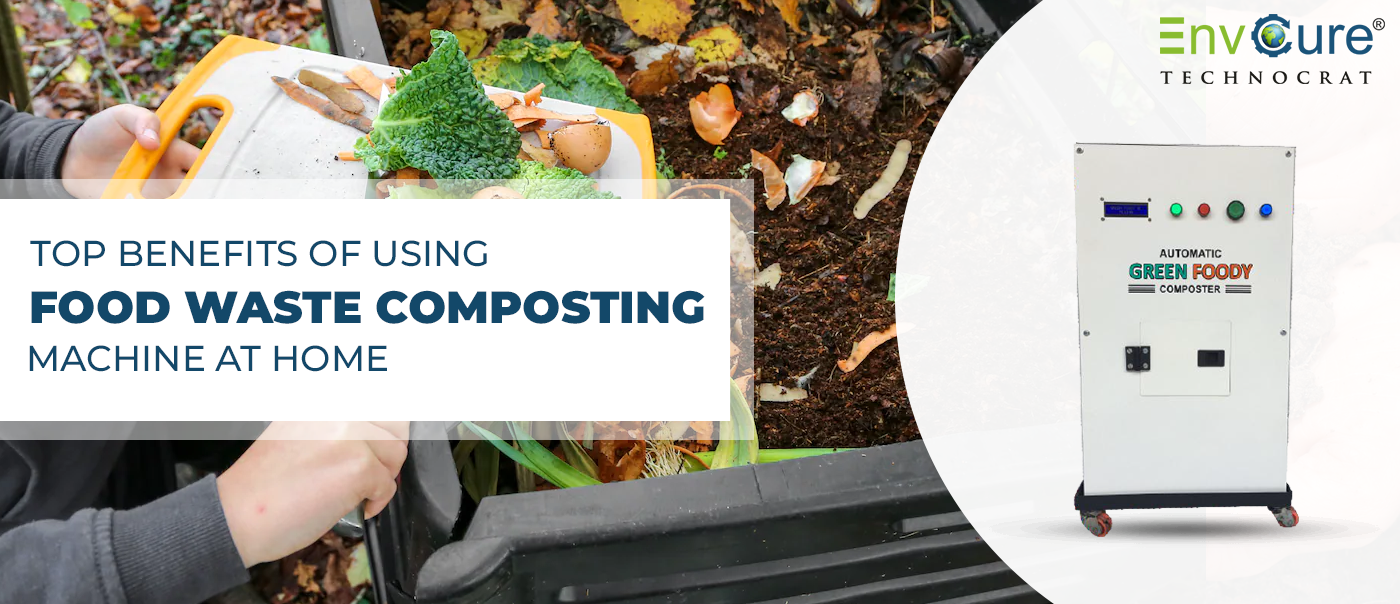
TOP BENEFITS OF USING FOOD WASTE COMPOSTING MACHINE AT HOME

Food Waste Composting Machine

Composting is the process of breaking down and recycling biodegradable waste material into compost which is very useful. However, natural composting takes a long time. It also invites microbes and bacteria.

Food Waste Composting Machine for Home

People started using technology to fasten the process in a very organized and clean way. Today, food waste composting machine is used in commercial spaces. These machines are now being installed at home as well. Having an organic waste machine at home has many advantages. Some of them are listed below:

1. Natural pesticide

We use chemical pesticides to grow a kitchen garden and sow plants on farms. Unfortunately, these chemicals do not have a positive impact on the yield. This is the reason we are paying extra for chemical-free food products. A food wastage composting machine can help create natural pesticides for your plants.

2. Sustainability

A waste composting fertilizer enables you to contribute to the green environment. You also eliminate carbon dioxide emissions from the environment by reducing waste. In addition, you can keep your home sanitized by recycling the trash at a faster pace.

3. Clean home

Different food products compost at different paces. Again, different types of waste give out different dour. Meat, bones, and various dairy products take more time to decompose. Waste composting fertilizer is a great way to escalate decomposition. It can help you eliminate the unpleasant smell generated by slow decomposition. Along with nourished plants, you can also maintain a clean home.

4. Cost efficiency

Food waste collection and recycling without many machines can be tedious and clumsy. You would need a separate space to store and recycle the waste. This space will be occupied for a long time, and you might waste money or purchase chemicals for decomposition and odor removal. Food wastage composting machine comes with a low operating cost and less space. It can be installed in a tiny area. It is a one-time investment and can be a very cost-effective option in the long run. If your budget is meager or you do not want this long-term, you can hire it for a specific period.

5. Safe compost

The natural composting process keeps on adding microbes and bacteria. Handling the waste after complete decomposition can be a monumental task. The food wastage composting machine has a pasteurization process. This process ensures that the harmful microbes from the compost make it safe for handling. There are different features for safety. The machine stops without any spillage or malfunction in case of an overload. You can not only decompose the material but also handle it alone without help.

6. Easy operation

The composting machine is automatic, and all the processes take place on their own. You can set the time of composting and stay relaxed. The mixing blades inside the machine automatically stop opening the removal door. So, you need to put the food waste and start the machine.

A food waste composting machine can be said to be a breakthrough in composting. It is an environment-friendly technology that can be used for residential and commercial use. We are one of the leading waste composting machine manufacturers. You can find affordable and quality machines with use. Our experts will review your requirements and analyze your problems to suggest the best solution. Contact us to get cheap food waste composting machine suitable for residential use.

Frequently Asked Questions:

Q.1. How does a compost machine work?

A. A composting machine has an inbuilt shredder, mixing blades, heating chamber, and other units that efficiently shred and trim the mix, making it ready for composting. In addition, heat and other inputs are provided to escalate the composting process.

Q.2. What are some don’t of using a food waste composting machine?

A. You should always segregate the waste and process only biodegradable waste in the compost machine. Carefully remove glass, metals, and other materials from the input feed.

Q.3. How can we get the compost machine installed at our home?

A. You can contact us. Our professionals will collect the requirement and other details such as compost machine installation size and purpose. The experts will visit your space and install the machine. You will be given a demo of the device. Contact us today to get more details.

Different Ways to Compost Food Waste in Hotels

Different Ways to Compost Food Waste in Hotels

What is Hotel Food Waste?

When people think of waste, they often think of garbage. Meanwhile, hotel food waste often referred to as kitchen waste, refers to food that hotels and restaurants discard. However, in many hotels, the food is not discarded. Instead, it is left in a bin and is not utilized.

Food waste is a big problem in the hospitality industry. Every day, hotels discard enormous amounts of food you could use to feed people in need. Unfortunately, this wasted food often ends up in landfills, emitting greenhouse gasses and contributing to climate change.

How to reduce hotel food waste?

Restaurant food handling and consumption activities are bound to generate alarming amounts of food waste. However, even though food waste reduces restaurant profitability, there is a slew of other issues to be concerned about. Such difficulties include offensive odors in restaurants and the production of greenhouse gasses.

  • Organize food according to expiry dates

The easiest way to reduce your hotel food waste is to check the expiration date on your leftovers and only keep food items that are still good.

  • Give any leftovers to a local charity

If you have any leftover food from your event, please consider donating it to a local charity. Many organizations would be happy to receive your donations, which would be a great way to help those in need.

  • Practicing composting of food waste

The best alternative to eliminate food waste is to compost your leftovers. Composting is a simple and effective way to reduce food waste in your hotel. All you have to do is to put your bits in a pile and let them decompose. The breakdown of food waste is a natural process in the soil. Therefore, you can easily use this compost in the landscape of the hotel or restaurant. The article further discusses composting in detail.

Tips for composting Food Waste

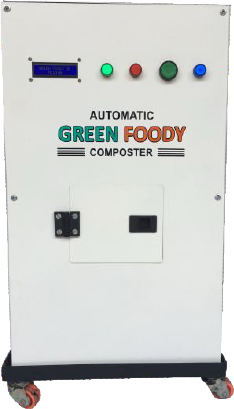
Automatic Green Foody Compost

Let’s get started on how to compost hotel food waste, which will help determine the type of material that goes into the compost pile and the approximate cost of the compost. Gather the Materials. These could include Kitchen scraps, food waste, and Coffee grounds. Other organic materials. Composting can be done in several different ways. These include:

  • Using an organic matter digester to break down kitchen waste
  • Using an enzymatic digestion process to break down hotel food waste
  • Using a bio-digester to break the waste
  • Using a combination of these processes to break down food waste

Things to ensure while collecting food waste and composting:

Collecting food waste and composting is pretty simple to do actually; all you have to do is take care of these essential tips:

1. Sort and Prepare Food Properly: All types of food waste should be sorted into different piles according to type.

2. Keep Food Waste Cool: Do not put food waste in the compost pile if it is too warm. This slows down the process of composting and reduces the quality of the compost.

3. Add Fresh Vegetables: Fresh vegetables help maintain the compost quality and add nutrients to the soil.

4. Do Not Overdose on Nitrogen: Too much nitrogen in the compost will make it acidic and unpleasant to handle. Add only about 1/4 of a nitrogen-based fertilizer per 1,000 square feet of composting area.

You have to be also mindful of the timings; it takes at least some months to get a final compost that can be used as a fertilizer. A lot of things have to be taken care of when it comes to naturally compost. For beginners, it’s advised that you try organic or food waste composter machines. The further article discusses the food waste composting machine and the advantages of using it.

What is a food waste composting machine?

The food waste composting machine is a practical device that converts waste into manure in a shorter time compared to the domestic methods. This machine recycles all types of garbage into compost that may apply in various ways. The waste composter machine is one of the most commonly used machines for producing fertilizers from organic waste for hotels.

You can then use the food waste composting machine to mix it up and finish composting. It generates food waste; you can easily break down this organic material into high-quality compost. Organic waste composters naturally convert biodegradable waste or food waste into compost with the help of bacteria. Contact us to select a wide range of Compost Machines from one of the leading food waste composting machine manufacturers.

Benefits of using a composting machine for food waste:

Using a machine to compost organically has a lot of advantages for the environment and economy, which are listed below:

  • Compost preparation takes less time because of the composting machine’s accelerated composting process.
  • You can manage garbage effectively and cut transportation expenses with the aid of this equipment.
  • Using this machine to compost can help keep insects and rodents at bay.

Conclusion

In conclusion, composting hotel food waste is the best way to eliminate food leftovers in hotels. Therefore, hotel staff should start composting today to reduce food waste going to landfills, which will help reduce environmental pollution.

Frequently Asked Questions:

Q.1. What is the difference between compost and fertilizer?

Ans. Compost is a mixture of organic material and fertilizer. Fertilizer is a mixture of chemical fertilizer and organic material. Composting is a natural way to break down organic material used as fertilizer.

Q.2. What organic waste do I need to put in the composter machine?

Ans. You can put wet organic waste like fruit peels, vegetable peels, eggshells, and coffee grounds into the composter machine. You can also put dry organic waste like coffee grounds, tea leaves, grass clippings, and paper in the composter machine.

Q.3. How often should I turn my pile?

Ans. The frequency of turning depends on the size of your pile and your location. For example, you might need to turn your bank weekly if you live in a hot climate. If you live in a cold climate.

Q.4. What type of composting method should I use?

A. If you’re part of a hotel or restaurant, it’s advisable to try food waste composting machines instead of traditional composting methods. Food waste composting machines are more efficient than conventional composting methods.

Q.5. How long will the composting process take?

Ans. The composting process takes about 4 to 6 months to complete. During this time, you will need to turn your pile every week or so. If you do not turn your stack, it will begin to smell. However, if you turn your pile too often, it will become too dry and will not compost properly. Therefore, it will help if you turn your pile once or twice a week.

Q.6. How do I know if my compost is finished?

Ans. When your compost turns into brown, thick, earthy-smelling dirt, it’s ready to use as fertilizer. 

Q.7. When is the best time to turn my compost?

Ans. The best time to turn your compost is when it is dry. When you turn your compost, you will need to add water to keep it moist. If you turn your compost too often, it will dry out, and your compost will not be as adequate. You should turn your compost every week.

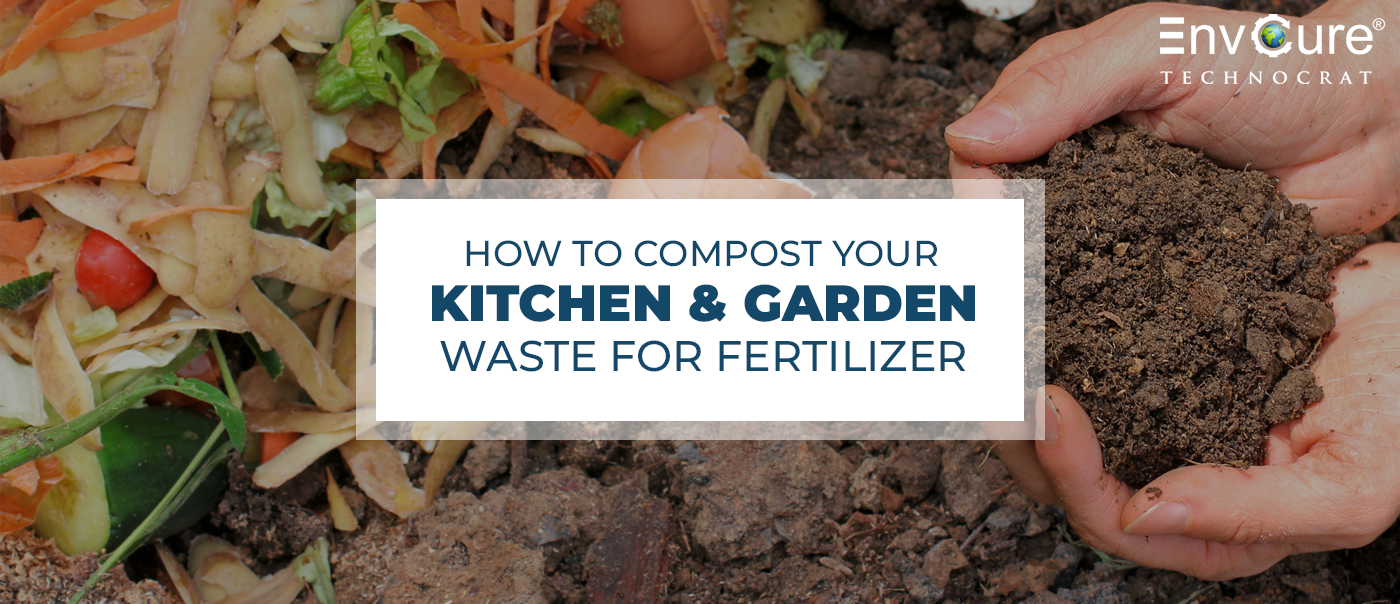
How to Compost your Kitchen and Garden Waste for Fertilizer?

How to Compost your Kitchen and Garden Waste for Fertilizer

The serious threat of accumulating wet waste

In major cities across the world, most of the waste produced is organic or biodegradable waste. This waste needs to be properly managed to avoid polluting our soil and water and to ensure this, it should be collected and disposed of properly. The most common methods of managing wet waste are through landfill disposal or, in some cases, wet waste management plants.

It is illogical to dump wet waste into landfills when it can be treated at home or in the backyard. Whereas these same wet waste generated can be used to make compost for gardens and farms. The compost created improves the quality of soil and helps it in retaining moisture and reduces the waste volume handed over to the government, which is already a huge amount of 1.50 lakh metric tons daily just in India.

Composting helps productively dispose of wet waste, and also provides the opportunity for societies to generate extra income by the sale of compost fertilizer. This compost for gardens and farms can be used as a fertilizer.

Why use food waste as fertilizers?

Waste generated in the kitchen contains organic nutrients that can be used to make compost. By using leftovers and other food scraps, you can turn those stinky kitchen waste items into a highly organic, nutrient-rich product that can be used to grow vegetables or flowers. Before throwing away kitchen waste, be sure to determine if the kitchen waste can go into compost or can be converted into liquid fertilizer.

Composting kitchen waste provides many benefits, including the elimination of unwanted waste and the ability to use fertilizer on your lawn. Composting organic waste is a great way to prevent it from ending up in landfills and releasing methane, a much more potent greenhouse gas than carbon dioxide gas.

To make a nutrient-dense fertilizer, you’ll need to add some natural waste, such as grass clippings and lawn leaves, to your compost. You now know the basics of using kitchen waste as a garden fertilizer, but to become a true expert, check out the following article which covers composting in detail.

What is composting?

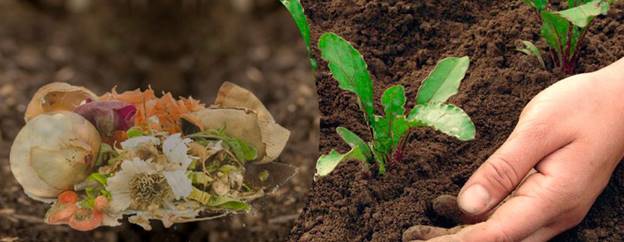
Composting is a biological process in which naturally occurring microbes, bacteria and insects break down organic material such as leaves, grass clippings, and some kitchen waste into a soil-like product called compost. In this food waste and other matter go through a decomposition process and form an organic material called humus, a kind of soil improver or fertilizer. By composting, you can recycle your organic materials and turn them into valuable soil amendments.

The end product of composting is nutrient-rich soil that can be used to grow crops, garden plants, and trees. The resulting decomposed material, which often looks like fertile garden soil, is called compost. In composting, food waste and other matter go through a decomposition process and form an organic material called humus, a kind of soil improver or fertilizer. 

Composting, known as “black gold,” is a natural process that occurs when water is mixed with brown materials (such as fallen leaves, twigs, and twigs) and green materials (such as grass clippings and fruit and vegetable clippings). Brown material provides carbon for composting, green material provides nitrogen, and water provides moisture to help break down organic matter.

Can you make compost at home?

Yes, compost can be easily prepared at home. Kitchen waste contains essential organic nutrients that can be used to make liquid fertilizer or compost. Food waste is made up of organic matter that can be composted to make fertilizer. The compost fertilizer can be easily produced by using the segregated wet waste at home itself.

Compost bins can be easily bought, but you can also easily make compost bins out of barbed wire, cinder blocks, bricks, and even scrap wood. You can buy a compost bin or make your own, be sure to include a removable lid so you can add more compostable material as you accumulate. If you don’t have space for outdoor composting, you can compost material indoors using a special type of litter box or use an organic waste composting machine.

Easiest DIY way of composting at home:

To compost at home, you will need a container, some organic matter, and water. The container can be anything from a traditional compost bin to a simple pile in your backyard. The organic matter can be fruits, vegetables, grains, coffee filters, eggshells, or any other organic material. Be sure to mix in some soil or compost to provide the necessary microbes for composting. And finally, water the compost regularly to keep it moist. One of the key rules is adding three parts brown waste to one part green waste

  • Pick a medium-sized earthen or plastic container and drill 5-6 holes on the edges (more if the container is bigger).
  • Place newspapers and cardboard under the container to contain any leaks.
  • Line the edges of the container with soil or shredded newspaper.
  • Start adding alternate layers of green waste and brown waste. Add some materials like buttermilk or cow dung to accelerate this process.
  • When your compost turns into brown, thick, and earthy-smelling dirt, it’s ready to use as a fertilizer.

This process usually takes a long time, instead, you can try other alternatives such as food waste composting machine.

What is an organic waste composting machine?

The organic waste composting machine is a practical device that converts waste into manure in a shorter time as compared to the domestic methods. This machine is used to recycle all kinds of waste and turn it into compost that can be used in many different ways. The waste composter machine is one of the most commonly used machines for the production of fertilizers from organic waste.

You can use the organic waste composting machine to ensure the quality of the organic fertilizer. You can then use the organic waste recycling machine to mix it up and finish composting. It generates food waste, this organic material can be easily broken down into high-quality compost. Organic waste composters naturally convert biodegradable waste or food waste into compost with the help of hemophilic and thermophile bacteria.

Advantages of using an organic waste composting machine?

There are several environmental and economic benefits of using a machine to compost organically, some of which are as follows:

  • The composting machine accelerates the composting process, thus decreasing the time required to prepare the compost.
  • These machines can help you manage waste efficiently and reduce transportation costs.
  • Composting can be sold to a local farmer which is cheaper and better than chemical fertilizer.
  • Composting through this machine will help reduce rodents and insects.

The Don’ts of composting at home:

  • The remains of meat, fish, fat, and oil should not be added to the compost heap outdoors.   
  • Avoid pet waste as it contains harmful pathogens that can attract animals to your compost.
  • Try to put the waste in small particles and avoid big chunks.
  • Do not use the compost bin as a dustbin and randomly put the waste.
  • Avoid putting non-biodegradable waste in the container.

Now is the perfect time to get an organic waste composting machine. Composting is the perfect way to reduce your kitchen waste and get healthy soil for your garden at the same time. Try it!

Frequently Asked Questions:

Q.1. How do I start composting?

A. Start by collecting organic waste in a container and place it in an area where it will get sunlight and air circulation. You can also buy an organic composter machine to make this process easier for you. Once your compost has been generated, use it as fertilizer on your plants or flowers, or even sell it!

Q.2. What type of composter should I buy for my kitchen?

A. Envcure is one of the leading organic waste composting machine manufacturers and service providers in waste management activities based in Gujarat, India. Check out the different types of composters at envcure.

Q.3. How do I know if my compost is finished?

A. When your compost turns into a brown, thick, and earthy-smelling dirt, it’s ready to use as a fertilizer.