




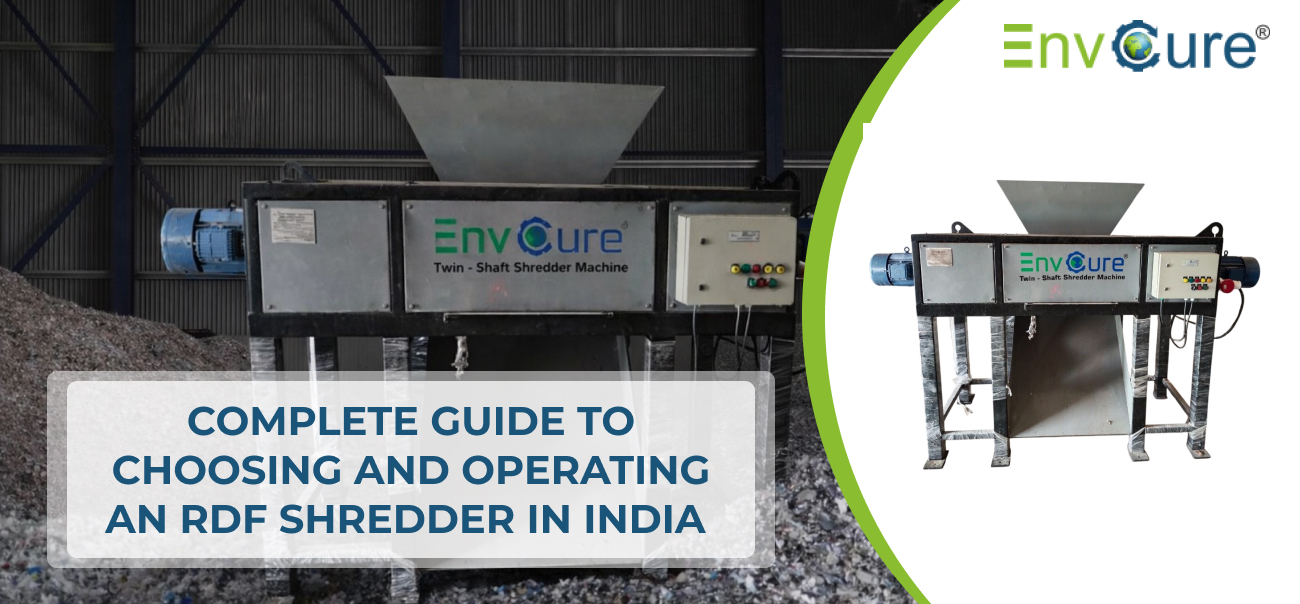

Transition from open landfills to Refuse Derived Fuel (RDF) is one of the biggest shifts in India’s waste management landscape. With tighter regulations for municipalities and industries alike, non-recyclable waste has never been more important to convert into energy. Central to this transformation is the RDF Shredder, a robust machine that turns raw, mixed waste into uniform, high-calorific fuel.
This guide describes the engineering behind these machines, the types available and how to select the right industrial shredder machine manufacturer for your project.
Overview: RDF Shredder Selection & Operation Guide
- RDF Shredder machines process municipal solid waste (MSW) into Refuse Derived Fuel (RDF), an alternative energy source for cement kilns and power plants.
- The industry standard here is the twin shaft shredder, which has high torque and can handle plastic, rubber and textiles without jamming.
- Specialised industrial waste shredder benefits include volume reduction, homogeneous particle sizes for combustion and considerable landfill diversion.
- Buyers should consider blade durability, motor efficiency and local technical support when choosing a shredder machine manufacturer in India like EnvCure Technocrat LLP.
Understanding RDF: The “Hub” of Waste-to-Energy
Refuse Derived Fuel (RDF) is more than “burnt trash.” It’s a specially engineered fuel product made from combustible components of Municipal Solid Waste (MSW) such as plastics, paper, cardboard and textiles that can not be recycled.
RDF must meet moisture content, calorific value and most importantly, size standards to be used in cement kilns or waste-to-energy power plants. A cement kiln can not take a whole mattress or a pack of plastic sheets; Usually, 50-80mm uniform pieces are needed for complete combustion. And here the RDF shredder machine really shines! This becomes the principal process unit for separating bulky/heterogeneous waste into a stream of fuel.
The Engineering Choice: Single vs. Twin Shaft Technology
Though different technologies exist, the twin shaft shredder is the most preferred for RDF applications in India. A single shaft shredder uses high speed and a screening screen to size material. Although effective for clean wood or plastic, it is unsuitable for wet, abrasive and mixed Indian MSW.
Industrial twin shaft shredders work on a different principle: low speed, high torque. Two counter-rotating shafts with hooked blades shear and tear through materials.
- Jam Resistance: If a hard object gets in, the machine can reverse and try again, protecting the drive train.
- Versatility: This design can handle soft textiles to hard plastics without a screen change.
Any facility processing legacy waste or fresh MSW should use a twin-shaft shredder.
Different Waste Types Handled by RDF Shredders
An RDF Shredder does not exist by itself. It is sometimes part of a larger system of waste processing. Understanding what materials make up the “spokes” of the machine helps configure the machine correctly.

1. Municipal Solid Waste (MSW)
The main feedstock for RDF is MSW. A dedicated municipal solid waste shredder must be tough enough to handle the unpredictable city garbage that contains glass, stones and wet organics. Volume reduction and separation shredding open waste bags so downstream trommels can separate the organic fines (for compost) from the combustible RDF fraction.
2. Plastic Waste Management
The most valuable RDF component is high-calorific plastic. A specialized plastic shredder machine or Plastic bottle shredder machine can be added to the line to pre-process PET and HDPE before they are mixed into the fuel fluff. This ensures a uniform burn temperature of the final fuel.
3. Industrial and Rubber Waste
Beyond MSW, some RDF plants accept industrial scrap as calorific value addition. A Rubber shredder can process tyres and conveyor belts – tough to cut but extremely energy-efficient materials. A tough industrial waste shredder reduces these tough materials to chips that prevent blockages.
Confused about whether modern composting technology or conventional methods better suit your operational needs? Read on: Organic Waste Composter vs. Traditional Composting – Which Is Right for Your Facility?
Selection Guide: How to Choose a Manufacturer
The right machine is less about specifications in a brochure but about the reliability of the partner. It is a competitive market, but finding a reputable shredder machine manufacturer in India requires due diligence.
Blade Metallurgy
The blades are the heart of any Shredder Machine. Ask potential suppliers about the metallurgy of their cutters. Find out the metallurgy of potential suppliers ‘cutters. For RDF, normal steel will dull in days. You need hardened alloys that will stand the roughness of Indian waste, which contains sand and grit.
Motor and Gearbox Efficiency
One industrial shredder runs continuously. Unproductive motors can destroy your margins. Look for industrial shredder manufacturers using premium, high-efficiency motors and planetary gearboxes that produce the required torque with minimum energy waste.
Service and Spare Parts
A municipal waste shredder machine will need maintenance someday. Your plant closes if your manufacturer uses imported parts that take 6 weeks to arrive. Finding a local shredder machine manufacturer means spare blades, shafts and technical support are available by phone only.
Also read our blog on: 10 Qualities of a Reliable Shredder Machine Manufacturer
Operational Best Practices
Follow these operational “golden rules”:
- Input Control: While a heavy-duty industrial shredder machine manufacturer may design for toughness, feeding large metal chunks like engine blocks will damage the machine. Ensure some manual or magnetic sorting happens before the shredder.
- Regular Blade Rotation: The leading edge of shredder blades wears down. Some designs even rotate the blades to a new edge effectively doubling their life before needing re-tipping or replacement.
- Monitor Throughput: The drop in tons per hour usually indicates dull blades or belt slippage. Regular monitoring stops minor issues from becoming major failures.
Partnering with EnvCure Technocrat LLP for Sustainable Solutions
The move from Burning Fuel to Refuse Derived Fuel requires machinery that combines brute force with precision engineering. The right RDF Shredder is the engine that turns mixed waste into an efficient energy resource. When it comes to handling legacy waste piles or setting up a new MSW processing line, the difference between success and stagnation is usually all about the industrial twin shaft shredders and support equipment you are using.
At EnvCure Technocrat LLP, we engineer solutions for India’s toughest waste challenges. Backed by 2500+ successful installations, our engineering team delivers MSW, plastic, and rubber shredders built for heavy-duty performance/ From a large municipal solid waste shredder to plastic and rubber processing units, we build equipment that lasts. Ready for optimising your waste-to-energy project? Partner with EnvCure Technocrat LLP. Call today to discuss your specific shredding requirements and let us build the infrastructure your project needs.
FAQs Related to Organic Waste Composter
Q. How do I choose the right RDF shredder manufacturer in India?
Ans.To choose a reliable manufacturer, prioritize those offering local after-sales support, customized blade metallurgy for Indian mixed waste, and proven machine throughput via a live material demo.
Q. Which type of shredder is best for RDF production in India?
Ans. Dual-shaft shredders are ideal for India’s diverse waste streams. They provide high torque and adjustable screen sizes to meet the 50mm-100mm particle size requirements for cement kilns.
Q. How can I reduce maintenance costs for an RDF shredder?
Ans.Reduce costs by implementing an automatic lubrication system, regularly sharpening blades before they dull, and using a magnetic separator upstream to prevent non-shreddable metal from damaging the cutters.
Q. What Indian safety standards apply to industrial RDF shredders?
Ans. Shredders should comply with SWM Rules 2016 for waste processing and feature safety interlocks, emergency stop buttons, and dust suppression systems to protect operators from hazards and air pollution.