



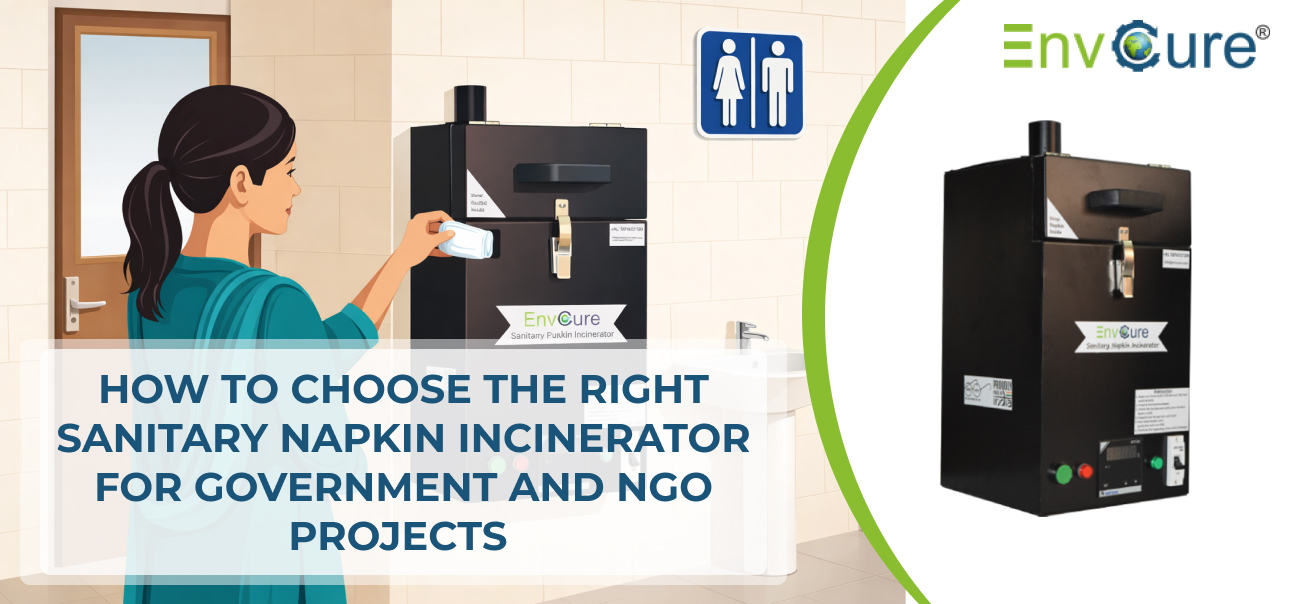

The success of any sanitation drive, whether it’s Swachh Bharat Abhiyan or a focused NGO initiative for menstrual hygiene, depends not just on distribution but on disposal. For government bodies and NGOs, picking the right Sanitary Napkin Incinerator is an important infrastructure decision. Choosing poorly can mean high energy bills, health hazards, or unused machines with high operational complexity. This guide details technical specifications, safety parameters and government compliance standards you must consider when selecting a sanitary napkin incinerator machine that will provide long-term public health benefits.
Overview: Choosing the Right Sanitary Napkin Incinerator
- Sanitary Napkin Incinerator machines provide a hygienic, on-site disposal solution for schools, public restrooms & hostels funded by government or NGO initiatives.
- Important selection parameters are burning capacity (according to user volume), power efficiency and material durability (rust-resistant stainless steel).
- Respecting CPCB guidelines is mandatory. Electric models are generally safer and convert waste to sterile ash without toxic emissions.
- Look for auto-off timers, thermal insulation and correct emission control for public spaces.
- With established manufacturers such as EnvCure Technocrat LLP, you get compliant, durable machines supported by long-term service support.
Learn more about the benefits and working of sanitary napkin incinerators in this detailed guide.
The Challenge of Disposal in Public Projects
In India, millions of sanitary pads are discarded annually. Their improper disposal can block sewage lines or open landfills and cause serious health hazards. Availability of private disposal options in schools and rural centers contributes to high dropout rates in adolescent girls’ studies.
A decentralized, instant disposal is provided by an incinerator machine. Yet in government tenders and NGO projects, the lowest cost is usually more important than functional longevity. For the sustainability of your project, technical diligence is required.
What is a Sanitary Napkin Incinerator?
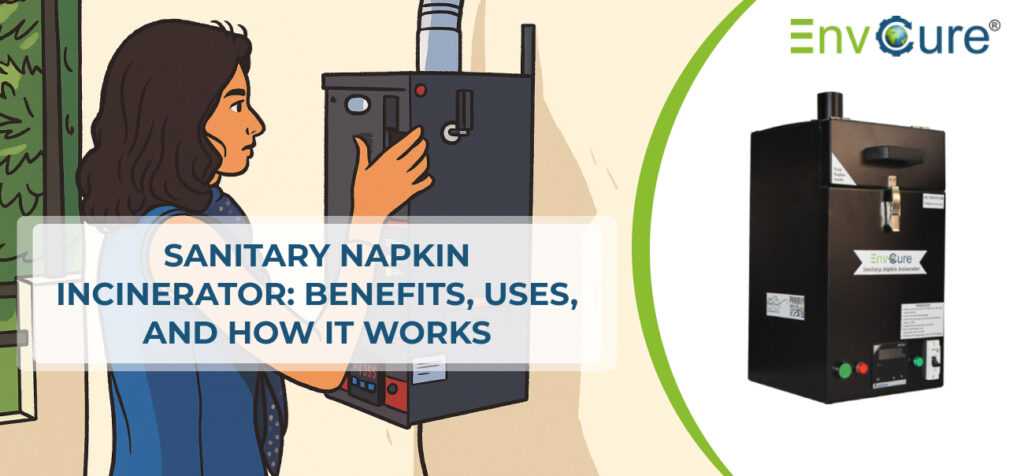
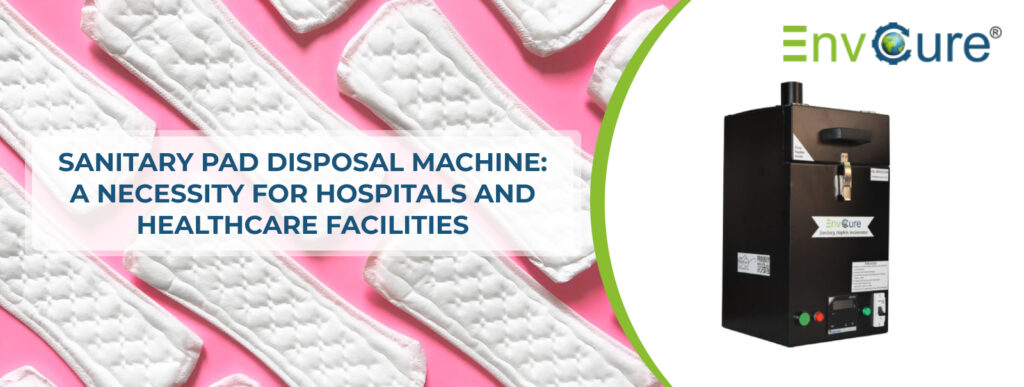
A Sanitary pad incinerator is an electrically operated unit that burns used menstrual absorbents to sterile ash. Unlike open burning, however, a quality sanitary napkin burner burns the fuel inside an insulated chamber with smoke and odors controlled by an exhaust system.
The goal of these incinerators is to reduce waste volume by 98% while avoiding pathogens. For institutional use, they are usually wall-mounted and automatic, with types such as opening a door, placing the napkin inside, and pressing a button.
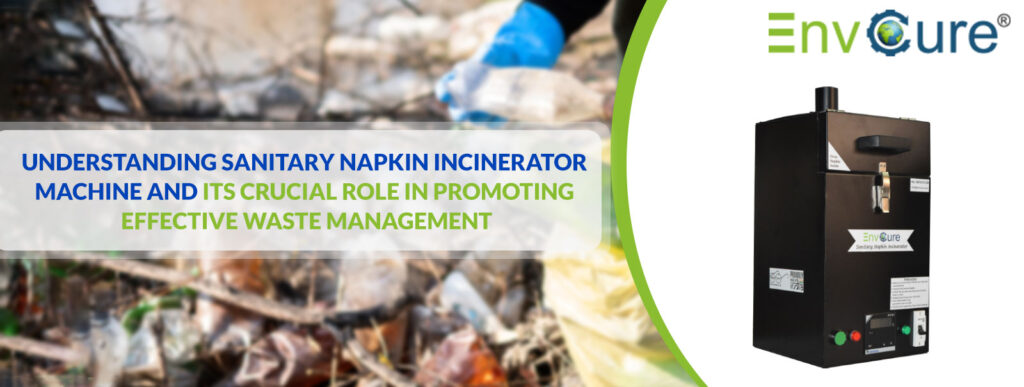
Read this guide on Understanding Sanitary Napkin Incinerator Machine and Its Crucial Role in Promoting Effective Waste Management.
Government Guidelines & NGO Compliance Standards
When purchasing machinery for public welfare, national standards are non-negotiable. Follow the Central Pollution Control Board (CPCB) & Solid Waste Management (SWM) Rules for a legal, safe & sustainable project.
1. Central Pollution Control Board (CPCB) Norms
According to pollution control guidelines for small-scale incinerators:
- Temperature: The primary combustion chamber should reach temperatures sufficient to destroy pathogens and superabsorbent polymers (typically above 800 °C for good combustion).
- Emission Control: The machine should have an exhaust system (chimney/flue) for venting gases outside the building, preferably 2 meters above the roof level to prevent smoke accumulation in the user area.
- Residue Management: Resting ash must be sterile and safe for disposal in municipal bins.
2. Solid Waste Management Rules (2016)
Under these rules, sanitary waste is classified as “Domestic Hazardous Waste.”
- Segregation: This prohibits mixing sanitary waste with wet or dry waste.
- Decentralised Disposal: These rules encourage on-site disposal methods like incinerators for bulk generators like hostels and schools to reduce landfill use.
3. Menstrual Hygiene Management (MHM) Guidelines
The Ministry of Drinking Water and Sanitation recommends:
- Safety First: Electric incinerators are preferred in schools over low-cost brick/wood burners to prevent accidental burns and poisonous fumes.
- Privacy: Installation should always be inside the toilet block or a private area adjacent to it to encourage use without embarrassment.
Project Tip: When drafting your RFP (Request for Proposal), ask vendors to provide a “Compliance Certificate” stating that their Sanitary napkin incinerator machine meets these emission and safety norms.
This blog explains The Importance of Installing Sanitary Napkin Incinerator Machines in Public Places, Schools, and Universities.
Critical Selection Criteria for Institutional Buyers
Focusing on these four areas when drafting a tender or purchasing for a large-scale project will ensure you select a machine that can withstand public use.
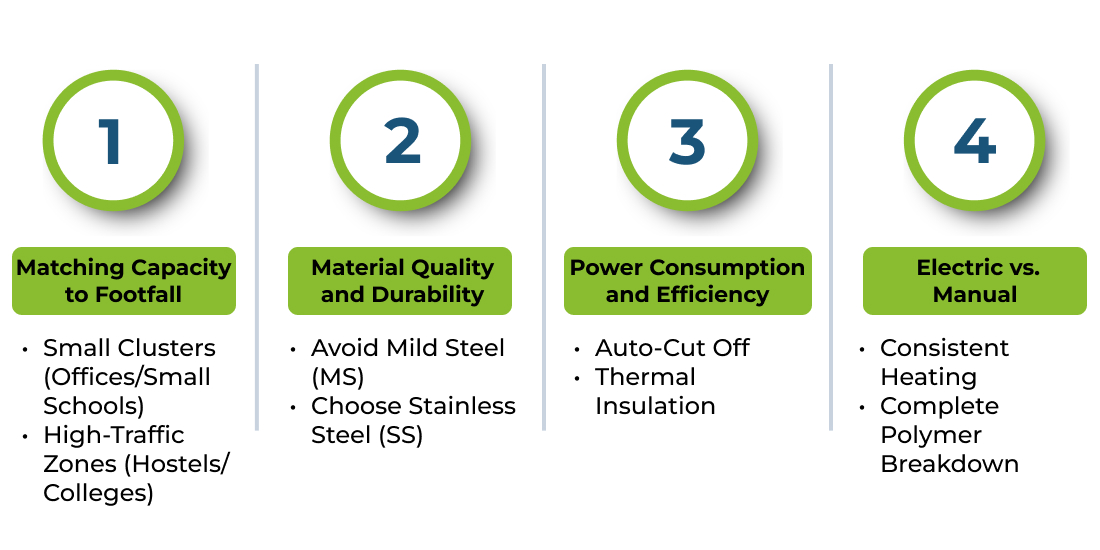
1. Matching Capacity to Footfall
One of the most common mistakes is choosing a low-capacity machine in a high-traffic area. Incinerators are classified by their “burning capacity” per cycle.
- Small Clusters (Offices/Small Schools): Locations without more than 50 users will need a basic Electric Incinerator such as the EnvCure ECI 01 (burning 1-3 napkins per cycle).
- High-Traffic Zones (Hostels/Colleges): For hostels or public washrooms, you need a Sanitary napkin incinerator for schools that can take peak loads. Machines like the EnvCure ECI 15, which burn 15-20 napkins at a time, prevent queues and overheating.
Pro-Tip: Always calculate the peak hour load. A tiny single-napkin burner will fail if 50 girls need to use the machine during a 15-minute recess.
2. Material Quality and Durability
Public amenities are subject to rough use and humidity. The lifespan of your Sanitary napkin incinerator machine is directly related to the building material.
- Avoid Mild Steel (MS): MS bodies are cheaper, but rust quickly in damp toilet environments.
- Choose Stainless Steel (SS): Government projects need to specify SS 304 grade. It is corrosion-resistant. Ensure the exhaust piping is also made of durable material, such as SS corrugated pipes, instead of cheap plastic hoses.
3. Power Consumption and Efficiency
Operational cost is a major issue for NGOs and government schools. Any designed Sanitary Napkin Incinerator should be energy efficient. Look for:
- Auto-Cut Off: The machine should shut off after burning is complete.
- Thermal Insulation: High-density ceramic insulation keeps the heat in the chamber. This stops burning faster & keeps the outer body cool – an important safety feature in schools.
4. Electric vs. Manual
Manual, fuel-based incinerators are easily available in the market, but for institutional projects, an Electric Incinerator is almost always the better choice. Manual burners lack temperature control and produce toxic fumes. Electric models maintain consistent temperatures so plastic liners and polymers completely disintegrate.
Learn more from How Do Sanitary Napkin Disposal Machines Helps Society.
The Maintenance Factor
A project must close the maintenance loop. When selecting a vendor, ask:
- Ash Removal: Is the ashtray accessible and clean?
- Service Network: Do they offer an Annual Maintenance Contract (AMC)?
- Spare Parts: Are heating coils and thermocouples replaceable?
Our Commitment to Hygiene: Partnering with EnvCure Technocrat LLP
We know installing a Sanitary Napkin Incinerator is more than a purchase. It’s an investment in dignity, health and environmental stewardship. The right machine lets women and girls take control of their hygiene without embarrassment or infection.
Here at EnvCure Technocrat LLP, we have designed our “BIJOU” and ECI series incinerators for the Indian public infrastructure needs. Our machines are available in compact units for small offices and heavy-duty Sanitary napkin incinerators for school hostels, all built in SS 304 durability and comply with all regulatory requirements. Ready to install sustainable sanitation? Partner with EnvCure Technocrat LLP. See how our compliant, energy-efficient incinerators are serving thousands of government and NGO projects in India. Contact us today for a technical consultation and ensure your project delivers lasting impact.
FAQs Related to Sanitary Napkin Incinerators:
Q. How do I choose the right capacity for a sanitary napkin incinerator?
A. Choose capacity based on daily pad volume (estimate users × usage rate), peak usage times, and future growth; pick a model with 10-30% extra capacity to avoid frequent overloading.
Q. What are the operating costs and energy requirements?
A. Compare fuel/electricity consumption, maintenance frequency, consumables (e.g., filters), and expected ash disposal costs; calculate total cost of ownership (TCO) over 5–10 years.
Q. Which features are essential for school, hospital, or public-place installations?
A. Look for lockable access, tamper-proof feed, automatic controls, low smoke emissions, easy ash removal, clear maintenance access, and user safety interlocks.