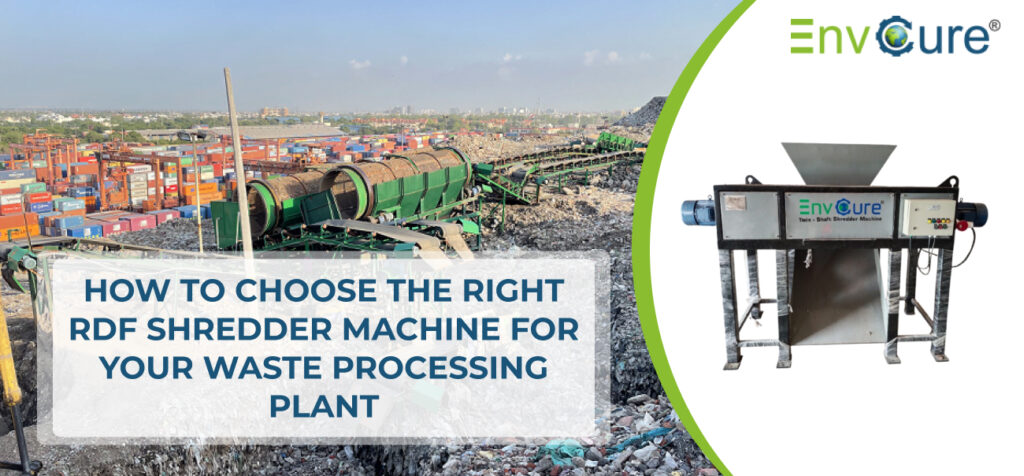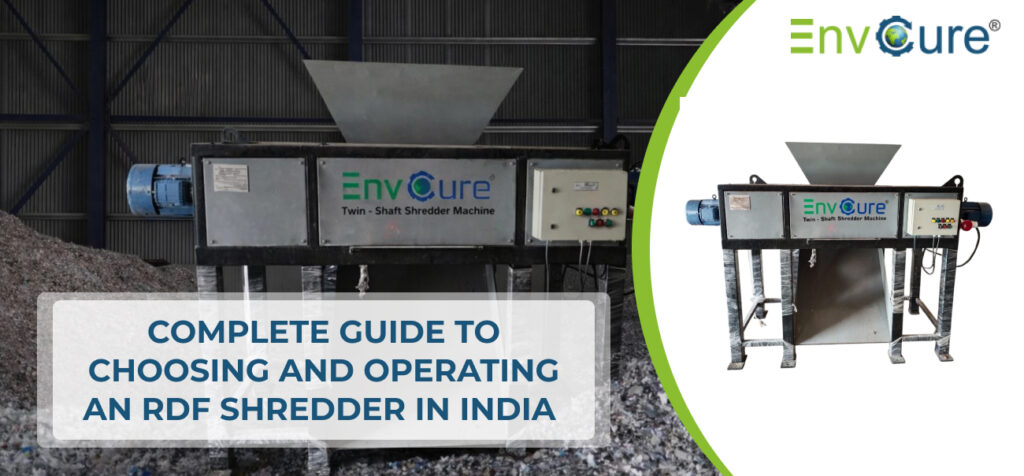





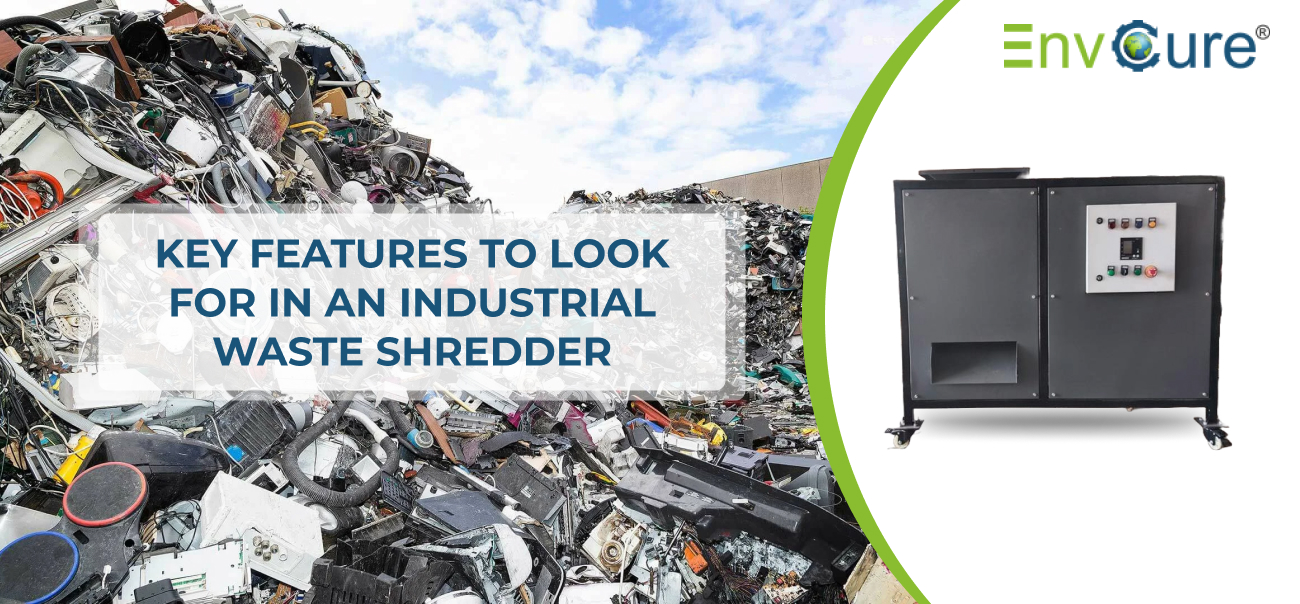

Selecting the right Industrial waste Shredder is an important decision for your Waste management operation. You may be operating a municipal recycling facility or an industrial manufacturing plant – your equipment must handle specific material densities, resist wear and produce consistent output. This guide details the key engineering features from high-torque gearboxes to advanced automation that separate a high-performance machine from a maintenance liability, to help you make an educated investment decision for your facility.
Overview: Industrial Waste Shredder
- Volume Reduction: Shredding can reduce waste volumes by up to 70%, lowering logistics 1and1 landfill costs.
- Resource Recovery: First, primary shredding separates valuable commodities like metals and plastics from more complicated waste streams (e-waste).
- Technology Variants: Twin shaft shredders use slow speeds with high torque for tough material shearing, and single shaft models use screens for particle sizing.
- RDF Production: RDF shredder machines turn combustible waste into Refuse Derived Fuel for cement kilns and power plants.
- Operational Safety: Modern units use PLC controls with auto reverse for jamming prevention and drive train protection.
Planning an RDF setup? Start with the complete guide to choosing and operating an RDF shredder in India.
1. Understanding Industrial Waste Shredder: Single vs. Double Shaft Shredder
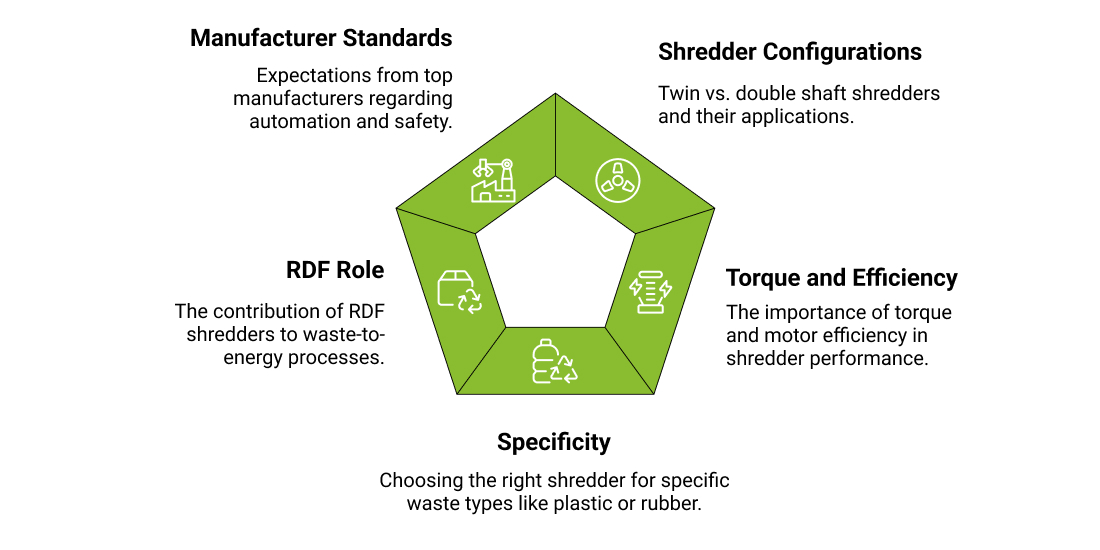
The first technical hurdle when choosing a shaft configuration for an Industrial Waste Shredder is the shaft configuration. It is not a preference. It is a functional requirement depending on the waste stream shearing physics you want to achieve. Single-shaft machines are good for granulation, but the heavy lifting in industrial applications is usually done by multi-shaft machines.
- Single Shaft: Unlike multi-shaft systems, a single-shaft machine usually runs at higher speeds and has a gradation screen under the rotor. It is the best choice if you need a uniform output size, for example, specific chips for plastic moulding or wood boilers. However, because it runs off a screen, it can jam with “shock load” items like heavy metal or contaminated waste.
- Twin Shaft Shredder: The twin shaft shredder is considered the industry workhorse, as it has two counter-rotating shafts interlocked with hooks. This design generates an enormous shear force, which is suitable for bulky, heterogeneous waste that would jam a single-shaft machine. The low speed is supposed to give high torque “to chew through material without generating excessive heat or dust”.
- Why Industrial Twin Shaft Shredders Dominate: Rather than using clog-prone screens for primary shredding, industrial twin shaft shredders are superior. For volume reduction for landfill diversion or material preparation for a secondary fine shredder, this configuration provides the highest throughput with the lowest risk of jamming downtime.
For long-term performance, explore, 10 Qualities of a Reliable Shredder Machine Manufacturer.
2. Why Industrial Shredder Manufacturers Prioritise Torque and Motor Efficiency
An experienced industrial waste shredder machine manufacturer understands that raw horsepower has no torque behind it. Speed is often the enemy of speed in industrial shredding. High-speed machines wear out faster and are prone to catastrophic failure if they come across “unshreddable” items like a solid steel bar in a bale of plastic.
- Gearbox Technology: The heart of any waste shredder machine is its gearbox. Top industrial shredder manufacturers employ planetary or heavy-duty helical gearboxes. These change from the high RPM of the motor to a slow, strong rotation (10-20 RPM). This extra force enables the blades to weld metal and rubber through materials that would otherwise be sheared by a hydraulic shear.
- Electric vs. Hydraulic Drives: Electric motors are standard, but some applications need hydraulic drive systems. A hydraulic drive allows instant reverse without current spikes, protecting the motor. Expert industrial waste shredder manufacturers will analyse your material density and recommend the most energy-efficient drive system so you don’t overpay for electricity but still achieve peak performance.
- Shock Load Resistance: Industrial waste is variable. The drive train must be designed to bear shock loads. In high-end machines, there are fluid couplings / shock-absorbing torque arms separating the gearbox and cutting chamber to prevent the teeth from tearing off during sudden impacts.
Understand the ROI in How a Waste Shredder Machine Cuts Costs and Reduces Landfill Volume before investing.
3. Industrial Waste Shredder Specificity: Choosing a Plastic Shredder Machine or Rubber Shredder
Standard machines rarely give optimised results. Blade metallurgy and cutting chamber design must be adapted to the physical properties of the waste. A Plastic Waste Shredder has different challenges than a tire-specific machine – understanding these nuances is key to long life.
- Optimising the Plastic Shredder Machine: Plastics are tricky; They can melt, wrap about shafts, or shatter. In some specialized Plastic shredder machines, a “pusher ram” is used to force light, floating plastics such as bottles or film into the rotor. In addition, the blades are generally angled sharply to slice rather than crush to prevent heat build-up that melts the plastic and clogs the screen.
- The Durability of a Rubber Waste Shredder Machine: Rubber is rough and elastic. A Rubber waste shredder machine needs blades made of high-chrome alloy steel or heat-treated tool steel to resist friction. So the “hooks” on the blades are designed to grab the rubber more deeply and tear it instead of just scratching the surface.
- Handling Steel Wire in a Rubber Shredder: There are steel beads and belts on tyres. A robust Rubber shredder has tight cutting tolerances (the gap between blades) so that the steel wire can be sheared cleanly. When this gap becomes large enough, it will bend and wrap around the shaft, causing major maintenance headaches.
4. The Role of an RDF Shredder Machine in Waste-to-Energy
This is an expanding sector, and the RDF shredder machine is the critical link in this supply chain. Turning waste into fuel involves more than volume reduction. It needs a uniform particle size for combustion in cement kilns or power plants, which is why an industrial waste shredder plays a vital role in RDF production.
- Precision Sizing with an RDF Shredder: And unlike a primary shredder, an RDF shredder is usually a secondary machine which has to produce a certain output size, 80mm, for example. Such a machine requires a screening system that recirculates oversized material back into the cutting chamber until it meets specifications.
- Handling Contamination: RDF streams are sometimes dirty, containing inert materials like stones or glass. A good quality RDF shredder machine has ballistic separators or easy-access maintenance doors to remove these contaminants before they damage the rotor or the screen.
- High Throughput Requirements: DF plants run 24 x 7. Thus, the waste shredder machine used for this application should have robust cooling systems for the hydraulic unit and gearbox to avoid overheating during continuous operation.
Planning a waste-processing setup? Start with Industrial Shredder Machine: Turning Waste into Valuable Resources.
5. What to Expect from a Top Shredder Machine Manufacturer: Automation and Safety
What separates a budget machine from a premium model from a top industrial waste shredder machine manufacturer is often found in the control panel. Automation isn’t a luxury. This is your main protection against loss of your investment.
- PLC Integration and Auto-Reverse: Modern Shredder Machines require Programmable Logic Controllers (PLC). This system measures the amperage draw from the motor. When the shredder comes across an unbreakable object, the current spikes, and the PLC goes into “Auto-Reverse” mode to clear the jam. That happens in milliseconds, so the shaft does not snap.
- Operator Safety Protocols: A good industrial waste shredder machine manufacturer cares about safety. Seek out machines with interlocked access doors to hoppers (the machine can not run if the door is open), multiple points of emergency stop buttons and noise reduction enclosures insulated from decibel exposure for workers.
- Predictive Maintenance: Advanced industrial twin shaft shredders come with IoT sensors for monitoring bearing temperature and vibration. This data enables maintenance teams to predict failures before they occur and schedule repairs during planned downtime instead of responding to emergency breakdowns.
Conclusion
We know that an industrial waste shredder purchase is an investment that impacts your facility’s operation flow and bottom line. Buying a machine is not enough. It is about investing in capability – to turn waste into value, reduce logistics costs and reach sustainability goals. From the torque of a double shaft shredder to the accuracy of a Plastic Waste Shredder, every feature we reviewed contributes to your operations running smoothly and profitably.
At EnvCure Technocrat LLP, we provide more than industrial waste shredder equipment. We engineer solutions for your waste challenges. So whether you want an extremely robust Rubber waste shredder machine or an extremely large RDF shredder, our team has years of experience building machines that work. To upgrade your waste management strategy with proven, high-performance industrial waste shredder technology, contact EnvCure Technocrat LLP today. Make waste your greatest resource.
FAQs Related to an Industrial Waste Shredder
Q. What is an industrial waste shredder?
A. An industrial waste shredder is a heavy-duty machine that reduces large volumes of waste into smaller, uniform particles for recycling, RDF, or easier disposal.
Q. How do I choose the right shredder capacity (throughput)?
A. Match the shredder’s rated throughput (kg/hr or t/day) to your daily waste volume, allowing headroom for peak loads and future growth.
Q. What shredder types should I consider (single-shaft, dual-shaft, granulator)?
A. Choose based on material and output: dual-shaft for bulky/mixed waste and high torque needs, single-shaft or granulators for uniform fine output and recycling lines.
Q. How do shredders handle contamination (stones, glass, metal)?
A. High-quality units include ballistic separators, tramp metal protection, easy-access maintenance hatches and sacrificial components to protect the rotor and screens.
Q. Can a shredder run 24×7 for an RDF or recycling plant?
A. Yes, but choose industrial models with robust cooling for hydraulics/gearboxes, heavy-duty bearings, and service plans designed for continuous operation.