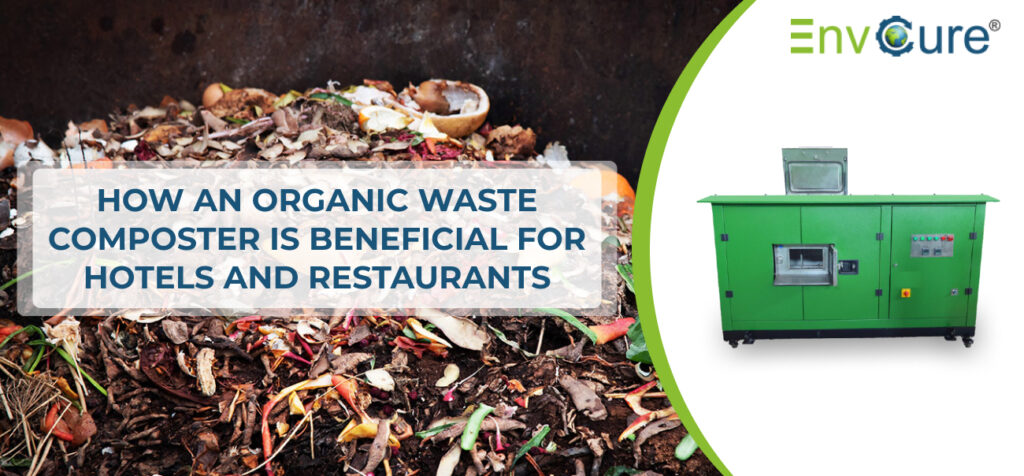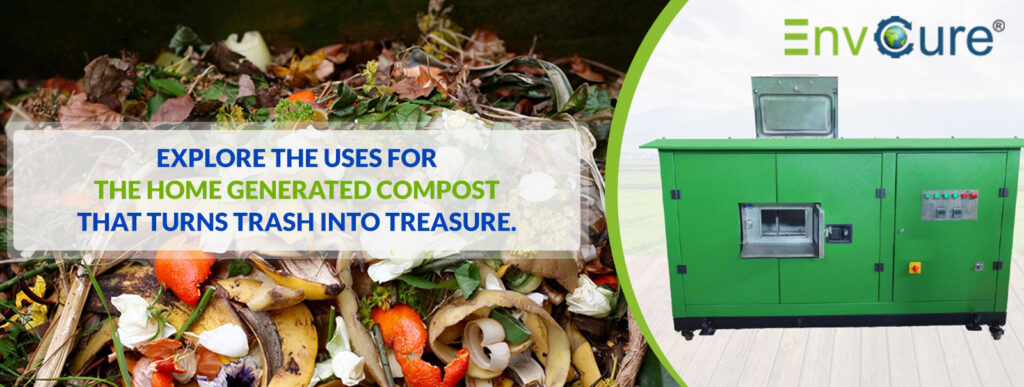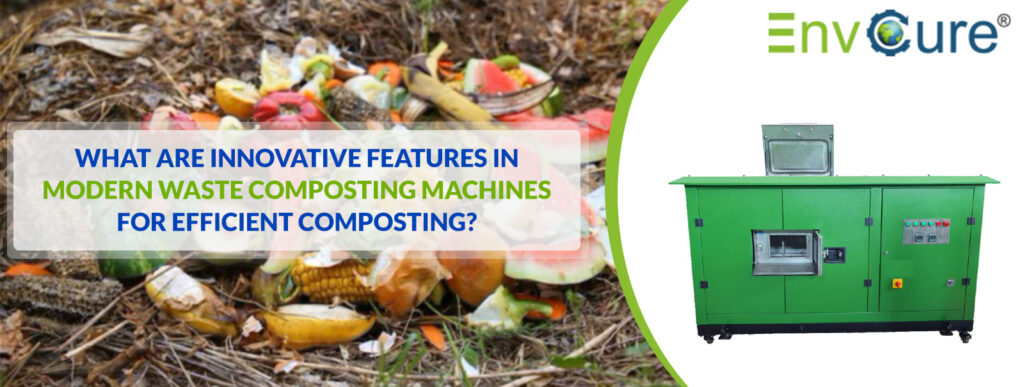





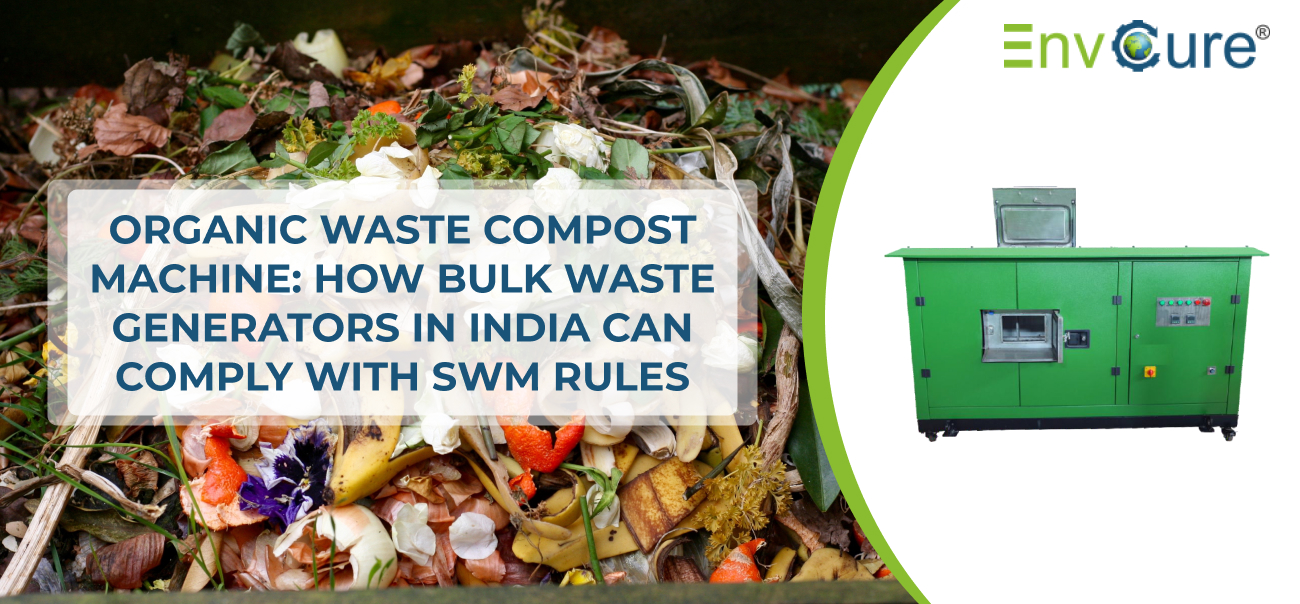

Bulk waste generators such as big hotels, restaurants, hospitals, malls, and apartment complexes shall now have to at least segregate organic waste and treat the same on-site in compliance with the Solid Waste Management (SWM) Rules in India. As per these rules, waste generators must segregate refuse and treat all biodegradable (wet) waste at their premises through composting or bio-methanation. An organic waste compost machine is one of the possible methods: it accepts all kinds of organic waste and turns it into usable manure in a short duration while minimizing disposal volume and cost.
These machines can process waste into compost within 24-48 hours, which cuts down enormously on landfill space and mitigates greenhouse gas emissions. Indeed, cities are now even fining violators-for instance, nine bulk generators were recently fined ₹25,000 each in Gurgaon for violation of the SWM rules.
What is an Organic Waste Compost Machine?
The organic waste composting machine works essentially as a fast in-vessel composter for kitchen and garden wastes into nutrient compost. Using controlled heat and aeration along with microbial action, sealed units produce compost in less than a day or two, unlike a backyard heap that may take weeks to months. Sampling stainless steel, the inside is equipped with shredders and mixers to break the waste into smaller pieces and evenly distribute heat and oxygen.
For instance, EnvCure’s fully-automatic type of composting equipment establishes an optimum environment for decomposition in which microbes complete their job in 24-48 hours, causing an 80-90% reduction by volume of the input waste. The output compost is dry, inoffensive, FCO-compliant, and safe for landscaping or organic farming.
For a more detailed guide on choosing an organic waste machine based on your requirements, read on: Commercial Organic Waste Compost Machine: A Complete Buying Guide
Benefits of the Organic Waste Compost Machine
Using an organic waste compost machine brings multiple benefits to bulk waste generators. Key advantages include:
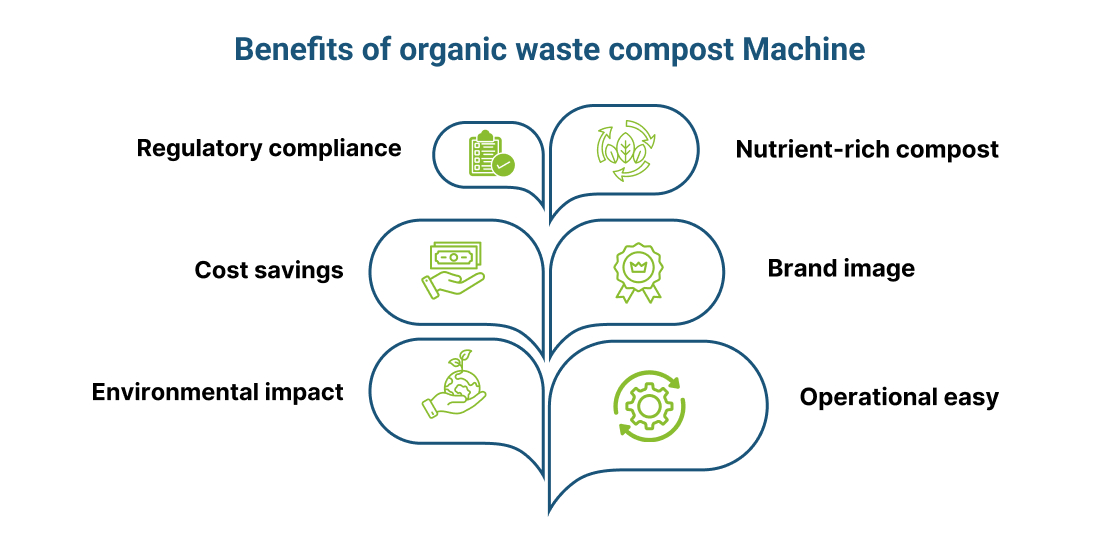
- Regulatory compliance: SWM Rules require wet waste to be processed onsite.
- Cost savings: Saves transportation charges of hauling to landfill sites and may provide for saleable by-products. A review says, “waste hauling bills go down while there is earning potential through compost sales.”
- Environmental impact: Keeps organic waste out of landfills, reducing methane emissions and pollution.
- Nutrient-rich compost: Provides nutrient-rich, pathogen-free compost for garden use. Various studies confirm that the compost output is indeed safe and can be helpful for soils.
- Brand image: Demonstrates sustainability, boosting CSR credentials and public goodwill.
- Operational ease: New-generation composters operate automatically with minimum human intervention. Most systems enable untrained operators to run the units with easy controls.
Implementing onsite composting thus turns waste management into a productive process, rather than an expense.
Types of Organic Waste Compost Machine
EnvCure offers a range of composting solutions tailored to different scales of operation:
- Fully Automatic Organic Waste Composting Machine: The design accommodates large-scale waste generators (hotels, hospitals, institutions). This is an in-vessel system with a touch screen interface and an in-built shredder. Further, it manages aeration of the waste and acts exceedingly fast with odor management; hence, it achieves high throughput (80–90% volume reduction) with minimal human intervention.
- Semi Automatic Organic Waste Composting Machine: Suited for medium-sized establishments (restaurants, office canteens, housing societies). These units run on simpler controls, with fewer parts moving around, thus being a fine energy saver and extremely easy to maintain. They also reduce more waste than usual and require less labor.
- Roto Composter: A rotating drum composter for moderate volume sites such as schools or smaller eating places, or residential setups. This sturdy drum ensures uniform mixing of the waste. This compact type can nicely fill in where space or the budget is a little bit tight.
Each of these serves various needs: for example, an automatic organic waste compost machine might deal with waste processing for several hundred kilos per day, while a roto or a semi-auto might be suited for businesses generating 50–100 kg/day of waste.
Choosing the Right Organic Waste Composting Machine
When selecting an organic waste compost machine, try to match the unit features to your site’s needs. Consider the following important factors:
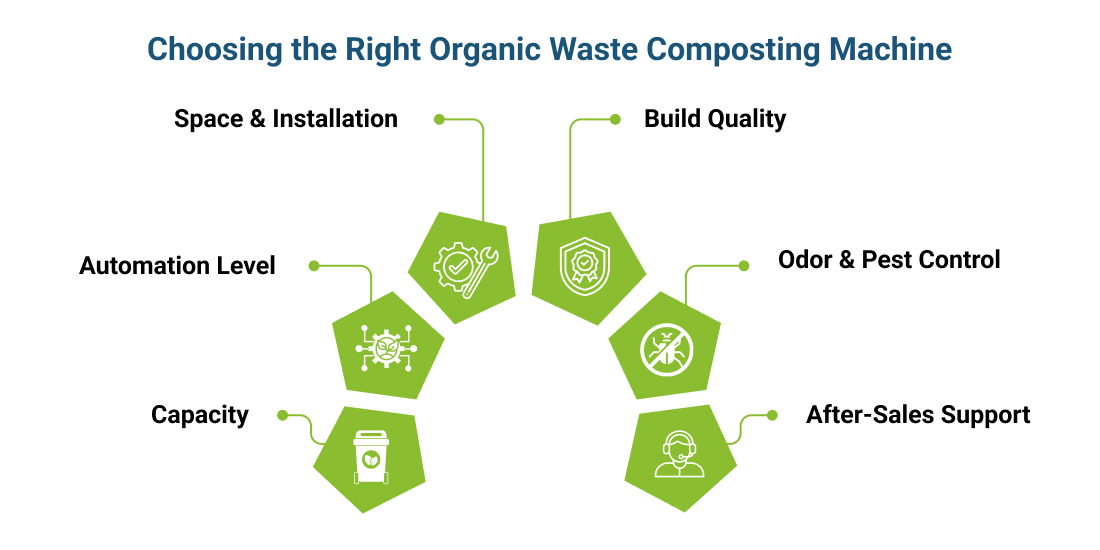
- Capacity: Consider the average daily amount of organic waste you throw away. Choose a machine that can handle that volume (e.g., 50kg/day, 100kg/day, etc.). Trying to run a larger volume through a smaller one can lead to failure; conversely, an oversized machine is a waste of investment.
- Automation Level: Fully-automatic units automatically feed, mix, and discharge a material with less labor on the user’s part, but cost more initially; semi-automatic models are cheaper but require some manual work. Consider how much you want to stay hands-off.
- Space & Installation: Check the machine’s footprint and the space available on your premises. You have to make sure that it has the power line (voltage, phase) and good air circulation.
- Build Quality: Stainless steel construction is standard for durability and better hygiene (as in the better models). Look for rustproof coatings, strong welds, and sturdy motors.
- Odor & Pest Control: Good machines are made air-tight with filters/carbon scrubbers for smells and pests.
- After-Sales Support: Choose a provider that offers reliable service and training. Like EnvCure Technocrat LLP, which carries out site surveys, customizes solutions, and maintains support.
By considering these aspects, you ensure the organic waste compost machine you select will deliver maximum disposal with minimum operations.
Conclusion
In brief, onsite composting is no longer optional in India for the bulk waste producers but a mandatory compliance with financial and environmental payoffs. An automatic organic waste composting machine can turn your kitchen and garden waste into a resource and also keep you legit.
Partnering with an experienced vendor such as EnvCure Technocrat LLP will ensure expert guidance, proper installation, and after-sales support.
Our extensive line of fully- and semi-automatic organic waste compost machine and roto-composters are designed to comply with SWM rules and cater to a wide variety of bulk generators, converting the problem of waste into a sustainable solution.
FAQs Related to Organic Waste Compost Machine:
1. What types of waste can the organic waste compost machine process?
Ans. They handle all common biodegradable refuse, food scraps, vegetable peels, fruit waste, tea leaves, yard waste (leaves, flowers, small trimmings), etc. Anything that would normally go into a kitchen bin can be fed to the composter (except metals, plastics, or glass).
2. How much maintenance do these machines require?
Ans. They are built for minimal upkeep, but some regular tasks are needed. You should remove any inert debris daily (e.g., plastic bits) and periodically clean the inside surfaces. Most suppliers recommend a simple rinse or wipe-down after each batch. Larger units may need an annual check-up of motors and sensors. Choose a model with good after-sales support; EnvCure technicians provide training so your team can handle basic maintenance.
3. How does an organic waste compost machine help meet SWM regulations?
Ans. SWM Rules explicitly state that wet/biodegradable waste must be composted or processed at source. By converting your kitchen and green waste into compost on-site, these machines fulfill that requirement directly. They eliminate the need for hauling wet waste elsewhere, thus keeping you compliant and avoiding fines.