




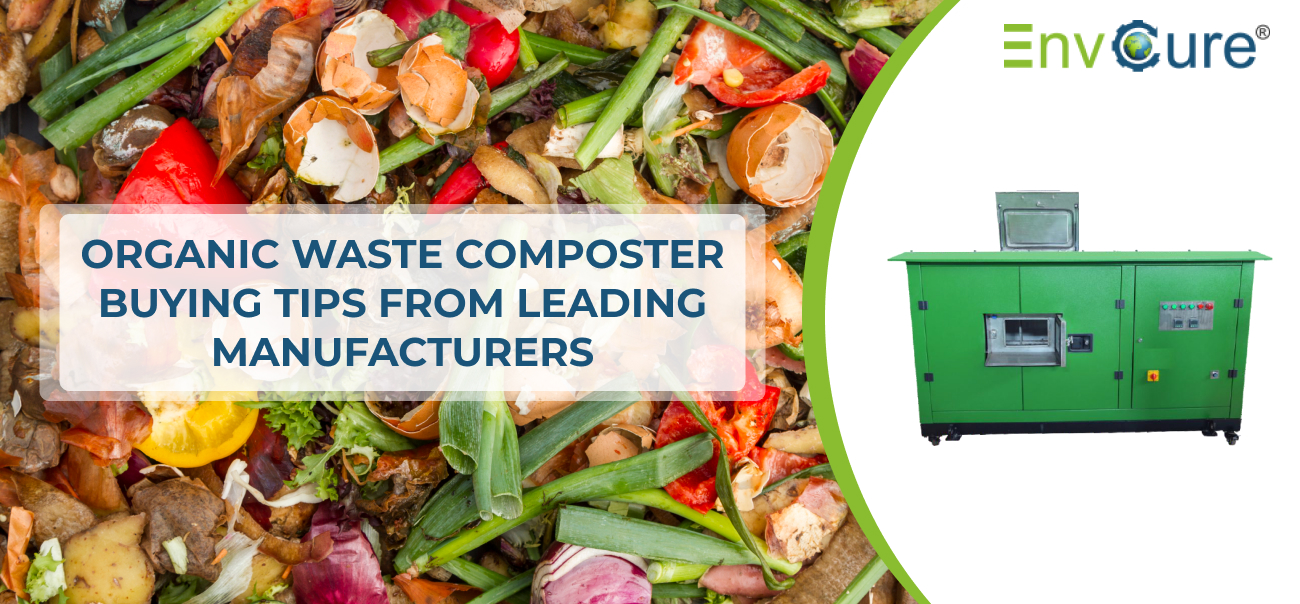

The right organic waste composter depends upon your business’s daily waste load, available space, and operating workflow. In this article, we’ll discuss matching machines to your setup and compare the top features of leading manufacturers. Understand the costs versus returns and how these tools fit into effective systems.
Overview: Buying Tips for Organic Waste Composter
- The Organic Waste Composter transforms kitchen scraps and food waste into nutrient-rich soil in days, cutting disposal costs by up to 80% for hotels and restaurants.
- Match capacity to daily waste output, go for odor-free designs, and select energy-efficient automatic composting machines from reputable Indian makers.
- Compare shredding tech, processing speed, and after-sales support features to find the right food waste composting machine.
- These organic waste composters facilitate decentralized collection from multiple sites, simplifying urban waste flows.
- EnvCure Technocrat LLP offers full automation organic waste composting machines for commercial use.
Why Organic Waste Composters Matter for Businesses Today
Food waste accumulates in eateries and hotels, raising disposal fees and creating more environmental strain. An organic waste composter tackles this head-on by turning scraps into compost, reducing volume, and producing a useful byproduct. Owners typically save on trash hauls and have a better green image with patrons. These machines comply with local rules and simplify routines across urban India.
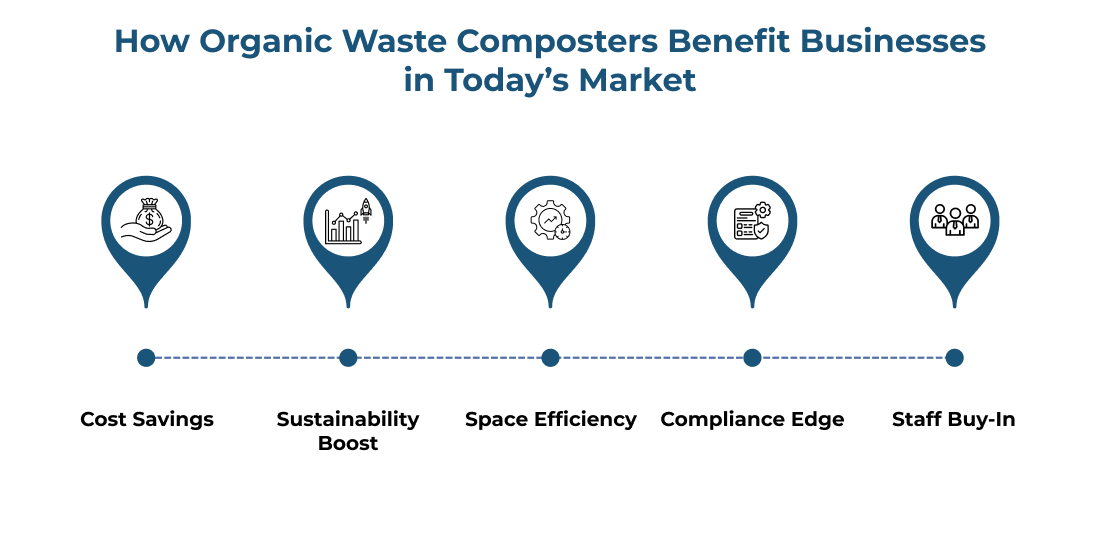
- Cost Savings: Reduce hauling costs by 50-70%. Compost replaces landfill trips.
- Sustainability Boost: Turn waste into fertilizer for on-site gardens or sales.
- Space Efficiency: Compact styles slide into tight kitchen corners, allowing more floor space.
- Compliance Edge: Align with municipal rules on organic diversion and avoid fines.
- Staff Buy-In: Easy operation makes team adoption easy.
Learn how an Organic Waste Composter turns food waste into value.
For Hotel and Restaurant Food Waste Management
Kitchens in hotels and restaurants are under special pressure: high volume scraps, tight spaces & hygiene rules. A solid food waste composter comes in here and handles everything from rice remnants to coffee grounds, eliminating odors or pests. Find models that include shredders that chop through tough bits like eggshells.
- Volume Handling: Select units that process 50-500 kg daily to cover peak meal rushes.
- Hygiene Focus: Seal designs with filters prevent smells and pests in guest areas.
- Quick Setup: Portable options with wheels allow station shifts.
- Waste Variety: Shredders handle a wide range of materials from soft fruits to tough shells.
- Tracking Tools: Output is logged for inventory control/monitoring.
Top Features of Organic Waste Composter to Compare Between Leading Manufacturers
Pick out durable features when shopping for an Organic Waste Compost machine. Automation and durability are key terms promoted by top manufacturers, but differences become apparent in real use, for example, how a unit performs during monsoons or busy seasons. Compare these to your budget and space; the Best fits come from demos. Identify vendors with proven track records first – for fewer headaches down the road.
| Feature | What to Look For | Example Benefit for Hotels/Restaurants |
| Capacity | 25-1000 kg/day, with buffer for peaks | Handles banquet surges without overflow |
| Processing Time | 24-72 hours for initial breakdown | Daily compost output for fresh use |
| Odor Control | Carbon filters or sealed chambers | Keeps dining areas guest-ready |
| Energy Use | Under 10 kWh/day for midsize units | Lowers utility bills in high-use spots |
| Automation Level | Fully Automatic or Semi Automatic | Frees staff for cooking, not monitoring |
| Shredder Integration | Built-in blades for mixed waste | Processes veggie-heavy loads smoothly |
All of these characterize an industrial organic waste composter. Suppose a commercial composting system with smart sensors adjusts heat to minimize energy waste. Its users praise quiet operation – important in noisy environments. Compare warranties as well: Ideally, aim for 2-5 years for core parts. Try demos if possible; there’s nothing better than seeing a waste composter working with your scraps.
If you handle large volumes of food waste, our blog on Organic Waste Compost Machines explains how bulk generators in India can meet SWM rules.
Composting Machine Manufacturers in India
There are many manufacturers in India producing localised organic waste composter for voltage fluctuations and high humidity. Companies in industrial hubs like Ahmedabad and Bengaluru provide low-cost, long-lasting solutions for commercial waste streams.
In Gujarat alone, EnvCure Technocrat LLP has over 100 installations across the country. EnvCure’s EC-OWC series shredder and heater in a compact frame converts scraps into compost in 3-4 days, similar to the 250-kg model. It has proven to be a great success in apartments and eateries where you need only one attendant to run it. What makes them unique?
- Built for local needs, voltage stabilizers and easy-access panels.
- Machines can tolerate power dips & climatic stress thanks to local expertise.
- Models ranging from small converters in cafes and housing societies through to industrial composters.
- Strong support networks (installation, commissioning/maintenance) to minimize downtime.
- Innovative products such as touch-screen controls, IoT/remote monitoring, or microbial accelerators.
- Competitive pricing & flexible financing to reduce upfront costs.
Scouting reviews from operators in similar lines of business, similar geographic regions, may reveal reliability, service responsiveness, and/or total cost of ownership.
If you’re planning to invest in a composting system, our Commercial Organic Waste Compost Machine buying guide covers everything you need to know.
Installation, Training, and Ongoing Care
An organic waste composter works best when its setup is planned correctly. First, find a well-ventilated location near your waste handling point, where loading and regular checks can be easily achieved. The professional installers usually complete electrical and drainage connections in a few hours, after which staff are trained in daily operation. With a simple maintenance routine, most units run reliably and produce stable compost output. Facilities following these basics typically have low downtime and high throughput.
- Site Preparation: Provide a level, nonslip floor; have a drain nearby; and provide ventilation for safe, spill-free operation.
- Staff Training: A 1-2 hour session typically reviews loading patterns, control panel use, monitored parameters, and some basic safety steps.
- Maintenance Routine: Weekly cleaning and periodic (quarterly, semi-annual) component replacement keep efficiency up and extend machine life.
- Troubleshooting: Essential spares include filters or microbial mixes. Some machines include app-based alerts for early issue detection.
- Scaling Up: With increasing waste volume, more units can be installed in tandem or linked to form a larger processing line.

Why EnvCure Stands Out in Organic Waste Solutions
We’ve covered everything from sizing up kitchen waste compost maker to comparing features across the top manufacturers. These tools reduce waste and costs while turning hotel and restaurant food waste management into garden gold. Want to make sustainability simple at EnvCure TechnoCrat LLP? Organic Waste Composter, such as EC-OWC 250, processes 250 kg daily with full automation and stress-free operations. Visit or call the best waste management experts and turn those scraps into something special – load by load. Reach out for a site assessment & quote today.
FAQs Related to Organic Waste Composter
Q. What factors should I consider before buying an organic waste composter?
A. Consider capacity, input waste types, automation level, footprint, power and water needs, odor control, maintenance, warranty and after-sales support.
Q. How do I choose the right capacity for an organic waste composter?
A. Estimate average daily organic waste, add a 20–30% buffer for peaks, and choose a machine rated for that throughput or a modular system you can scale.
Q. What affects the price of an organic waste composter?
A. Price is driven by capacity, automation, technology, build quality, odour control and warranty, plus installation, shipping and civil works costs.
Q. Can installing a composter help me comply with local waste regulations?
A. Yes, composting reduces landfill waste and can support regulatory compliance, but you must confirm specific municipal/state requirements and reporting needs.
Q. How do I evaluate and compare manufacturers and suppliers?
A. Compare experience, client references, case studies, on-site demos, warranty and service networks, spare parts availability, and request itemised quotes covering installation and training.