





Ahmedabad’s Waste Management Has Changed. Are You Ready?
If you manage a housing society, run a hotel, or oversee a school or hospital in Ahmedabad, there is something you need to act on right now. The rules around waste disposal have changed, and they carry real legal consequences. In this scenario, installing an Organic Waste Composter and a Sanitary Napkin Incinerator can be the smartest step toward AMC compliance.
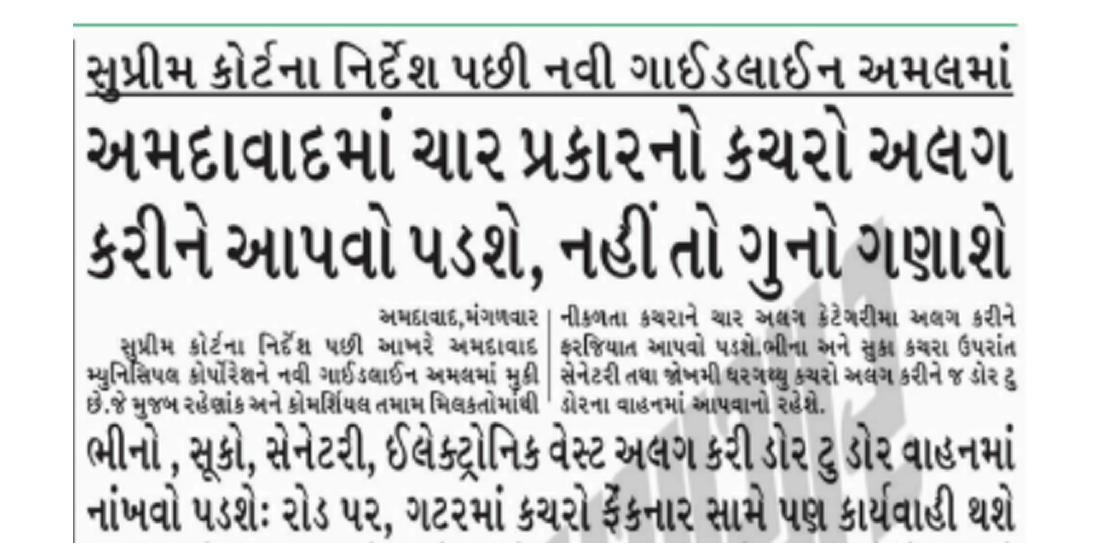
Following the Supreme Court’s directives and the Central Government’s Solid Waste Management Rules 2026, the Ahmedabad Municipal Corporation (AMC) has introduced a strict new waste segregation framework across the city. And non-compliance with these guidelines can lead to FIRs, heavy fines, and legal action, too.
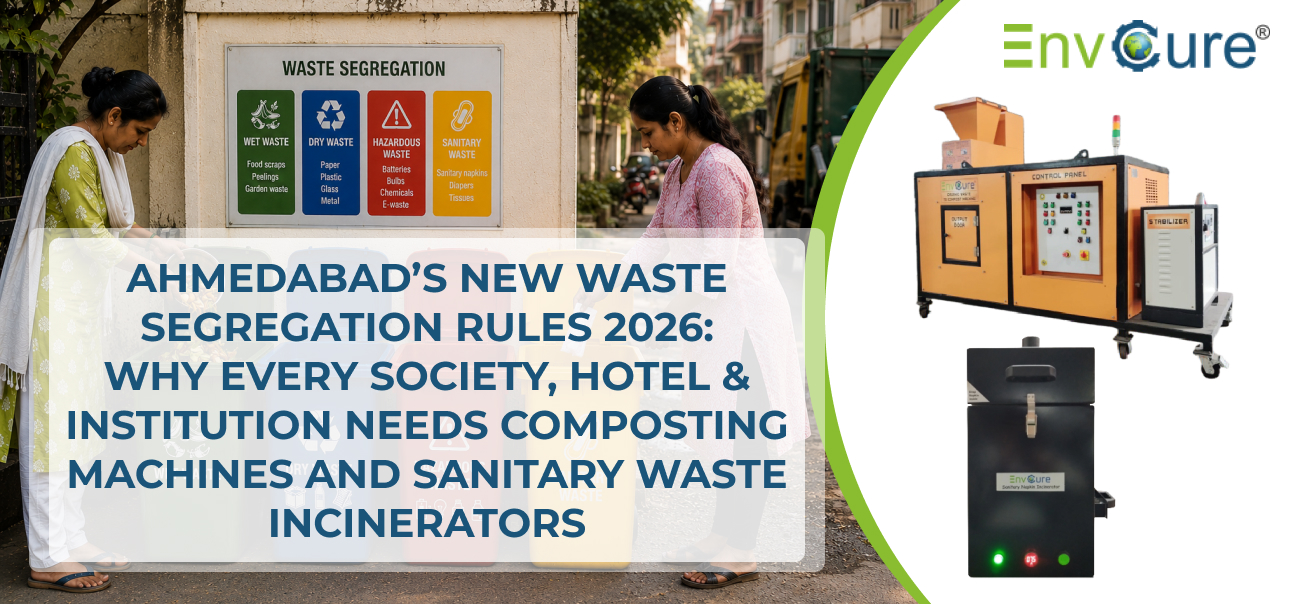
The 4 Categories of Waste You Must Segregate
Under the new rules, all waste must be separated into four distinct categories before collection.
-
Wet Waste
Kitchen waste, vegetable and fruit peels, leftover food, and garden trimmings.
-
Dry Waste
Paper, plastic, glass, metal, cardboard, and other recyclable materials.
-
Sanitary Waste
Used sanitary napkins, diapers, razors, and blades are to be wrapped in paper or a bag before disposal.
-
Hazardous / Special Waste
Expired medicines, empty medicine packets, batteries, pesticides, and household chemicals.
Separate door-to-door vehicles will collect each category. Mixing waste, dumping it in gutters, throwing it on roads, or burning it openly are all punishable offences under the law.
Who is a Bulk Waste Generator?
AMC has introduced a new legal classification called Bulk Waste Generator (BWG). If your establishment meets even one of the following criteria, you fall under this category:
- Built-up area of 20,000 square meters or more
- Daily water consumption exceeding 40,000 litres
- Daily waste generation of 100 kg or more
Who Does This Apply To?
Hotels, restaurants, shopping malls, hospitals, educational institutions, universities, government offices, and large residential societies all qualify as Bulk Waste Generators.
What Are the Obligations?
Bulk Waste Generators are legally required to process their wet waste on-site. They cannot depend entirely on the municipal collection system. Failure to comply invites FIRs, penalty notices, and strict enforcement action.
The Ahmedabad city generates around 3,200 tonnes of waste daily, yet only 29% is being properly segregated. AMC has already issued over 3.54 lakh notices and recovered fines worth ₹16.95 crore since January 2025. This enforcement is only getting stricter.
Solving Wet Waste: The Case for an Organic Waste Composter
Wet waste is the biggest burden on Ahmedabad’s landfill sites. Food scraps and kitchen waste decompose in landfills, releasing harmful gases and leachate. The new rules are designed specifically to stop this at the source.
What Is an Organic Waste Composter?
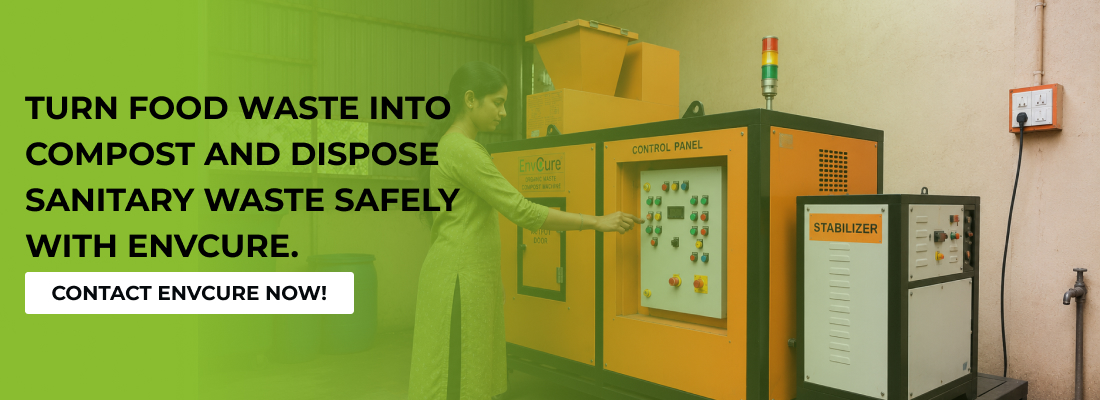
An Organic Waste Composter converts wet kitchen and food waste into nutrient-rich compost, right within your premises. Instead of sending wet waste for municipal pickup every day, a waste composter machine processes it on-site, quickly and hygienically.
Why Does Your Society or Institution Need One?
A large housing society with 50 or more homes generates a substantial volume of wet waste every single day. An organic waste composting machine handles this efficiently, turning daily food waste into compost that can be used directly in the society’s garden. In this way, it reduces fertiliser costs and also helps in keeping the premises clean and odour-free.
For hotels, hospitals, and malls, an organic waste compost machine is a direct pathway to Bulk Waste Generator compliance. It reduces landfill dependency, eliminates foul odours from waste storage areas, and requires minimal manual effort from staff.
Also Know, How an Organic Waste Composter Pays for Itself in Commercial Catering and Hospitality
Is It Practical?
The modern organic composting machine is fully automated, compact, and easy to operate. A waste composting machine from a reliable manufacturer handles everything from kitchen scraps to vegetable peels with very little intervention. The result is rich, usable compost and a cleaner, more compliant premises.
Solving Sanitary Waste: The Case for a Diaper and Sanitary Napkin Incinerator
Sanitary waste is a category that is often overlooked, but it is one of the trickiest to handle properly. Used sanitary napkins, diapers, and hygiene products carry pathogens that cannot be recycled. Meaning such waste can cause serious contamination if mixed with regular waste.
Why Institutions Cannot Ignore This
For schools, colleges, hospitals, and large workplaces, sanitary waste is generated daily in significant volumes. Under the new rules, this waste must be handled separately. Therefore, on-site disposal is the most hygienic and legally sound approach available.
How a Diaper and Sanitary Napkin Incinerator Works
A Diaper/Sanitary Napkin Incinerator uses high-temperature incineration to convert used sanitary waste into harmless, odourless ash, right inside the washroom. There is no contact with the waste, no lingering odour, and no contamination risk. The sanitary napkin incinerator machine is simple to operate and requires minimal maintenance.
Why Schools Need It Most
A sanitary napkin incinerator for school is not just a compliance requirement. It is also a matter of dignity and hygiene solution. Girls and young women deserve a safe, private way to dispose of sanitary waste, and installing a sanitary pad incinerator in school washrooms makes that possible.
The Electric Incinerator design ensures controlled combustion with no harmful emissions. Whether you call it a Diaper/ sanitary napkin burner, an Incinerator Machine, or a sanitary disposal unit, the purpose is the same. A clean, safe, and compliant waste disposal every single day.
EnvCure Technocrat LLP: Your Waste Management Compliance Partner in Ahmedabad
EnvCure Technocrat LLP, based in Vatva GIDC, Ahmedabad, is a leading manufacturer of waste management solutions registered with GEM, MSME, and Startup India. Here why we have the perfect waste management solution for your specific requirements.
Organic Waste Composter Solutions
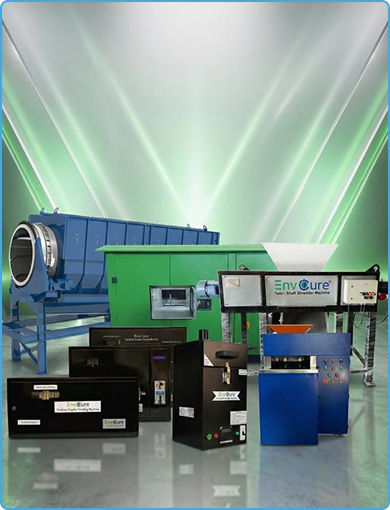
EnvCure Technocrat LLP’s Fully-Automatic Organic Waste Composter is designed for residential societies with at least 50 homes, as well as hotels, hospitals, and large institutions. Our range of organic waste composting machines handles anywhere from 50 kg to 2,000 kg of waste per day. Fully automated and easy to maintain, these machines turn daily food waste into valuable compost, right on your premises.
Sanitary Napkin Incinerator Solutions
EnvCureTechnocrat LLP’s Sanitary Napkin Incinerator range offers multiple models with varying capacities, from compact single-washroom units to high-capacity machines for hospitals and large institutions. Our sanitary napkin incinerator machine features rust-resistant construction, hands-free hygienic operation, and safe ash disposal. Whether you need a sanitary pad incinerator for a school or a large-capacity Incinerator Machine for a hospital, EnvCure Technocrat LLP has the right model for you.
Conclusion: The Time to Act Is Now
The Supreme Court has spoken, and the AMC is enforcing. If your establishment qualifies as a Bulk Waste Generator, on-site wet waste processing through an Organic Waste Composter and hygienic sanitary waste disposal through a Sanitary Napkin Incinerator are not optional. They are legal obligations.
An organic waste compost machine turns daily food waste into garden compost. A sanitary napkin incinerator machine keeps your washrooms clean, hygienic, and compliant. Together, they cover two of the four waste categories that the new rules demand you handle responsibly.
Do not wait for a notice. Partner with EnvCure Technocrat LLP and make your premises waste-compliant today.
Frequently Asked Questions
Q1. What are the new waste segregation rules in Ahmedabad 2026?
A. AMC now requires all waste to be separated into four categories, wet, dry, sanitary, and hazardous, before collection. Non-compliance can result in fines and FIRs.
Q2. Who is considered a Bulk Waste Generator under AMC’s new rules?
A. Any establishment with a built-up area over 20,000 sq. meters, daily water use exceeding 40,000 liters, or waste generation above 100 kg qualifies as a Bulk Waste Generator.
Q3. Is an Organic Waste Composter mandatory for housing societies in Ahmedabad?
A. Yes, societies that generate 100 kg or more of waste daily must process wet waste on-site. An Organic Waste Composter is the most efficient and compliant solution for this.
Q4. Why do schools and hospitals need a Sanitary Napkin Incinerator?
A. A Sanitary Napkin Incinerator safely converts used sanitary waste into ash on-site, preventing contamination and ensuring full compliance with AMC’s sanitary waste disposal rules.
Q5. What happens if a society or hotel does not comply with the new waste rules?
A. AMC can issue penalty notices, recover fines, and file an FIR against non-compliant establishments. Officials showing negligence can also face personal legal action.