

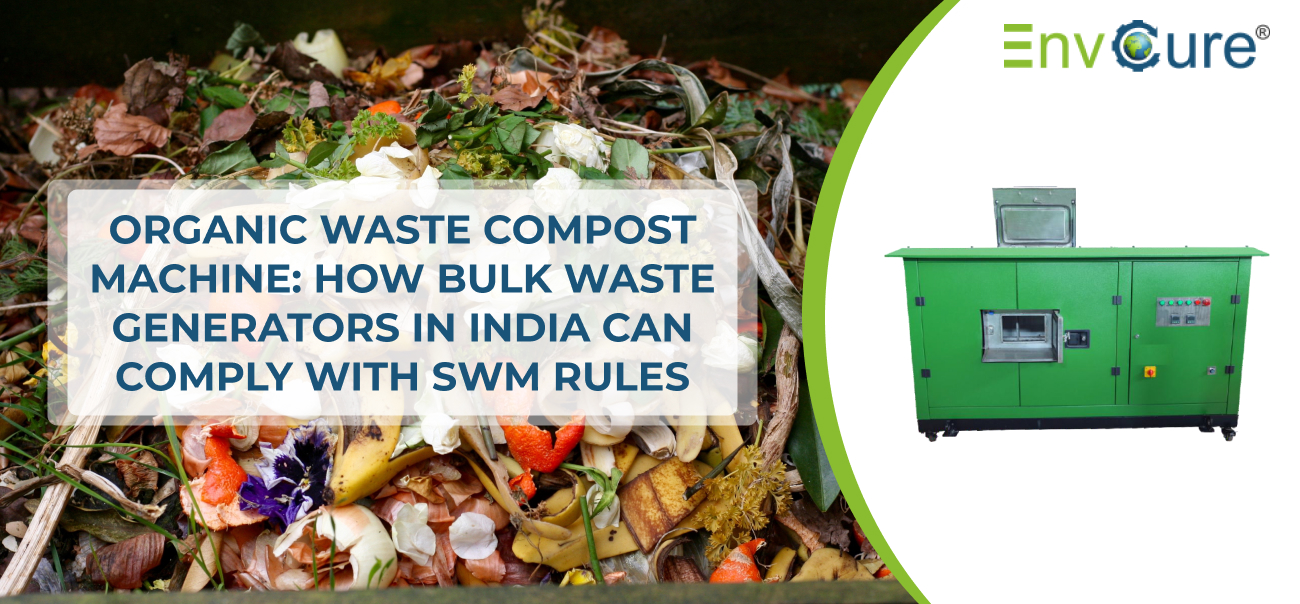
Organic Waste Compost Machine: How Bulk Waste Generators in India Can Comply with SWM Rules

Organic Waste Compost Machine

Bulk waste generators such as big hotels, restaurants, hospitals, malls, and apartment complexes shall now have to at least segregate organic waste and treat the same on-site in compliance with the Solid Waste Management (SWM) Rules in India. As per these rules, waste generators must segregate refuse and treat all biodegradable (wet) waste at their premises through composting or bio-methanation. An organic waste compost machine is one of the possible methods: it accepts all kinds of organic waste and turns it into usable manure in a short duration while minimizing disposal volume and cost.

These machines can process waste into compost within 24-48 hours, which cuts down enormously on landfill space and mitigates greenhouse gas emissions. Indeed, cities are now even fining violators-for instance, nine bulk generators were recently fined ₹25,000 each in Gurgaon for violation of the SWM rules.

What is an Organic Waste Compost Machine?

The organic waste composting machine works essentially as a fast in-vessel composter for kitchen and garden wastes into nutrient compost. Using controlled heat and aeration along with microbial action, sealed units produce compost in less than a day or two, unlike a backyard heap that may take weeks to months. Sampling stainless steel, the inside is equipped with shredders and mixers to break the waste into smaller pieces and evenly distribute heat and oxygen.

For instance, EnvCure’s fully-automatic type of composting equipment establishes an optimum environment for decomposition in which microbes complete their job in 24-48 hours, causing an 80-90% reduction by volume of the input waste. The output compost is dry, inoffensive, FCO-compliant, and safe for landscaping or organic farming.

For a more detailed guide on choosing an organic waste machine based on your requirements, read on: Commercial Organic Waste Compost Machine: A Complete Buying Guide

Benefits of the Organic Waste Compost Machine

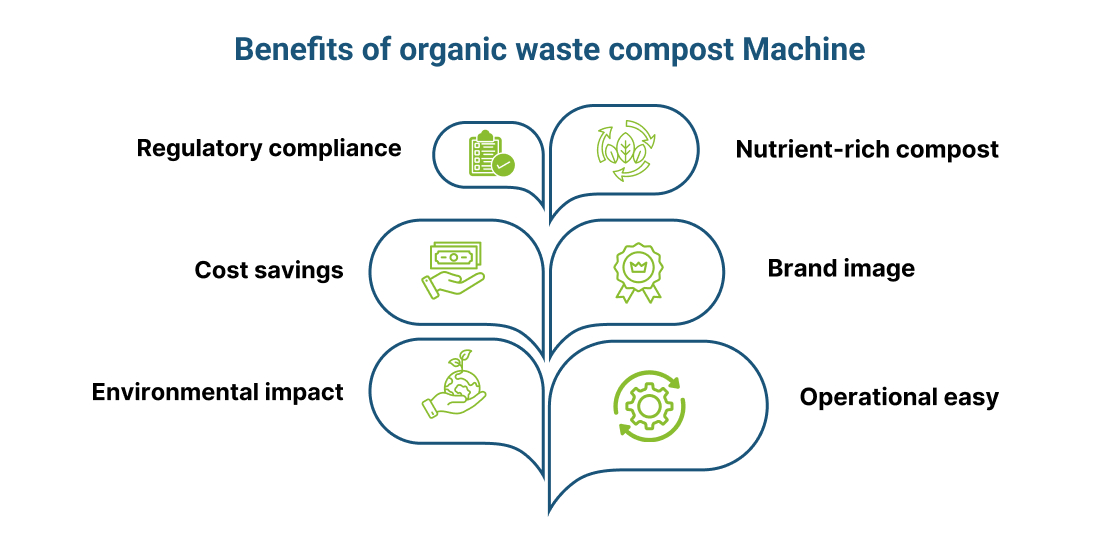
Using an organic waste compost machine brings multiple benefits to bulk waste generators. Key advantages include:
waste composter

  • Regulatory compliance: SWM Rules require wet waste to be processed onsite.
  • Cost savings: Saves transportation charges of hauling to landfill sites and may provide for saleable by-products. A review says, “waste hauling bills go down while there is earning potential through compost sales.”
  • Environmental impact: Keeps organic waste out of landfills, reducing methane emissions and pollution.
  • Nutrient-rich compost: Provides nutrient-rich, pathogen-free compost for garden use. Various studies confirm that the compost output is indeed safe and can be helpful for soils.
  • Brand image: Demonstrates sustainability, boosting CSR credentials and public goodwill.
  • Operational ease: New-generation composters operate automatically with minimum human intervention. Most systems enable untrained operators to run the units with easy controls.

Implementing onsite composting thus turns waste management into a productive process, rather than an expense.

Types of Organic Waste Compost Machine

EnvCure offers a range of composting solutions tailored to different scales of operation:

  • Fully Automatic Organic Waste Composting Machine: The design accommodates large-scale waste generators (hotels, hospitals, institutions). This is an in-vessel system with a touch screen interface and an in-built shredder. Further, it manages aeration of the waste and acts exceedingly fast with odor management; hence, it achieves high throughput (80–90% volume reduction) with minimal human intervention.
  • Semi Automatic Organic Waste Composting Machine: Suited for medium-sized establishments (restaurants, office canteens, housing societies). These units run on simpler controls, with fewer parts moving around, thus being a fine energy saver and extremely easy to maintain. They also reduce more waste than usual and require less labor.
  • Roto Composter: A rotating drum composter for moderate volume sites such as schools or smaller eating places, or residential setups. This sturdy drum ensures uniform mixing of the waste. This compact type can nicely fill in where space or the budget is a little bit tight.

Each of these serves various needs: for example, an automatic organic waste compost machine might deal with waste processing for several hundred kilos per day, while a roto or a semi-auto might be suited for businesses generating 50–100 kg/day of waste.

Choosing the Right Organic Waste Composting Machine

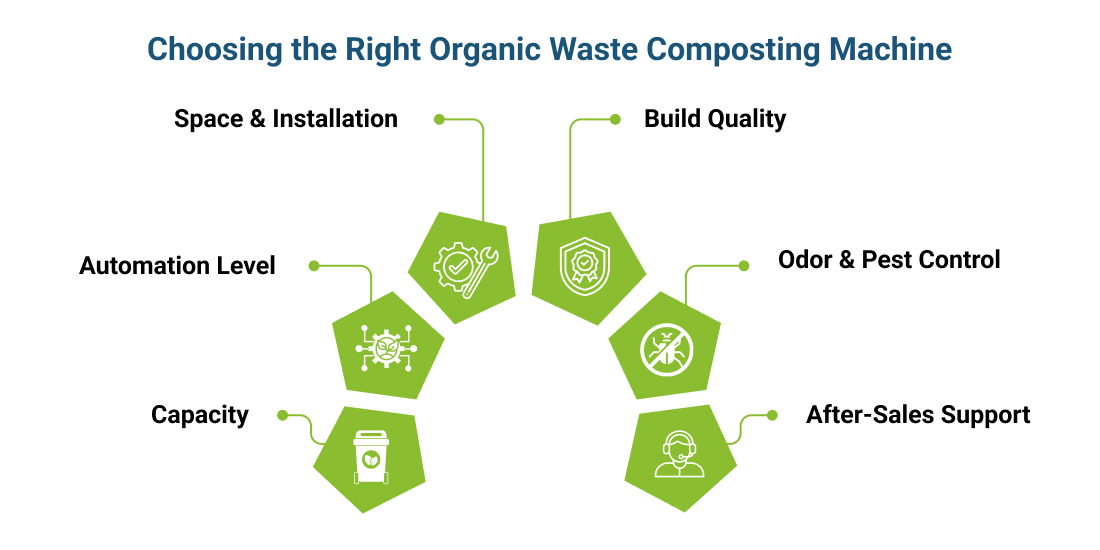
When selecting an organic waste compost machine, try to match the unit features to your site’s needs. Consider the following important factors:
Compost Machine

  • Capacity: Consider the average daily amount of organic waste you throw away. Choose a machine that can handle that volume (e.g., 50kg/day, 100kg/day, etc.). Trying to run a larger volume through a smaller one can lead to failure; conversely, an oversized machine is a waste of investment.
  • Automation Level: Fully-automatic units automatically feed, mix, and discharge a material with less labor on the user’s part, but cost more initially; semi-automatic models are cheaper but require some manual work. Consider how much you want to stay hands-off. 
  • Space & Installation: Check the machine’s footprint and the space available on your premises. You have to make sure that it has the power line (voltage, phase) and good air circulation.
  • Build Quality: Stainless steel construction is standard for durability and better hygiene (as in the better models). Look for rustproof coatings, strong welds, and sturdy motors. 
  • Odor & Pest Control: Good machines are made air-tight with filters/carbon scrubbers for smells and pests. 
  • After-Sales Support: Choose a provider that offers reliable service and training. Like EnvCure Technocrat LLP, which carries out site surveys, customizes solutions, and maintains support. 

By considering these aspects, you ensure the organic waste compost machine you select will deliver maximum disposal with minimum operations.
Organic Waste Composter

Conclusion

In brief, onsite composting is no longer optional in India for the bulk waste producers but a mandatory compliance with financial and environmental payoffs. An automatic organic waste composting machine can turn your kitchen and garden waste into a resource and also keep you legit.

Partnering with an experienced vendor such as EnvCure Technocrat LLP will ensure expert guidance, proper installation, and after-sales support. 

Our extensive line of fully- and semi-automatic organic waste compost machine and roto-composters are designed to comply with SWM rules and cater to a wide variety of bulk generators, converting the problem of waste into a sustainable solution.

FAQs Related to Organic Waste Compost Machine:

1. What types of waste can the organic waste compost machine process?

Ans. They handle all common biodegradable refuse, food scraps, vegetable peels, fruit waste, tea leaves, yard waste (leaves, flowers, small trimmings), etc. Anything that would normally go into a kitchen bin can be fed to the composter (except metals, plastics, or glass).

2. How much maintenance do these machines require?

Ans. They are built for minimal upkeep, but some regular tasks are needed. You should remove any inert debris daily (e.g., plastic bits) and periodically clean the inside surfaces. Most suppliers recommend a simple rinse or wipe-down after each batch. Larger units may need an annual check-up of motors and sensors. Choose a model with good after-sales support; EnvCure technicians provide training so your team can handle basic maintenance.

3. How does an organic waste compost machine help meet SWM regulations?

Ans. SWM Rules explicitly state that wet/biodegradable waste must be composted or processed at source. By converting your kitchen and green waste into compost on-site, these machines fulfill that requirement directly. They eliminate the need for hauling wet waste elsewhere, thus keeping you compliant and avoiding fines.
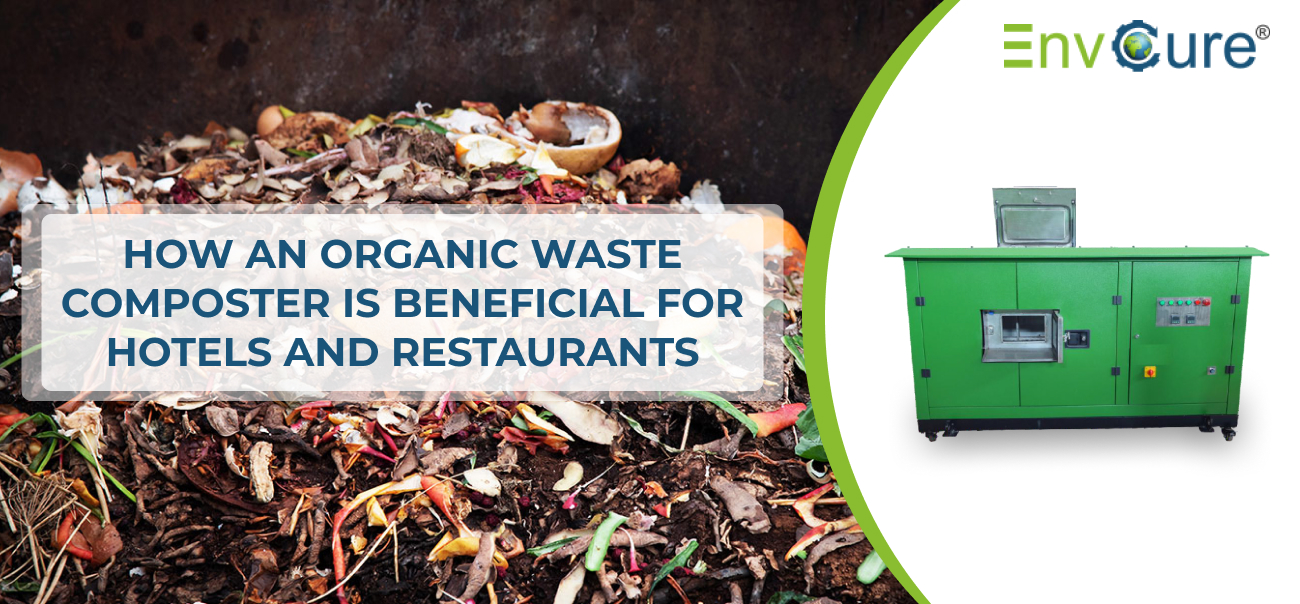
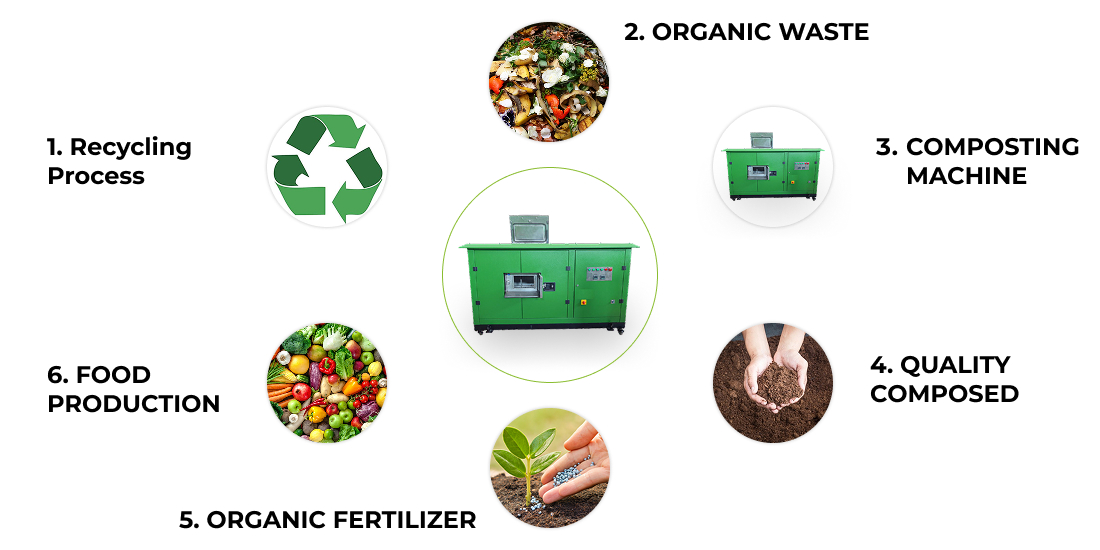
How Does an Organic Waste Composter Benefit Hotels and Restaurants?

Organic Waste Composter

Key Takeaways – Why It Matters

  • Cut disposal costs by composting food waste on-site
  • Hit your sustainability goals and earn green certifications
  • Use the compost for landscaping or local partnerships
  • Improve hygiene and keep pests out of your kitchen
  • Reduce your environmental footprint and boost ESG ratings

So, What Is an Organic Waste Composting Machine?

If you’re in hospitality, you’ve probably seen more food waste in a day than most households do in a week. 

An Organic Waste Composting Machine gives that waste a second life, right on your property.

Instead of tossing leftovers into the dumpster (and paying for it), these machines break down organic waste. Think vegetable peels, plate scrapings, and even meat, an organic waste composting machine turns that into usable compost. 

Here’s how it works:

  1. Input: You load the machine with food scraps and other organic material.
  2. Decomposition: Through heat, air, and microbial action, the machine mimics natural composting, but faster.
  3. Output: After a few hours or days (depending on the model), out comes clean, earthy compost.

Here’s a quick video for you to see of an organic waste composting machine –

Now remember, there are different types of organic waste composting machines to choose from, some fully automatic, some in-vessel, and others aerobic. 

So, whether you’re a boutique hotel with a small kitchen or a resort running multiple restaurants, there’s a composting solution that fits.

Explore how the Organic Waste Converter Machine: Turning Waste into Valuable Resource promotes efficient and eco-friendly waste conversion.

Why Hotels and Restaurants Generate So Much Organic Waste (And What You Can Do About It)?

Working in the hospitality and restaurant sector, we are sure you have a fair idea about how kitchens can be messy. And busy ones? Even more so.

From prepping veggies to scraping plates, food waste is part of daily operations. Buffets, especially, can generate shocking amounts of leftovers that can’t be reused. 

According to the UN Environment Programme, about 17% of global food production is wasted, and hospitality plays a big part.

But, here’s how this food waste becomes a real problem for restaurants and the hospitality industry – 

  • Commercial waste has High disposal fees
  • Complaints from guests about smells near bins
  • Rodents and insects hanging around dumpsters
  • Pressure to meet sustainability guidelines

And this is exactly how an Organic Waste Composter fills the gap. It gives your waste a purpose and keeps it from becoming a problem.

Let’s have a look at the benefits of an organic waste composting machine in the following section. 

6 Practical Benefits of Using an Organic Waste Composting Machine

Organic Waste Compost Machine


Here are some of the most important and crucial benefits you will get by installing an organic waste composting machine. 

  • Reduces Waste Disposal Costs

Finally, say goodbye to frequent pickups and landfill fees. Handling waste in-house saves you real money.

  • Helps Meet Sustainability Goals and Certifications

Today, going green isn’t just trendy, it’s now a requirement for many hotel brands and corporate audits. Composting helps you check that box for programs like LEED or Green Key.

  • Creates Usable Compost for Landscaping or Local Distribution

Moreover, you’ll end up with a steady stream of compost, perfect for gardens, green spaces, or even to give to local farmers and community gardens.

  • Improves Hygiene and Reduces Pests

No more overflowing bins or odorous surprises. Composting machines seal the waste process, reducing pests and improving kitchen hygiene.

  • Enhances Brand Image and ESG Compliance

Being in the hospitality industry, we all know that guests notice the details. And when you make compost out of waste, it shows that your brand takes environmental, social, and governance responsibilities seriously.

  • Decreases Greenhouse Gas Emissions from Food Waste

Last but not least, rotting food in landfills releases methane. By composting on-site, you’re cutting those emissions and lightening your carbon footprint.

Learn more about reducing daily food waste through How Does an Organic Waste Composting Machine Improve Your Canteen / Kitchen Waste?

The Organic Waste Compost Machine in Action: EnvCure’s Impact

Take, for example, a 200-room hotel in Bangalore that partnered with EnvCure. They were spending thousands per month on waste pickup. After installing an organic waste composting machine, they saw:

  • A 40% drop in disposal costs
  • 150 kg of compost produced every week, used in their own gardens
  • Cleaner back-of-house areas, with far fewer pest complaints

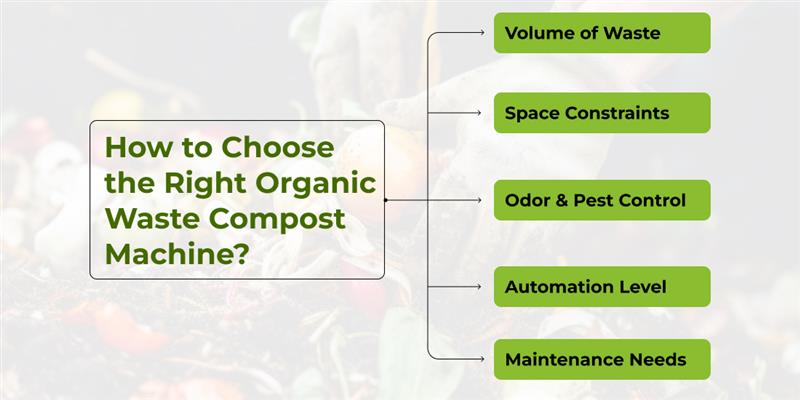
How to Choose the Right Organic Waste Compost Machine?

Organic waste composting machine

Now, if you are wondering how to choose the right organic waste compost machines, we get it! 

As not all machines are created equal, here’s what you need to keep in mind:

  • Volume of Waste: 

Know your numbers. If you’re generating 100 kg of waste daily, don’t buy a machine built for 30.

  • Space Constraints: 

Some models are compact and indoor-friendly, others need a dedicated outdoor space. Talk to your vendor about this before you make a decision. 

  • Odor & Pest Control: 

Look for systems with sealed chambers, proper aeration, and filtration to avoid odor and pest control. 

  • Automation Level: 

Want hands-free operation? EnvCure’s composters come with auto-loading, mixing, and compost discharge so you can free up your staff’s time.

  • Maintenance Needs: 

Finally, choose a machine with easy-to-clean components and good vendor support.

Discover how small changes lead to big environmental benefits in How do organic waste composting machines reduce footprints and aid in environmental conservation?

Final Thoughts: Bring Sustainability That Pays Off with Organic Waste Composting Machine

There’s no doubt that installing an organic waste compost machine isn’t just a green gesture, it’s a smart business move too.

You save money, meet growing sustainability expectations, reduce your impact, and create a cleaner, more efficient work environment. Best of all? Your brand becomes popular among today’s growing population of eco-consciousness. 

Ready to reduce waste at your hotel or restaurant with EnvCure Technocrat LLP? Let’s talk about composting. Start exploring your options today.

Frequently Asked Questions

Q.1. Can organic waste composters handle cooked food and meat?

Ans. Yes, most commercial composters, like those from EnvCure, are built to handle a wide range of organic materials.

Q.2. Is the compost Machine safe to use?

Ans. Completely. The output is free from pathogens and ideal for landscaping or soil enrichment.

Q.3. How much does a composting machine cost?

Ans. Prices vary based on size, features, and automation, but most systems pay for themselves in 12–18 months through cost savings.

Q.4. Will organic waste compost smell or attract pests?

Ans. Not with a quality machine. Today’s models are odor-sealed and pest-proof by design.

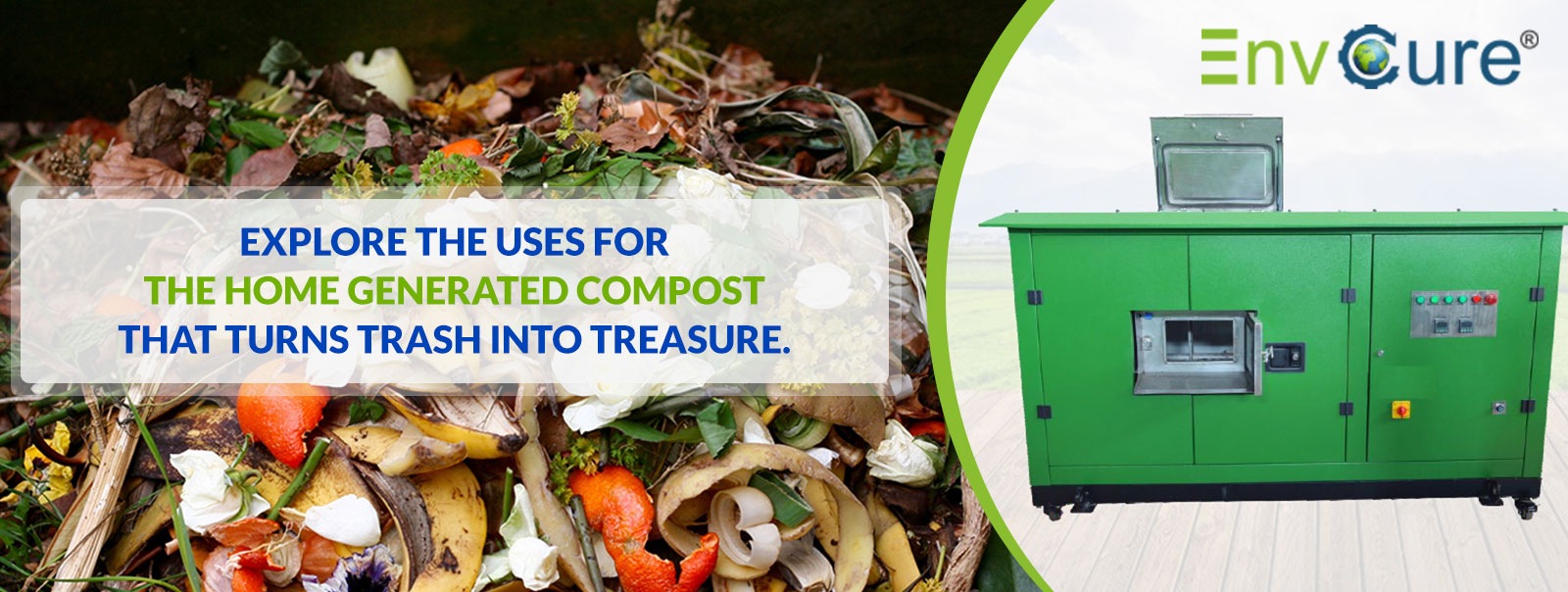
Explore The Uses For The Home Generated Compost That Turns Trash Into Treasure

Uses For The Home Generated Compost That Turns Trash Into Treasure

In our homes, we often overlook the potential hidden in the everyday scraps and leftovers. Kitchen peels, garden trimmings, and other organic remnants, typically seen as waste, hold a secret: they can be transformed into something valuable. This article delves into the world of home waste composting, a simple yet impactful practice that can turn your everyday trash into a nutrient-rich treasure for your garden. 

The Basics of Home Composting: A Step-by-Step Guide

Engaging in home waste composting is akin to embarking on a journey of ecological mindfulness. It begins with selecting a suitable spot for your compost bin or pile, ideally in a dry, shaded area close to a water source. The process involves layering green and brown materials. Green materials are rich in nitrogen and encompass kitchen scraps like vegetable peels, fruit waste, and coffee grounds. Brown materials, on the other hand, are carbon-rich and include items such as dried leaves, branches, and cardboard.

  • Layering: Start with a layer of brown materials to create aeration and drainage, then add a layer of green materials on top.
  • Moisture: The compost should be moist, but not wet. Sprinkle water occasionally to maintain the moisture level.
  • Aeration: Turn your compost pile every few weeks to introduce oxygen, which is crucial for composting.
  • Size: Keep your compost pile or bin no larger than 3 feet in height and width to ensure proper aeration.

Through these steps, you create an environment where microorganisms thrive and break down the waste, turning it into compost over time.

Enriching Your Garden Soil with Homemade Compost

The transformation of kitchen scraps and garden waste into a nutrient-rich soil enhancer is the heart of organic waste composting. This alchemy of decomposition bestows numerous benefits on garden soil:

  • Nutrient-Rich Soil: Compost adds essential nutrients, including nitrogen, phosphorus, and potassium, which support plant growth.
  • Improved Soil Structure: Compost enhances soil’s ability to retain moisture and nutrients, benefiting plant roots.
  • Encourages Beneficial Organisms: Earthworms and other beneficial organisms are attracted to compost-enriched soil, further enhancing soil health and structure.

Regularly adding compost to your garden can result in more vibrant flowers, healthier vegetables, and an overall more robust garden ecosystem.

Reducing Household Waste Through Composting

Implementing waste composting at home plays a pivotal role in waste reduction. By composting, you divert a significant portion of your household waste away from landfills, where organic waste often decomposes anaerobically, producing methane, a potent greenhouse gas.

  • Waste Reduction: Up to 30% of household waste can be composted, significantly reducing the amount of waste sent to landfills.
  • Lower Greenhouse Gas Emissions: By composting, you contribute to lower methane emissions from landfills.
  • Sustainable Waste Management: Composting is a cornerstone of sustainable waste management, turning waste into a valuable resource.

Incorporating composting into your daily routine is a straightforward yet impactful step towards a more sustainable household and a healthier planet.

Harnessing Compost as a Natural Pest Repellent and Soil Protector

The benefits of compost extend beyond mere nutrition; they delve into the realm of natural pest control and disease prevention. When you enrich your garden with the compost produced through home waste composting, you’re also cultivating a robust soil ecosystem. This healthy soil environment is less hospitable to many common garden pests and pathogens.

  • Disease Suppression: Compost can help suppress certain soil-borne diseases, thanks to the beneficial microorganisms it introduces.
  • Natural Pest Deterrent: Healthy plants grown in compost-rich soil are generally more resistant to pests, reducing the need for chemical pesticides.
  • Improved Plant Resilience: The overall health and resilience of plants are enhanced, making them better equipped to withstand diseases and pest infestations.

By integrating compost into your gardening practice, you’re not just feeding the soil; you’re actively participating in creating a more balanced and natural garden ecosystem.

Economic and Environmental Benefits:

The Unsung Advantages of Composting Engaging in organic waste composting is not only an environmentally conscious choice but also an economically savvy one. The act of converting kitchen scraps and yard waste into compost can have tangible benefits for both your wallet and the wider environment.

  • Reduced Gardening Costs: Homemade compost can replace the need for commercial soil amendments and fertilizers, leading to considerable savings.
  • Decreased Waste Disposal Fees: With a significant portion of household waste being diverted to compost, you might see a reduction in waste disposal costs.
  • Enhanced Soil Health Leading to Less Water Usage: Compost improves soil structure, which means better water retention and, consequently, a decrease in the need for frequent watering.

By adopting waste composting practices, you’re not just contributing to a greener planet; you’re also making a financially prudent choice that benefits your garden and the environment as a whole.

Conclusion: A Step Towards a Greener Future with EnvCure 

In conclusion, the practice of converting home-generated organic waste into compost is not just an act of recycling; it’s a step towards a more sustainable and environmentally conscious lifestyle. Companies like EnvCure, with their focus on innovative, practical, and economical environmental solutions, are at the forefront of this movement. 

EnvCure’s commitment to environmental sustainability, through their expertise in waste management and renewable energy, aligns perfectly with the ethos of home composting. By adopting practices like composting, we not only enrich our gardens but also contribute to a larger vision – a vision of a healthier, more sustainable world. 

With over 6 years of experience and 1500+ machines installed across various industries including hospitals, universities, and temples, EnvCure is leading the way in making our planet a better place for future generations.

Frequently Asked Questions:

Q.1. What is home-generated compost?

Ans: Home-generated compost is organic matter, like kitchen scraps and yard waste, decomposed into nutrient-rich soil conditioner through natural processes.

Q.2. What are the uses for home-generated compost?

Ans: Compost can be used as a soil amendment, potting mix, mulch, or top dressing to enhance plant health, retain moisture, and improve soil structure.

Q.3. Is composting environmentally friendly?

Ans. Yes, composting reduces landfill waste, lowers greenhouse gas emissions, and promotes a sustainable, eco-friendly approach to managing organic waste.

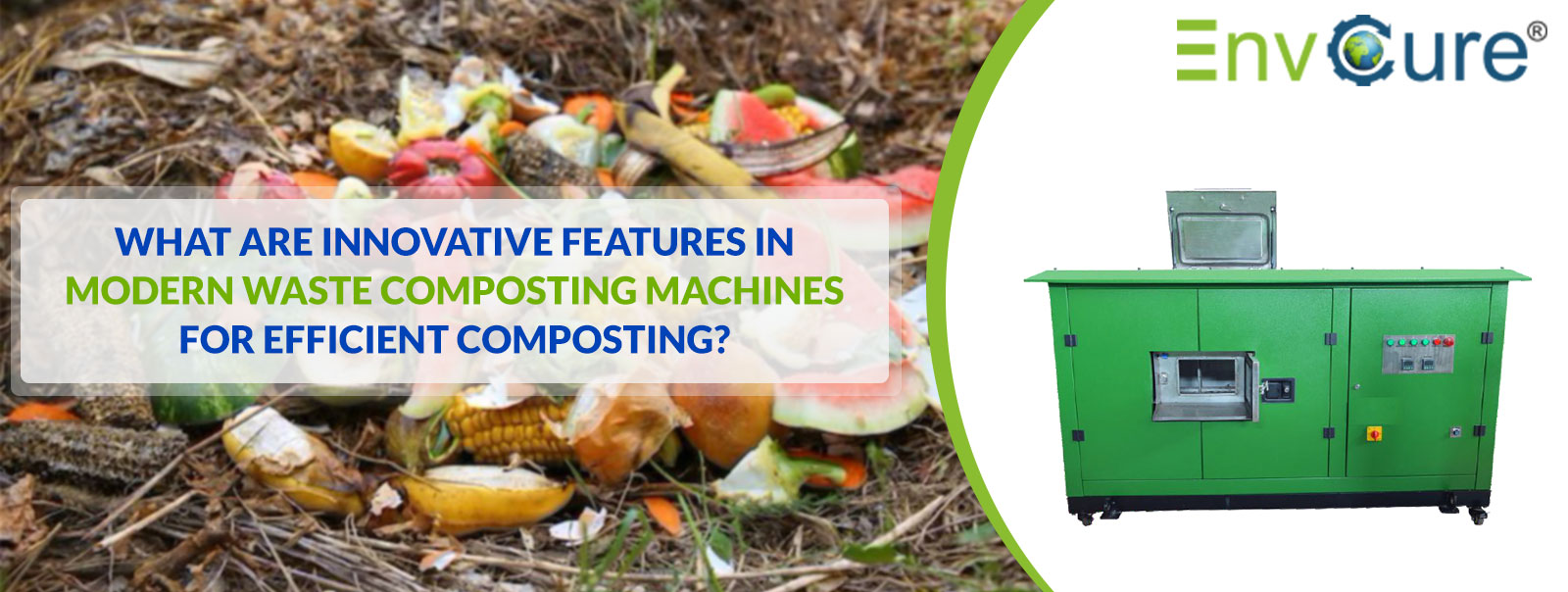
What Are Innovative Features in Modern Waste Composting Machines for Efficient Composting?

Innovative Features in Modern Waste Composting Machines for Efficient Composting

In an era where sustainability is not just a trend but a necessity, the focus on efficient waste management has intensified. Among the various approaches, composting stands out as a pivotal solution, turning waste into a resource. This article explores the innovative features of modern Organic Waste Composting Machines and Waste Compost Machines, highlighting their role in transforming composting processes. 

1. Advanced Aerobic Digestion Technology

The heart of modern Organic Waste Composting Machines lies in their advanced aerobic digestion technology. This process fundamentally transforms how organic waste is broken down.

How Aerobic Digestion Works:

  • Optimized Breakdown: Aerobic digestion relies on oxygen-loving bacteria to decompose organic matter. These machines maintain a consistent airflow, ensuring that these bacteria thrive.
  • Speed of Composting: This technology accelerates the composting process dramatically. Traditional methods might take weeks or months, but this time frame is shortened significantly with aerobic digestion.
  • Quality of Compost: The compost produced is of high quality, rich in nutrients, and free of pathogens often found in anaerobically processed compost.

Benefits of Advanced Aerobic Digestion:

  • Environmental Impact: This method reduces greenhouse gas emissions compared to anaerobic composting.
  • Scalability: It’s highly scalable and suitable for both small-scale residential use and large-scale industrial applications.
  • Versatility: It can handle a wide variety of organic wastes, from kitchen scraps to yard waste.

2. Smart Moisture Regulation

Maintaining the perfect moisture balance is critical in composting. Modern Waste Compost Machines achieve this with innovative moisture regulation technologies.

The Role of Moisture in Composting:

  • Balancing Act: Composting requires a delicate balance of moisture – too dry, and the microbial activity slows down; too wet, and it leads to odors and reduced oxygen flow.
  • Constant Monitoring: Smart sensors within the machines continuously monitor the moisture levels, adjusting them to maintain this balance.

Advantages of Smart Moisture Regulation:

  • Enhanced Decomposition Speed: Proper moisture levels mean faster decomposition, as microbial activity is at its peak.
  • Improved End Product: The compost is more consistent in quality, with a balanced nutrient profile, ideal for gardening and agriculture.
  • Reduced Maintenance: Automatic moisture regulation reduces the need for manual intervention, making the composting process more user-friendly.

3. Odor Control Mechanisms

Odor management is a crucial aspect of modern composting machines, especially important for units operating in residential or urban settings.

Tackling Odor Issues:

  • Odor Filters: These machines often incorporate carbon filters or other absorbent materials that trap and neutralize odors.
  • Sealed Systems: By maintaining a sealed environment, odors are contained within the machine, preventing them from spreading.

Why Odor Control Matters:

  • Community Acceptance: Effective odor control is key to the acceptance of composting solutions in urban areas.
  • Operational Flexibility: It allows these machines to be used in a variety of settings, including indoor environments, without the worry of unpleasant smells.
  • Health and Comfort: By controlling odors, these machines ensure a more pleasant and healthy environment for users and nearby residents.

4. Energy-Efficient Operations

Energy efficiency is a top priority, and modern Waste Compost Machines are designed with this in mind.

Embracing Energy Efficiency:

  • Low Power Consumption: These machines are engineered to consume minimal energy while delivering maximum output, thereby reducing their overall carbon footprint.
  • Smart Design: Innovations in design, such as efficient motors and optimized mechanical processes, ensure that less energy is required for the same level of composting effectiveness.

Benefits of Energy-Efficient Composting Machines:

  • Cost-Effective: Lower energy usage translates to reduced operational costs, making them economically viable in the long run.
  • Sustainability: By consuming less energy, these machines align with global efforts to reduce greenhouse gas emissions and promote sustainable practices.
  • Wider Acceptance: Their eco-friendly nature makes them more appealing to organizations aiming to meet corporate sustainability goals.

5. User-Friendly Interfaces and Automation

The latest Organic Waste Composting Machines are not only effective in composting but are also incredibly user-friendly, thanks to their intuitive interfaces and automation.

Enhancing User Experience:

  • Intuitive Controls: These machines often feature easy-to-navigate control panels, making it simple for users to operate them regardless of their technical expertise.
  • Automated Processes: From adding waste to extracting compost, many steps are automated, minimizing manual effort and potential errors.

Why User-Friendly Design Matters:

  • Broadening User Base: By being easy to use, these machines appeal to a wider audience, including those new to composting.
  • Efficiency in Operation: Automation ensures a consistent composting process, leading to better quality compost with less effort.
  • Reduced Training and Maintenance: Simple interfaces and automated systems mean less time and resources are spent on training and maintenance.

A Greener Tomorrow with EnvCure

At EnvCure, we believe in a world where waste is not an issue but an opportunity. With over 6 years of experience and 1500+ machines installed across various industries including hospitals, universities, and canteens, EnvCure stands at the forefront of this green revolution.

Our Twin-Shaft Shredder Machine and Single-Shaft Shredder Machine, along with the specialized Pet Bottle Shredder, demonstrate our dedication to reducing, recycling, and reusing waste materials efficiently.

Whether you’re managing waste in a hospital, university, or any other setting, our Organic Waste Composting Machines and Waste Compost Machines are designed to cater to your needs. 

Let’s work together towards a greener, more sustainable future. Contact EnvCure today and discover how our solutions can transform your waste management practices. Together, we can turn waste into wealth, one compost at a time.

Frequently Asked Questions:

Q.1. What innovative features do modern waste composting machines offer for efficient composting?

Ans. Modern composting machines boast features such as automated control systems, advanced aeration technology, and intelligent monitoring, optimizing the composting process for efficiency and sustainability.

Q.2. What role does advanced aeration technology play in modern composting machines?

Ans. Advanced aeration systems facilitate better oxygen distribution within compost heaps, promoting aerobic conditions essential for microbial activity. This results in faster decomposition and higher-quality compost.

Q.3. How do these machines contribute to sustainability in waste management?

Ans. By optimizing composting efficiency, modern machines reduce the reliance on landfill disposal. The resulting high-quality compost can be used to enrich soil, closing the loop in a sustainable waste management cycle.

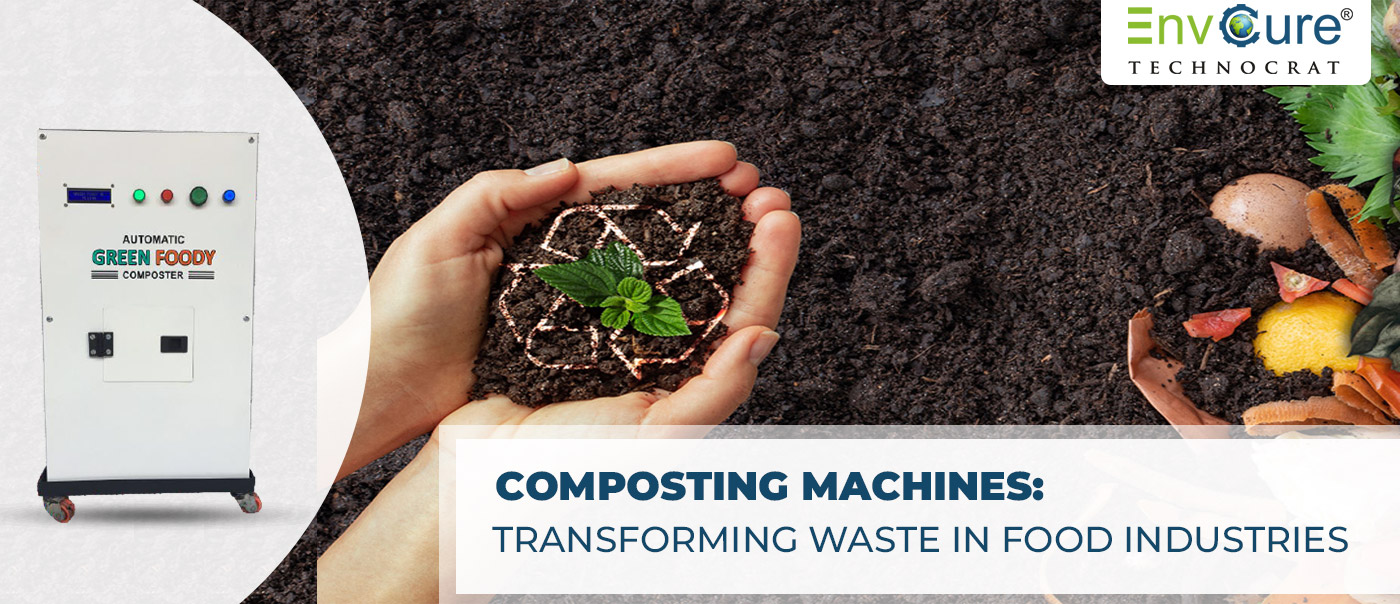
Composting Machines: Transforming Waste in Food Industries

Composting Machines Transforming Waste in Food Industries

In an era brimming with technological advancements, embracing sustainable solutions becomes not just desirable, but vital. The Organic Waste Compost Machine emerges as a hero, especially in realms such as Industrial Canteens, Vegetable Agricultural Produce Market Committees (APMCs), and Hotels. But why? Let’s delve into the treasure trove of its benefits. 

Industrial Canteens: Transforming Waste into Wealth

Industrial canteens churn out mountains of food waste daily. Left unmanaged, this becomes a ticking environmental time bomb. Enter the Organic Waste Compost Machine. This marvel transforms the problem into a solution – converting waste into compost, a nutrient-rich natural fertiliser. An added bonus? The composting process is completed within a day, unlike the months it usually takes.

By adopting the Organic Waste Compost Machine, you can:

  • Achieve rapid composting: This machine accelerates the composting process, turning large amounts of waste into nutrient-rich natural fertiliser in a day.
  • Cut down costs: Say goodbye to expensive waste disposal trips and pest-related issues.
  • Boost your eco-friendly credentials: Composting reduces methane emissions and greenhouse gases, positioning your canteen as an environmental champion.
  • Generate additional revenue: Sell your compost to local farmers and strengthen your community relationships.

Vegetable APMCs: Nurturing Green Gold

Vegetable APMCs hold an essential place in the agricultural ecosystem. These bustling hubs see heaps of organic waste produced daily. The Organic Waste Compost Machine, paired with an efficient Garbage chute system, provides an ideal waste management solution. A win for nature and business alike.

With the machine’s fast and efficient composting capabilities, APMCs can harness the rich compost for their affiliated farms, thereby reducing dependency on chemical fertilisers. By integrating this machine, APMCs ensure a reduced carbon footprint and set an example for other market committees. 

On adopting the Organic Waste Compost Machine, APMCs can:

  • Engage in efficient composting: Rapidly transform organic waste into nutrient-rich compost for affiliated farms, significantly reducing dependence on chemical fertilisers.
  • Be sustainability champions: Lower your carbon footprint, actively contribute to environmental conservation, and set a positive example for other market committees.
  • Foster healthful crops: The produced compost can lead to healthier, more robust crops, indirectly contributing to better yields and profits.
  • Enhance waste management: With an effective waste management system, APMCs can ensure cleaner and safer marketplaces, boosting overall hygiene and reducing the risk of pest-related issues.
  • Build community relationships: By selling or donating the produced compost to local farmers or community gardens, APMCs can strengthen ties within the community.

Hotels: Going Green with Organic Waste Composting

Hotels, with their myriad operations, inevitably generate substantial organic waste. The Organic Waste Compost Machine promises a valuable solution here too. By turning kitchen waste into compost, hotels reduce their environmental impact, appeal to eco-conscious customers, and decrease waste disposal costs.

Moreover, the compost can be utilised in maintaining hotel green spaces, providing guests with lush, healthy landscapes to enjoy. What’s more, the composting process can be an interactive educational experience for guests, adding a unique charm to their stay.

By implementing the Organic Waste Compost Machine, hotels can:

  • Convert waste to wealth: Effectively transform kitchen waste into valuable compost, significantly reducing waste disposal costs.
  • Enhance landscapes: Use the nutrient-rich compost in maintaining hotel green spaces, offering guests lush, thriving landscapes to enjoy.
  • Provide engaging education: Make the composting process an engaging experience for guests, adding a unique, educational aspect to their stay.
  • Attract eco-conscious clientele: By visibly committing to sustainable practices, hotels can attract a growing demographic of eco-conscious travellers, potentially enhancing their market share.
  • Improve waste management: Efficient composting can significantly reduce the amount of waste sent to landfills, contributing to more sustainable waste management practices.

Take Action with Envcure

At Envcure, we’re committed to tackling environmental challenges head-on. We understand the value of sustainable practices and offer practical, innovative, and economical solutions like organic waste compost machines.

Whether you’re a hotel, an industrial canteen, or part of the Agricultural Produce Market Committee, we have a solution tailored for you. Our vision is to make efficient, economical, and eco-friendly Organic Waste Compost Machines accessible to all.

Take a step towards sustainability with us. Let’s turn today’s waste into tomorrow’s resource together. Contact us today to learn more about our organic waste compost machines and how they can benefit your establishment.

Frequently Asked Questions:

Q.1. What are composting machines?

Ans. Composting machines are specialized equipment used in food industries to efficiently convert organic waste into nutrient-rich compost through the process of decomposition.

Q.2. What types of waste can be composted using these machines?

Ans. Composting machines are designed to handle a wide range of organic waste commonly found in food industries. This includes fruit and vegetable scraps, coffee grounds, tea leaves, leftover food, plant trimmings, and more.

Q.3. Are composting machines environmentally friendly?

Ans. Absolutely! Composting machines play a crucial role in promoting environmental sustainability. They help divert organic waste from landfills, reduce greenhouse gas emissions, and contribute to the circular economy by transforming waste into valuable resources.

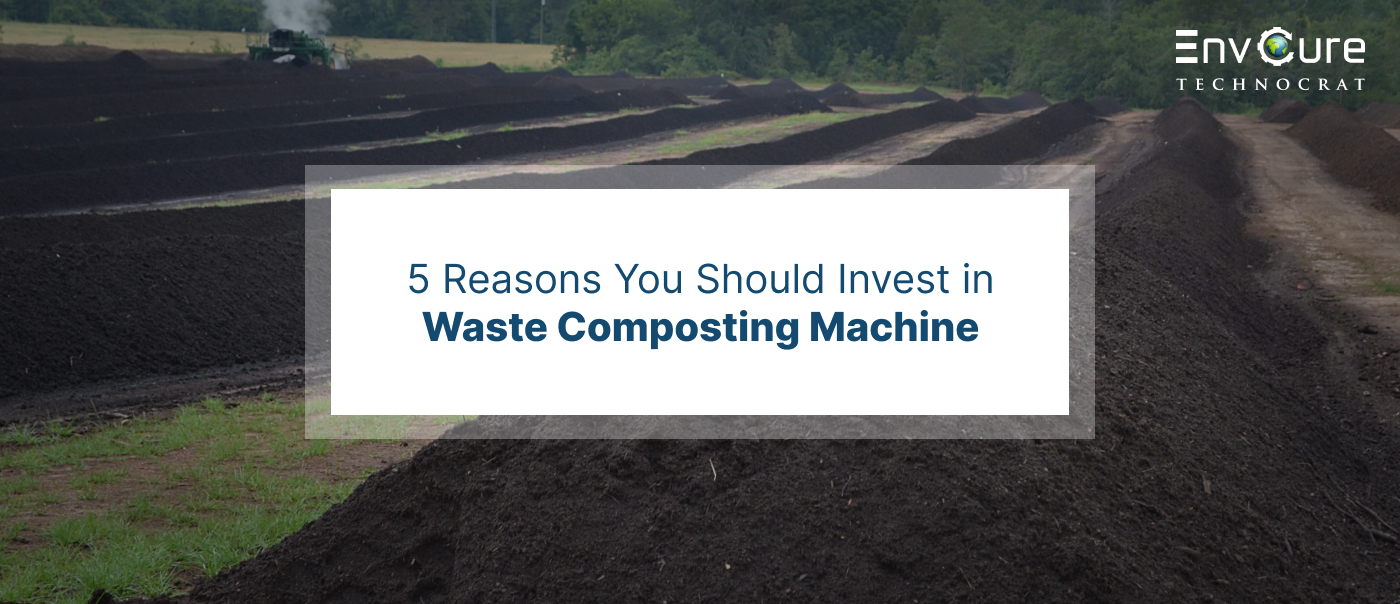
5 Reasons You Should Invest in a Waste Composting Machine

5 Reasons You Should Invest in Waste Composting Machine

An organic waste composting machine is the solution to all the shortcomings of traditional composting. A waste composter machine is meant not only to be used as a garbage chute but also for treating and recycling solid and liquid waste material.

A waste composter machine works independently, giving out manure in return for the waste you add and also for recycling the solid and liquid waste. Let us read more about how it can benefit you.

5 Reasons to buy a Waste Composting Machine

  • Fully automatic, time-saving, and composts all waste
  • No secondary pollution or need for different treatment methods
  • Highly efficient and occupies low space at less expense
  • Durable and safe with effective power systems
  • Safe for human handling with sterilization

Fully automatic, time-saving, and composts all waste

An organic waste compost machine is fully automatic. This saves a lot of manpower for operations. Often one person on a part-time basis is enough to handle the machine. The waste composter machine also takes fewer hours to process everything and converts all kinds of waste into high-quality manure.

There can be food waste, vegetables, eggs, fish, small bones, fruit peels, meals, and leftovers, and everything will quickly be converted into manure.

No secondary pollution or need for different treatment methods

An organic waste compost machine does not waste water. It is a very odorless process and does not actually hold any toxic traits. This technology can compost waste for you without actually having a landfill or any other compost techniques.

Highly efficient and occupies low space at less expense

Compared to a traditional composting method, a waste composter machine occupies less space as the machine is usually compact. In addition, the machine without a Modular Solar Dehydration System can convert 50 kgs of organic waste into 5-10 kgs of manure per day.

If it is used with the Modular Solar Dehydration System, it can convert 500 kgs of organic waste into 50-100 kgs of manure in a short span of 10 hours. All of this is at a very minimal expense as the operating cost of maintaining and running this is low.

Durable and safe with effective power systems

A waste composter machine is built with a tank made of stainless steel. It has a lifespan of over 20 years and is very durable. There are also functions set in place, such as the overload function, to halt the machine during an overload to avoid spillage and any danger to the user.

Usually, the waste composter machines also come with effective systems, including indicators for power, heater, power saving, etc.

Safe for human handling with sterilization

An organic waste compost machine is actually relatively safe for human use, and human handling as a composting machine pasteurizes organic waste. It also processes sterilization and kills all forms of organisms like fungi, bacteria, viruses, and biohazards.

This way, the risk of contracting diseases or health issues for humans operating the machine is significantly reduced.

Conclusion

A waste composter machine is one of the best investments you will make when it comes to waste management. It is better to have manure than to throw away the waste that you yourself have collected.

You can use the manure for gardening or growing vegetables or sell it away to your local farms. There are many benefits to why it is essential and beneficial for conducting waste composting. Here are the benefits of purchasing a waste composter machine as an actual investment rather than an expense.

Frequently Asked Questions

Q.1. How does a composting machine work?

Ans. An integrated shredder, mixing blades, a heating chamber, and other components of a composting machine effectively shred and trim the mixture to prepare it for composting.

Q.2. What are the advantages of composting waste?

Ans. It has many advantages and decreases the demand for synthetic fertilizers. promotes the growth of helpful bacteria and fungi that decompose organic material to produce humus.

Q.3. Are food composting machines compensate for themselves?

Ans. A compost machine can help the environment by lowering the amount of waste that is trucked to a landfill if you don’t already have a system in place to treat food scraps.

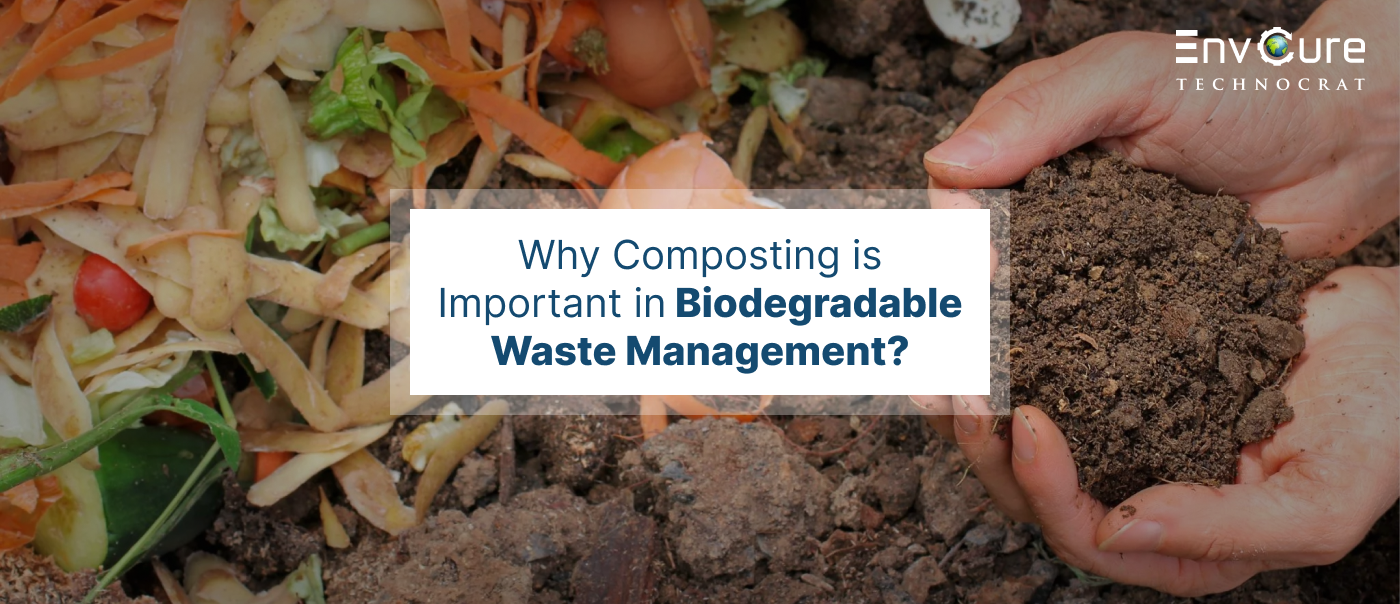
Why Composting is Important in Biodegradable Waste Management?

Why composting is important in biodegradable waste management

Biodegradable waste management has many advantages, which is why government initiatives promote it. It has primarily four main steps – segregation, collection, treatment, and disposal. Composting is an integral part of the treatment step. A proper decomposition of biodegradable waste can give useful products like manure. The organic waste converter machines are making composting easier. With the help of a waste composting machine, waste management can be initiated at a very small scale, inducing sustainability at a micro level. Everyone can contribute to making the system Eco-friendly. The variety in size, mechanism, and price also lucrative these waste composting machines.

Composting is very important for biodegradable waste management and has many advantages. Let us take a look:

Advantages of Composting

1. Avoid rotting hazardous waste

Many types of biodegradable waste can rot with time when left in their original condition. This is because the waste may have been collected at different times under different conditions. This will give way to certain bacteria that can harm the surrounding. By composting the biodegradable waste, we eliminate the conditions that give way to rotting and foul smells. We bring it under the local environmental condition to provide a good yield.

2. Optimum space usage

Different material occupies different space for storage. Waste management without composting can be exhausting for any space management. After composting, every type of biodegradable waste comes under the same category with similar granule size and texture, easy to store and manage. Composting is an excellent way of waste management.

3. Agricultural products

Much food waste can be reutilized in agricultural fields. Composting the waste material can be converted into manure that can be very nutritious for the plants. This compost can be used in agricultural production and land reclamation. Several other benefits include improved soil quality, better biological activity, and improved pest resistance in plants. Composting is an excellent way of creating quality waste.

4. Reduced GHG emissions

Different types of waste material give GHG emissions as they decay. These emissions are harmful to the ecosystem. By composting the waste, we stop the rotting of products and prevent GHG emissions. This has a positive impact on the environment.

Today, we have many technologies and machines for composting. For example, villages and small compounds can install an organic waste converter machine and start using it. The process is straightforward.

Conclusion

Sustainability is essential to make a healthy future. Waste composting machines enable every citizen to contribute to it. With the biodegradable waste converter machine, we can start composting the waste even at the household level. From nourishing the nutrient-depleted soil to making every household self-sufficient, we can bet on an array of benefits. The growing awareness about sustainability and government initiatives push ordinary people to start composting at the ground level. Eco-friendly waste management is a reality today with waste composting machines and new technologies, making the future sustainable and clean.  

Frequently Asked Questions

Q1. What is the importance of composting in waste management?

Ans. It reduces the need for chemical fertilizers, promotes the production of beneficial bacteria and fungi, and breaks down organic matter into humus, a nutrient-rich material.

Q2. What is composting and why is it important?

Ans. Compost is the decomposition of organic matter such as fallen leaves, cut grass, and garbage. It is often used as a fertilizer because it contains many nutrients essential for plant growth.

Q3. What is garbage composting?

Ans. Composting is a natural process that breaks down organic matter and recycles it into a humus-rich soil conditioner known as compost.

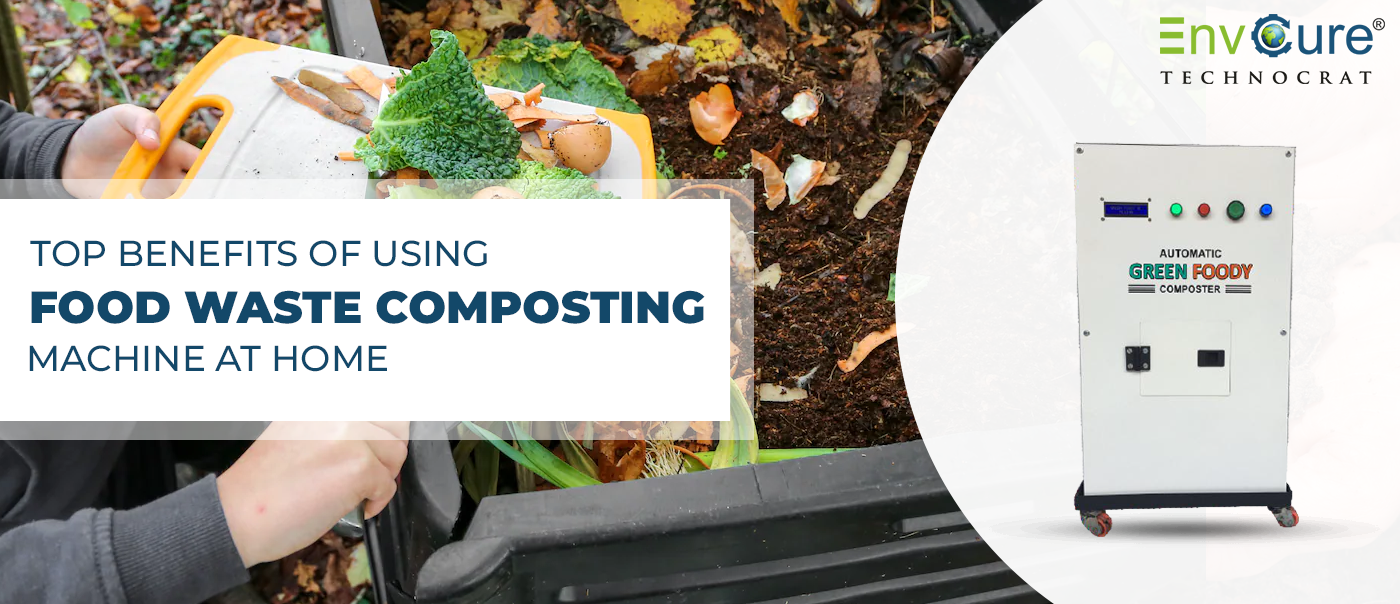
TOP BENEFITS OF USING FOOD WASTE COMPOSTING MACHINE AT HOME

Food Waste Composting Machine

Composting is the process of breaking down and recycling biodegradable waste material into compost which is very useful. However, natural composting takes a long time. It also invites microbes and bacteria.

Food Waste Composting Machine for Home

People started using technology to fasten the process in a very organized and clean way. Today, food waste composting machine is used in commercial spaces. These machines are now being installed at home as well. Having an organic waste machine at home has many advantages. Some of them are listed below:

1. Natural pesticide

We use chemical pesticides to grow a kitchen garden and sow plants on farms. Unfortunately, these chemicals do not have a positive impact on the yield. This is the reason we are paying extra for chemical-free food products. A food wastage composting machine can help create natural pesticides for your plants.

2. Sustainability

A waste composting fertilizer enables you to contribute to the green environment. You also eliminate carbon dioxide emissions from the environment by reducing waste. In addition, you can keep your home sanitized by recycling the trash at a faster pace.

3. Clean home

Different food products compost at different paces. Again, different types of waste give out different dour. Meat, bones, and various dairy products take more time to decompose. Waste composting fertilizer is a great way to escalate decomposition. It can help you eliminate the unpleasant smell generated by slow decomposition. Along with nourished plants, you can also maintain a clean home.

4. Cost efficiency

Food waste collection and recycling without many machines can be tedious and clumsy. You would need a separate space to store and recycle the waste. This space will be occupied for a long time, and you might waste money or purchase chemicals for decomposition and odor removal. Food wastage composting machine comes with a low operating cost and less space. It can be installed in a tiny area. It is a one-time investment and can be a very cost-effective option in the long run. If your budget is meager or you do not want this long-term, you can hire it for a specific period.

5. Safe compost

The natural composting process keeps on adding microbes and bacteria. Handling the waste after complete decomposition can be a monumental task. The food wastage composting machine has a pasteurization process. This process ensures that the harmful microbes from the compost make it safe for handling. There are different features for safety. The machine stops without any spillage or malfunction in case of an overload. You can not only decompose the material but also handle it alone without help.

6. Easy operation

The composting machine is automatic, and all the processes take place on their own. You can set the time of composting and stay relaxed. The mixing blades inside the machine automatically stop opening the removal door. So, you need to put the food waste and start the machine.

A food waste composting machine can be said to be a breakthrough in composting. It is an environment-friendly technology that can be used for residential and commercial use. We are one of the leading waste composting machine manufacturers. You can find affordable and quality machines with use. Our experts will review your requirements and analyze your problems to suggest the best solution. Contact us to get cheap food waste composting machine suitable for residential use.

Frequently Asked Questions:

Q.1. How does a compost machine work?

A. A composting machine has an inbuilt shredder, mixing blades, heating chamber, and other units that efficiently shred and trim the mix, making it ready for composting. In addition, heat and other inputs are provided to escalate the composting process.

Q.2. What are some don’t of using a food waste composting machine?

A. You should always segregate the waste and process only biodegradable waste in the compost machine. Carefully remove glass, metals, and other materials from the input feed.

Q.3. How can we get the compost machine installed at our home?

A. You can contact us. Our professionals will collect the requirement and other details such as compost machine installation size and purpose. The experts will visit your space and install the machine. You will be given a demo of the device. Contact us today to get more details.

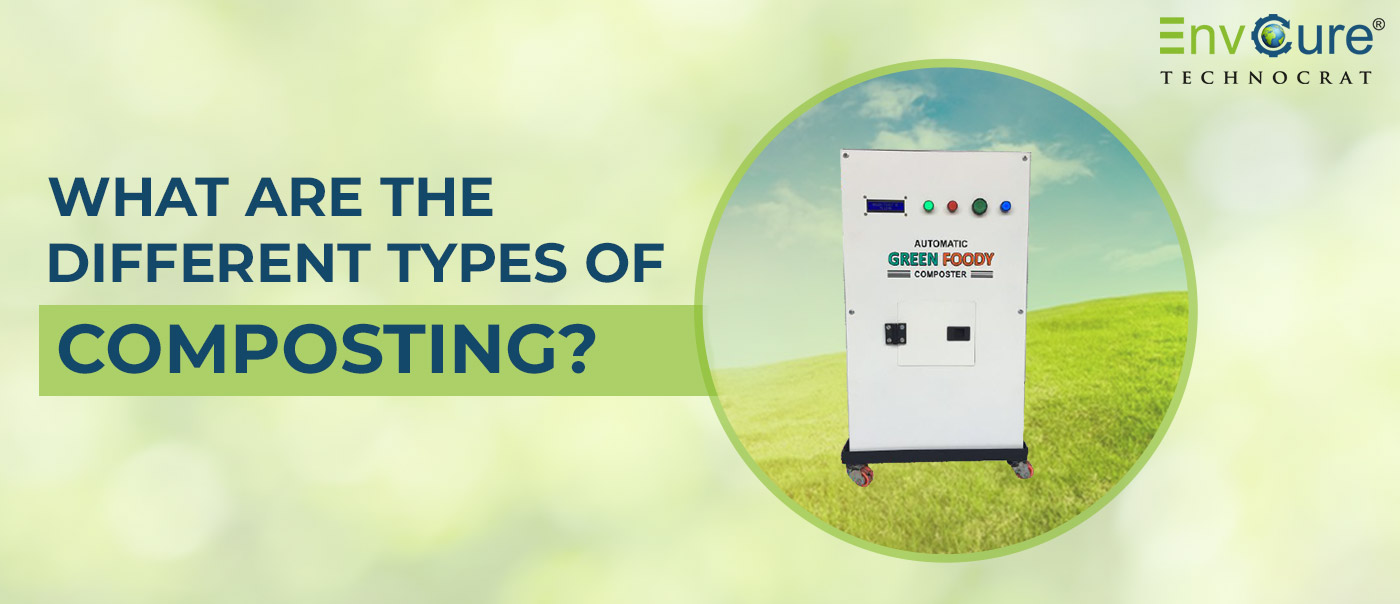
What Are the Different Types of Composting?

What Are the Different Types of Composting

Composting is an ancient method that farmers have practiced for decades. The organic waste is used to produce organic fertilizers that enrich the soil with different nutrients naturally.

In the old days, the process took many years. Today it is possible to get the complete decomposition in a few weeks with the help of machines. Let us understand what compost is and other details about composting.

What is Compost?

Compost is a term used to define decayed material such as food scraps, animal products, and leaves. These waste materials are made to decompose naturally to become a nutrient-rich end-product that can be reused. They are mostly used as fertilizers. The process is known as composting and has many benefits for farmers and gardeners. There are organic waste composting machines that make the process easier and faster.

Types of Composting

1. On-site composting

It is generally used to compost the food waste and garden waste into meaningful, reusable products. It is named on-site as it can be done anywhere. It does not require specific techniques or equipment, such as an organic waste converter machine. It does not require ample space and can be done in containers and bins. However, it is a slow process and takes one to two years to complete.

  • Types of materials

The materials are generally of regular use, such as uncooked food, eggshells, coffee ground, etc. Therefore, they can be summarized as kitchen waste. These things decompose quickly with any specific catalyst and process. However, for 100 percent decomposition, the green and brown waste should be in equal proportion.

2. Vermicomposting

In this process, worms are added as a catalyst to fasten decomposition. Red wigglers and earthworms are some of the common worms. These worms feed on the waste and break it down. This helps the waste to decompose faster. As a result, it takes only one to three months to complete decomposition.

  • Types of materials

The materials can be regular kitchen waste or waste from the household. The only precision required is the presence of water and oxygen in the decomposition process.

3. Windrow composting

It is a precision composting method employed for decomposing bulk materials. It is used in the farming sector on a large scale, preferably in dedicated spaces or shelters. When done in an enclosed space, it provides oxygen using cooling machines. It can take up to two years to finish the composting. However, the actual time depends on the thickness of the waste pile.

  • Types of materials

The materials are generally the waste from farmlands, such as animal residues or spoiled crops. These materials are available on a large scale, making them ideal for the process.

4. In-vessel composting

It is done with the help of a waste composter machine. The machines can control the temperature, oxygen level, rotation, and other aspects that impact the composting method. The device can be used to compost the materials on a large scale. Also, a wide variety of materials can be used to decompose in the machine. Complete decomposition requires only a few weeks.

  • Types of material

In general, all organic materials can be used. Brown materials such as glass, cardboard, and twigs can be used. The green materials, including fruit leftover and lawn clipping, can also be used. The industrial waste can also be decomposed using an organic waste converter machine.

Conclusion

Every composting type has its benefits. The ultimate goal is to convert the waste into valuable products. Conventionally the composting method was very natural and took a long time. With organic waste composting machines, we have fastened the composting method. It helps the gardeners and farmers in organic farming.

Options to control different inputs make composting very easy. Even industries can use this machine for waste management. We are one of the leading manufacturers of waste composter machines. We have machines for a wide range of industries. Our experts can guide you in buying the perfect organic waste composting machine.

The machines are easy to install, use and maintain. Contact us today to get the waste composter machine to recycle waste quickly and at affordable prices.

Frequently Asked Questions:

Q1. What is Compost?

A. Compost is a term used to define decayed material such as food scraps, animal products, and leaves. These waste materials are made to decompose naturally to become a nutrient-rich end-product that can be reused. They are mostly used as fertilizers. The process is known as composting and has many benefits for farmers and gardeners.

Q2. What are the different types of composting?

A. There are four primary compost types: On-site composting, Windrow composting, and In-vessel composting.