
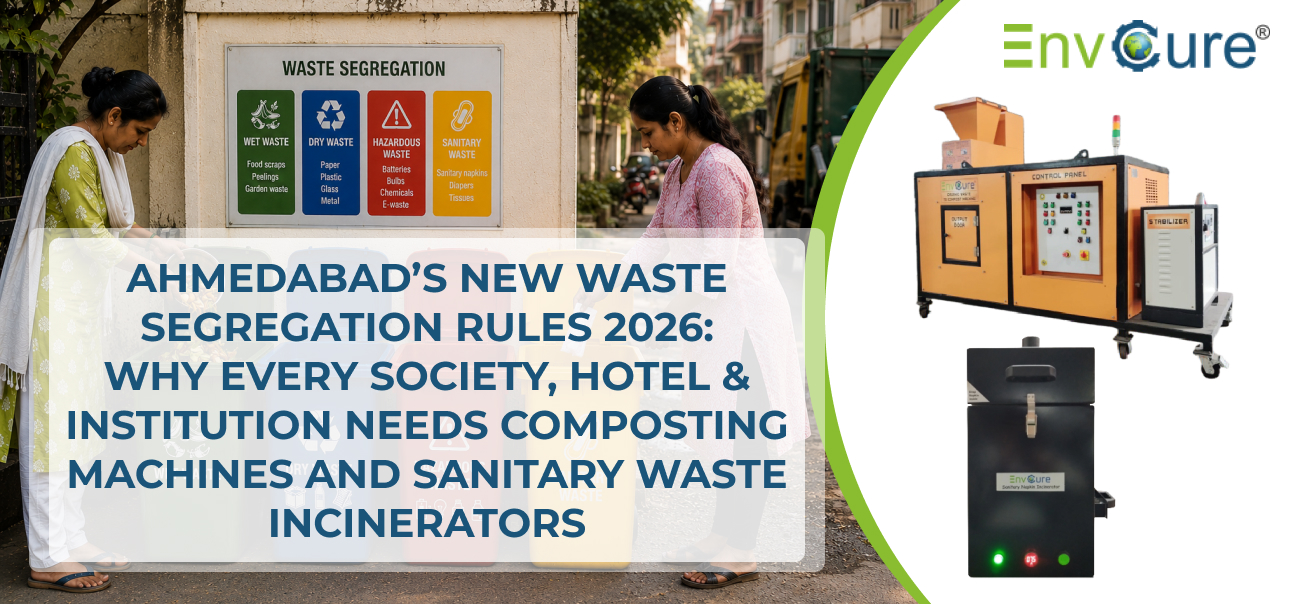
Ahmedabad’s New Waste Segregation Rules 2026: Why Every Society, Hotel and Institution Needs Composting Machines and Sanitary Waste Incinerators

Organic Waste Composter, Sanitary Napkin Incinerator

Ahmedabad’s Waste Management Has Changed. Are You Ready?

If you manage a housing society, run a hotel, or oversee a school or hospital in Ahmedabad, there is something you need to act on right now. The rules around waste disposal have changed, and they carry real legal consequences. In this scenario, installing an Organic Waste Composter and a Sanitary Napkin Incinerator can be the smartest step toward AMC compliance.

Following the Supreme Court’s directives and the Central Government’s Solid Waste Management Rules 2026, the Ahmedabad Municipal Corporation (AMC) has introduced a strict new waste segregation framework across the city. And non-compliance with these guidelines can lead to FIRs, heavy fines, and legal action, too.
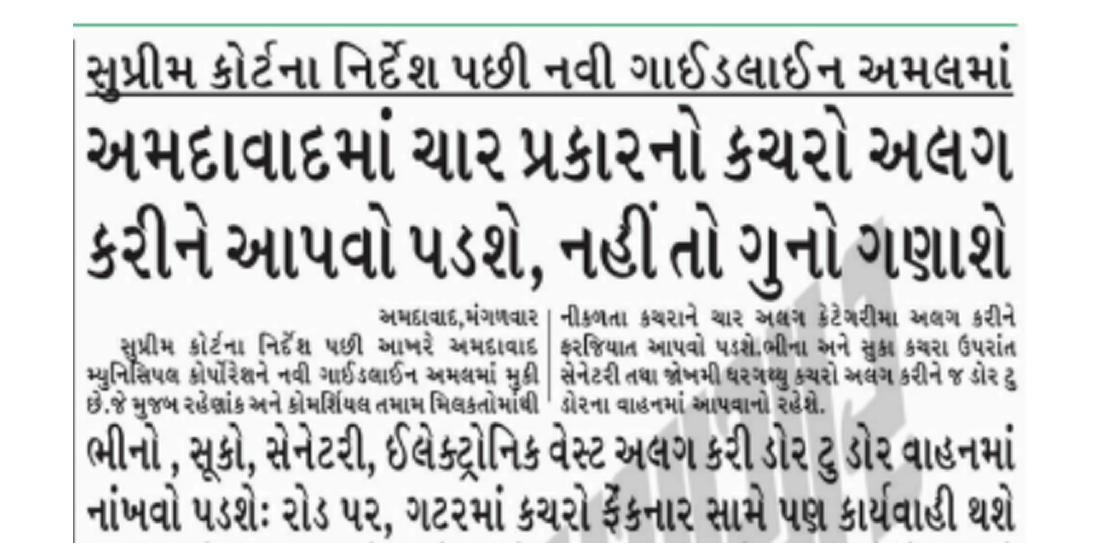
New Rule of differentiation 4 types of waste

The 4 Categories of Waste You Must Segregate

Under the new rules, all waste must be separated into four distinct categories before collection.

  • Wet Waste

    Kitchen waste, vegetable and fruit peels, leftover food, and garden trimmings.

  • Dry Waste

    Paper, plastic, glass, metal, cardboard, and other recyclable materials.

  • Sanitary Waste

    Used sanitary napkins, diapers, razors, and blades are to be wrapped in paper or a bag before disposal.

  • Hazardous / Special Waste

    Expired medicines, empty medicine packets, batteries, pesticides, and household chemicals.
    Separate door-to-door vehicles will collect each category. Mixing waste, dumping it in gutters, throwing it on roads, or burning it openly are all punishable offences under the law.

Who is a Bulk Waste Generator?

AMC has introduced a new legal classification called Bulk Waste Generator (BWG). If your establishment meets even one of the following criteria, you fall under this category:

  • Built-up area of 20,000 square meters or more
  • Daily water consumption exceeding 40,000 litres
  • Daily waste generation of 100 kg or more

Who Does This Apply To?

Hotels, restaurants, shopping malls, hospitals, educational institutions, universities, government offices, and large residential societies all qualify as Bulk Waste Generators.

What Are the Obligations?

Bulk Waste Generators are legally required to process their wet waste on-site. They cannot depend entirely on the municipal collection system. Failure to comply invites FIRs, penalty notices, and strict enforcement action.

The Ahmedabad city generates around 3,200 tonnes of waste daily, yet only 29% is being properly segregated. AMC has already issued over 3.54 lakh notices and recovered fines worth ₹16.95 crore since January 2025. This enforcement is only getting stricter.

Solving Wet Waste: The Case for an Organic Waste Composter

Wet waste is the biggest burden on Ahmedabad’s landfill sites. Food scraps and kitchen waste decompose in landfills, releasing harmful gases and leachate. The new rules are designed specifically to stop this at the source.

What Is an Organic Waste Composter?

An Organic Waste Composter converts wet kitchen and food waste into nutrient-rich compost, right within your premises. Instead of sending wet waste for municipal pickup every day, a waste composter machine processes it on-site, quickly and hygienically.

Why Does Your Society or Institution Need One?

A large housing society with 50 or more homes generates a substantial volume of wet waste every single day. An organic waste composting machine handles this efficiently, turning daily food waste into compost that can be used directly in the society’s garden. In this way, it reduces fertiliser costs and also helps in keeping the premises clean and odour-free.

For hotels, hospitals, and malls, an organic waste compost machine is a direct pathway to Bulk Waste Generator compliance. It reduces landfill dependency, eliminates foul odours from waste storage areas, and requires minimal manual effort from staff.

Also Know, How an Organic Waste Composter Pays for Itself in Commercial Catering and Hospitality

Is It Practical?

The modern organic composting machine is fully automated, compact, and easy to operate. A waste composting machine from a reliable manufacturer handles everything from kitchen scraps to vegetable peels with very little intervention. The result is rich, usable compost and a cleaner, more compliant premises.
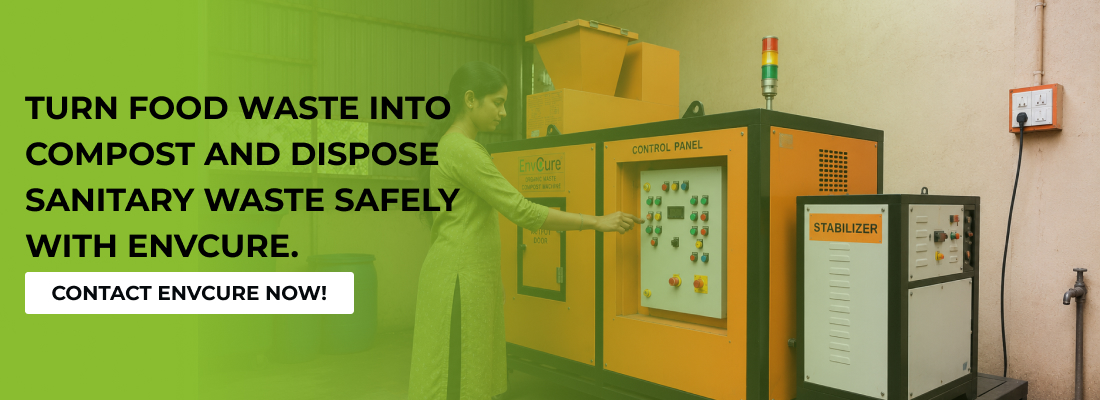
Compost and sanitary incinerator

Solving Sanitary Waste: The Case for a Diaper and Sanitary Napkin Incinerator

Sanitary waste is a category that is often overlooked, but it is one of the trickiest to handle properly. Used sanitary napkins, diapers, and hygiene products carry pathogens that cannot be recycled. Meaning such waste can cause serious contamination if mixed with regular waste.

Why Institutions Cannot Ignore This

For schools, colleges, hospitals, and large workplaces, sanitary waste is generated daily in significant volumes. Under the new rules, this waste must be handled separately. Therefore, on-site disposal is the most hygienic and legally sound approach available.

How a Diaper and Sanitary Napkin Incinerator Works

A Diaper/Sanitary Napkin Incinerator uses high-temperature incineration to convert used sanitary waste into harmless, odourless ash, right inside the washroom. There is no contact with the waste, no lingering odour, and no contamination risk. The sanitary napkin incinerator machine is simple to operate and requires minimal maintenance.

Why Schools Need It Most

A sanitary napkin incinerator for school is not just a compliance requirement. It is also a matter of dignity and hygiene solution. Girls and young women deserve a safe, private way to dispose of sanitary waste, and installing a sanitary pad incinerator in school washrooms makes that possible.

The Electric Incinerator design ensures controlled combustion with no harmful emissions. Whether you call it a Diaper/ sanitary napkin burner, an Incinerator Machine, or a sanitary disposal unit, the purpose is the same. A clean, safe, and compliant waste disposal every single day.

EnvCure Technocrat LLP: Your Waste Management Compliance Partner in Ahmedabad

EnvCure Technocrat LLP, based in Vatva GIDC, Ahmedabad, is a leading manufacturer of waste management solutions registered with GEM, MSME, and Startup India. Here why we have the perfect waste management solution for your specific requirements.

Organic Waste Composter Solutions

EnvCure Technocrat LLP’s Fully-Automatic Organic Waste Composter is designed for residential societies with at least 50 homes, as well as hotels, hospitals, and large institutions. Our range of organic waste composting machines handles anywhere from 50 kg to 2,000 kg of waste per day. Fully automated and easy to maintain, these machines turn daily food waste into valuable compost, right on your premises.

Sanitary Napkin Incinerator Solutions

EnvCureTechnocrat LLP’s Sanitary Napkin Incinerator range offers multiple models with varying capacities, from compact single-washroom units to high-capacity machines for hospitals and large institutions. Our sanitary napkin incinerator machine features rust-resistant construction, hands-free hygienic operation, and safe ash disposal. Whether you need a sanitary pad incinerator for a school or a large-capacity Incinerator Machine for a hospital, EnvCure Technocrat LLP has the right model for you.

Conclusion: The Time to Act Is Now

The Supreme Court has spoken, and the AMC is enforcing. If your establishment qualifies as a Bulk Waste Generator, on-site wet waste processing through an Organic Waste Composter and hygienic sanitary waste disposal through a Sanitary Napkin Incinerator are not optional. They are legal obligations.

An organic waste compost machine turns daily food waste into garden compost. A sanitary napkin incinerator machine keeps your washrooms clean, hygienic, and compliant. Together, they cover two of the four waste categories that the new rules demand you handle responsibly.

Do not wait for a notice. Partner with EnvCure Technocrat LLP and make your premises waste-compliant today.

Frequently Asked Questions

Q1. What are the new waste segregation rules in Ahmedabad 2026?

A. AMC now requires all waste to be separated into four categories, wet, dry, sanitary, and hazardous, before collection. Non-compliance can result in fines and FIRs.

Q2. Who is considered a Bulk Waste Generator under AMC’s new rules?

A. Any establishment with a built-up area over 20,000 sq. meters, daily water use exceeding 40,000 liters, or waste generation above 100 kg qualifies as a Bulk Waste Generator.

Q3. Is an Organic Waste Composter mandatory for housing societies in Ahmedabad?

A. Yes, societies that generate 100 kg or more of waste daily must process wet waste on-site. An Organic Waste Composter is the most efficient and compliant solution for this.

Q4. Why do schools and hospitals need a Sanitary Napkin Incinerator?

A. A Sanitary Napkin Incinerator safely converts used sanitary waste into ash on-site, preventing contamination and ensuring full compliance with AMC’s sanitary waste disposal rules.

Q5. What happens if a society or hotel does not comply with the new waste rules?

A. AMC can issue penalty notices, recover fines, and file an FIR against non-compliant establishments. Officials showing negligence can also face personal legal action.
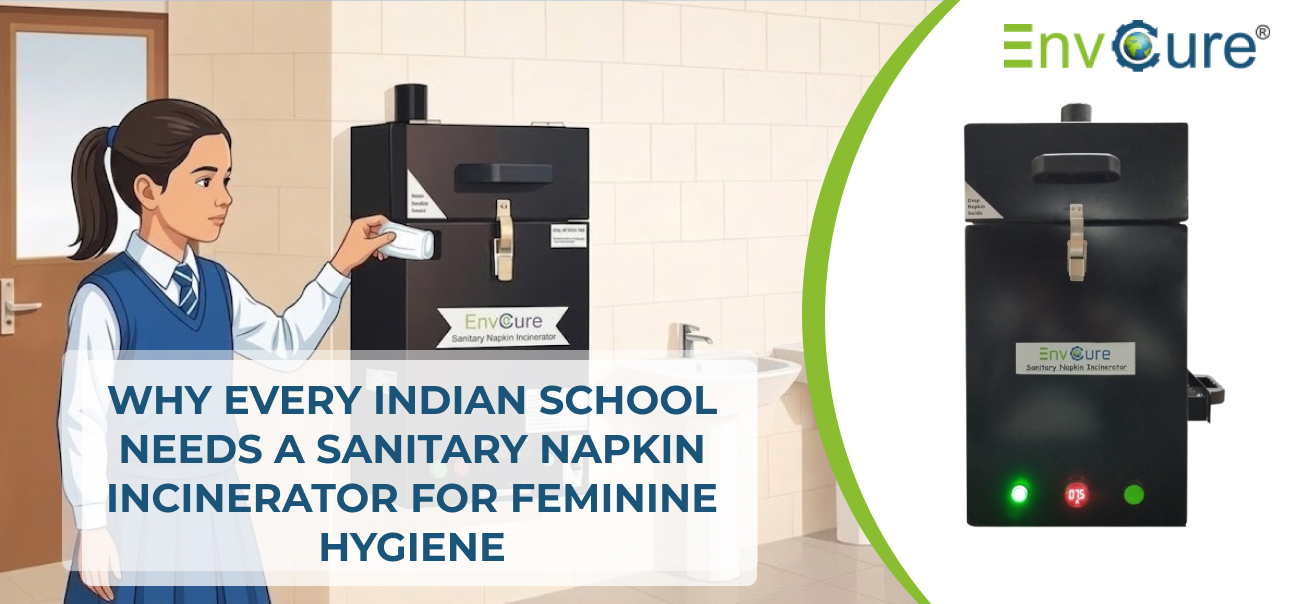

Why Every Indian School Needs a Sanitary Napkin Incinerator for Feminine Hygiene

Why Every Indian School Needs a Sanitary Napkin Incinerator for Feminine Hygiene

Millions of Indian schoolgirls miss classes every month, not by choice, but because their schools fail them on something as fundamental as basic hygiene. A simple, practical solution exists: the sanitary napkin incinerator. And it’s time every school in India have one.

The Silent Crisis in Indian School Toilets

Walk into the girls’ washroom of most government or semi-urban schools, and the reality is impossible to ignore. Sanitary pads will be thrown into corners, stuffed into dustbins, or flushed down drains, causing blockages, spreading infections, and robbing girls of the dignity they deserve. These aren’t just sanitation failures. These are daily humiliations that no child should have to face.

According to UNICEF, nearly 23 million girls drop out of school annually in India due to inadequate menstrual hygiene facilities. Poor disposal infrastructure quietly accounts for a significant share of this heartbreaking number.

When a girl doesn’t feel safe or find hygienic facilities at school during her period, she stays home. It seems like a small decision in the moment, but such repeated absences quietly bring down her grades, her confidence, and her belief in what she can achieve in her future. 

This is not a minor inconvenience. It is a public health and education crisis, for which we have the means to solve, and every reason to do so.

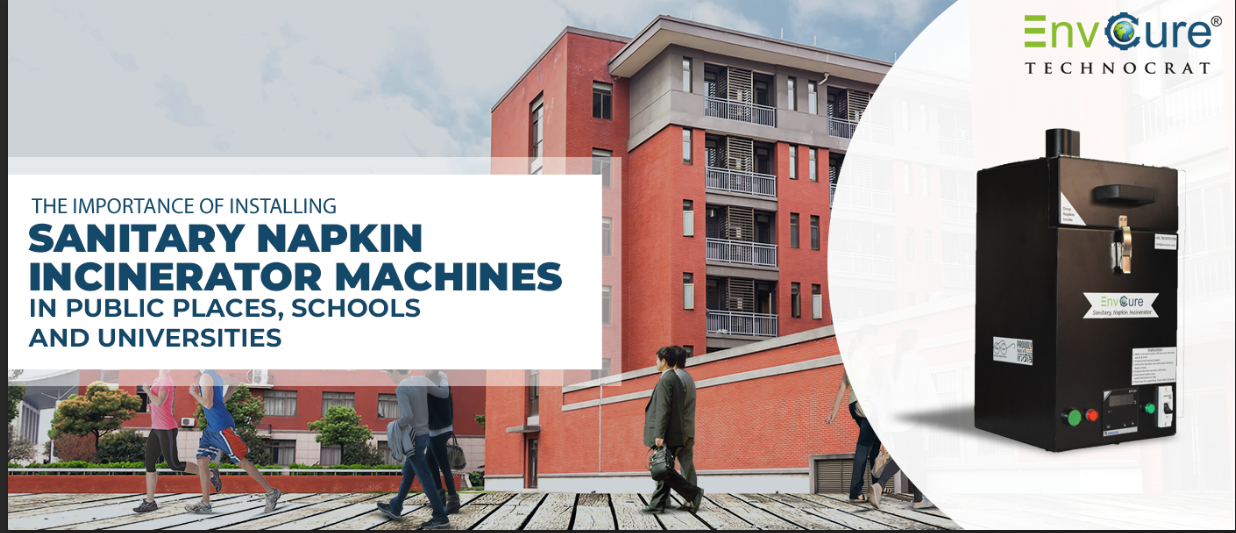
This blog explains The Importance of Installing Sanitary Napkin Incinerator Machines in Public Places, Schools, and Universities.

What is a Sanitary Napkin Incinerator?

A sanitary napkin incinerator is a compact, electrically operated device built to burn and dispose of used sanitary pads. When installed directly inside school washrooms, it allows girls to manage their periods privately and without the quiet shame that comes from inadequate facilities.

This incinerator uses high-temperature combustion, typically between 300°C and 800°C, to burn the pads and reduce them to a small quantity of sterile ash. It leaves no foul odour and no visible waste. In addition, the contactless disposal saves schoolgirls from possible disease, and it is also very easy for them to use.

Modern units, like these developed by EnvCure Technocrat LLP, are built with real institutional needs in mind. They are compact enough to fit within existing washroom infrastructure, quite easy for students to operate without assistance, and designed to require minimal maintenance.

Learn more from How Do Sanitary Napkin Disposal Machines Helps Society.

How Does a Sanitary Napkin Burner Work?

The working of a sanitary napkin burner is very straightforward:

  • A student places her used sanitary pad inside the incinerator chamber.
  • The electric incinerator heats up automatically or through a push-start mechanism.
  • The pad is incinerated at high temperature within minutes.
  • Only a small amount of sterile ash remains, which is disposed of safely.

The entire process is enclosed, odour-controlled, and touchless in most models. This makes the sanitary napkin burner certainly a better solution than opening bins, plastic bags, or shared dustbins that many schools still rely on.  

Why Schools Specifically Need a Sanitary Pad Incinerator

There are several reasons for the need for a sanitary pad incinerator in schools.

Hygiene and Infection Control

Used menstrual products carry bacteria, blood, and pathogens that still exist when dropped into an open bin. Rather, they accumulate and create conditions where infections can spread easily and silently. A sanitary pad incinerator addresses this at the source, eliminating waste through heat before it ever becomes a hazard.

Dignity and Confidence

No girl should have to walk out of a toilet stall carrying a used pad wrapped in newspaper, searching for somewhere to dispose of it discreetly. The schools need to install a sanitary napkin incinerator, which provides students with a safe, hygienic method to dispose of their napkins while maintaining their personal dignity.

Environmental Responsibility

A single sanitary pad takes between 500 and 800 years to decompose in a landfill. When schools install an incinerator machine, they make themselves capable of reducing plastic-based menstrual waste that otherwise would’ve gone to the dumping grounds or drains.

Reduced Plumbing Damage

Flushed sanitary pads block the pipes when thrown in school toilets. When students use a dedicated sanitary napkin incinerator machine, they also leave the habit of flushing pads, which ultimately results in a reduction in costly plumbing services.

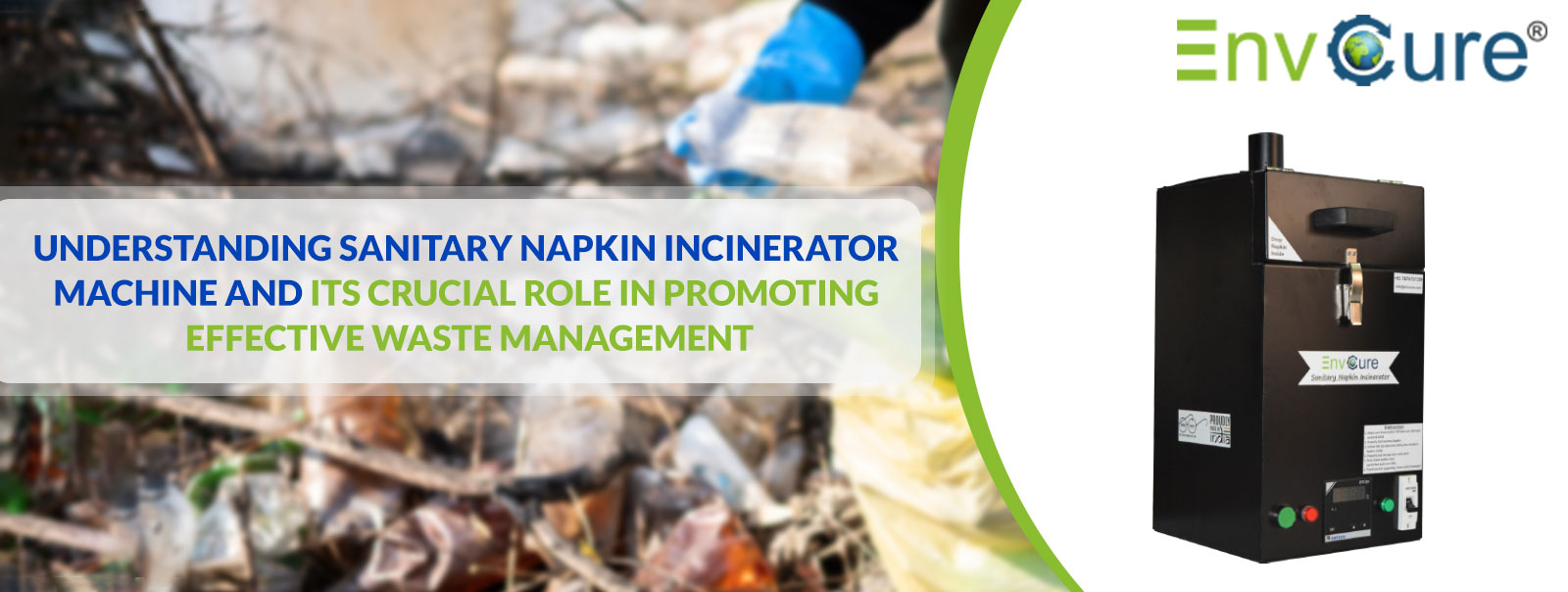
Learn more about the Understanding Sanitary Napkin Incinerator Machine and Its Crucial Role in Promoting Effective Waste Management.

Contact us - EnvCure Technocrat LLP

Is a Sanitary Napkin Incinerator Mandatory in Indian Schools?

The short answer is: Yes.

The Government of India’s Swachh Bharat Mission (Gramin) guidelines formally recommend the installation of a sanitary napkin incinerator in all school toilets under the Swachh Vidyalaya programme.

Both the Ministry of Education and the National Commission for Protection of Child Rights (NCPCR) have underscored the importance of proper menstrual hygiene management (MHM) facilities in schools. 

Several states have moved beyond recommendations entirely. Karnataka, Maharashtra, and Rajasthan, among others, have made installation a formal requirement for schools above a minimum student strength.

Compliance is increasingly reflected in school inspection reports, and it is also tied directly to eligibility for the government’s funding schemes.

How to Choose the Right Sanitary Napkin Incinerator for Your School

How to Choose the Right Sanitary Napkin Incinerator for Your School

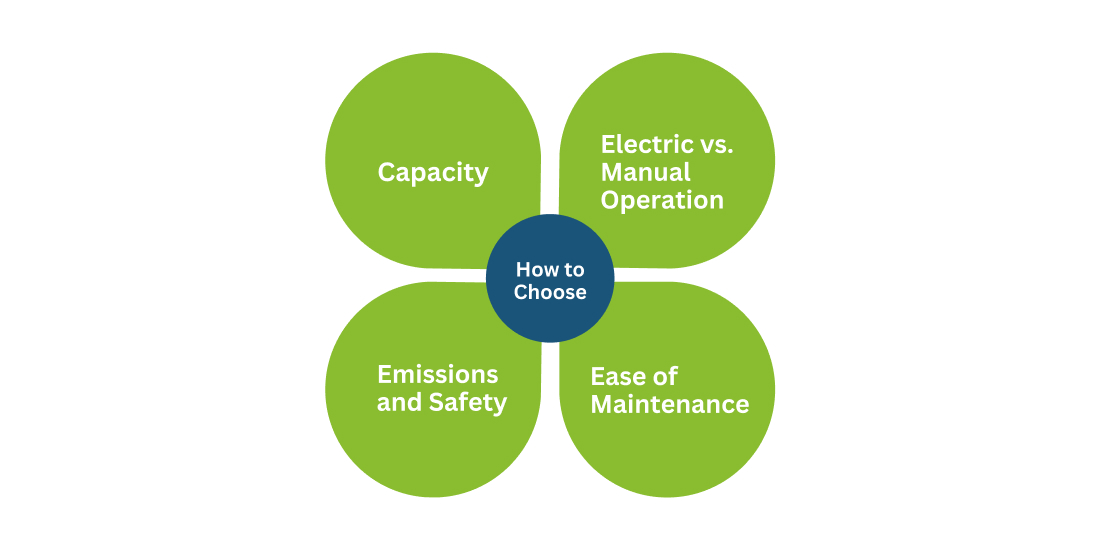
Not all incinerators are built alike, and choosing the wrong model can mean a device that’s underused, overused, or simply not suited to how your school actually functions. Here’s what to look for before selecting a sanitary napkin incinerator machine:

Capacity

To choose the incinerator, you should start with the number of female students in your school. A school with fewer than 200 female students will typically be well-served by a unit handling 10–15 pads per cycle. Larger schools, however, should think about getting a higher-capacity model or installing multiple units across different washroom blocks.

Electric vs. Manual Operation

For school, an electric incinerator is a more convenient choice. It’s safe enough for students to operate independently, without training or assistance. And because it delivers consistent high-temperature combustion every time, there’s no variability in how effectively the waste is destroyed.

Emissions and Safety

The best models come equipped with in-built filtration systems or catalytic converters that prevent smoke and toxic by-products from leaking out from the machine and spreading in the washroom. Ensure the unit you choose complies with CPCB (Central Pollution Control Board) norms.

Ease of Maintenance

A sanitary napkin incinerator at school is only useful when it can be used by girl students on their own. Therefore, you should look for practical design features, such as a self-cleaning functionality, a removable ashtray, and a system that doesn’t demand technical expertise to dispose of a pad.

EnvCure Technocrat LLP has created its sanitary napkin incinerator for school to solve the real problems that girl students face in schools. The machine serves its purpose well, and it is the best available sanitary pad incinerator for Indian schools that operate with restricted resources.

Read in detail, How to choose the right sanitary napkin incinerator for government and NGO projects

Every School Deserves Better: Start With a Sanitary Napkin Incinerator

Menstrual hygiene is a basic right and a public health necessity, too. Schools that invest in the right infrastructure and install a sanitary napkin incinerator create a safer, more inclusive space where girls can focus on learning, not managing discomfort in unhygienic conditions.

The solution needs only basic cost requirements, direct installation, and basic construction work. The installation of one properly situated sanitary napkin incinerator machine for each girls’ washroom will provide instant, measurable results.

EnvCure Technocrat LLP builds incinerators with precisely that purpose in mind. Our incinerators are purpose-built for Indian school conditions, fully compliant with regulatory norms, and backed by after-sales support that ensures the device keeps doing its job long after installation. 

So, give your students the hygiene infrastructure they deserve.

FAQs Related to Sanitary Napkin Incinerator

Q: What is a sanitary napkin incinerator? 

A: It is an electrically operated device that destroys used sanitary pads through high-temperature combustion, leaving behind only sterile ash. It is designed for clean, odour-free, and hygienic menstrual waste disposal. 

Q: Why do schools need a sanitary pad incinerator? 

A: Schools need it to provide safe disposal options for menstrual waste, prevent infection, maintain washroom hygiene, and protect the dignity of female students. Without it, waste ends up in open bins or drains, creating health hazards. 

Q: Is a sanitary napkin incinerator machine mandatory in Indian schools? 

A: Government guidelines under Swachh Vidyalaya and Swachh Bharat Mission strongly recommend it. Several state governments have made it mandatory, especially for schools with a significant female student population. 

Q: What is the best electric incinerator for schools? 

A: The best one is compact, electrically operated, CPCB-compliant, has low emissions, and is easy for students to use without staff assistance. Capacity should be matched to the school’s student strength. 

Q: How does a sanitary napkin burner work? 

A: The user places the used pad inside the chamber. The electric heating element raises the internal temperature to 300–800°C, incinerating the pad within minutes. The remaining ash is minimal and sterile, with no odour or visible waste.

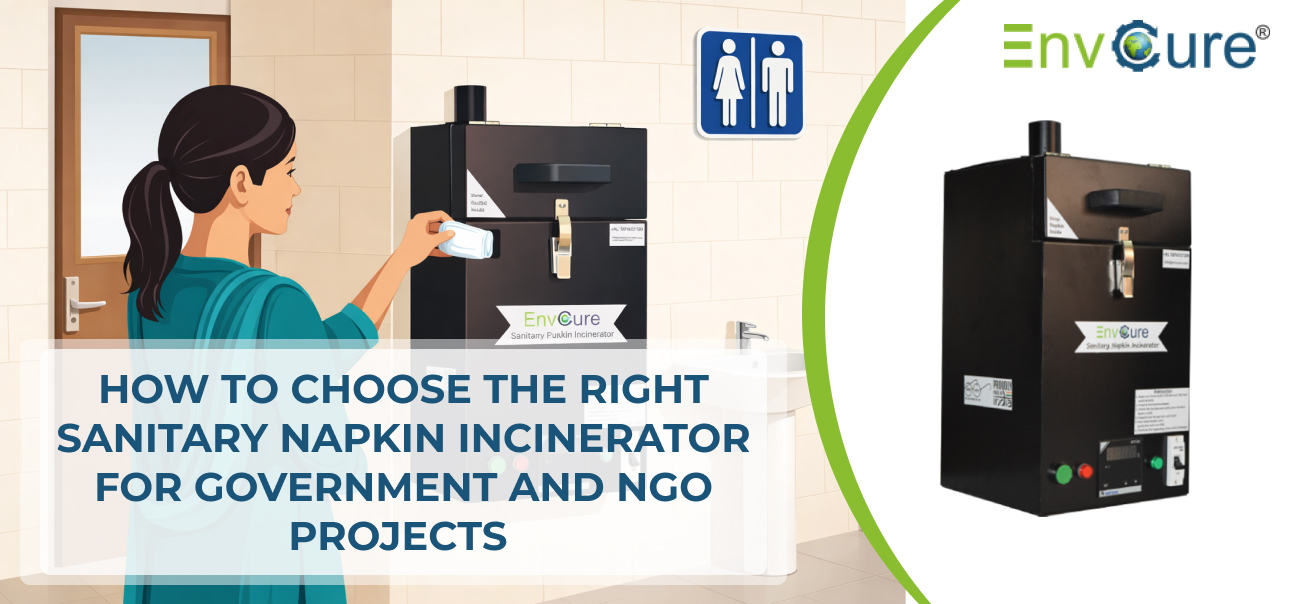
How to choose the right sanitary napkin incinerator for government and NGO projects

Sanitary Napkin Incinerator

The success of any sanitation drive, whether it’s Swachh Bharat Abhiyan or a focused NGO initiative for menstrual hygiene, depends not just on distribution but on disposal. For government bodies and NGOs, picking the right Sanitary Napkin Incinerator is an important infrastructure decision. Choosing poorly can mean high energy bills, health hazards, or unused machines with high operational complexity. This guide details technical specifications, safety parameters and government compliance standards you must consider when selecting a sanitary napkin incinerator machine that will provide long-term public health benefits.

Overview: Choosing the Right Sanitary Napkin Incinerator

  • Sanitary Napkin Incinerator machines provide a hygienic, on-site disposal solution for schools, public restrooms & hostels funded by government or NGO initiatives.
  • Important selection parameters are burning capacity (according to user volume), power efficiency and material durability (rust-resistant stainless steel).
  • Respecting CPCB guidelines is mandatory. Electric models are generally safer and convert waste to sterile ash without toxic emissions.
  • Look for auto-off timers, thermal insulation and correct emission control for public spaces.
  • With established manufacturers such as EnvCure Technocrat LLP, you get compliant, durable machines supported by long-term service support.

Learn more about the benefits and working of sanitary napkin incinerators in this detailed guide.

The Challenge of Disposal in Public Projects

In India, millions of sanitary pads are discarded annually. Their improper disposal can block sewage lines or open landfills and cause serious health hazards. Availability of private disposal options in schools and rural centers contributes to high dropout rates in adolescent girls’ studies.

A decentralized, instant disposal is provided by an incinerator machine. Yet in government tenders and NGO projects, the lowest cost is usually more important than functional longevity. For the sustainability of your project, technical diligence is required.

Sanitary napkin burner

What is a Sanitary Napkin Incinerator?

A Sanitary pad incinerator is an electrically operated unit that burns used menstrual absorbents to sterile ash. Unlike open burning, however, a quality sanitary napkin burner burns the fuel inside an insulated chamber with smoke and odors controlled by an exhaust system.

The goal of these incinerators is to reduce waste volume by 98% while avoiding pathogens. For institutional use, they are usually wall-mounted and automatic, with types such as opening a door, placing the napkin inside, and pressing a button.

Read this guide on Understanding Sanitary Napkin Incinerator Machine and Its Crucial Role in Promoting Effective Waste Management.

Government Guidelines & NGO Compliance Standards

When purchasing machinery for public welfare, national standards are non-negotiable. Follow the Central Pollution Control Board (CPCB) & Solid Waste Management (SWM) Rules for a legal, safe & sustainable project.

1. Central Pollution Control Board (CPCB) Norms

According to pollution control guidelines for small-scale incinerators:

  • Temperature: The primary combustion chamber should reach temperatures sufficient to destroy pathogens and superabsorbent polymers (typically above 800 °C for good combustion).
  • Emission Control: The machine should have an exhaust system (chimney/flue) for venting gases outside the building, preferably 2 meters above the roof level to prevent smoke accumulation in the user area.
  • Residue Management: Resting ash must be sterile and safe for disposal in municipal bins.

2. Solid Waste Management Rules (2016)

Under these rules, sanitary waste is classified as “Domestic Hazardous Waste.”

  • Segregation: This prohibits mixing sanitary waste with wet or dry waste.
  • Decentralised Disposal: These rules encourage on-site disposal methods like incinerators for bulk generators like hostels and schools to reduce landfill use.

3. Menstrual Hygiene Management (MHM) Guidelines

The Ministry of Drinking Water and Sanitation recommends:

  • Safety First: Electric incinerators are preferred in schools over low-cost brick/wood burners to prevent accidental burns and poisonous fumes.
  • Privacy: Installation should always be inside the toilet block or a private area adjacent to it to encourage use without embarrassment.

Project Tip: When drafting your RFP (Request for Proposal), ask vendors to provide a “Compliance Certificate” stating that their Sanitary napkin incinerator machine meets these emission and safety norms.

This blog explains The Importance of Installing Sanitary Napkin Incinerator Machines in Public Places, Schools, and Universities.

Critical Selection Criteria for Institutional Buyers

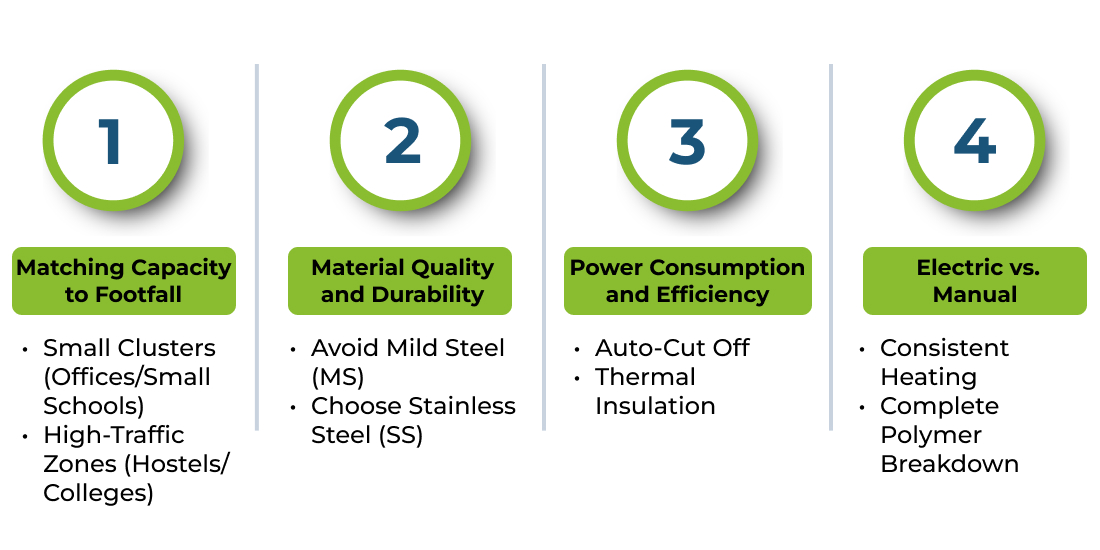
Focusing on these four areas when drafting a tender or purchasing for a large-scale project will ensure you select a machine that can withstand public use.

Sanitary pad incinerator

1. Matching Capacity to Footfall

One of the most common mistakes is choosing a low-capacity machine in a high-traffic area. Incinerators are classified by their “burning capacity” per cycle.

  • Small Clusters (Offices/Small Schools): Locations without more than 50 users will need a basic Electric Incinerator such as the EnvCure ECI 01 (burning 1-3 napkins per cycle).
  • High-Traffic Zones (Hostels/Colleges): For hostels or public washrooms, you need a Sanitary napkin incinerator for schools that can take peak loads. Machines like the EnvCure ECI 15, which burn 15-20 napkins at a time, prevent queues and overheating.

Pro-Tip: Always calculate the peak hour load. A tiny single-napkin burner will fail if 50 girls need to use the machine during a 15-minute recess.

2. Material Quality and Durability

Public amenities are subject to rough use and humidity. The lifespan of your Sanitary napkin incinerator machine is directly related to the building material.

  • Avoid Mild Steel (MS): MS bodies are cheaper, but rust quickly in damp toilet environments.
  • Choose Stainless Steel (SS): Government projects need to specify SS 304 grade. It is corrosion-resistant. Ensure the exhaust piping is also made of durable material, such as SS corrugated pipes, instead of cheap plastic hoses.

3. Power Consumption and Efficiency

Operational cost is a major issue for NGOs and government schools. Any designed Sanitary Napkin Incinerator should be energy efficient. Look for:

  • Auto-Cut Off: The machine should shut off after burning is complete.
  • Thermal Insulation: High-density ceramic insulation keeps the heat in the chamber. This stops burning faster & keeps the outer body cool – an important safety feature in schools.

4. Electric vs. Manual

Manual, fuel-based incinerators are easily available in the market, but for institutional projects, an Electric Incinerator is almost always the better choice. Manual burners lack temperature control and produce toxic fumes. Electric models maintain consistent temperatures so plastic liners and polymers completely disintegrate.

Learn more from How Do Sanitary Napkin Disposal Machines Helps Society.

The Maintenance Factor

A project must close the maintenance loop. When selecting a vendor, ask:

  • Ash Removal: Is the ashtray accessible and clean?
  • Service Network: Do they offer an Annual Maintenance Contract (AMC)?
  • Spare Parts: Are heating coils and thermocouples replaceable?

Our Commitment to Hygiene: Partnering with EnvCure Technocrat LLP

We know installing a Sanitary Napkin Incinerator is more than a purchase. It’s an investment in dignity, health and environmental stewardship. The right machine lets women and girls take control of their hygiene without embarrassment or infection.

Here at EnvCure Technocrat LLP, we have designed our “BIJOU” and ECI series incinerators for the Indian public infrastructure needs. Our machines are available in compact units for small offices and heavy-duty Sanitary napkin incinerators for school hostels, all built in SS 304 durability and comply with all regulatory requirements. Ready to install sustainable sanitation? Partner with EnvCure Technocrat LLP. See how our compliant, energy-efficient incinerators are serving thousands of government and NGO projects in India. Contact us today for a technical consultation and ensure your project delivers lasting impact.

FAQs Related to Sanitary Napkin Incinerators:

Q. How do I choose the right capacity for a sanitary napkin incinerator?

A. Choose capacity based on daily pad volume (estimate users × usage rate), peak usage times, and future growth; pick a model with 10-30% extra capacity to avoid frequent overloading.

Q. What are the operating costs and energy requirements?

A. Compare fuel/electricity consumption, maintenance frequency, consumables (e.g., filters), and expected ash disposal costs; calculate total cost of ownership (TCO) over 5–10 years.

Q. Which features are essential for school, hospital, or public-place installations?

A. Look for lockable access, tamper-proof feed, automatic controls, low smoke emissions, easy ash removal, clear maintenance access, and user safety interlocks.

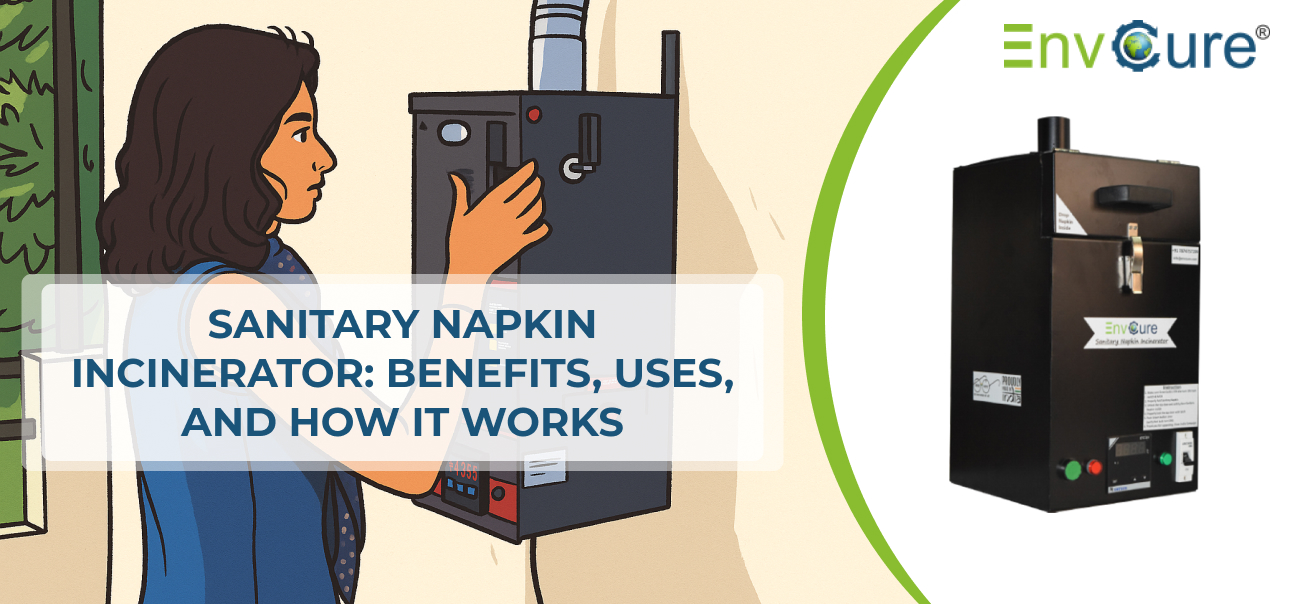
Sanitary Napkin Incinerator: Benefits, Uses, and How It Works

Sanitary Napkin Incinerator

Poor disposal of menstrual waste poses serious hygiene and environmental challenges. A sanitary napkin incinerator (also known as a sanitary pad incinerator or sanitary napkin burner) is a compact electric device designed for the safe burning of used pads. The incinerator is constructed to burn waste at very high temperatures, converting the waste into sterile ash, while significantly reducing its volume. These incinerators, therefore, act as a method for disposing of dangerous contaminated waste on-site, with which schools, workplaces, hospitals, and public restrooms remain clean and maintain menstrual hygiene. Proper use of these incinerators prevents health hazards arising from traditional disposal methods (such as open dumping) and helps sustain the environment by not contributing to landfill buildup.  

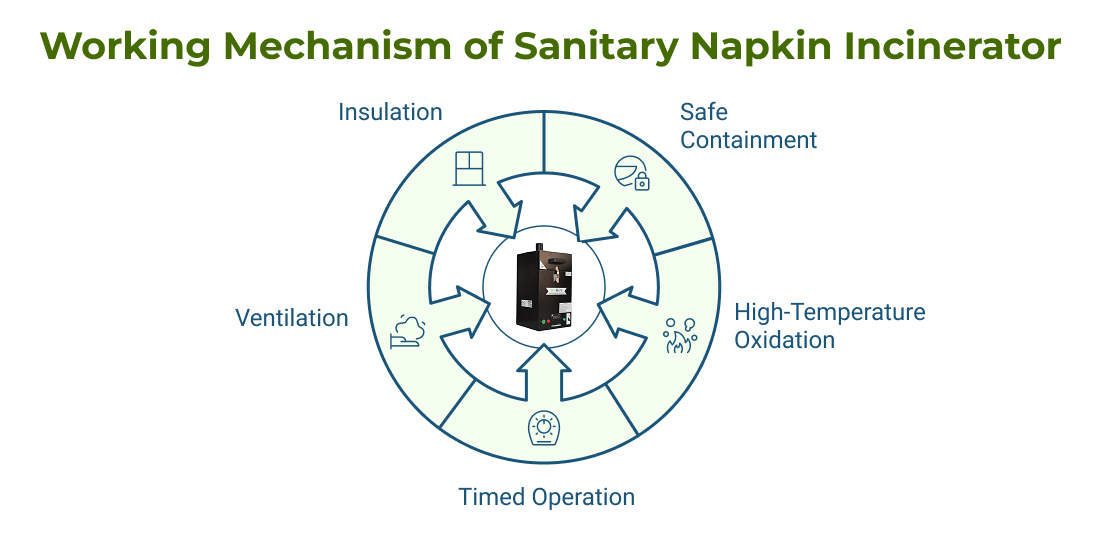
Working Mechanism of Sanitary Napkin Incinerator 

The sanitary napkin incinerator consists of a sealed burning chamber with internal heating elements and proper insulation. Waste enters through a door. Upon closing and activation of the incinerator, electrical heaters rapidly raise the temperature of the chamber to around 500–600 °C or above; this level of heat incinerates pads almost instantly. This process burns the pads into ash and odorless gases; most units have a timer for automatic switch-off, plus a chimney that ventilates the exhaust air externally. Are modern designs equipped with a digital control panel and safety features such as temperature cutoffs and double-wall insulation, which prevent smoke formation or energy leakage? As described by Coohom, “These devices work by burning waste at very high temperatures, converting it into ash and gas, thereby significantly reducing the volume of waste.” In other words, an entire pad may turn into about a spoonful of ash, which removes big trash and prevents spills or leaks. 

Sanitary pad incinerator

  • Safe containment: The sealed design of the incinerator ensures that unprotected human contact with waste is impossible while trapping pathogens.  
  • High-temperature oxidation: Electric coils or burners are activated and reach very high temperatures for complete combustion of organic substances, sterilizing the wastes.  
  • Timed operation: Most units incorporate an auto-shutoff feature that turns off the heater at the end of a preset heating cycle, conserving energy.  
  • Ventilation: An exhaust chimney or the vent pipe of 2 to 3 m (almost always included) carries exhaust out; it may be fitted with filters to minimize air pollution.  
  • Insulation: Two-wall stainless steel construction with ceramic insulation for retaining heat as well as for efficient burning and surface cooling. 

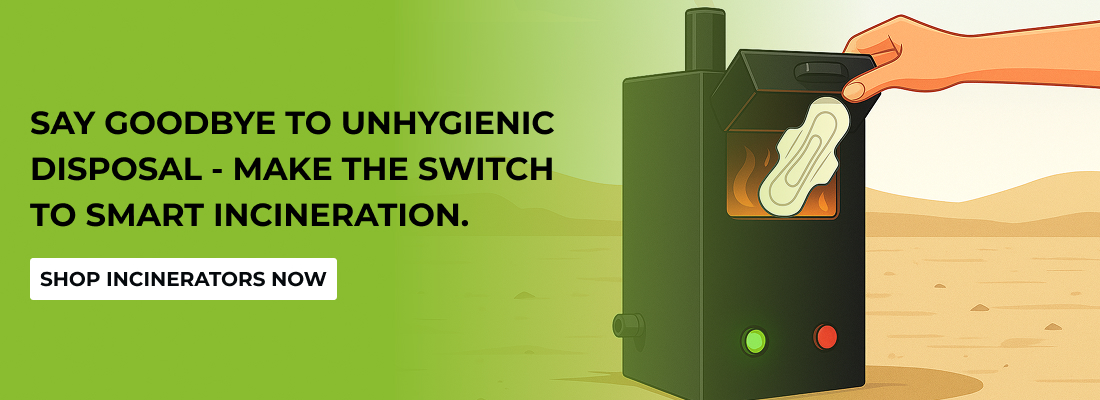
The uneventful operation of an incinerator is done by dropping used pads through the loading door. The door gets closed and locked, then the cycle is selected and started. Following incineration and the cooling period, the sterile ash can be thrown away in regular garbage. Cleaning and maintenance according to the manufacturer’s guidelines (e.g., ash emptying, ventilation checks) will ensure trouble-free service for years.  

Don’t miss Sanitary Pad Disposal Machine: A Necessity for Hospitals and Healthcare Facilities. 

Advantages of Sanitary Napkin Incinerators  

Sanitary napkin incinerators offer more obvious advantages than customary disposal: 

  • Better hygiene: Incinerators significantly destroy pathogens and provide exposure control. Used pads turn odorless and bacteriophage-proof inert ash when incinerated. Coohom notes,” They ensure that used sanitary products are disposed of safely, preventing any potential health hazards.” This prevents cleaners, users, and communities from the hazards of infection or disease that contaminated menstrual waste could pose. 
  • Environmental Protection: Incineration sharply reduces waste volume, cutting reliance on landfills and sewers. Disposing of pads by burning prevents plastic and fibers from clogging drains or contaminating soil. Incineration could emit some CO₂; however, from an environmental perspective, it is preferable to the uncontrolled burning of low-grade pad waste or its disposal in landfills or waterways. According to WHO, menstrual waste might commonly go to an incinerator or landfill, depending on local ordinances. So, controlled incinerators with filtration are the best option: they kill pathogens, reduce volume, and keep pollution to a minimum. 
  • Convenience and cost savings: Incineration cuts the monthly waste volume by over 90%; hence, fewer sanitary bins need to be emptied. Facilities save on fees for waste collection and fight against pad clogging in toilets (which can cause plumbing backups). As ashes waste, incinerators make disposal easy without chemicals or special packaging. 
  • Discreet: The incinerators offer acute privacy for disposal and instant removal from sight, so that the stigma against menstruation is not applied. The user drops the pad into the incinerator and starts the machine, without the use of any visible trash bin. This provides comfort and dignity to the user, especially in shared or public washrooms.  
  • Regulatory compliance: Many sanitation policy frameworks, especially in India and to some extent elsewhere, encourage the installation of sanitary waste incinerators in institutions. For instance, according to India’s Menstrual Hygiene Management Guidelines, one should go for on-site incineration of sanitary wastes to reduce human handling and environmental impact. Hence, schools, hospitals, and industries that install incinerators are complying with such health regulations and promoting more extensive programs like Swachh Bharat (Clean India). 

According to Business Waste UK guide, “As long as it is carried out in a proper facility, incineration of sanitary products eliminates any health risks landfilling might pose” (businesswaste.co.uk). This means practically buying an approved incinerator and not just, for instance, open burning, which causes toxic fumes. Proper incinerators burn waste in a closed chamber with controls (often ceramic insulation and filters) to limit emissions. To summarize, incinerators provide a scientifically sound, sanitary alternative for managing menstrual refuse.  

Applications and Usage  of Sanitary Napkin Burner

Anyplace with significant female restroom use or health focus would benefit from sanitary napkin incinerators:  

  • Schools & colleges: Student toilets tend to see lots of pad disposals per day. An incinerator installed in girls’ and women’s restrooms (one per 2–4 stalls) will allow quick, on-site disposal of menstrual waste, preventing the bins from overflowing and affecting the general cleanliness of the campus.  
  • Hospitals & clinics: Incinerators in maternity wards, gynecology units, and general hospital washrooms help with appropriate disposal. Medical disposal would be the timely option here to reduce infection risks from contaminated products. An incinerator would act as a self-contained waste disposal option, thereby diminishing the biohazard concerns associated with patient waste. 
  • Office blocks and factories: Incinerators in washrooms keep the facilities neat in establishments with a large female workforce (offices, factories, and call centers). Many organizations consider it a part of employee welfare benefits. 
  • Public restrooms and airports: Given the population traffic generated at these toilets in parks, malls, transit stations, and other amenities, the establishments per se may use coin-operated incinerators or attendant-based disposal units, so that they can offer a sanitary disposal system that does not entail nearly manual cleaning on a frequent basis.  
  • Residential complexes: Large apartment buildings or gated communities may have shared incinerators installed (in, say, a caretaker’s quarters or club facility) to give tenants a sanitary disposal option. Waste-conscious single-family homes will also find these convenient small home models.  

The chief advantage in each case is local, contactless waste management. For instance, India’s sanitation policy notes that community incinerators can be enacted by local bodies to allow the safe disposal of pads at the neighborhood level. Wherever used pads are generated, the presence of a sanitary incinerator ensures that there will be no concern over their final disposal.   

Explore the role of incinerators in Sanitary Napkin Incinerator: Essential for Effective Waste Management. 

Envcure Sanitary Incinerator Models 

Sanitary Napkin Incinerator is an apparatus used to burn soiled sanitary napkins at high temperatures until they are reduced to ash. 

  • Operation Mode: Electrically operated automatic 
  • Internal Heating Chamber: SS stainless steel 
  • Outer Body: MS Sheet, color powder coated 
  • Micro controller based and push-button operated 
  • Removable trash tray inside the unit 
  • High-density ceramic blanket insulation 
  • Mounting Style: Wall Mounting 
  • Power Supply: Single phase, 220 V, 50 Hz 
Product Code  Burning Capacity   Power  Dimensions (in mm)  Exhaust Pipe 
ECI 01  01-03 Napkins at a time  800 W  200 X 200 X 300  Silicon Hose; 1 meter 
ECI 02  02-04 Napkins at a time  1000 W  225 X 225 X 350  SS 304 Corrugated; 1.5 meter 
ECI 05  05-08 Napkins at a time  1500 W  250 X 250 X 400  SS 304 Corrugated; 1.5 meter 
ECI 10 10-14 Napkins at a time  2000 W  275 X 275 X 500 SS 304 Corrugated; 2.0 meter
ECI 15  15-20 Napkins at a time  2500 W  325 X 325 X 600  SS 304 Corrugated; 2.0 meter 

Every Envcure model is fitted with safety interlocks, digital controls, and operations that cease automatically after a preset time. They are built with corrosion-resistant bodies and stainless-steel chambers for durability and long life. Besides, they all feature an automatic shutdown following the preset burn time to avoid overheating. These incinerators work off a standard power supply (220–240V) and only require very little maintenance (all ash needs to be removed). Having a choice of size incinerators gives the buyer the flexibility to choose a capacity corresponding to the waste volume, ensuring a smooth and cost-effective working condition.  

Sanitary napkin burner

Installation and Best Practices  

To reap the best results, sanitary incinerators should be installed in well-ventilated areas or directly through a wall or roof with a chimney. Maintain these best practices:  

  • Ventilation: Ensure that the chimney is free from blockages and complies with local height regulations (usually 2–3 meters higher than the roof of the building) to safely discharge smoke away from the building occupants.  
  • Cleaning: Regular cleaning is important. After each use or at least once a day, the incinerator should be allowed to cool, and the ash tray should be emptied to maintain airflow. Wipe down the interior from time to time and inspect gaskets or seals.  
  • Training: Operators should be advised on loading limits (number of pads) and cycle duration. Overfilling will cause the plant to malfunction. 
  • Safety precaution: Users are informed on how to operate the unit (generally by sticker or manual instructions). Repairs should only be carried out by trained personnel.  
  • Compliance: Check and confirm that the incinerator model in use needs to be certified to any local standard, should one exist. For example, medical establishments may also apply their own standards for infectious waste equipment.  

When operating a sanitary incinerator, one must strictly follow the manufacturer’s guidelines and local laws. Do not incinerate waste outside of the machine or dispose of any non-medical waste in it.  

Learn why sanitary pad incinerators are crucial in schools and public places. 

Conclusion

EnvCure Technocrat LLP’s Sanitary napkin incinerators offer an environmentally friendly and hygienic method of disposing of menstrual waste. They alleviate the health hazards and foul smells from used pads while greatly reducing volume. Their increased acceptance in schools, healthcare, and public institutions manifests an international call for safer sanitation. The guidelines stress on-site incineration to limit human contact and environmental effects when disposing of menstrual products. Cleaner Restrooms and much better user comfort have been availed in institutions through the installation of sanitary pad incinerator (napkin burner), besides modern waste management compliance. 

FAQs Related to Sanitary Napkin Incinerator

Q. What is a sanitary napkin incinerator used for?

A. A sanitary napkin incinerator is used to safely dispose of used sanitary pads by burning them at high temperatures, eliminating health hazards and environmental pollution caused by improper disposal.

Q. Is using a sanitary pad incinerator safe indoors?

A. Yes, modern sanitary pad incinerators like those from Envcure are designed with proper ventilation, insulation, and temperature controls, making them safe for indoor use in schools, hospitals, offices, and homes.

Q. Are sanitary napkin incinerators eco-friendly?

A. Yes. They reduce plastic and biowaste from landfills. Envcure’s models are energy-efficient and emit minimal smoke when operated correctly.

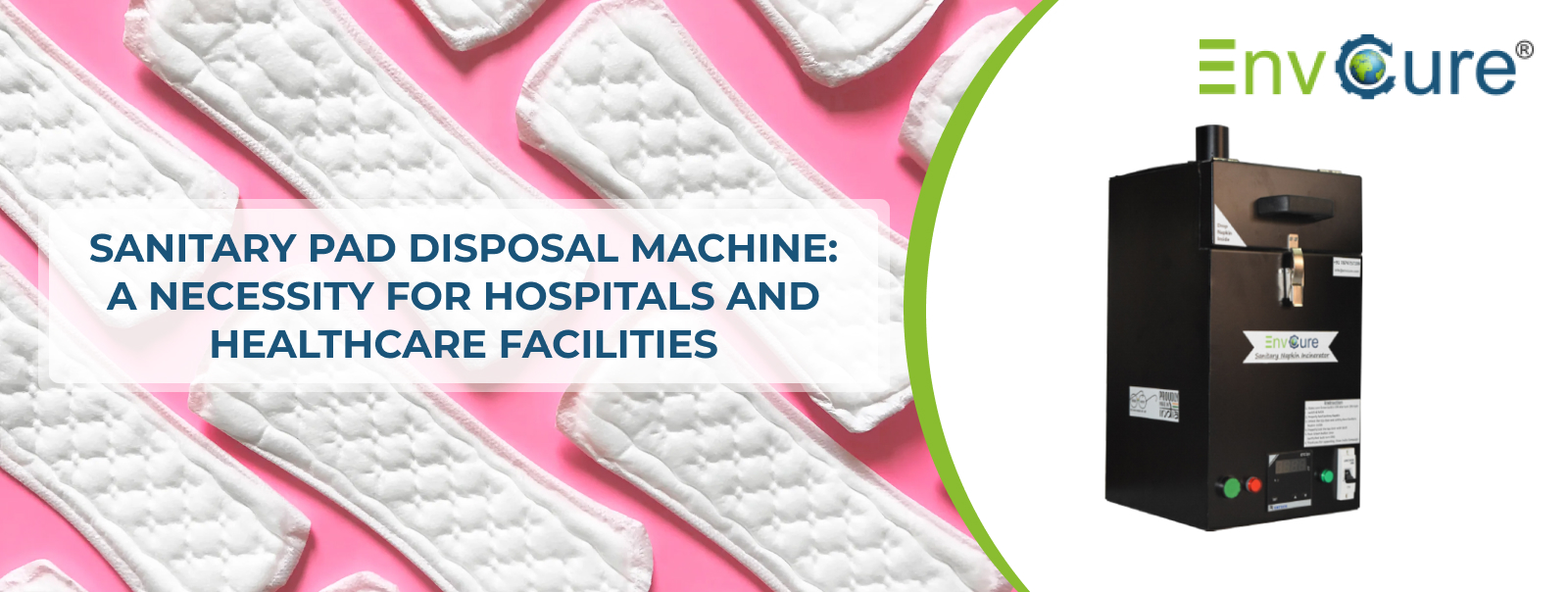
Sanitary Pad Disposal Machine: A Necessity for Hospitals and Healthcare Facilities

Sanitary Pad Disposal Machine

Keeping a safe and clean atmosphere is crucial in healthcare settings, particularly when it comes to waste management. The proper disposal of sanitary pads is one frequently ignored factor that, if done wrongly, may result in environmental issues and health risks. This article discusses the value of  a sanitary pad disposal machine and the reasons hospitals and other healthcare institutions must have them. 

Dangers of Inadequate Sanitary Waste Management

  • Bacterial Growth and Infections: If used sanitary pads are not disposed of correctly and quickly, they may turn into havens for germs. This has the potential to cause infections to spread across healthcare facilities, harming both patients and medical staff.
  • Pathogen Transmission: Sanitary waste that is improperly handled can spread diseases, particularly in locations where patients have weakened immune systems.
  • Landfill Overburden:  Using conventional methods of disposal, sanitary waste is often dumped into landfills. This eventually adds to the landfill garbage issue, which is becoming worse and may discharge dangerous chemicals and other contaminants into the land and water.
  • Logistical Difficulties: In big facilities with many waste production sources, the collection, transportation, and disposal of sanitary waste may be a laborious procedure.
  • Cost Implications: Because facilities may need more regular garbage collection and disposal services, ineffective waste management systems might result in higher operating expenses.
  • Reputation Management: Hospitals and other healthcare institutions need to maintain a favourable public image in the era of social media and internet reviews. Problems with sanitation may swiftly damage people’s reputations and cause them to lose confidence.

The Role of a Sanitary Pad Disposal Machine

Sanitary pad disposal machines are innovative solutions meant to deal with these issues. They change everything and make everything better:

Efficient and Hygienic Disposal

Used sanitary pads may be disposed of with safety and efficiency thanks to the design of these pads. Usually, they use one of the following techniques:

  • Incineration:  Modern sanitary napkin incinerator burns waste at high temperatures to ensure total annihilation. This procedure lowers the amount of waste produced and the chances of infection transmission.
  • Shredding and Disinfection: Some machines shred the pads and treat the waste with disinfectants before dumping it safely.
  • Instant Disposal: These machines remove sanitary pads quickly and easily, without causing bacterial growth and odour.
  • Volume Reduction: Through incineration or shredding, sanitary napkin destroyer significantly reduce waste volume, making it easier to manage and transport.
  • Hygienic Process: Modern machines ensure a clean and odour-free disposal process, maintaining a healthy environment.

Discover how sanitary pad vending machines are making access to feminine hygiene products easier. Read about their transformative impact in our article, How Sanitary Pad Vending Machines are Revolutionizing Feminine Hygiene With Ease? 

Environmental Benefits of a Sanitary Pad Disposal Machine

Sanitary pad disposal machines offer a more sustainable approach to waste management:

  • Reduced Pollution: Innovative incineration processes eliminate harmful emissions from traditional incinerators.
  • Waste Volume Reduction: They reduce waste volume by incinerating or shredding pads.
  • Energy Recovery: Some models use heat from incineration for energy production – supporting renewable energy initiatives.

Space and Cost Efficiency

These machines are designed with space constraints in mind, offering compact solutions for healthcare facilities:

  • Compact Design: Many sanitary napkin destroyer are small and can be wall-mounted, taking up minimal space in restrooms or waste disposal areas.
  • Cost-Effective: By efficiently managing sanitary waste, these machines can reduce overall waste management costs, especially in large healthcare facilities.  

To learn more about how sanitary napkin incinerator machines play a crucial role in effective waste management, check out Understanding Sanitary Napkin Incinerator Machine and Its Crucial Role in Promoting Effective Waste Management

Benefits for Hospitals and Healthcare Facilities

Implementing a sanitary pad disposal machine in healthcare settings offers a range of advantages:

  • Improved Hygiene and Safety: By eliminating the risk of bacterial growth and pathogen transmission, these machines create a safer environment for patients and staff.
  • Enhanced Patient Experience: Efficient waste management contributes to a cleaner and more pleasant hospital environment, positively impacting patient satisfaction.
  • Environmental Responsibility: Hospitals can demonstrate their commitment to sustainability by adopting eco-friendly waste management practices.
  • Space Optimization: Compact machines free up valuable space, allowing for better utilisation in busy healthcare settings.  

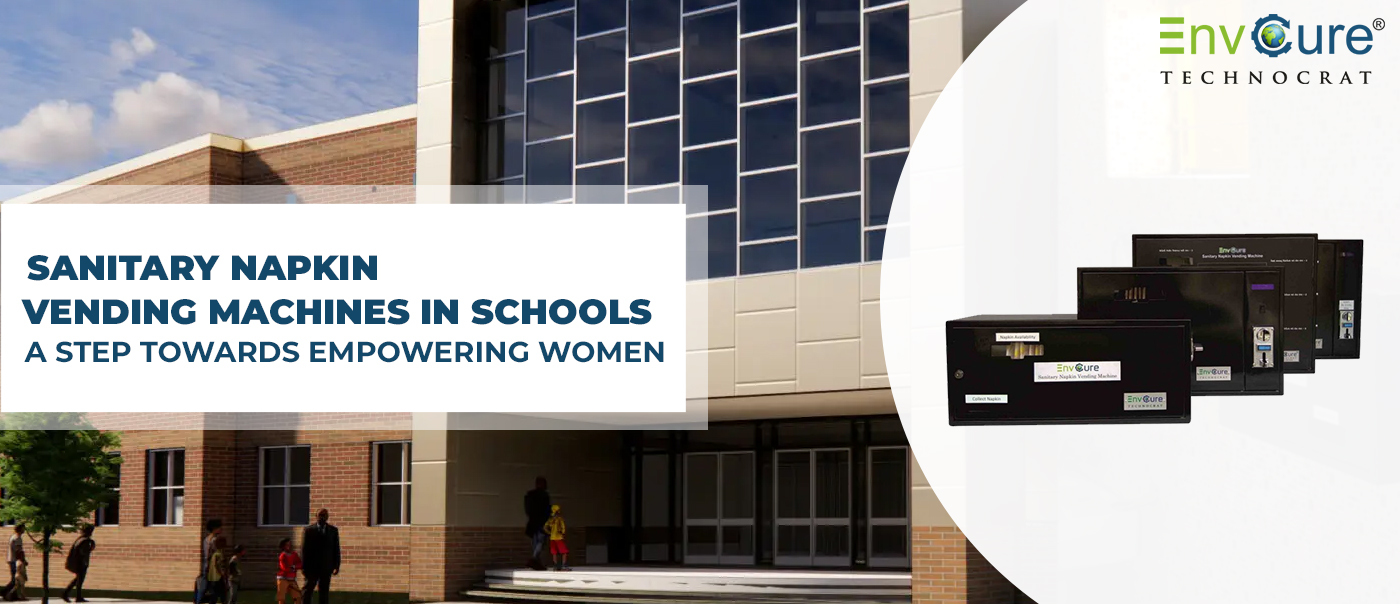
Learn how installing sanitary napkin vending machines in schools is empowering young women and promoting gender equality. For more on this progressive initiative, read Sanitary Napkin Vending Machines in Schools: A Step Towards Empowering Women.

Choosing the Right Sanitary Pad Disposal Machine

When selecting a disposal machine, consider the following factors:

  • Capacity and Usage: Assess the machine’s capacity and choose one that aligns with your facility’s needs. Consider the number of users and the frequency of disposal.
  • Technology and Safety: Opt for machines with advanced technology, ensuring efficient and safe disposal. Look for features like temperature control, emission reduction, and safety mechanisms.
  • Maintenance and Support: Choose a reputable manufacturer that offers reliable after-sales service and maintenance support.

EnvCure’s Commitment to Sustainable Solutions

With over 6+ years of experience, EnvCure Technocrat LLP has become a trusted name in the industry, with a presence in 5+ countries. Our team of 20+ dedicated professionals has successfully installed over 1500+ machines, serving a diverse range of industries, including hospitals, universities, canteens, temples, and market yard. 

Our range of disposal machines, including sanitary napkin destroyer, is designed to meet the unique needs of various industries. Take the first step towards a cleaner, healthier future. Contact EnvCure today to learn more about our sustainable waste management solutions!

How Sanitary Pad Vending Machines are Revolutionizing Feminine Hygiene With Ease?

How Sanitary pad vending machines are revolutionizing feminine hygiene with ease_

The landscape of feminine hygiene is undergoing a transformative shift with the introduction of sanitary pad vending machines. These devices not only offer convenience but also empower women by ensuring they have access to essential hygiene products discreetly and efficiently. 

Accessibility and Empowerment

How can we ensure that every woman has the autonomy to manage her menstrual health with dignity and privacy? The answer lies in improving accessibility to essential sanitary products through the strategic placement of sanitary pad vending machines. These machines serve as a vital resource, particularly in public institutions such as schools and universities, where young women can face significant barriers to obtaining menstrual products discreetly.

Key Points to Consider:

  • Location and Visibility: Machines should be installed in easily accessible yet discreet locations to maintain privacy while ensuring convenience.
  • Cultural Sensitivity: It is crucial to align the deployment of these vending machines with cultural norms and sensitivities to enhance acceptance and usage.
  • Education and Awareness: Accompanying educational programs can help demystify menstrual health, encouraging more confident and informed use of the vending facilities.

Through these measures, sanitary pad vending machines not only promote better health outcomes but also empower women by mitigating the stigma often associated with menstruation.

Technological Advancements

In today’s tech-driven world, how can innovation enhance the basic need for menstrual health management? Modern sanitary pad vending machines incorporate advanced technologies that not only streamline the distribution of menstrual products but also enhance the user experience. These machines are equipped with diverse operational modes, including coin, RFID, and sensor systems, ensuring that women can access sanitary products effortlessly and with dignity.

Trends in Machine Technology:

  • Smart Integration: Utilization of RFID and sensor technology allows for a contactless and hygienic transaction, crucial in today’s health-conscious era.
  • Payment Flexibility: Modern machines offer multiple payment options, from traditional coins to digital payments, accommodating user preference and convenience.
  • Sustainability: Eco-friendly models that use biodegradable materials or minimize energy consumption are becoming more prevalent, reflecting a commitment to environmental sustainability.

The evolution of these machines signifies a leap forward in making menstrual care products more accessible while keeping pace with technological advancements and sustainability goals.

Health and Safety

What are the health implications of inadequate menstrual hygiene, and how do sanitary vending machines play a role in addressing these concerns? Ensuring timely access to sanitary products is not just a matter of convenience but a significant public health concern. Vending machines provide a reliable solution by offering immediate access to sanitary pads, which is crucial in preventing infections and promoting safe menstrual practices among women, especially in high-traffic public areas.

Essential Benefits:

  • Reduction in Health Risks: Regular and easy access to sanitary products helps reduce the risk of bacterial infections, which are prevalent when using unsanitary alternatives.
  • Promotion of Hygiene Practices: These machines encourage good menstrual hygiene practices, which are essential for the health and well-being of women.
  • Support in Emergency Situations: The strategic placement of these machines can be lifesaving in scenarios where immediate access to menstrual hygiene products is needed, avoiding potential health complications.

By addressing these critical aspects, sanitary pad vending machines contribute significantly to not only individual health and comfort but also broader public health outcomes.

Design and Efficiency

What considerations should guide the design of a sanitary pad vending machine to ensure it meets the needs of its diverse users? The design of these machines is critical for ensuring they are both functional and discreet. Companies like EnvCure focus on creating compact and efficient models that can be easily installed in various environments, from educational institutions to public restrooms.

Considerations for Optimal Design:

  • Space Efficiency: These machines should occupy minimal space while being easily accessible. Wall-mounted or recessed designs can help conserve space and maintain aesthetics.
  • Ease of Use: The design should cater to all users, including those with disabilities, ensuring that the interface and mechanics are simple and intuitive.
  • Maintenance and Reliability: Machines must be durable and easy to maintain, capable of withstanding high usage without frequent breakdowns.

Efficient design not only addresses the practical aspects of installation and use but also enhances the overall user experience, making menstrual health products more accessible and less of a logistical concern.

Social Impact and Corporate Responsibility

Why is corporate responsibility crucial in the context of menstrual health, and how can businesses make a meaningful impact? The introduction of sanitary vending machines in public spaces is not just an innovation in product accessibility; it’s a statement about a company’s commitment to social issues. Businesses that invest in these machines are taking a stand for gender equality and public health, showing that they value the well-being of all individuals.

Actions for Corporate Engagement:

  • Partnerships and Sponsorships: Businesses can partner with non-profits and educational institutions to provide these machines free of cost or at a subsidized rate, extending their reach to underserved communities.
  • Awareness Campaigns: Companies can initiate or support awareness campaigns that educate the public about menstrual health, helping to break down taboos and promote a more inclusive society.
  • Feedback and Improvement: Regular feedback from users can help companies improve the machines’ design and functionality, ensuring they continue to meet user needs effectively.

Through these actions, companies not only enhance their corporate image but also contribute to societal well-being, setting a standard for corporate responsibility and community engagement in addressing menstrual health challenges.

Conclusion 

EnvCure stands at the forefront of this revolutionary change with its line of sanitary napkin vending machines. With a focus on environmental sustainability and innovative solutions, EnvCure’s products are designed to meet the diverse needs of modern women, ensuring they face no barriers in their daily lives due to menstruation. By choosing EnvCure, organizations can make a substantial difference in promoting menstrual hygiene, breaking down societal barriers, and empowering women across the globe.

Frequently Asked Questions:

Q.1. What are sanitary pad vending machines?

Ans. Sanitary pad vending machines are automated dispensers that provide sanitary pads to women in public places.

Q.2. How do these machines revolutionize feminine hygiene?

Ans. They offer easy access to sanitary pads, promoting hygiene, convenience, and dignity for women, especially in areas lacking such facilities

Q.3. What are the benefits of these machines?

Ans. They reduce the stigma associated with menstruation, ensure uninterrupted access to hygiene products, and contribute to a healthier environment.

Q.4. Are these machines cost-effective?

Ans. Yes, they offer a cost-effective solution for maintaining feminine hygiene in public spaces, benefiting both users and facility managers.

Sanitary Napkin Incinerator: Essential for Effective Waste Management

Understanding Sanitary Napkin Incinerator Machine and Its Crucial Role in Promoting Effective Waste Management

One of the most overlooked categories of waste, particularly in urban areas, is sanitary napkin waste. These essential products for women have an environmental impact that’s often neglected. Enter the Sanitary Napkin Incinerator Machine, a game-changer in the realm of sustainable waste management. 

The Problem with Sanitary Napkins

Sanitary napkins, while indispensable in our lives, pose a significant challenge in the sphere of environmental conservation and waste management. These products, commonly used by billions of women globally, come with a host of issues that extend beyond their primary function.

Non-biodegradability: Sanitary napkins are primarily non-biodegradable, leading them to persist in the environment for years if not decades. The main components of most sanitary pads are synthetic and plastic materials that resist decomposition. This non-biodegradability is a primary concern because:

  • Landfills are swelling with increasing volumes of such waste, much of which won’t break down in our lifetimes.
  • Animals often mistakenly consume these products, leading to health complications or even death.

Landfill space: The sheer volume of sanitary napkins disposed of daily accumulates, leading to significant space occupation in landfills. This burgeoning volume:

  • This leads to increased pressures on waste disposal systems.
  • Amplifies the need for new landfill sites, often resulting in deforestation or the use of other crucial lands.

Pollution hazards: Improper disposal methods, such as flushing down toilets, lead to blockages in sewage systems. The ramifications include:

  • Increased costs for municipalities in terms of maintenance.
  • Risks of sewage overflows, which can pollute natural water sources and harm aquatic life.

Exposure to pathogens: Sanitary napkins come into contact with human blood by their very nature. If not disposed of properly:

  • They become a breeding ground for harmful bacteria and pathogens.
  • Workers in waste management inadvertently get exposed, risking the spread of diseases.

Introducing the Sanitary Napkin Incinerator Machine

In response to the mounting challenges posed by sanitary waste, the Sanitary Napkin Incinerator Machine emerged as a beacon of innovation.

Functionality: At its essence, the machine’s primary role is to incinerate sanitary napkins safely. Converting them into ash ensures:

  • Drastic reduction in the volume of waste, easing the pressure on landfills.
  • Destruction of any pathogens, promoting hygiene and safety.

Efficiency: Modern iterations of these machines, like those developed by companies such as EnvCure, use cutting-edge technologies to ensure efficient operations. Features include:

  • Sensors and automated systems to ensure optimal burning.
  • Filters and emission control mechanisms to minimise air pollution.

User-friendly Design: One of the main barriers to proper sanitary waste disposal has been convenience. Addressing this, many modern machines:

  • Are compact and can be easily installed in restroom facilities.
  • Include intuitive controls, sometimes even with multilingual instructions, ensuring they can be used by everyone without specialized training.

A Deeper Dive into the Technology

The Incinerator Machine isn’t just another industrial device; it’s the amalgamation of various advanced technological components that come together to serve a crucial purpose.

Automatic Power-Off: Modern designs ensure energy conservation. This feature:

  • Detects when the incineration process is complete, cutting off the power supply automatically.
  • Not only conserves energy but also reduces the wear and tear on the machine, extending its lifespan.

Thermal Protection: The machine’s design often incorporates high-density ceramic fiberboards. These:

  • Ensure heat is contained efficiently within the machine.
  • Reduce the risk of exterior heating, making the machine safe to touch even during operation.

Compact Design: Despite their robust functionalities, the machines prioritize spatial economy. These designs:

  • Allow installation in tight spaces, making them suitable for varied locations, from public restrooms to school facilities.
  • Are crafted considering an aesthetic appeal, ensuring they don’t stand out jarringly in interior settings.

Beneficiaries of the Sanitary Napkin Incinerator Machine

The Sanitary Napkin Incinerator Machine boasts a broad application range, offering substantial benefits across various sectors. Here’s a breakdown of its key beneficiaries:

Sector Institutions/Spaces Benefits
Educational Institutions Schools, Universities, Hostels Promotes menstrual hygiene; eco-friendly waste disposal.
Corporate Establishments Office Complexes, Tech Parks In-house waste management; no reliance on external services.
Healthcare Institutions Hospitals, Clinics Hygienic waste disposal ensures safety of patients and staff.
Hospitality Industry Hotels, Resorts Enhances eco-friendly reputation; appeals to conscious travelers.
Public Spaces Malls, Cinemas, Transport Hubs Manages high-footfall waste, and upholds public health standards.
Residential Complexes Apartment Buildings Community sustainability; reduces municipal waste.
Religious Places Temples, Churches, Mosques Demonstrates commitment to cleanliness and environmental stewardship.
NGOs & Charities Charitable Institutions Reinforces the message of women’s health and sustainable waste disposal.
Rural Areas Semi-Urban Communities Transforms waste management without straining local environments.

Global Implications and the Push for Wider Adoption

The adoption of the Sanitary Napkin Incinerator Machine isn’t just a local concern; it has global repercussions.

Standardized Disposal: One machine can set the precedent for global practices:

  • By providing a universally effective method of disposal.
  • Offering a blueprint for nations to incorporate into their waste management strategies.

Environmental Sustainability: The global call for sustainable practices amplifies the importance of such machines:

  • Their wide-scale adoption can significantly reduce the environmental damage caused by sanitary waste worldwide.
  • Can act as a stepping stone towards more comprehensive waste management solutions.

Supporting Women’s Health: Beyond the environment, the machine also addresses a significant health issue:

  • By ensuring that disposed sanitary products don’t end up where they shouldn’t, it reduces risks of infections in communities.
  • Promotes menstrual hygiene education and practices in regions where it’s needed the most.

Conclusion: Making the Shift with EnvCure

As we navigate an era defined by rapid environmental change, solutions like the Sanitary Napkin Incinerator Machine are not just innovations; they are necessities. The team at EnvCure Technocrat LLP has exemplified the spirit of innovation by not only acknowledging the environmental challenges posed by sanitary napkins but also providing a pragmatic solution. If you’re committed to creating a sustainable future and promoting effective waste management, it’s time to consider integrating EnvCure’s waste management solutions. Get in touch with the experts today! 

Frequently Asked Questions:

Q.1. Why are sanitary napkin incinerator machines important for waste management?

Ans. These machines are important because they help manage and dispose of used sanitary napkins effectively, reducing the environmental impact, preventing blockages in sanitation systems, and promoting hygiene.

Q.2. What are the key benefits of using a sanitary napkin incinerator machine?

Ans. Benefits include reducing solid waste, preventing clogs, minimizing the carbon footprint, promoting hygiene in public restrooms, and ensuring a cleaner and more sustainable environment.

Q.3. Are sanitary napkin incinerator machines safe to use?

Ans. Yes, when used correctly, these machines are safe. They are designed with safety features to prevent accidents. Users should follow guidelines for safe operation.

Sanitary Napkin Vending Machines in Schools: A Step Towards Empowering Women

Sanitary Napkin Vending Machines in Schools

In recent years, the introduction of sanitary napkin vending machines in schools has sparked widespread discussion and gained traction as a progressive initiative. By providing convenient access to menstrual hygiene products, these machines aim to empower young women, break stigmas, and promote gender equality. This article delves into the benefits of installing sanitary pad vending machines in educational institutions and their potential long-term impact on society. 

Tackling Menstrual Taboos and Stigma in India

India, a diverse and culturally rich country, is no exception when it comes to menstrual taboos and stigma. Deep-rooted cultural beliefs and traditions have created an environment where menstruation is often regarded as impure and shameful. In many communities, girls and women are subjected to various restrictions during their periods, such as being barred from entering places of worship, participating in family events, or even touching certain food items. These beliefs perpetuate a culture of silence, making it difficult for young girls to discuss their menstrual health and seek support.

Introducing sanitary napkin vending machines in Indian schools is a vital step towards challenging these taboos and fostering open dialogue about menstruation. By making these essential products readily available within educational institutions, we can begin to normalize conversations around menstruation and empower young girls to voice their needs and concerns.

Steps To Reduce Absenteeism and Dropout Rates in Schools

Menstruation-related challenges are one of the leading causes of absenteeism and dropout rates among young girls in schools worldwide. Installing a sanitary pad vending machine in schools can play a significant role in reducing absenteeism and dropout rates by addressing the core concerns of menstruating students.

  • Access to Sanitary Napkins

One of the primary reasons girls may miss school during their periods is the lack of access to affordable and hygienic menstrual products. A sanitary napkin vending machine can fill this gap by providing students with a discreet and reliable source of sanitary napkins within the school premises. This convenience enables girls to manage their periods effectively while at school, increasing their confidence and attendance.

  • Improved Facilities for Menstrual Hygiene Management

Complementing the vending machines with clean and well-maintained restroom facilities, including private spaces for changing and disposing of used sanitary napkins, can help girls feel more comfortable attending school during their periods. A supportive school environment that caters to the unique needs of menstruating students is crucial for reducing absenteeism and encouraging girls to focus on their education.

  • Combatting the Fear of Embarrassment

The fear of staining clothes or being ridiculed due to menstrual mishaps can also contribute to girls missing school. By providing access to sanitary napkins and fostering a culture of understanding and support among students and staff, schools can alleviate these concerns, making girls feel more secure and confident while attending school during their periods.

  • Fostering Academic Success and Personal Growth

By addressing the menstrual hygiene needs of students, schools can help girls maintain consistent attendance, leading to better academic performance, higher self-esteem, and increased opportunities for personal growth. As more girls stay in school and complete their education, they can break the cycle of poverty, contribute to the workforce, and become role models for future generations.

Steps To Cultivate a Supportive School Environment

A supportive and inclusive school environment is crucial for the overall well-being and success of all students, including those who menstruate. Integrating a sanitary pad vending machine into educational institutions demonstrates a commitment to addressing the unique needs of menstruating students and fostering a culture of understanding, empathy, and inclusivity.

  • Acknowledging and Valuing Menstrual Needs

By installing a sanitary napkin pad machine, schools send a clear message to students that their menstrual needs are acknowledged, valued, and supported. This gesture helps create a sense of belonging and security for menstruating students, making them feel more comfortable and confident in their educational pursuits.

  • Promoting Open Dialogue and Understanding

The presence of vending machines can encourage open dialogue about menstruation among students, teachers, and staff. Such conversations can help dispel myths and misconceptions, promote understanding, and contribute to a more empathetic school environment. By fostering open communication, schools can create a safe space where all students feel comfortable discussing their needs and concerns.

  • Encouraging Gender Equality and Respect

When schools actively address the menstrual hygiene needs of their students, they contribute to the promotion of gender equality and the cultivation of respect among peers. Educating all students about menstruation, including boys, can help foster an environment where menstruating students are supported and respected, rather than marginalized or ridiculed.

  • Empowering Students to Take Control of Their Health

Providing access to sanitary napkins and promoting menstrual health education empowers students to take control of their own well-being. This empowerment extends beyond the school environment, as students learn to make informed decisions about their health and well-being, ultimately leading to healthier and more confident individuals.

  • Inspiring Positive Change in the Community

Schools that prioritize menstrual hygiene management and cultivate a supportive environment can inspire positive change within the broader community. By addressing the needs of menstruating students, schools can encourage parents, community members, and local organizations to challenge traditional beliefs and work together towards a more inclusive and equitable society.

EnvCure’s Impact on Menstrual Hygiene Management and Accessibility

EnvCure’s innovative sanitary napkin vending machine has the potential to revolutionize menstrual hygiene management by ensuring easy access to sanitary napkins for women and girls in various settings. By catering to the needs of corporate, educational, and public organizations, these vending machines are bridging the gap between women and the essential menstrual hygiene products they require.

With its user-friendly design, versatile payment options, and space-efficient structure, EnvCure’s vending machines are well-suited to meet the diverse needs of different environments. By offering both manual and automatic variants, the company ensures that organizations have the flexibility to choose the most suitable option based on their requirements and budget.

Conclusion

Take a step towards a healthier and more equitable future by choosing EnvCure’s sanitary pad vending machine for your organization. Together, we can break down barriers, promote menstrual hygiene awareness, and empower women to live their lives without any limitations imposed by menstruation.

Contact EnvCure today to learn more about their sanitary napkin vending machine and how they can benefit your organization or community. Embrace the change and make a lasting impact on the lives of women and girls around you.

Frequently asked questions:

Q.1: What is a sanitary napkin vending machine?

Ans: A sanitary napkin vending machine is a device that dispenses sanitary pads to women in need of menstrual hygiene products.

Q.2: Why is it important to have sanitary napkin vending machines in schools?

Ans: It is important to have sanitary napkin vending machines in schools to provide easy access to menstrual hygiene products for female students. This can help reduce absenteeism and dropout rates, as well as improve the overall health and well-being of young girls.

Q.3: How do these machines work?

Ans: Sanitary napkin vending machines work by accepting a form of payment, such as coins or tokens, and then dispensing a sanitary pad. Some machines may also include a mechanism for disposing of used pads.

Sanitary Pad Incinerator: Importance for Public Spaces and Schools

Importance of Installing Sanitary Napkin Incinerator Machines in Public Places

Sanitary Pad Incinerator:

Are you tired of seeing used sanitary napkins lying around in public places, schools, and universities? Are you looking for a solution to this problem? Well, look no further! In this article, we’re going to discuss the importance of installing sanitary Pad incinerator machines in these public spaces.

Trust us, it’s not just about keeping things clean and tidy – there are a lot of other reasons why this is a crucial step towards creating a more hygienic and healthy environment for everyone.

Sanitary Pad Incinerator!

These are those machines that turn the pads into ashes. They destroy their existence. To completely decompose them, governments are installing sanitary Pad incinerator in public places like schools, universities, and many more.

First and foremost, let’s talk about the obvious – the importance of installing sanitary Pad incinerator machines in public places, schools, and universities.

  • Hygiene

Used sanitary napkins can attract bacteria and other harmful microorganisms, leading to unpleasant odors, unsanitary conditions, and even disease transmission. By installing incinerator machines, these used napkins can be safely disposed of without any risk of contamination.

  • Reduced Waste and Environmental Sustainability

Traditional methods of disposing of sanitary napkins involve throwing them into trash cans, which are then collected and sent to landfills. This not only takes up valuable landfill space but also contributes to greenhouse gas emissions from the decomposition of organic waste. Incinerator machines, on the other hand, burn the used napkins to ash, which can then be safely disposed of in landfills or used as fertilizer.

  • Psychological Impact

The psychological impact of seeing used sanitary napkins in public places should not be overlooked. It can be embarrassing, uncomfortable, and downright gross for anyone who comes across them.

This can especially affect young girls and women who may feel ashamed or self-conscious about their menstruation. By providing a discreet and hygienic way to dispose of sanitary napkins, incinerator machines can help to reduce the stigma surrounding menstruation and promote a more positive and accepting attitude towards it.

  • Maintenance and Upkeep

The installation of these machines can also have a positive impact on the maintenance and upkeep of public restrooms. When used napkins are not disposed of properly, it can lead to clogged toilets, blocked pipes, and other plumbing issues. This can result in expensive repairs and maintenance costs for public facilities.

  • Convenience

Finally, let’s talk about convenience. Sanitary pad incinerator machines are easy to use and require minimal maintenance. They can be installed in any public restroom or washroom, including schools and universities, without taking up much space. They also offer a more discreet and sanitary alternative to traditional trash cans or bins.

In conclusion, installing sanitary pad incinerator machines in public places, schools, and universities is a simple yet effective way to promote hygiene, reduce waste, eliminate embarrassment, and save money.

Conclusion:

By installing these machines, we can create a more inclusive and hygienic environment for everyone. It’s time we start prioritizing this issue and take action toward creating a more sustainable and healthy world.

Frequently asked questions

Q.1: What are sanitary pad incinerator machines?

Ans. Sanitary pad incinerator machines are devices that are designed to safely and hygienically dispose of used sanitary napkins through incineration.

Q.2: Why is it important to install sanitary pad incinerator machines in public places, schools, and universities?

Ans. Installing sanitary pad incinerator machines in public places, schools, and universities can promote better hygiene and waste management. It also helps in avoiding the environmental and health hazards caused by the disposal of used sanitary napkins in open spaces or in unhygienic ways.

Q.3: Are sanitary pad incinerator machines safe to use?

Ans. Yes, sanitary pad incinerator machines are designed to be safe to use. They are equipped with features such as automatic shut-off mechanisms, thermal insulation, and air pollution control systems to ensure safe and hygienic disposal of used sanitary napkins.