



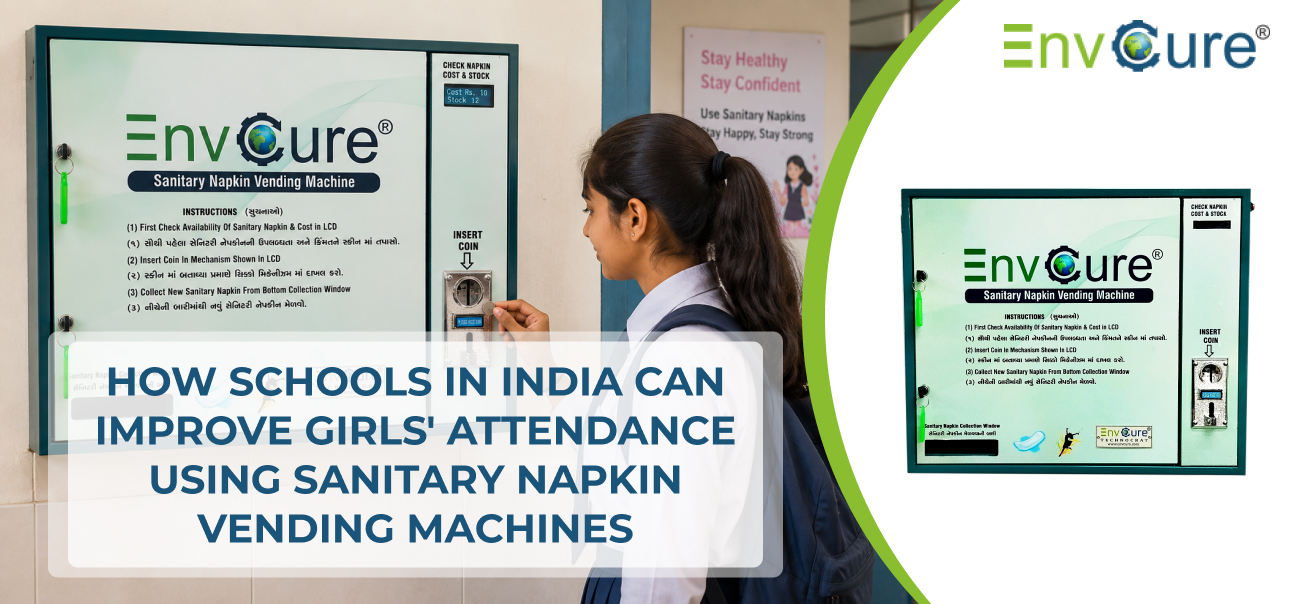

Millions of schoolgirls in India miss classes during their periods because they don’t have easy access to menstrual products at school. This affects their education, confidence, and overall well-being. A sanitary napkin vending machine offers a simple fix by giving girls instant, private access to pads whenever they need them.
Also called a sanitary pad vending machine, sanitary vending machine, or napkin dispenser machine, this small addition helps schools become safer and more supportive places to learn. In this blog, you’ll see how a sanitary pad vending machine in schools can boost attendance and help girls keep learning without interruption.
Why Menstrual Hygiene Matters for Attendance
Poor menstrual hygiene is one of the main reasons girls stay home during their periods. When a school has no sanitary pads, no private washroom, or no proper way to dispose of used pads, students often skip class out of discomfort or embarrassment.
Research backs this up. In Kerala, a government scheme that placed pad-dispensing machines in schools raised attendance among seventh-grade girls by 22.6 percentage points and brought down dropout rates. Similar efforts elsewhere show the same pattern, when pads are easy to get, girls come to school with more confidence.
UNESCO and the Government of India both support better Menstrual Hygiene Management (MHM) in schools by improving sanitation and making sure pads are available.
Setting up a sanitary napkin vending machine is a small step with a big payoff, helping schools cut absenteeism, improve hygiene, and build a more inclusive place to learn.
The results speak for themselves. Read how a sanitary napkin vending machine improved female hygiene facilities in a real CSR initiative.
What Is a Sanitary Napkin Vending Machine?
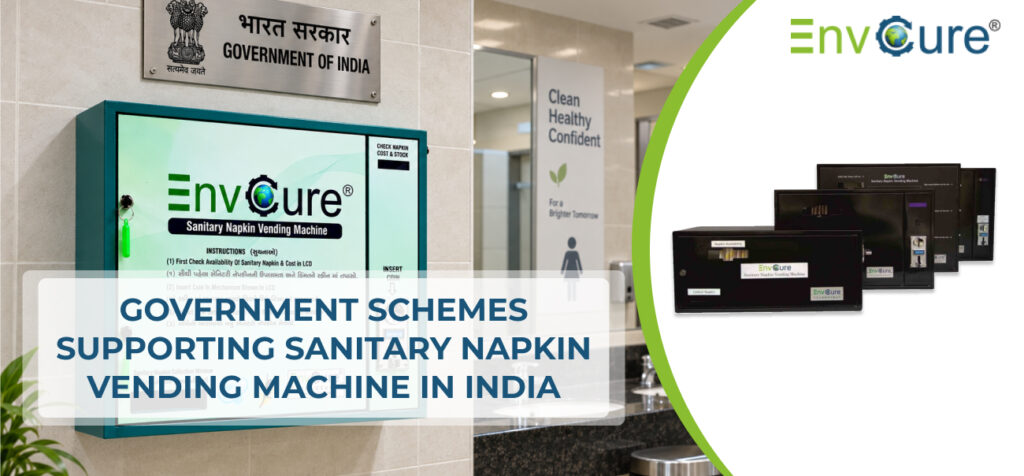
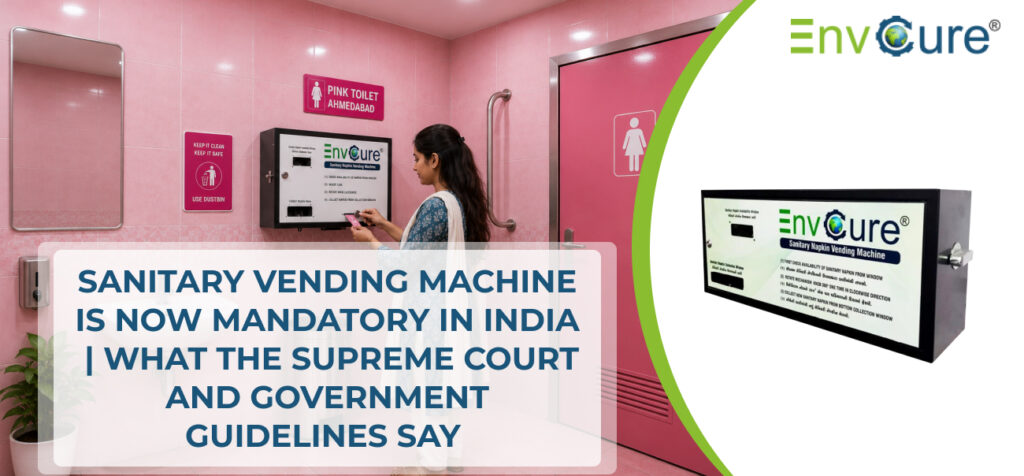
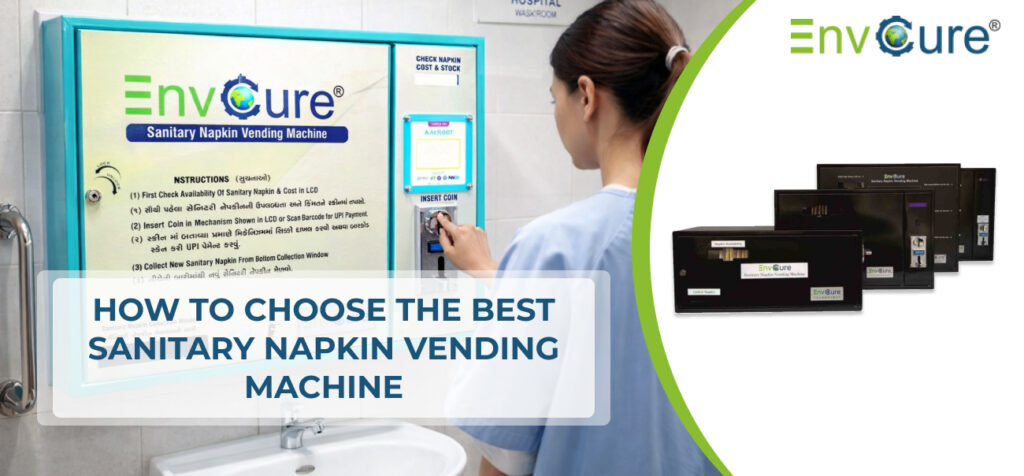
A sanitary napkin vending machine is an automatic dispenser that provides sanitary pads on demand. Usually installed inside girls’ washrooms, it lets students get a pad using a coin, token, QR code, RFID card, or a free-vend system, depending on the school’s setup.
You’ll also hear it called a sanitary pad vending machine, sanitary vending machine, or napkin dispenser machine. Whatever the name, it gives girls a clean, private way to manage their periods without leaving school or asking anyone for help.
Most machines give out one sealed pad at a time to keep things hygienic, and many schools pair the machine with a disposal bin or a small incinerator for safe pad disposal.
By giving girls quick access to pads, a sanitary pads vending machine helps cut period-related absences and builds a more supportive school environment, letting students attend class with more confidence and dignity.
Schools aren’t the only place these help, here are the top 5 places to install a sanitary napkin vending machine for maximum impact.
Key Benefits of School Sanitary Vending Machines
A sanitary pad vending machine in schools brings several benefits for students and the wider community:
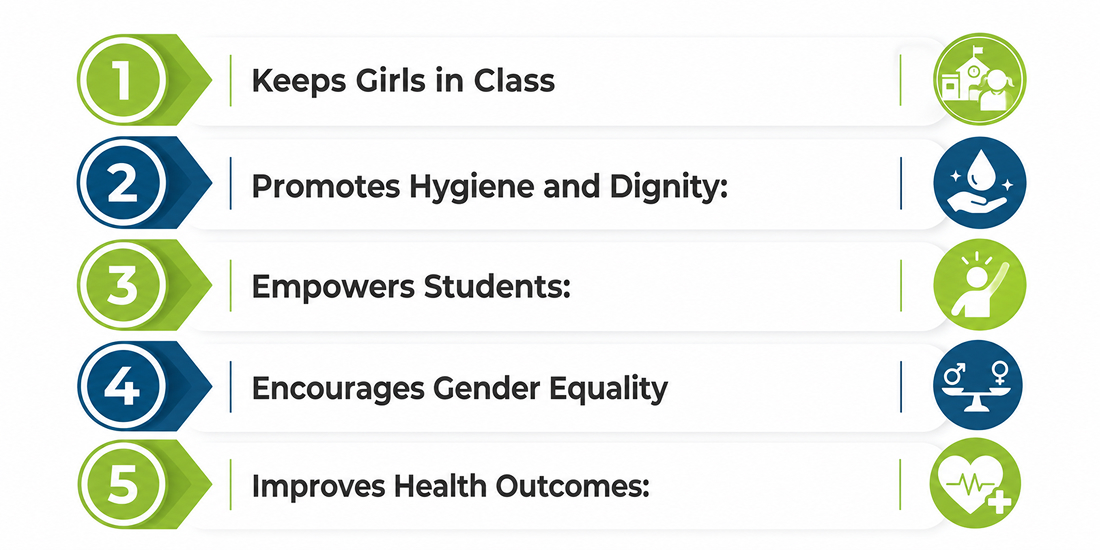
- Keeps Girls in Class: By keeping pads available on-site, a sanitary napkin vending machine removes one of the most common reasons girls miss class. Research shows easy pad access reduces school and workplace absences for women and girls. The Kerala scheme raised girls’ attendance by more than 20 percentage points, and in Nepal, an evaluation by Save the Children found girls stopped missing four days of school a month after free pad machines were installed.
- Promotes Hygiene and Dignity: Each pad is individually wrapped and dispensed clean and sealed, so girls aren’t forced to use unhygienic options like old cloths. Having a sanitary napkin vending machine also spares girls the discomfort of asking a teacher or classmate for help. In Nepal, close to 5,000 schoolgirls said they had private access to pads this way, protecting their dignity.
- Empowers Students: A sanitary napkin vending machine on school grounds lets girls handle their own needs without waiting for anyone’s permission. Knowing a pad is just a token or coin away helps students stay relaxed and focused on their studies.
- Encourages Gender Equality: Installing these machines shows schools value girls’ health as much as boys’. It builds trust and signals an inclusive environment, supporting both social welfare and gender-equality goals.
- Improves Health Outcomes: Easy access to clean pads lowers the risk of infection. Poor menstrual hygiene is linked to higher rates of urinary and reproductive tract infections, while easy pad access helps bring those risks down.
The takeaway: sanitary napkin vending machines in schools meet a real need while also lifting attendance and well-being. When girls know they can get a pad anytime at school, they’re far less likely to miss a day of class.
Key Factors to Consider When Choosing a Sanitary Pad Vending Machine
When choosing a sanitary napkin vending machine, schools should think about capacity, payment options, durability, and hygiene. Smaller schools can go for wall-mounted units holding 25-50 pads, while larger schools may need machines that hold 100-200 pads. Coin, token, QR code, RFID, or free-vend options give schools flexibility based on their needs.
Pick a machine built from durable, tamper-proof material that dispenses one pad at a time smoothly, is easy to refill, and needs little upkeep. A simple, hygienic sanitary vending machine with sealed, touchless dispensing and good after-sales support is the right choice for supporting girls’ education.
- Capacity & Location: The machine’s pad storage should match how many students will use it. One EnvCure Technocrat LLP’s model, for instance, holds 50 pads, while another holds 200, helping schools avoid constant refills. Place it somewhere private, typically inside girls’ toilets or a quiet corner of the infirmary, so girls feel comfortable using it.
- Payment Flexibility: Some schools make pads free, using tokens or ID cards, to remove any cost barrier. Others charge a small fee to cover expenses. Many sanitary napkin vending machines let you set the coin price (for example, ₹5 per pad). Make sure students know how to use it, and check regularly that coins or cards are read properly.
- Hygiene & Safety: The machine should keep pads sealed until they’re dispensed, with one pad given out at a time. Some units include disposal bins or connect to a small incinerator, and anti-jam mechanisms or locks help protect against misuse.
- Durability & Support: Machines built from heavy-duty, tamper-resistant metal tend to last longer in schools. Choose a supplier that offers warranties, easy maintenance, and restocking training. Indian suppliers such as EnvCure Technocrat LLP focus on reliable machines with solid technical support.
Keeping these points in mind will help schools pick a sanitary napkin vending machine that fits their setting well. The right machine offers constant, hygienic pad access without frequent breakdowns.
Picking the right unit matters; learn how to choose the best sanitary napkin vending machine.
Maintenance and Usage Tips
Even a good sanitary napkin vending machine needs regular care. Schools should set a refill schedule, weekly or every two weeks, based on student usage. Tracking pad inventory helps avoid sudden shortages, and some newer machines have digital counters or usage logs to flag when stock is low. Staff should also wipe down the exterior regularly and check for dust or jammed pads.
Train at least two staff members on refilling and troubleshooting, and always use high-quality, properly wrapped pads. Check the payment system too, clear out stuck coins or tokens, and make sure digital readers work. If the power supply is unreliable, schools can opt for manual lever-based models that don’t need electricity at all. By watching usage patterns (exam weeks often see higher demand) and keeping extra stock on hand, schools can make sure no girl ever finds an empty dispenser.
Case Studies: Real-World Impact in India
Kerala’s SHE Pad Initiative
Kerala’s SHE Pad programme is one of India’s most successful menstrual hygiene efforts. The state government installed pad-dispensing machines and disposal units in hundreds of government schools, reaching over 10 lakh girls. Studies found girls’ attendance rose by around 23 percentage points, while dropout rates fell sharply once free pads became easy to access. The impact was especially strong in rural and government schools, showing that accessible menstrual products really can improve educational outcomes.
Other Successful Initiatives
Similar programmes across India and neighbouring countries have shown encouraging results. Schools in Mumbai and Nepal reported better attendance and more confident students after installing sanitary pad vending machines. These examples show that easy access to menstrual hygiene products helps students stay focused on learning instead of worrying about managing their periods.
Government Support
The Government of India promotes Menstrual Hygiene Management (MHM) through guidelines and initiatives that encourage schools to provide sanitary pads and proper disposal facilities. Installing a sanitary napkin vending machine supports these efforts while helping create a healthier, safer, and more inclusive learning environment for girls.
Conclusion
Installing a sanitary napkin vending machine is a simple yet impactful step toward improving girls’ attendance, menstrual hygiene, and overall well-being in schools. By ensuring easy access to sanitary pads, schools can reduce period-related absenteeism, promote confidence, and create a more inclusive learning environment.
As more schools across India adopt better Menstrual Hygiene Management (MHM) practices, sanitary pad vending machines will continue to play an important role in supporting girls’ education and dignity.
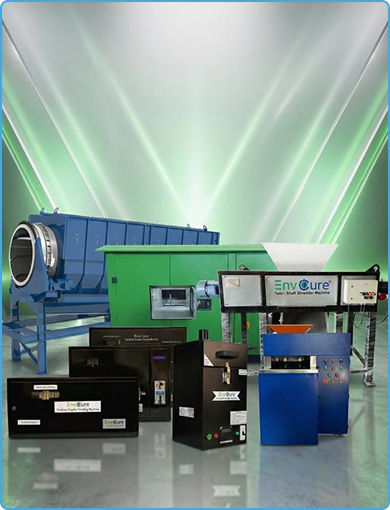
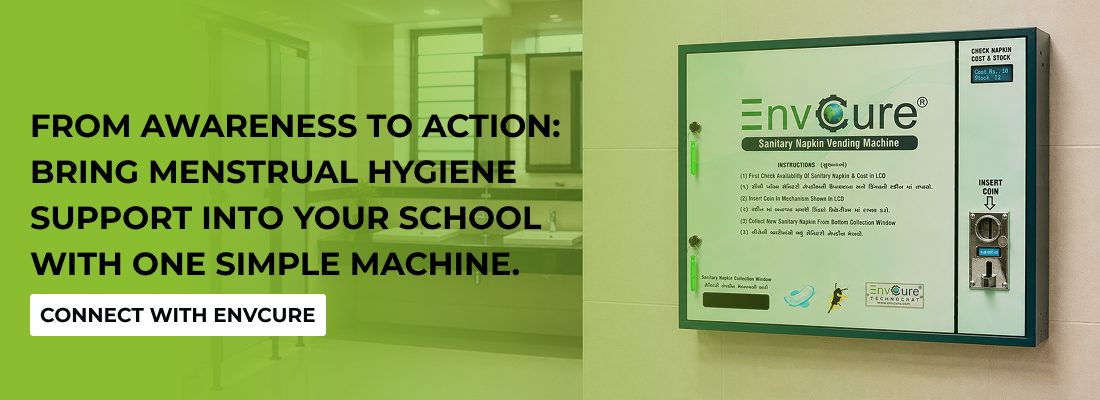
EnvCure Technocrat LLP offers reliable and hygienic sanitary vending machines designed for schools, colleges, and institutions. Investing in the right solution today helps ensure that no girl has to miss a day of learning because of her period.
Frequently Asked Questions
Q: What is a sanitary napkin vending machine?
A: A sanitary napkin vending machine is an automated dispenser that provides sanitary pads through a coin, token, or digital payment. It offers quick, hygienic, and private access to menstrual pads in schools.
Q: Why install these machines in schools?
A: They help girls access sanitary pads during emergencies, reduce period-related absenteeism, improve menstrual hygiene, and create a more supportive school environment.
Q: How does a school vending machine work?
A: Students insert a coin or token or use a digital payment to receive one sealed sanitary pad. Some schools also provide free pads through token or ID-based systems.
Q: Who supplies these machines, and can schools afford them?
A: Many Indian manufacturers, including EnvCure Technocrat LLP, supply sanitary pad vending machines for schools. Schools can also reduce costs through government schemes, CSR initiatives, or NGO support.
Q: How does this improve attendance?
A: Easy access to sanitary pads helps girls stay in school during their periods, reducing absenteeism and allowing them to attend classes with confidence.