

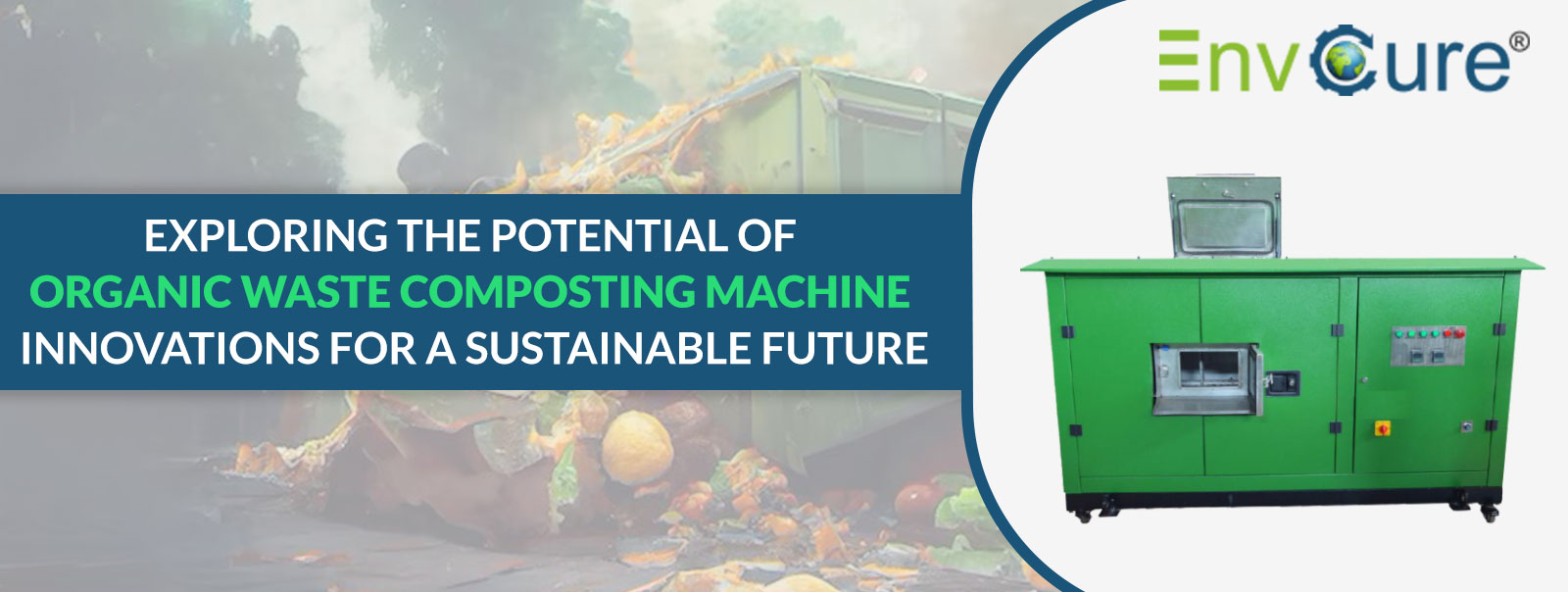
Exploring the Potential of Organic Waste Composting Machine Innovations for a Sustainable Future

Organic Waste Composting Machine Innovations for a Sustainable Future

The clock is ticking, and with the escalating environmental challenges our planet faces, there’s an urgent need for solutions. One pressing issue is the enormous quantity of organic waste we generate daily. Enter the organic waste composting machine – a marvel of modern engineering that’s proving to be a game-changer. 

Understanding the Organic Waste Composting Machine

The essence of this machine lies in its ability to turn what we often see as waste – food scraps, garden cuttings, and other biodegradables – into compost, a rich, organic matter beneficial for soil health.

  • Efficiency: Machines, especially the food waste composting machine, operate far more swiftly than traditional composting methods. While a backyard compost heap might take months, machines can process and transform waste in mere hours or days.
  • Space-saving: Ideal for urban environments where space is a premium. Compact designs mean even a large apartment complex or restaurant can conveniently own and operate one.
  • Environmental Impact: By diverting significant amounts of organic waste from landfills, these machines directly combat the greenhouse gas emissions generated when such waste decomposes anaerobically.

Real-world Applications 

A closer look reveals that the organic waste composting machine isn’t just an innovation on paper; it’s making waves in various industries.

Restaurants and Community Kitchens

  • Large volumes of food waste are inevitable. Integrating a food waste composting machine not only solves waste disposal challenges but also provides compost that can be used or sold.
  • Demonstrates a commitment to sustainability, enhancing brand image.

Residential Complexes

  • Simplifies waste segregation and management for residents.
  • Creates a valuable resource (compost) that can be utilised within the community garden or sold to generate funds.

Hospitals and Offices

  • With cafeterias generating significant amounts of organic waste, having an in-house composting solution is efficient and cost-effective.
  • Sends a positive message about the institution’s eco-conscious policies.

Long-Term Benefits of Organic Waste Composting Machines

Organic waste composting machines, an innovative solution to waste management, offer a plethora of benefits that not only address immediate concerns but also pave the way for sustainable futures. Delving into these advantages gives us insight into why investing in such technologies is imperative for both current and upcoming generations.

Environmental Conservation

  • Reduced Greenhouse Gas Emissions: Traditional landfills are a significant source of methane, a potent greenhouse gas. Organic waste composting machines significantly curtail methane emissions by providing a controlled environment for organic decay.
  • Landfill Diversion: By transforming organic waste into nutrient-rich compost, these machines significantly reduce the volume of waste destined for landfills. This helps extend the lifespan of landfills and minimises the environmental degradation associated with them.

Soil Health and Fertility

  • Enriched Soil Structure: Regularly incorporating compost into soils improves its structure, making it more porous and improving aeration. This not only benefits plant roots but also the myriad organisms that call the soil home.
  • Natural Fertiliser: Compost derived from organic waste is rich in essential nutrients, reducing the need for chemical fertilisers. Over time, this lessens soil and water pollution and reduces the environmental and health risks associated with chemical run-off.

Economic Sustainability

  • Reduced Waste Management Costs: As organic waste gets transformed into valuable compost, municipalities can anticipate reduced costs associated with waste transportation, disposal, and landfill management.
  • Revenue Generation: High-quality compost can be commercialised, offering an additional revenue stream for municipalities or businesses. This is particularly viable in areas with a thriving agricultural or gardening sector.

Community and Public Health

  • Community Engagement and Education: Organic waste composting machines can serve as educational hubs, teaching communities about sustainable waste practices, the science of composting, and the benefits of organic agriculture.
  • Reduced Pathogens and Pests: Proper composting in controlled environments eliminates pathogens present in organic waste. This translates to healthier compost and a reduction in diseases that can be transmitted via contaminated soil.

Forward-Thinking Infrastructure

  • Scalability for Growing Populations: As urban areas continue to grow, so will their waste. Organic waste composting machines are scalable solutions, able to address the needs of expanding populations, ensuring that cities are prepared for future waste management challenges.
  • Promotion of Circular Economies: Such machines epitomise the principles of a circular economy where waste is not the end but the beginning of a new cycle. Over time, this mindset shift can transform industries, economies, and communities to think more sustainably about resource use.

Global Biodiversity

  • Revitalisation of Degraded Lands: Compost has the power to revitalise lands that have been degraded due to over-farming, deforestation, or pollution. As such, organic waste composting machines can indirectly play a role in restoring habitats and promoting biodiversity.
  • Supporting Pollinators: Healthier soils lead to more vibrant plants, which in turn support vital pollinators such as bees and butterflies. By enriching the soil, we’re ensuring a brighter future for these essential creatures and the ecosystems they support.

Concluding Thoughts and the Road Ahead with EnvCure

Waste composting, particularly through machines, presents a promising avenue towards a greener tomorrow. Companies like EnvCure are at the forefront of these innovations, ensuring that technological advancements and environmental stewardship go hand in hand. 

If you’re interested in paving the way for a sustainable future, understanding and investing in these machines is a step in the right direction.

Looking to explore the potential of composting machines for your institution, business, or community? EnvCure offers top-tier solutions tailored to meet diverse needs. Let’s collaborate to make the world a better place.

Frequently Asked Questions:

Q.1. What is organic waste composting, and why is it important for sustainability?

Ans: Organic waste composting is a natural process that turns organic materials into nutrient-rich soil. It’s vital for sustainability as it reduces landfill waste, lowers greenhouse gas emissions, and enriches soil for agriculture.

Q.2. What are the environmental benefits of using organic waste composting machines?

Ans. Composting machines help reduce landfill waste, decrease methane emissions, and conserve resources. They play a crucial role in building a more sustainable future.

Q.3. How can I get in touch with experts in organic waste composting and composting machine technology?

Ans. You can contact experts through the event organizers or reach out to manufacturers and industry associations. They are usually happy to share their knowledge and insights.
Waste Composting: How does this simple solution help in the economy package?

Waste Composting How does this simple solution help in the economy package

Composting is the process of changing the form of organic waste, like food scraps and yard waste, to compost, a nutrient-rich soil additive. 

Composting can be done on a small size at home, on a larger scale in a community garden, or even on a commercial scale at a facility with a waste composting machine.

Because of the activity of microorganisms, this process occurs naturally. Still, it can be sped up by taking the necessary steps to control the environment where organic waste is decomposed. 

The soil’s health and the amount of waste transferred to landfills can be improved using this environmentally beneficial method.

Economic benefits of having a waste composter machine

Composting waste is an easy and affordable method with a significant economic impact:

Saves landfill costs:

It can lessen the amount of waste that needs to be disposed of in landfills by decomposing organic waste materials like food scraps and yard debris into nutrient-rich compost. Considering landfills’ high construction and maintenance expenses, this can reduce waste disposal expenses. Additionally, it can reduce the cost of additional landfill space, freeing up funds that could be used for other crucial purposes.

Reduces fertilizer costs:

Composting can lessen the need for chemical fertilizers, which is another advantage. Compost and other natural fertilizers are rich sources of essential nutrients. It can promote sustainable agriculture and enhance soil health, resulting in healthier crops and possibly larger yields. In addition, farmers’ profits may rise due to reduced fertilizer expenses.

More jobs:

Additionally, composting might lead to job growth in the recycling and waste management sectors. Jobs in compost collection, processing, and distribution will be created as more cities and municipalities implement organic waste compost machines. Generating new jobs and opportunities can help the local economy grow.

Education tool:

Composting can be a powerful educational tool. It can help to create a more ecologically conscious and responsible community by teaching people about its significance and how it can help to reduce trash, improve soil health, and encourage sustainable agriculture. This may encourage environmentally and economically beneficial sustainable actions and behaviors.

Additional benefits of composting:

Other than economic benefits, having a waste composting machine can benefit you in the following ways:

  • Reduces greenhouse gas emissions:

Methane is generated due to organic waste in landfills. It is a greenhouse gas that participates in climate change. Composting can help to minimize methane emissions by lowering the volume of organic waste dumped in landfills. This may contribute to a slower rate of climate change and a more sustainable environment for coming generations. 

  • Sustainable agriculture:

Composting can be a valuable resource for the local community. For example, compost can be used in parks and community gardens to enhance soil quality and help plants grow more healthily. Local farmers and gardeners can also use compost to improve their soil and boost crop production. This may assist regional food systems and encourage sustainable agriculture.

Is an organic waste compost machine worth buying?

A waste composting machine is a device that helps accelerate the organic waste materials’ normal decomposition process. These devices can be found in wide varieties and sizes, ranging from compact home composters to complex industrial composting systems.

They typically combine heat, moisture, and mechanical agitation to break down the organic material, and they can quickly produce nutrient-rich compost. To facilitate composting, some composting devices may additionally have features that let you regulate the temperature and ventilation and separate liquids from solids.

You may use any waste composter machine to speed up your composting process.

Conclusion:

Therefore, composting is a valuable option that can support regional food systems, encourage sustainable agriculture, cut greenhouse gas emissions, save money, create jobs, and reduce trash. In addition, it is an easy and affordable way to boost the economy and the environment, making it a win-win situation for the two.

Frequently asked questions

Q.1. What is waste composting?

Ans. Waste composting is the process of breaking down organic waste materials, such as food scraps and yard waste, into a nutrient-rich soil amendment called compost.

Q.2. How does waste composting help the economy?

Ans. Waste composting can create jobs in the collection, transportation, and processing of organic waste materials. Additionally, compost can be used to improve soil health, reducing the need for chemical fertilizers and supporting local agriculture.

Q.3. What materials can be composted?

Ans. Common materials that can be composted include food scraps, yard waste, paper products, and certain types of wood. Items that should not be composted include meats, dairy products, and pet waste.

5 Reasons You Should Invest in a Waste Composting Machine

5 Reasons You Should Invest in Waste Composting Machine

An organic waste composting machine is the solution to all the shortcomings of traditional composting. A waste composter machine is meant not only to be used as a garbage chute but also for treating and recycling solid and liquid waste material.

A waste composter machine works independently, giving out manure in return for the waste you add and also for recycling the solid and liquid waste. Let us read more about how it can benefit you.

5 Reasons to buy a Waste Composting Machine

  • Fully automatic, time-saving, and composts all waste
  • No secondary pollution or need for different treatment methods
  • Highly efficient and occupies low space at less expense
  • Durable and safe with effective power systems
  • Safe for human handling with sterilization

Fully automatic, time-saving, and composts all waste

An organic waste compost machine is fully automatic. This saves a lot of manpower for operations. Often one person on a part-time basis is enough to handle the machine. The waste composter machine also takes fewer hours to process everything and converts all kinds of waste into high-quality manure.

There can be food waste, vegetables, eggs, fish, small bones, fruit peels, meals, and leftovers, and everything will quickly be converted into manure.

No secondary pollution or need for different treatment methods

An organic waste compost machine does not waste water. It is a very odorless process and does not actually hold any toxic traits. This technology can compost waste for you without actually having a landfill or any other compost techniques.

Highly efficient and occupies low space at less expense

Compared to a traditional composting method, a waste composter machine occupies less space as the machine is usually compact. In addition, the machine without a Modular Solar Dehydration System can convert 50 kgs of organic waste into 5-10 kgs of manure per day.

If it is used with the Modular Solar Dehydration System, it can convert 500 kgs of organic waste into 50-100 kgs of manure in a short span of 10 hours. All of this is at a very minimal expense as the operating cost of maintaining and running this is low.

Durable and safe with effective power systems

A waste composter machine is built with a tank made of stainless steel. It has a lifespan of over 20 years and is very durable. There are also functions set in place, such as the overload function, to halt the machine during an overload to avoid spillage and any danger to the user.

Usually, the waste composter machines also come with effective systems, including indicators for power, heater, power saving, etc.

Safe for human handling with sterilization

An organic waste compost machine is actually relatively safe for human use, and human handling as a composting machine pasteurizes organic waste. It also processes sterilization and kills all forms of organisms like fungi, bacteria, viruses, and biohazards.

This way, the risk of contracting diseases or health issues for humans operating the machine is significantly reduced.

Conclusion

A waste composter machine is one of the best investments you will make when it comes to waste management. It is better to have manure than to throw away the waste that you yourself have collected.

You can use the manure for gardening or growing vegetables or sell it away to your local farms. There are many benefits to why it is essential and beneficial for conducting waste composting. Here are the benefits of purchasing a waste composter machine as an actual investment rather than an expense.

Frequently Asked Questions

Q.1. How does a composting machine work?

Ans. An integrated shredder, mixing blades, a heating chamber, and other components of a composting machine effectively shred and trim the mixture to prepare it for composting.

Q.2. What are the advantages of composting waste?

Ans. It has many advantages and decreases the demand for synthetic fertilizers. promotes the growth of helpful bacteria and fungi that decompose organic material to produce humus.

Q.3. Are food composting machines compensate for themselves?

Ans. A compost machine can help the environment by lowering the amount of waste that is trucked to a landfill if you don’t already have a system in place to treat food scraps.

HOW TO LIVE TRASH-FREE USING A WASTE COMPOST MACHINE

HOW TO LIVE TRASH-FREE USING A WASTE COMPOST MACHINE

In our daily lives, we generate trash every day. It includes the garbage from various products, including newspapers, fruit peels, hay, cardboard, hair, and everything else you can imagine. We generally discard the waste after collecting it. The collected waste increases carbon dioxide and Methane in the environment. Wouldn’t it be great if we could individually contribute to making our environment sustainable and clean? The state takes up the challenge of collecting waste and recycling it. But it can be done at a personal level as well. Waste composting machines have opened doors to new ways of living life.

We can go trash-free by installing this machine at home or in our neighborhood. Let us see the ways we can live trash-free.

1. Collect waste

The first step is collecting the waste. Most of the days, we throw away the waste generated in the kitchen. It may sound very contrary to the trash-free life, but the first step is collecting the trash. Make sure that you are collecting only biodegradable waste. Collecting waste can again give way to a lot of issues. So, ensure that you are collecting waste in an air-tight container and that the dumping site is closed and distant from your home. Make sure it does not give way to foul smells and bacteria.

2. Segregate waste

We all are aware of dry waste and wet waste segregation. Besides this, you can have a green bin to throw away the kitchen waste that can be a valuable raw material for the manure. So, collect the vegetable waste separately. You can even make segregation here. Collect vegetable waste such as peels at one location and food waste such as bones and egg shells separately. Since both take different times to decompose, you may want to process them differently.

Segregation must also be done while putting the feed into the waste compost machine. Check any pieces of glass and metals in the waste. These things cannot be decomposed. Also, it can enhance your difficulty in handling the final product.

3. Look for new solutions

Installing an indoor waste compost machine is a great idea. After initiating the composting process, you may have waste to collect. To put everything in the proper cycle, start with some new and advanced such as a smart bin. It can help you with the activities for composting. Since we have a composting machine, we all need the essential requirement of storing the waste. These smart bins are air-tight and made explicitly for storing waste. Keeping the waste in these bins will keep it sanitized and clean. They are insect-proof. So, you can start storing your waste while your waste compost machine is busy.

4. Use biodegradable products

Change your lifestyle and introduce sustainability everywhere. You can start by ditching the plastic bag and toxic Styrofoam. Instead, use paper bags and reusable dishes. Go for mason jars to store food products and use water bottles that can be reused. Disposables are one of the primary reasons behind growing trash. So, whether use products that can be recycled or products that can be reused.

An organic waste compost machine is an excellent way of indoor composting. It is about choosing a clean and trash-free lifestyle every day. We have different types of quality automatic waste compost machines for commercial and residential purposes. We will install it in your compound and teach you how to use it. Contact us today for details and a quote on the waste compost machine.

Frequently Asked Questions:

Q.1 Is a waste compost machine costly?

Ans. There are different types of compost machines. Since it is a one-time installation, it is a cost-effective machine in the long run. In addition, there are manual machines that do not consume electricity. So, you can even cut down on electricity bills.

Q.2 Can I install these machines in my backyard?

Ans. It is a personal choice. The machine is not very large in size and can be installed in every home.

Q.3 Is the final product ready to use?

Ans. The organic waste compost machine completely breaks down the feed and decomposes it. The output is ready manure. You can start using it in your fields without any help from the experts.

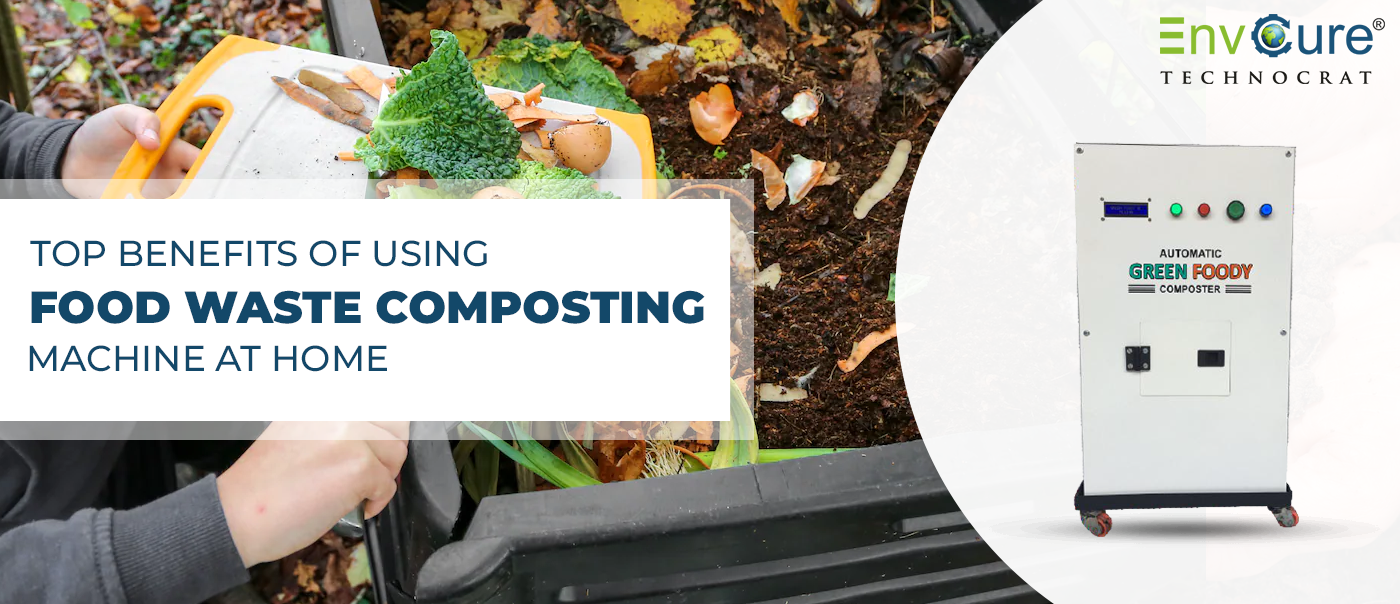
TOP BENEFITS OF USING FOOD WASTE COMPOSTING MACHINE AT HOME

Food Waste Composting Machine

Composting is the process of breaking down and recycling biodegradable waste material into compost which is very useful. However, natural composting takes a long time. It also invites microbes and bacteria.

Food Waste Composting Machine for Home

People started using technology to fasten the process in a very organized and clean way. Today, food waste composting machine is used in commercial spaces. These machines are now being installed at home as well. Having an organic waste machine at home has many advantages. Some of them are listed below:

1. Natural pesticide

We use chemical pesticides to grow a kitchen garden and sow plants on farms. Unfortunately, these chemicals do not have a positive impact on the yield. This is the reason we are paying extra for chemical-free food products. A food wastage composting machine can help create natural pesticides for your plants.

2. Sustainability

A waste composting fertilizer enables you to contribute to the green environment. You also eliminate carbon dioxide emissions from the environment by reducing waste. In addition, you can keep your home sanitized by recycling the trash at a faster pace.

3. Clean home

Different food products compost at different paces. Again, different types of waste give out different dour. Meat, bones, and various dairy products take more time to decompose. Waste composting fertilizer is a great way to escalate decomposition. It can help you eliminate the unpleasant smell generated by slow decomposition. Along with nourished plants, you can also maintain a clean home.

4. Cost efficiency

Food waste collection and recycling without many machines can be tedious and clumsy. You would need a separate space to store and recycle the waste. This space will be occupied for a long time, and you might waste money or purchase chemicals for decomposition and odor removal. Food wastage composting machine comes with a low operating cost and less space. It can be installed in a tiny area. It is a one-time investment and can be a very cost-effective option in the long run. If your budget is meager or you do not want this long-term, you can hire it for a specific period.

5. Safe compost

The natural composting process keeps on adding microbes and bacteria. Handling the waste after complete decomposition can be a monumental task. The food wastage composting machine has a pasteurization process. This process ensures that the harmful microbes from the compost make it safe for handling. There are different features for safety. The machine stops without any spillage or malfunction in case of an overload. You can not only decompose the material but also handle it alone without help.

6. Easy operation

The composting machine is automatic, and all the processes take place on their own. You can set the time of composting and stay relaxed. The mixing blades inside the machine automatically stop opening the removal door. So, you need to put the food waste and start the machine.

A food waste composting machine can be said to be a breakthrough in composting. It is an environment-friendly technology that can be used for residential and commercial use. We are one of the leading waste composting machine manufacturers. You can find affordable and quality machines with use. Our experts will review your requirements and analyze your problems to suggest the best solution. Contact us to get cheap food waste composting machine suitable for residential use.

Frequently Asked Questions:

Q.1. How does a compost machine work?

A. A composting machine has an inbuilt shredder, mixing blades, heating chamber, and other units that efficiently shred and trim the mix, making it ready for composting. In addition, heat and other inputs are provided to escalate the composting process.

Q.2. What are some don’t of using a food waste composting machine?

A. You should always segregate the waste and process only biodegradable waste in the compost machine. Carefully remove glass, metals, and other materials from the input feed.

Q.3. How can we get the compost machine installed at our home?

A. You can contact us. Our professionals will collect the requirement and other details such as compost machine installation size and purpose. The experts will visit your space and install the machine. You will be given a demo of the device. Contact us today to get more details.

How to Compost your Kitchen and Garden Waste for Fertilizer?

How to Compost your Kitchen and Garden Waste for Fertilizer

The serious threat of accumulating wet waste

In major cities across the world, most of the waste produced is organic or biodegradable waste. This waste needs to be properly managed to avoid polluting our soil and water and to ensure this, it should be collected and disposed of properly. The most common methods of managing wet waste are through landfill disposal or, in some cases, wet waste management plants.

It is illogical to dump wet waste into landfills when it can be treated at home or in the backyard. Whereas these same wet waste generated can be used to make compost for gardens and farms. The compost created improves the quality of soil and helps it in retaining moisture and reduces the waste volume handed over to the government, which is already a huge amount of 1.50 lakh metric tons daily just in India.

Composting helps productively dispose of wet waste, and also provides the opportunity for societies to generate extra income by the sale of compost fertilizer. This compost for gardens and farms can be used as a fertilizer.

Why use food waste as fertilizers?

Waste generated in the kitchen contains organic nutrients that can be used to make compost. By using leftovers and other food scraps, you can turn those stinky kitchen waste items into a highly organic, nutrient-rich product that can be used to grow vegetables or flowers. Before throwing away kitchen waste, be sure to determine if the kitchen waste can go into compost or can be converted into liquid fertilizer.

Composting kitchen waste provides many benefits, including the elimination of unwanted waste and the ability to use fertilizer on your lawn. Composting organic waste is a great way to prevent it from ending up in landfills and releasing methane, a much more potent greenhouse gas than carbon dioxide gas.

To make a nutrient-dense fertilizer, you’ll need to add some natural waste, such as grass clippings and lawn leaves, to your compost. You now know the basics of using kitchen waste as a garden fertilizer, but to become a true expert, check out the following article which covers composting in detail.

What is composting?

Composting is a biological process in which naturally occurring microbes, bacteria and insects break down organic material such as leaves, grass clippings, and some kitchen waste into a soil-like product called compost. In this food waste and other matter go through a decomposition process and form an organic material called humus, a kind of soil improver or fertilizer. By composting, you can recycle your organic materials and turn them into valuable soil amendments.

The end product of composting is nutrient-rich soil that can be used to grow crops, garden plants, and trees. The resulting decomposed material, which often looks like fertile garden soil, is called compost. In composting, food waste and other matter go through a decomposition process and form an organic material called humus, a kind of soil improver or fertilizer. 

Composting, known as “black gold,” is a natural process that occurs when water is mixed with brown materials (such as fallen leaves, twigs, and twigs) and green materials (such as grass clippings and fruit and vegetable clippings). Brown material provides carbon for composting, green material provides nitrogen, and water provides moisture to help break down organic matter.

Can you make compost at home?

Yes, compost can be easily prepared at home. Kitchen waste contains essential organic nutrients that can be used to make liquid fertilizer or compost. Food waste is made up of organic matter that can be composted to make fertilizer. The compost fertilizer can be easily produced by using the segregated wet waste at home itself.

Compost bins can be easily bought, but you can also easily make compost bins out of barbed wire, cinder blocks, bricks, and even scrap wood. You can buy a compost bin or make your own, be sure to include a removable lid so you can add more compostable material as you accumulate. If you don’t have space for outdoor composting, you can compost material indoors using a special type of litter box or use an organic waste composting machine.

Easiest DIY way of composting at home:

To compost at home, you will need a container, some organic matter, and water. The container can be anything from a traditional compost bin to a simple pile in your backyard. The organic matter can be fruits, vegetables, grains, coffee filters, eggshells, or any other organic material. Be sure to mix in some soil or compost to provide the necessary microbes for composting. And finally, water the compost regularly to keep it moist. One of the key rules is adding three parts brown waste to one part green waste

  • Pick a medium-sized earthen or plastic container and drill 5-6 holes on the edges (more if the container is bigger).
  • Place newspapers and cardboard under the container to contain any leaks.
  • Line the edges of the container with soil or shredded newspaper.
  • Start adding alternate layers of green waste and brown waste. Add some materials like buttermilk or cow dung to accelerate this process.
  • When your compost turns into brown, thick, and earthy-smelling dirt, it’s ready to use as a fertilizer.

This process usually takes a long time, instead, you can try other alternatives such as food waste composting machine.

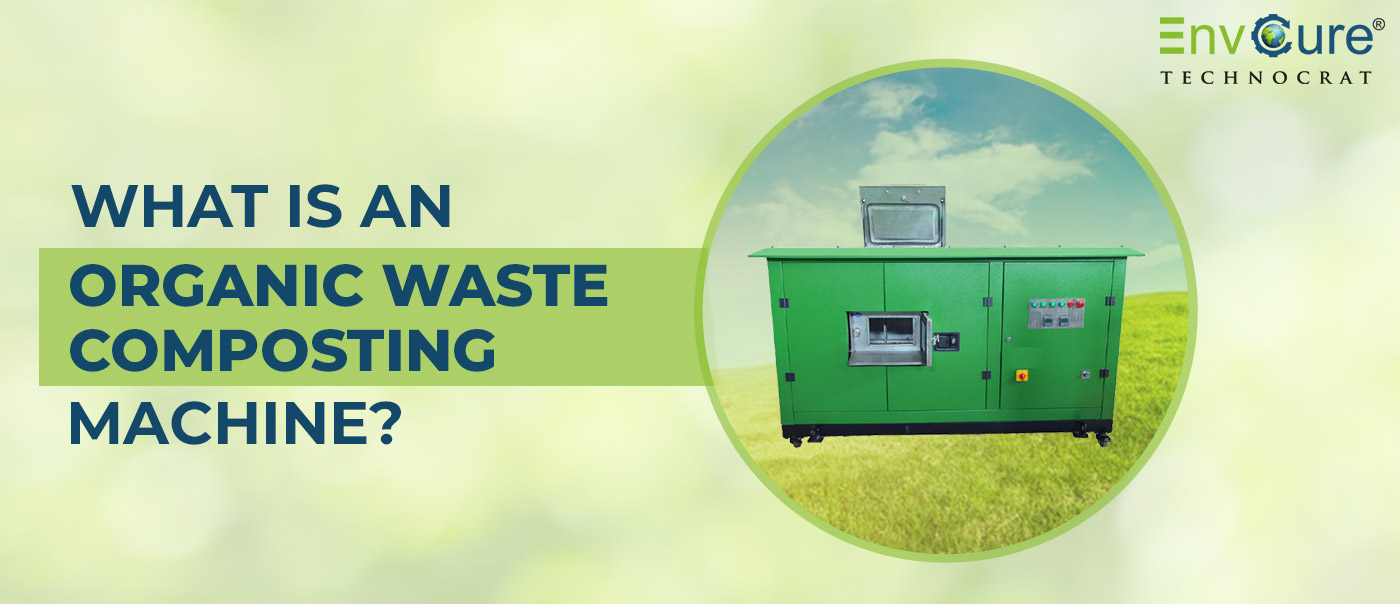
What is an organic waste composting machine?

The organic waste composting machine is a practical device that converts waste into manure in a shorter time as compared to the domestic methods. This machine is used to recycle all kinds of waste and turn it into compost that can be used in many different ways. The waste composter machine is one of the most commonly used machines for the production of fertilizers from organic waste.

You can use the organic waste composting machine to ensure the quality of the organic fertilizer. You can then use the organic waste recycling machine to mix it up and finish composting. It generates food waste, this organic material can be easily broken down into high-quality compost. Organic waste composters naturally convert biodegradable waste or food waste into compost with the help of hemophilic and thermophile bacteria.

Advantages of using an organic waste composting machine?

There are several environmental and economic benefits of using a machine to compost organically, some of which are as follows:

  • The composting machine accelerates the composting process, thus decreasing the time required to prepare the compost.
  • These machines can help you manage waste efficiently and reduce transportation costs.
  • Composting can be sold to a local farmer which is cheaper and better than chemical fertilizer.
  • Composting through this machine will help reduce rodents and insects.

The Don’ts of composting at home:

  • The remains of meat, fish, fat, and oil should not be added to the compost heap outdoors.   
  • Avoid pet waste as it contains harmful pathogens that can attract animals to your compost.
  • Try to put the waste in small particles and avoid big chunks.
  • Do not use the compost bin as a dustbin and randomly put the waste.
  • Avoid putting non-biodegradable waste in the container.

Now is the perfect time to get an organic waste composting machine. Composting is the perfect way to reduce your kitchen waste and get healthy soil for your garden at the same time. Try it!

Frequently Asked Questions:

Q.1. How do I start composting?

A. Start by collecting organic waste in a container and place it in an area where it will get sunlight and air circulation. You can also buy an organic composter machine to make this process easier for you. Once your compost has been generated, use it as fertilizer on your plants or flowers, or even sell it!

Q.2. What type of composter should I buy for my kitchen?

A. Envcure is one of the leading organic waste composting machine manufacturers and service providers in waste management activities based in Gujarat, India. Check out the different types of composters at envcure.

Q.3. How do I know if my compost is finished?

A. When your compost turns into a brown, thick, and earthy-smelling dirt, it’s ready to use as a fertilizer. 

What is an Organic Waste Composting Machine?

What is an organic waste composting machine

Every day thousands of tons of waste are generated from the domestic and commercial sector, challenging waste management. Most of the waste, especially the ones generated from the kitchen segment, can be composted to be used as manure.

However, dumping the entire waste into landfills can be hazardous to the environment with significant methane gas emissions. Organic waste composting can be an effective solution to dispose of such huge chunks of waste.

What is Composting?

Composting is breaking the complex structure of waste into simple forms called compost which offers various benefits. For example, it improves soil health along with reducing greenhouse gas emissions.

What is an Organic Waste Composting Machine?

An organic waste composting machine is used to recycle all types of waste and convert it into compost that can be used in varied ways. These machines propagate organic waste management, and without them, the same process would take a long time.

The general process deals with piles of waste generating environmental pollution. The organic waste composting machine is designed to fasten the composting process and recycle maximum waste in the shortest time.

How Does it Work?

The working principle of the waste composting machine is straightforward. The raw material is first mixed with water to create a mix that can be used as input. This waste is then fed to the machine from the input section.

The device has a mechanism for adding microorganisms to the mix. Some holes supplement the mixture with air. There is a stirrings shaft that mixes the waste mix with microorganisms. For the next seven days, the temperature inside the machine rises to 50-60 degrees Celsius, killing the undesired pathogens and reducing the waste into harmless and valuable manure.

Once the composting is complete, the temperature variation stops, and the organic fertilizers can be collected from the discharge section.

Can Composting be Done Within a Day?

Technology has made everything possible. For example, it is possible to compost the waste in one day with advanced composting machines. These machines are fitted with mixers and shredders to break down the trash faster.

In addition, some of the devices are equipped with PLC control systems and solar dehydration systems to fasten the composting process. Besides fast conversion, the machines also vary in handling the waste.

Why Should You Use An Organic Waste Composting Machine?

An organic composting machine is an advanced and cost-effective way of waste management. Most waste items, especially edible products, can be recycled into something useful. Primarily, using a composting machine saves time and manpower in converting waste into manure.

These organic fertilizers are in the purest form and can be used for raising healthy crops. In addition, it saves waste handling and transportation, required in a land filing with waste. The environmental benefits are something to count on.

Along with reduced methane production, they benefit the soil. Organic fertilizers supplement the soil with nutrition which can be used in plantations. When added to the soil, the compost keeps a check on soil erosion and water retention. An organic waste machine is an all-round solution to a greener and sustainable future.

The organic waste composting machine is a handy device used in many sectors, including hospitality, education, and food. With technological advancements, more advanced faster-composting machines are making their way into the market.

Envcure is the leading organic waste composting machine manufacturer that provides machines with world-class quality. We have easy-to-use organic waste converter machines for home and commercial use. We use international quality standards to manufacture our machines. Contact us to get a compost machine at the best market rates.

Related Products

Frequently Asked Questions:

Q1. Where Does Organic Waste Come From?
A. Organic waste, or biodegradable waste, is a natural refuse type that comes from plants or animals. It comes in manifold forms – biodegradable plastics, food waste, green waste, paper waste, manure, human waste, sewage, and slaughterhouse waste.

Q2. How is Organic Waste Converted into Compost?
A. The method of composting is started by shredding the plant matter, then adding water, and ensuring proper aeration by regularly turning the mixture when open piles are used. In this process, the waste must be appropriately broken down, and fungi, earthworms, and other detritivores help in breaking down the materials.

Q3. Is Kitchen Waste Biodegradable?
A. Biodegradable waste includes leftover food, fruit and vegetable peelings, soft shells, seeds, leaves, flowers, twigs, branches, stems as well as entrails of fish, fowl and other animals, noted NSWMC.