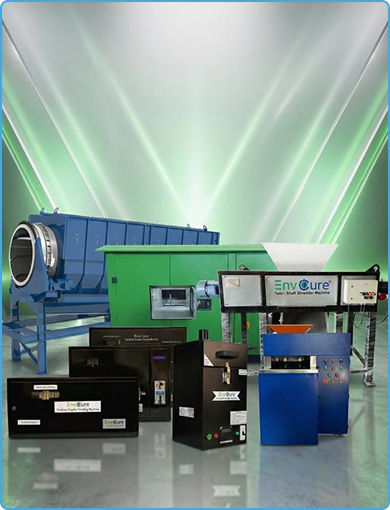


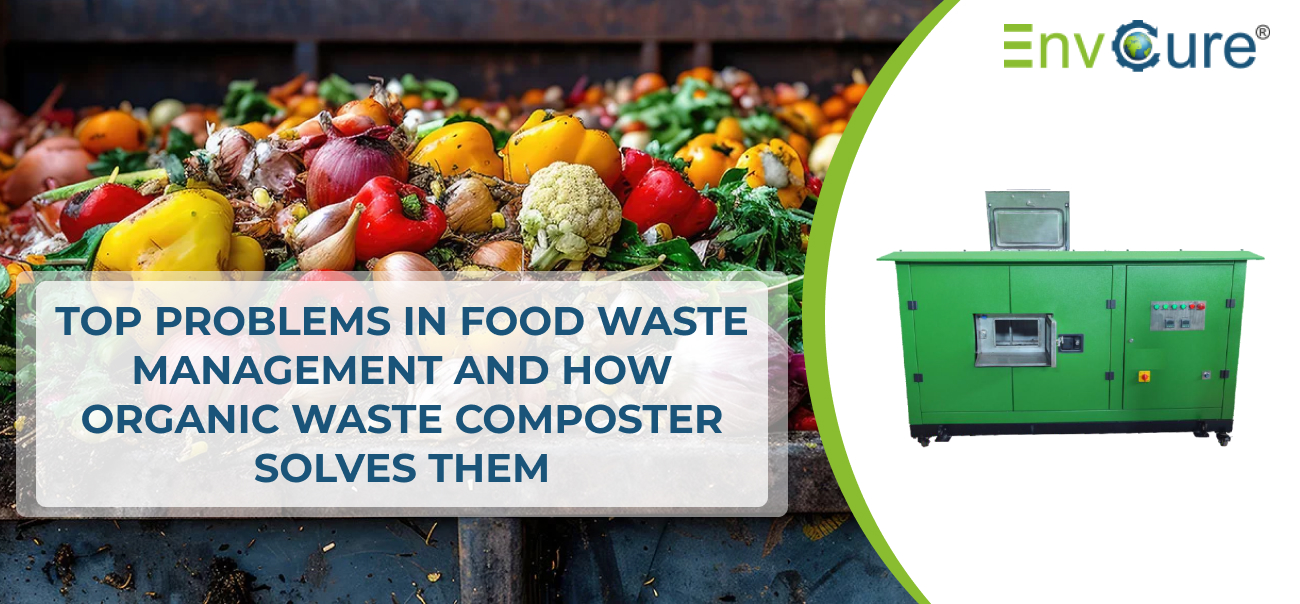
Top Problems in Food Waste Management and How Organic Waste Composter Solves Them

Organic Waste Composter

Every day, homes, hotels, restaurants, and institutions generate massive amounts of food waste. If you have been looking for a smarter way to handle that waste, an organic waste composter is the answer the world needs right now. 

Food waste is no longer just a hygiene issue. It has become an environmental, financial, and regulatory challenge that affects every kind of establishment, from small cafes to large municipalities.

Understanding the real problems behind food waste management and how modern organic waste composter machines solve them is the first step toward a cleaner and more sustainable future.

The Biggest Problems in Managing Food Waste Today

Overflowing Landfills and Space Shortages

India generates millions of tonnes of municipal solid waste every year, and a significant share of it is organic food waste. 

Landfills across the country are running out of space at an alarming rate. Cities are struggling to find new dumping grounds, and the ones that exist are already beyond capacity. 

The result is unmanaged waste piling up on roadsides, in waterways, and in residential areas, creating health hazards and ugly living conditions for everyone nearby.

Deadly Greenhouse Gases (Methane Emissions)

When food waste decomposes in a landfill without oxygen, it produces methane, a greenhouse gas that is far more potent than carbon dioxide when it comes to trapping heat in the atmosphere. 

Landfill methane is a major driver of climate change, yet most food waste still ends up there. Every tonne of food waste that goes to a landfill is a missed opportunity to do something better.

Foul Odors and Pest Infestations

Anyone who has managed a hotel kitchen, hospital cafeteria, or apartment complex knows the problem well. Rotting food waste produces strong, unpleasant odors that spread quickly and attract flies, rats, and other pests. This creates a health risk and also damages the reputation of any establishment that cannot keep its waste under control.

Toxic Liquid (Leachate) Seeping into Groundwater

As food waste rots in an open dump or landfill, it releases a dark, toxic liquid called leachate. This liquid seeps through the soil and contaminates groundwater, which many communities depend on for drinking and agriculture. 

The long-term damage to water quality and soil health from leachate is a serious environmental concern that does not get enough attention.

High Costs of Collecting and Transporting Trash

Municipal waste collection and transportation are expensive. Trucks burn fuel, require drivers and maintenance, and make multiple trips daily just to keep up with the volume of waste generated. 

For businesses and housing societies, waste disposal fees add up quickly and represent a recurring cost that most would rather reduce or eliminate altogether.

Wondering if the investment is worth it? See how an organic waste composter pays for itself in hospitality.

What is an Organic Waste Composter?

Definition of an Automatic Composting Machine

An organic waste composter is a machine that takes raw food and kitchen waste and converts it into compost, a nutrient-rich material that can be used to enrich soil. Unlike traditional methods, a modern organic waste composting machine does this quickly, cleanly, and with minimal human effort.

How it Differs from Traditional, Slow Compost Piles

Traditional composting involves piling up organic waste in an open space and waiting weeks or even months for it to break down. The process is slow, smelly, and impractical for most urban or commercial settings. 

An automatic food waste composting machine, on the other hand, completes the entire process within 24 hours in a fully enclosed system, which means no mess, no odor, and no waiting.

The Core Technology: Rapid Aerobic Decomposition

The principle on which a waste composting machine works is aerobic decomposition, which means breaking down organic material in the presence of oxygen. The organic waste composter machine maintains the ideal temperature, moisture, and airflow conditions to allow microorganisms to rapidly break down food waste. This process is fast, efficient, and produces high-quality compost as the end product.

How an Organic Waste Composter Machine Solves These Problems
organic waste compost machine

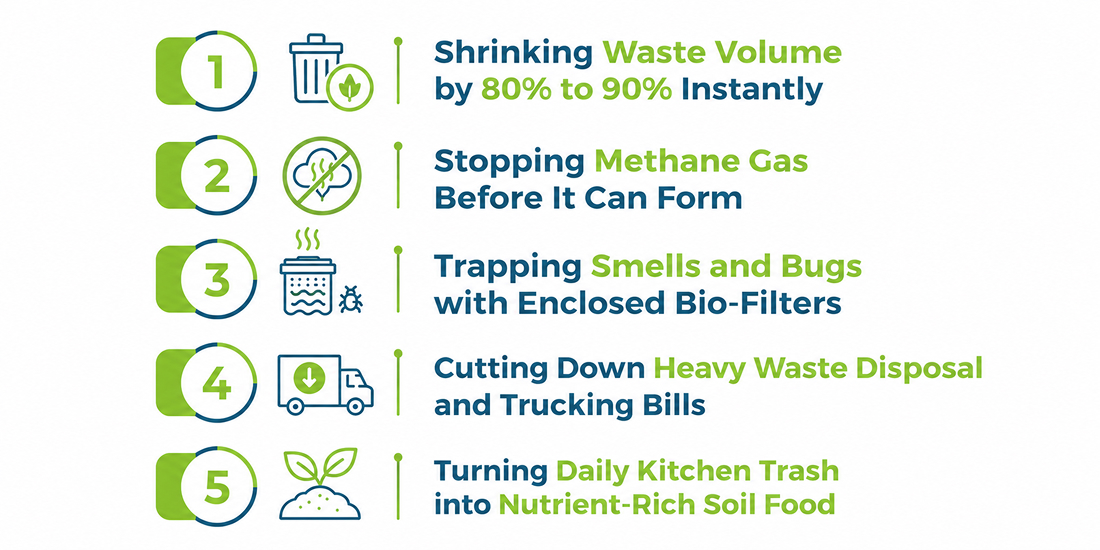
Shrinking Waste Volume by 80% to 90% Instantly

One of the most impressive things about a modern organic waste composter is how dramatically it reduces waste volume. In just one processing cycle, the machine can reduce the original weight and volume of food waste by 80% to 90%.

This means far less waste going out to collection trucks, far less pressure on landfills, and far lower disposal costs for any establishment.

Stopping Methane Gas Before It Can Form

Because the aerobic process inside an organic composting machine uses oxygen, methane simply cannot form. The food waste is processed before it ever has a chance to rot in an anaerobic environment. 

This directly cuts greenhouse gas emissions at the source, making every user of an organic waste composter an active contributor to climate action.

Trapping Smells and Bugs with Enclosed Bio-Filters

A quality waste composter machine operates in a fully sealed chamber with a built-in bio-filter system. All odors are neutralized before any air is released, so there is no smell to attract pests or disturb people nearby. 

This makes the machine suitable for use even in densely populated buildings, restaurant kitchens, and healthcare facilities.

Cutting Down Heavy Waste Disposal and Trucking Bills

With a food waste composting machine on-site, establishments dramatically reduce the frequency and cost of waste pickups. 

Less waste going out means fewer collection trips, which means lower bills. Over time, the savings on waste disposal can be substantial, and in many cases, cover the cost of the organic waste composter machine in a few years.

Turning Daily Kitchen Trash into Nutrient-Rich Soil Food

The compost that comes out of an organic waste composting machine is not garbage. It is a valuable soil amendment that improves fertility, moisture retention, and microbial activity in the soil. 

Housing societies can use it in gardens and green spaces. Farms and landscaping businesses can use it in place of chemical fertilizers. So, the organic waste compost machine closes the loop on food waste in the most productive way possible.

With stricter rules already in place, see how Ahmedabad’s new waste segregation rules 2026 are pushing societies, hotels, and institutions toward composting machines.

Driving Sustainability with EnvCure Technocrat LLP

At EnvCure Technocrat LLP, we design and manufacture fully automatic composting machines that are built for real-world conditions in India. Our organic waste composter models are engineered with smart controls, automated feeding systems, and integrated shredder and conveyor systems that make the entire process hands-off for the operator. 
organic composting machine

Smart Features of Our Fully Automatic Composting Machines

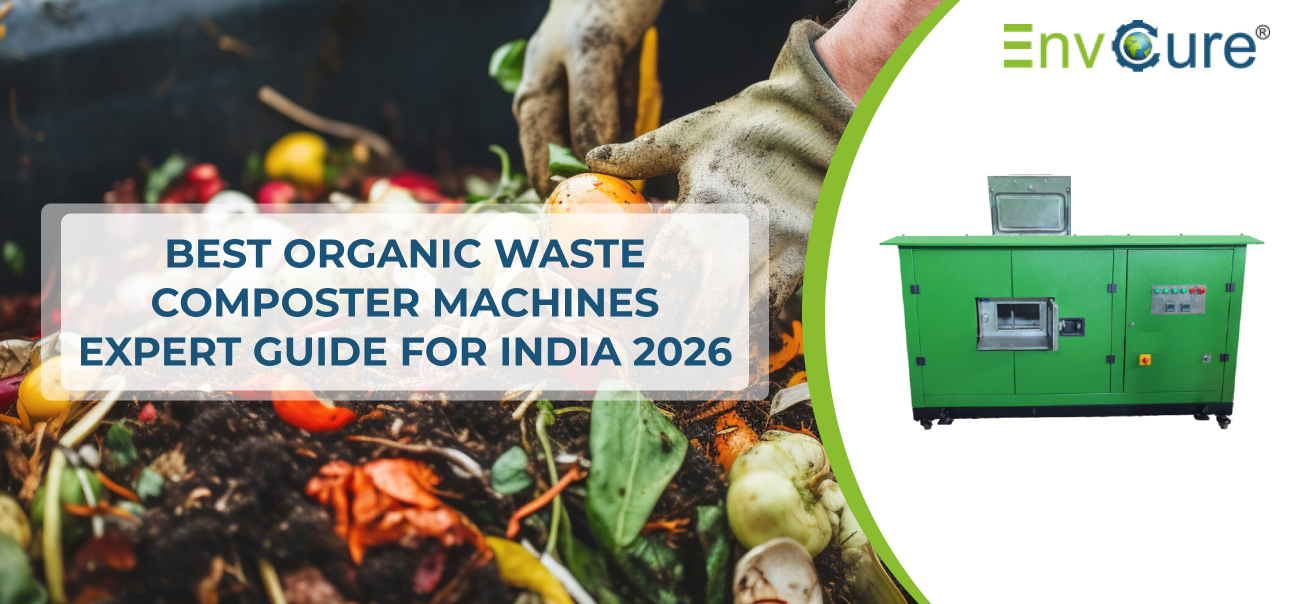
Our flagship model, the EC OWC 2000, handles up to 2000 kg of organic waste per day, making it one of the most capable machines in its category. We also offer semi-automatic and ROTO composter variants for establishments with different operational needs and budgets.

From Cafes to Municipalities: Finding Your Perfect Matching Machine Size

Our range of organic waste composter machines is designed to scale with demand. Small cafes, residential complexes, and schools can start with a compact model that processes a few hundred kilograms per day. 

Hotels, hospitals, and food processing units can move up to mid-range models. And for municipalities, industrial parks, or large township projects, we offer high-capacity organic composting machines that can handle several tonnes of food waste daily. 

Why Indian Businesses Trust EnvCure Technocrat LLP for Solid Waste Compliance

India’s Solid Waste Management Rules make it mandatory for bulk waste generators to process their organic waste on-site. Our company has become a trusted name for institutions, municipalities, and businesses that need to stay compliant without complicating their daily operations. 

EnvCure Technocrat LLP is registered on the Government e-Marketplace (GeM), is MSME-certified, and is recognized under Startup India. Our clients include IIT Gandhinagar, IIM Ahmedabad, Amdavad Municipal Corporation, Airports Authority of India, Indian Oil, and Nirma University, among many others. Our after-sales support, installation expertise, and reliable machine performance are why so many organizations across Gujarat and beyond keep coming back to us.

Choosing the right method matters; compare an organic waste composter vs traditional composting for your facility.

Conclusion

Food waste is one of the most solvable problems in environmental management, and the organic waste composter is the tool that makes solving it practical and profitable. From eliminating landfill pressure and methane emissions to cutting disposal costs and generating useful compost, the benefits are clear. 

Whether you run a restaurant, manage a residential society, or oversee a municipal corporation, there is a composting solution that fits your scale. And EnvCure Technocrat LLP is ready to help you find it.

FAQs Related to Organic Waste to Compost Machine

Q: What is an organic waste composter and how does it work?

A: An organic waste composter is a machine that breaks down food and organic waste into compost using heat, aeration, and microbial activity. It processes waste within 24 hours, reducing volume by up to 90% and producing usable compost as a by-product.

Q: What are the biggest problems in food waste management?

A: The most common problems include high disposal costs, foul odour, pest attraction, lack of space, regulatory non-compliance, and environmental damage from landfill dumping. An organic waste composter addresses all of these at the source.

Q: What is the difference between a composting machine and traditional composting?

A: Traditional composting takes weeks or months outdoors and needs large space. A composting machine does the same process mechanically in 24 hours, indoors, with no odour or manual effort, making it practical for hotels, societies, and institutions.

Q: Which places need an organic waste composter the most?

A: Hotels, restaurants, housing societies, hospitals, schools, corporate canteens, and food processing units generate the highest food waste daily and benefit most from on-site composting machines.

Q: Is an organic waste composter cost-effective?

A: Yes. It eliminates daily waste disposal charges, avoids municipal fines for improper disposal, and produces compost that can be used or sold. Most facilities recover the machine cost within 12 to 24 months.
How an Organic Waste Composter Pays for Itself in Hospitality

Organic Waste Composter

Running a hotel, restaurant, or resort means dealing with a bulk of food waste every single day. But this problem can be easily solved by obtaining an organic waste composter. This composter is not only an eco-friendly choice, but it is also a genuinely smart financial decision.

If you’ve been thinking about buying an organic waste composter but you are also concerned about the upfront cost, then this article will show you exactly how these machines pay for themselves, often faster than you’d expect.

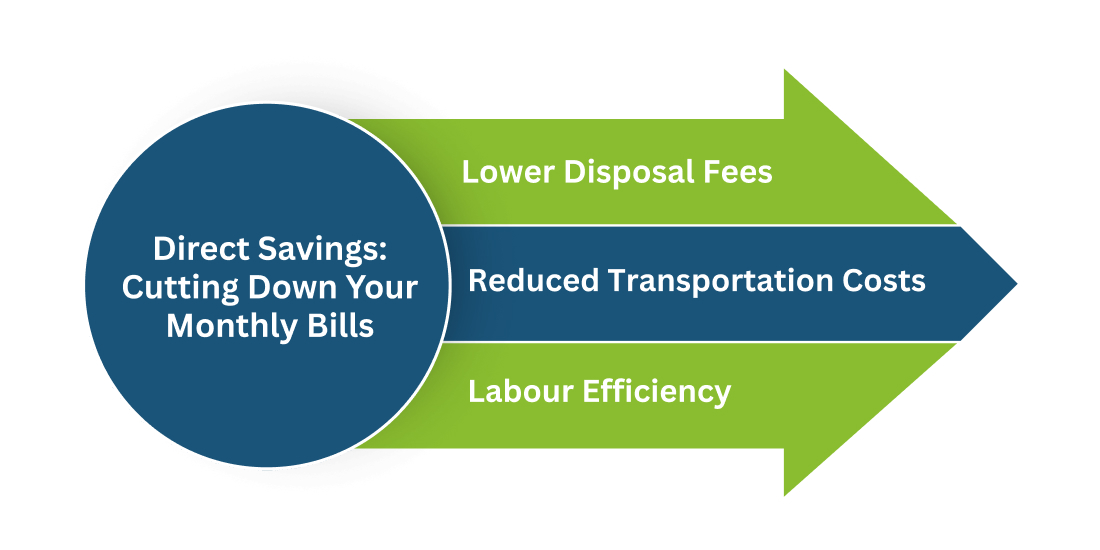
Direct Savings: Cutting Down Your Monthly Bills

organic waste compost machine

Lower Disposal Fees

One of the biggest ongoing expenses for any hospitality business is waste disposal. Organic waste is heavy, rots quickly, and the cost of sending it to a landfill is too high. A waste composting machine processes this waste right on your property, which means fewer pickups, smaller bins, and a noticeably smaller bill from your waste contractor.

Reduced Transportation Costs

Each time a garbage truck visits your property, you are charged for it. With an organic waste composter, you can handle your food scraps in-house. This will significantly reduce the garbage truck visits to your house. With fewer such trips, you can renegotiate your entire waste contract at a much lower rate.

Labour Efficiency

Traditional waste handling is messy and time-consuming. Your staff have to bag, carry and sort through large quantities of rotting food. An organic waste compost machine automates much of this process. This means that your team would be spending less time on waste management duties and more time on what actually matters.

Learn more about it in detail, How an Organic Waste Composter Pays for Itself in Commercial Catering and Hospitality

Analysing the Return on Investment (ROI)

The “Before” Scenario

Without an organic waste composter, hospitality businesses typically face high recurring costs, such as waste disposal fees, frequent collection charges, and additional expenses for labour and pest control, all of which add up month after month. The bigger the operation, the heavier this financial burden tends to be.

The “After” Scenario

After installing an organic composting machine, the same hotel might spend a fraction of that, mainly just on electricity costs to run the machine. The compost produced can be used on-property or sold, which will add value rather than cost.

The Break-even Point

Depending on the size of your operation and local disposal rates, most hospitality businesses cover the purchasing cost within 18 – 36 months. After that, it will just add up to your savings.

Turning Waste into Wealth: The Value of Onsite Compost

Landscaping Savings

Good compost is basically free fertiliser. If your hotel or resort has gardens, lawns or landscaped areas, using compost produced by your organic waste composter means spending significantly less on commercial fertilisers and soil conditions.

Organic Produce

Some properties have taken it a step further by using their compost to grow herbs, vegetables, or fruits for the kitchen. Farm-to-table dining is a big selling point for guests, and it costs very little when your compost is already being produced on-site.

A New Revenue Stream

Compost is actually in demand. Local farmers, nurseries and urban gardening communities will often pay for quality compost. If your waste composter machine is producing more than you need, selling the excess is a straightforward way to generate additional income.

The Lifecycle of a Food Scrap

Collection

It starts simple. Kitchen staff separate food scraps from other waste at the source. This takes almost no extra effort once the habit is established.

Processing

Then the scraps go into the organic waste composter, which shreds, heats, and supplies oxygen to the material to accelerate the decomposition process.

Transformation

Over the course of hours to days (depending on the machine model), the food waste breaks down into rich, dark compost.

Application

The finished compost goes back into the earth through your garden beds, your planters or out to a local farm, completing a clean, circular loop.

organic composting machine

Operational Perks: Beyond the Balance Sheet

Odours and Hygiene

Rotting food in large bins is a constant hygiene headache. An organic waste composter processes waste quickly, dramatically reducing the odours that can affect guest experience, especially in dining areas or near service corridors.

Pest Control

Pests are drawn to food waste. Reducing the amount of waste kept in your property, and the time it is kept there, naturally lowers your pest risk. This can reduce spending on pest control services as well.

Compliance

Waste regulations are tightening across India and globally. With an on-site food waste composting machine, you can easily meet your compliance requirements, avoid fines and ace safety inspections easily.

Read more in our blog Why Municipalities Choose Organic Waste Composter.

Partnering for a Greener Future: EnvCure Technocrat LLP

When it comes to choosing the right organic waste composter for your hospitality property, no one can surpass EnvCure Technocrat LLP. Based in Gujarat, our company is one of India’s leading manufacturers of fully automatic organic waste composting machines.

The following points show how we provide the best organic waste composter machine:

Smart Technology

Our machines are fully automated, meaning minimal manual intervention. The system manages temperature, aeration, and moisture on its own, and produces consistent, high-quality compost without requiring any specialised staff.

Customized for Hospitality

Hotels and restaurants have different waste volumes and operational constraints. EnvCure Technocrat LLP designs solutions that are a best fit for the hospitality sector, from boutique properties to large resort chains. Our range of organic waste composter includes machines for small daily volumes to large-scale industrial needs.

Maintenance and Support

Buying a machine is only the first step. We also provide after-sales support and service to ensure your organic waste composting machine keeps running efficiently, minimising downtime and keeping your operations smooth.

Proven Impact

The track record of EnvCure Technocrat LLP demonstrates real, measurable results across waste management projects in India. Our clients have reported significant reductions in waste disposal costs and improved sustainability, exactly what modern hospitality brands need.

Conclusion

Investing in an organic waste composter isn’t just about keeping our planet clean and green. It also contributes to our overall profit. From minimising disposal bills and reducing pest issues to producing usable compost and impressing eco-conscious guests, the benefits of these composting machines stack up fast. 

With the right partner like EnvCure Technocrat LLP, the transition is smooth, the technology is reliable, and the returns are real. If your property is still sending food waste off-site every week, now is the time to rethink that habit.

FAQs Related to Waste Composting Machine

Q. How does an organic waste composter save money for hotels and restaurants?

A. It reduces disposal fees, cuts garbage truck visits, and lowers labour costs. Hotels can also renegotiate waste contracts at lower rates and use the compost produced as free fertiliser, replacing commercial soil conditioners.

Q. How long does it take for an organic waste composter to pay for itself?

A. Most hospitality businesses recover their investment within 18 to 36 months. After that, the machine continues generating ongoing savings on waste hauling, labour, and fertiliser costs.

Q. Can compost produced on-site generate revenue for a hotel or restaurant?

A. Yes. Excess compost can be sold to local farmers, nurseries, and urban gardening communities. Some hotels also use it to grow herbs and vegetables, supporting farm-to-table dining at minimal cost.

Q. How does a food waste composting machine help with pest and odour control?

A. It processes food scraps quickly, reducing rotting waste stored on your property. Less stored waste means fewer pests and reduced odours, lowering spending on pest control and deodorizing services.

Q. Does an organic waste composter help meet waste compliance regulations in India?

A. Yes. An on-site composting machine helps hospitality businesses meet compliance requirements, avoid regulatory fines, and pass safety inspections easily.

Q. What happens to food waste inside an organic waste composter?

A. The machine shreds, heats, and aerates food scraps to accelerate decomposition. Within hours to days, waste transforms into rich compost ready for gardens, planters, or local farms.

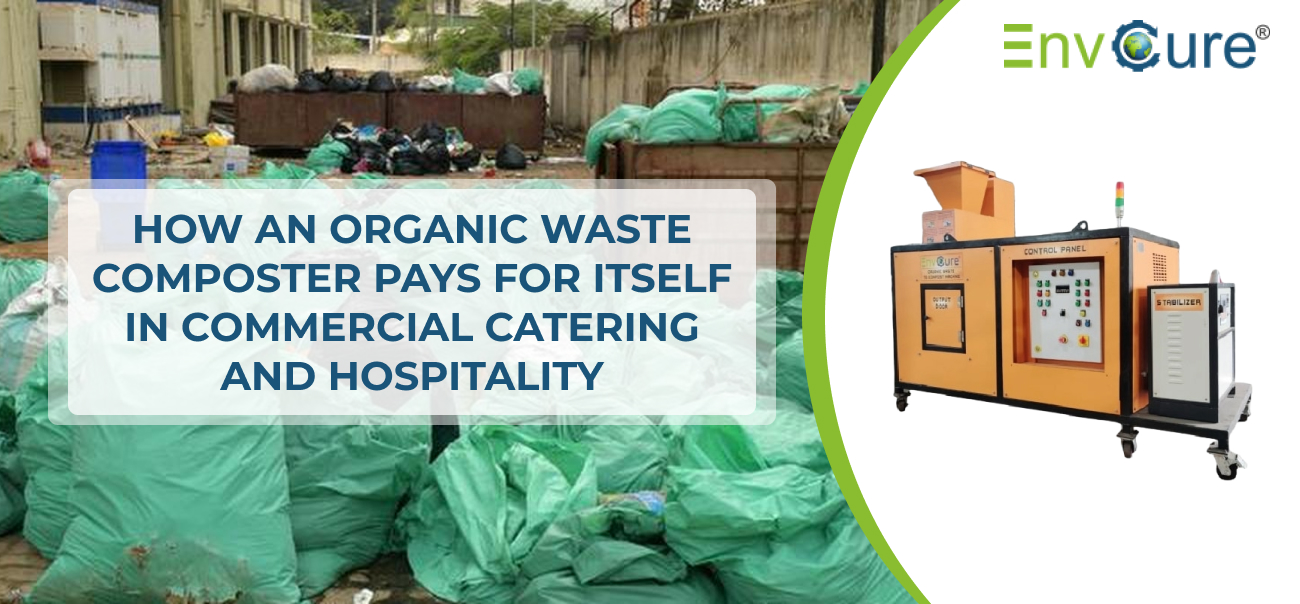
How an Organic Waste Composter Pays for Itself in Commercial Catering and Hospitality

Organic Waste Composter

In the world of commercial catering and hospitality, the best way to manage daily food scraps is to invest in an organic waste composter. Many business owners think that it is a costly task to manage their kitchen trimmings and leftovers. 

But a smart business owner sees this trash as a hidden opportunity. On-site waste management enables you to stop throwing money into a dumpster and start converting your kitchen scraps into valuable resources.

The Rising Costs of Traditional Waste Management

The traditional way of managing waste has become very expensive today. When you rely on external services to send your waste to a landfill, you are not just paying for the waste removal from your facility; you are also paying the transportation expense.

Landfill taxes and disposal fees are increasing every year, mainly because of stricter environmental regulations. Moreover, many hospitality businesses also face operational challenges, like a constant need for storage space, labor required to manage heavy, messy bins and the foul smell that attracts pests. Every time a waste collection truck comes to your property, you pay for the waste transportation. However, this should have been handled more efficiently on-site through an organic waste composter.

Municipal waste management strategies are evolving rapidly; discover the reasons in our blog Why Municipalities Choose Organic Waste Composter.

How the Machine Pays for Itself

Investing in an organic waste composting machine is not just about protecting the environment. It is also about making a smart financial decision. Here is how it pays off:

Lower waste collection fees

Your waste volume decreases significantly when you process waste on-site. Your need for waste collection also decreases because you stop sending large amounts of untreated organic waste to the landfill. By reducing your waste, you directly reduce your monthly collection bills.

Reduced labor and handling time

Managing messy, leaking trash bins takes a lot of effort and time from your kitchen staff. This laborious process can be easily simplified by acquiring an organic waste converter machine. The machines operate at high efficiency, which enables your staff to dedicate their time to serving customers and preparing meals instead of waste collection.

Pest and Odor Control Costs

The garbage containers outside restaurants, which contain discarded food materials, create a problem because they attract insects and produce unpleasant smells. The sealed composting systems use aerobic processes to decompose organic waste material, which eliminates the need for additional expenses required to maintain the facility, like professional pest control and deodorizing services.

Tax Incentives and Grants

Based on the government regulations applied in the area where your facility is located, the organic waste composter machine offers various financial incentives:

Capital Support: Restaurants and catering services can access up to 50% capital subsidies under the Swachh Bharat Mission (SBM) grants.

Tax benefit: Businesses using an organic waste composter machine can get a tax benefit under the Income Tax Act to lower taxable income.

Operations: Businesses can get 5-12% lower GST rates on composting machines.

organic waste compost machine

Avoid regulatory costs and fines

To manage the waste most effectively, the government has established certain rules and regulations that are meant to be followed by caterers, restaurants and hotels. Non-compliance with these regulations can result in penalties that can be avoided by using an organic waste composter.

Moreover, landfills are filling rapidly and so, the cost of sending your waste to these landfills is going to increase in the future. An investment in a composter today acts as a shield against the inevitable inflation of waste disposal prices.

One-time investment, long-term savings

If you send your waste to landfills, you have to pay for it regularly. But getting an organic waste composter machine is a long-term asset. Once the initial investment is made, the cost of operating the organic waste converter machine becomes minimal – electricity and basic maintenance being your main expenses. The savings you achieve from hauling fees and landfill charges will eventually pay for the organic waste composter machine, which will then produce profit for your business.

To understand the advantages and limitations of different composting methods, explore our article Organic Waste Composter vs. Traditional Composting – Which Is Right for Your Facility?

What Can You Put in Your Composter?

A modern organic waste compost machine is very versatile in its usage. It is built to process different types of waste, typically generated in a commercial kitchen.

Everyday food scraps

This includes fruit and vegetable peels, cores, stalks and other trimmings obtained from meal preparation. It also includes the leftovers foods in customers’ places and in the kitchen containers.

Kitchen essentials

Many items you throw away daily, such as eggshells, tea bags and coffee grounds, are perfect for the composting process. These materials break down easily and quickly inside an organic waste composter and produce a high-quality compost.

Garden and paper waste

If your property also has a garden and trees, then you can also add flowers, dried leaves and garden clippings to the organic waste composter machine. Additionally, an organic waste compost machine can even process paper napkins to produce compost, helping to reduce waste in landfills even further.

To explore the latest composting technologies and machine recommendations, check out our blog Best Organic Waste Composter Machines Expert Guide for India 2026.

How Composting Helps Your Brand

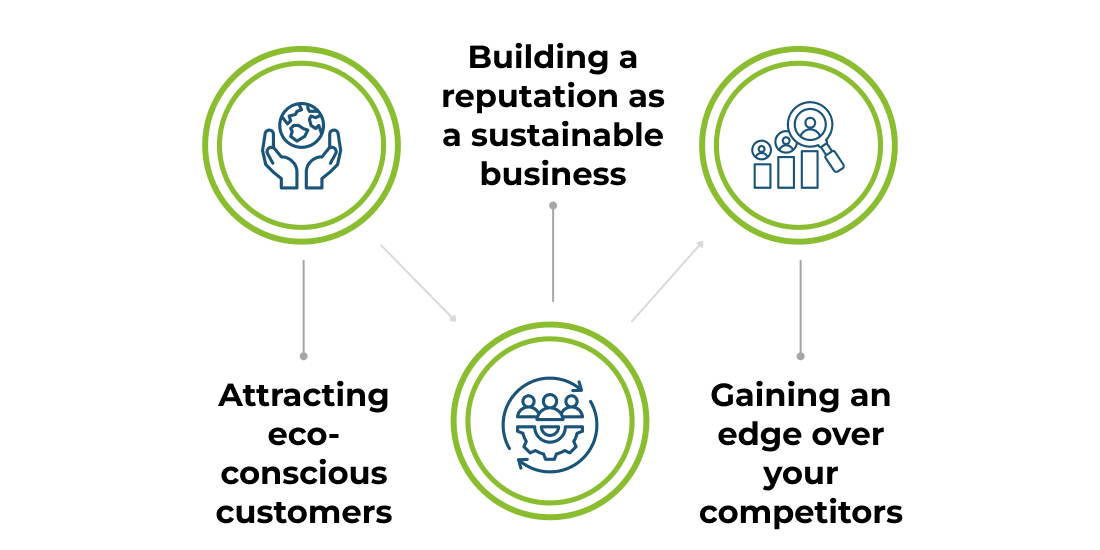
Today, the market has also become eco-conscious. That means, businesses and customers are not only thinking about financial savings, but they are also choosing products and services that support a clean and safe environment. 

Here is how becoming eco-conscious can help your brand:

organic waste composting machine

Attracting eco-conscious customers

As many modern guests are choosing environmentally friendly products and services, they actively seek out businesses that share the same value. Processing waste through an organic waste composter shows that you are also committed to sustainability. This creates a positive image of your brand in the market.  

Building a reputation as a sustainable business

Sustainability has become more than a ‘nice-to-have’ feature; it has become a badge of honor. By showing your green practices, your business stands out as an innovative leader in the hospitality industry.

Businesses planning to manage organic waste efficiently can explore our guide Organic Waste Composter Buying Tips from Leading Manufacturers for expert insights.

Gaining an edge over your competitors

If the two hotels or restaurants are offering similar services, customers often choose the one that has clear and visible sustainability initiatives. By showing your customers how you are taking care of the environment by using an organic waste composter, you can win a distinct competitive advantage in the market

How EnvCure Technocrat LLP Offers the Best Solution

EnvCure Technocrat LLP stands as the leading partner for commercial catering and hospitality businesses, helping them to turn their waste into compost using the organic waste composting machine. The company provides hotels, restaurants and catering services with waste management solutions that are highly reliable, easy to maintain and very efficient.

Our machines use innovative technology that supports fast operation without producing any foul smell – a necessity for any kitchen. We offer two types of organic waste composter machines. One is a Fully-Automatic Organic Waste to Compost Machine that handles a high volume of waste without human input. And another is a Semi-Automatic Organic Waste To Compost Machine that requires some human effort.

At EnvCure Technocrat LLP, we don’t just sell you a machine; we provide a complete solution to manage your organic waste. Our team delivers expert installation services along with complete maintenance support, so that your equipment keeps on operating at optimal performance. 

Conclusion

The transition from a “waste disposal” mindset to a “waste-to-wealth” strategy is one of the most effective ways to improve your bottom line. Your investment in an organic waste composter will quickly pay for itself by reducing waste transportation costs, saving on labor and improving the brand’s reputation. It is a practical shift that turns your daily headache of waste management into a long-term financial and environmental win.

FAQs Related to Organic Waste Composter

Q. How much money can a restaurant save by using an organic waste composter?

A. Savings come from reduced hauling fees, lower landfill charges, and lower fertilizer purchases, most commercial kitchens see 10–40% reduction in waste-related expenses

Q. What are the maintenance requirements and costs?

A. Routine tasks: emptying digestate, cleaning screens, and periodic inspection; typical maintenance time is 30–60 minutes/week for small systems, with modest consumable costs (filters, microbes).

Q. How noisy and odorous are commercial composters?

A. Modern in-vessel and aerated systems are low-noise and engineered to control odors; correct feeding practices and regular maintenance prevent smells.

Why Municipalities Choose Organic Waste Composter

Organic Waste Composter

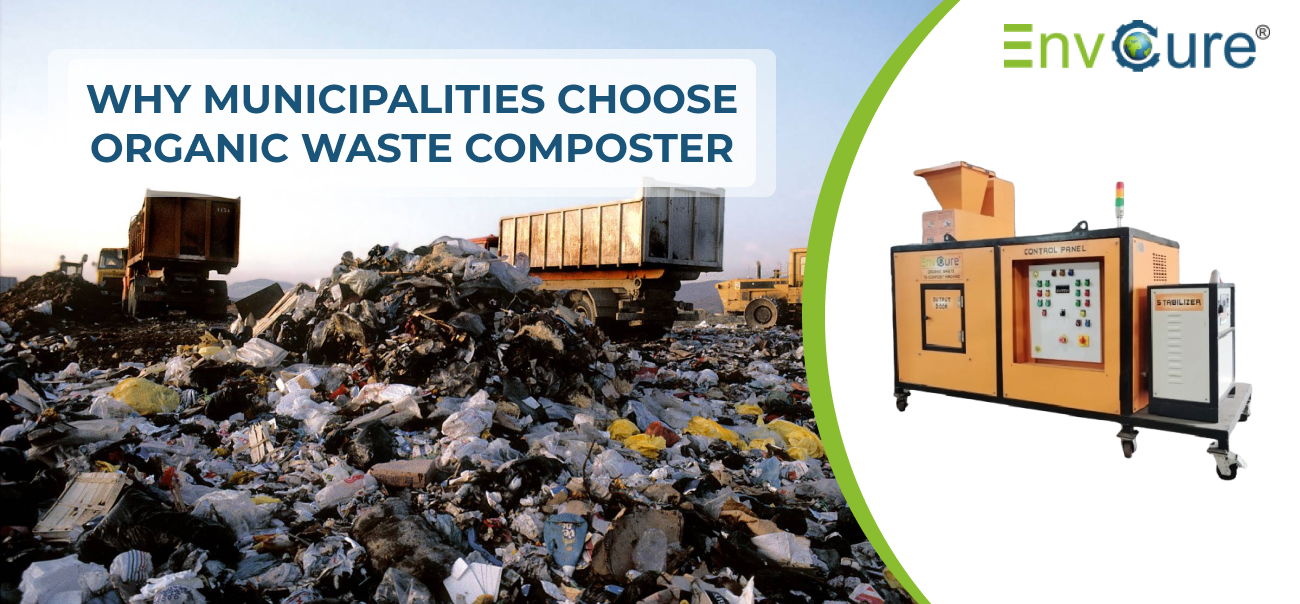
The growth of urban areas has created a major problem for cities because they are unable to manage their rising municipal solid waste (MSW). The conventional approach to waste disposal, which depends on collecting waste and dumping it, has become unworkable for today’s needs. And in the total municipal waste that cities are generating, 50 – 60 percent is of organic materials. That is why municipalities are opting for the Organic Waste Composter (OWC) for urban waste management in their respective cities.

The following article examines the reasons advanced cities are putting their resources into composting technology to protect their environmental sustainability and economic stability.

Drastic Reduction in Landfill Dependence

The physical limits of land serve as the most urgent challenge that municipalities face. The available waste Landfills are filling up rapidly and the strong “Not In My Backyard” (NIMBY) attitude of people is making it very difficult for municipalities to create new landfill sites. Organic waste composters are solving these problems in excellent ways.

  • Volume Reduction: The high-efficiency waste composter machine reduces waste volume by 80% to 90% within a few hours to a few days. Because of this, active landfills are getting extended operational time.
  • Methane Mitigation: The anaerobic decomposition of organic material in landfills results in methane production, a greenhouse gas that is 25 times more harmful than carbon dioxide. The composting process creates an aerobic environment, where methane emissions are eliminated.
  • Leachate Control: Landfills produce toxic liquid leachate, which contains organic waste that can contaminate groundwater. The environmental threat gets eliminated through waste processing in a controlled composter.

Explore which method works better in this organic waste composter vs traditional composting comparison.

Economic and Cost Saving Benefits of Organic Waste Composter

The composting infrastructure costs require substantial upfront funding, but municipal governments will achieve positive financial returns after a lengthy period.

  • Reduced Transportation Costs

It is a significant financial burden for cities when they move heavy, wet organic waste materials to landfill sites that are located far away. The installation of decentralized organic waste composters at ward and community center locations enables municipalities to achieve substantial reductions in their operational costs, which include fuel expenses, vehicle maintenance requirements and labor costs.

  • Revenue Generation

Municipalities see organic waste as a financial burden, but it can be a valuable resource if they can turn it into compost. The municipalities sell high-quality organic fertilizer to:

    • Local Farmers: Supporting regional food security.
    • Landscaping Companies: For urban beautification projects.
    • Public Parks: Reducing the city’s own budget for chemical fertilizers.
  • Carbon Credits

Today’s economy assigns economic value to all environmentally friendly activities. Multiple municipalities now possess the capability to obtain carbon credits, which they can acquire by demonstrating their success in reducing methane emissions, thereby creating a new source of revenue that does not originate from taxes.

Before selecting a machine, go through Best Organic Waste Composter Machines – Expert Guide for India 2026, which explains capacity, technology, pricing, and key factors to consider.

Meeting Regulatory and Environmental Mandates

Governments around the world are enforcing more stringent waste management regulations. The legal requirements for “Zero Waste” targets and complete bans on organic waste disposal in landfills force municipalities to create new waste management systems.

organic waste composting machine

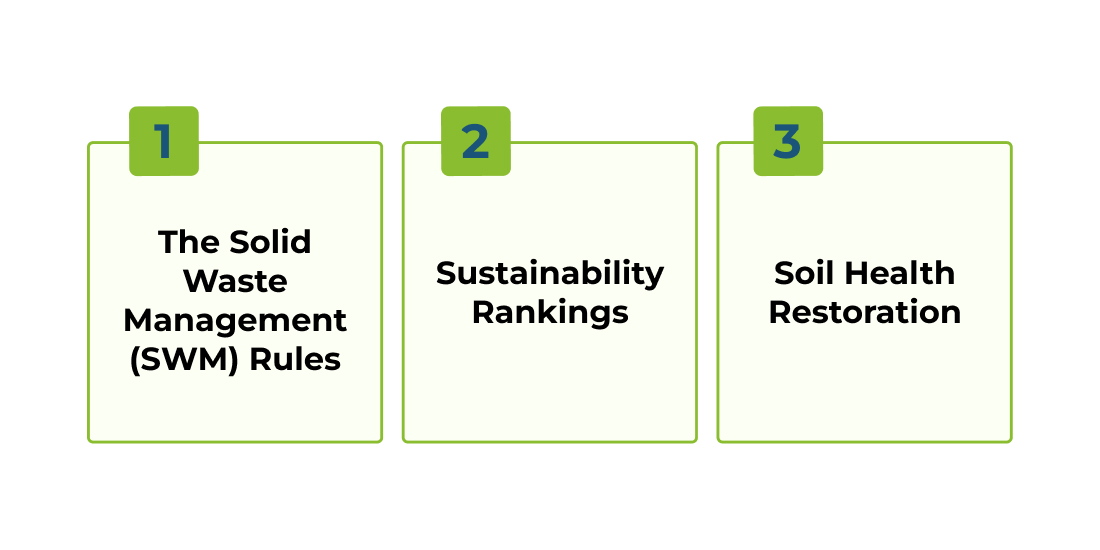
  • The Solid Waste Management (SWM) Rules

The government requires bulk waste generators and local authorities to separate their organic waste and process it at their facilities.

  • Sustainability Rankings

Governments and environmental organizations are using “Cleanliness Index” and “Green City” rankings to judge their contribution to protecting the environment. So, municipalities that are converting their waste into compost with such organic composting machine show their commitment to making a cleaner and greener earth, and thereby, also attracting investors and tourists.

  • Soil Health Restoration

Composting serves as an essential waste management method through which it restores vital nitrogen, phosphorus and potassium (NPK) nutrients back to the soil. At the same time, it also helps to reverse soil degradation that has persisted since the introduction of chemical farming methods.

Before choosing a machine for your facility or society, explore Organic Waste Composter Buying Tips from Leading Manufacturers for expert-backed selection tips from Envcure.

Public Health and Community Advantages of Organic Waste Composter Machine

Waste composting machine provide health benefits to public spaces while delivering benefits to local communities. The health advantages of a city increase when its streets maintain greater cleanliness. Disease vectors find their ideal breeding environment at traditional waste collection points, which operate as their breeding grounds.

  • Odors and Pests

The open garbage dump sites create unpleasant smells which attract rats and flies and stray animals that transmit diseases such as leptospirosis and cholera. The organic waste composting machine uses its closed system to control odors through bio-filters while processing waste to prevent pest attraction. 

  • Citizen Engagement

Composting programs help to strengthen community ties by generating a sense of community responsibility in citizens. Residents who observe their food waste transforming into compost for a nearby park tend to take part in waste segregation activities.

  • Employment Opportunities

Composting facilities create employment opportunities through their operational needs, which enable residents to work in green-collar positions that benefit the local economy. 

For insights on turning food waste into a valuable resource, explore Organic Waste Composter – Transform Food Waste into Value.”

Why EnvCure’s Organic Waste Composter is the Best for Municipalities

Industrial-grade composting requires machines that provide different levels of performance. The EnvCure Organic Waste Composting Machine has become the first choice for many municipalities that are choosing to compost their waste, because it features several useful benefits.

Feature Benefit for Municipalities
Fully Automated System It offers complete automation, which decreases the need for workers as well as reducing the possibility of human error. 
Rapid Composting Technology The Rapid Composting Technology transforms waste into compost within a single day, showing its high-volume processing capability.
Odour and Noise Control The system enables installation in densely populated residential areas because it maintains odour and noise levels within acceptable limits.
Space-efficient Design The system requires much less operational space as compared to traditional windrow composting methods.
High durability EnvCure uses SS-304/316 grade materials to manufacture equipment that can easily fight the corrosive nature of organic waste.

The EnvCure organic waste compost machine enables municipalities to process waste volumes between 50 kilograms and multiple tons per day through a system that operates with low energy consumption and simple upkeep requirements. The system handles all the various waste types that urban Indian households and markets produce as their regular wet waste.

organic waste compost machine

For businesses handling large volumes of waste, explore Organic Waste Compost Machine: How Bulk Waste Generators in India Can Comply with SWM Rules before choosing a solution.

Conclusion

The shift toward the Organic Waste Composter is not merely a trend; it is a necessity for the survival of the modern city. By choosing to compost, municipalities solve three problems at once: they eliminate the “garbage crisis,” they save taxpayers’ money, and they contribute to a healthier planet.

As land becomes more expensive and environmental regulations become more stringent, the question is no longer if a municipality should invest in composting technology, but how fast they can implement it. Solutions like the EnvCure Technocrat LLP’s Organic Composting Machine provide the reliable, scalable, and efficient path forward that urban administrators need to build the “Smart Cities” of tomorrow.

FAQs Related to Organic Waste Composter

Q. Why are municipalities switching to organic waste composters?

A. Municipalities adopt composters to cut landfill volumes, reduce methane emissions, lower disposal costs, and recover value from waste as compost or resale. 

Q. Do composting machines help cities comply with waste-management rules?

A. Yes, onsite and decentralized composting are explicitly recommended options to meet modern solid-waste management regulations and reduce municipal transport and disposal obligations.

Q. What are the typical costs and the ROI for municipalities?

A. While capital costs exist, many municipalities see long-term savings from reduced hauling/landfill fees and compost sales or reuse; ROI often improves when transport and landfill externalities are included.

Q. Is the compost produced safe and usable for public projects?

A. When processed under proper temperature and quality controls, municipal compost meets standards for landscaping, tree plantations, and soil conditioning, and can be used in public greening projects or sold.

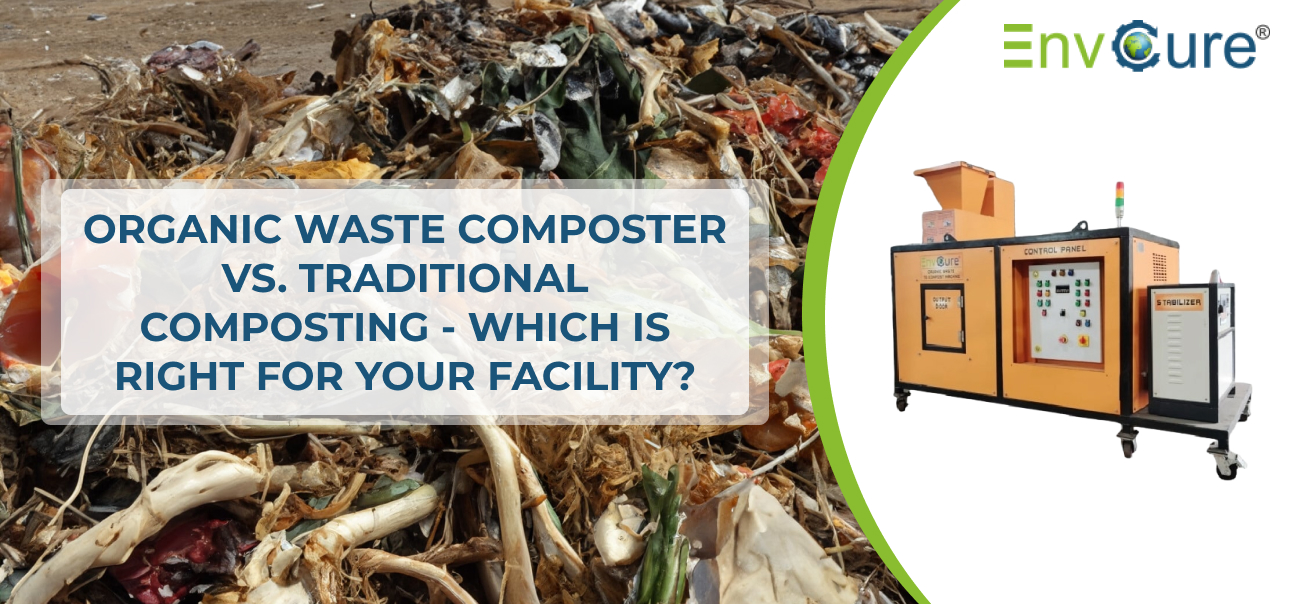
Organic Waste Composter vs. Traditional Composting – Which Is Right for Your Facility?

Organic Waste Composter vs. Traditional Composting - Which Is Right for Your Facility

Many businesses in India wonder whether an Organic waste composter (a mechanical composting machine) or conventional composting is the better solution for their organic waste. Both approaches aim to turn food and garden scraps into compost, but they differ greatly in speed, space, odor control, and compliance. As Green planet solutions notes, “one of the most searched questions” today is comparing traditional composting vs. organic waste composter machines. In this guide we’ll define each method, compare them side-by-side, and help you decide which fits your hotel, hospital, campus or community best. 

What is an Organic Waste Composter? 

An Organic Waste Composter is a self-contained, often automated system that rapidly turns kitchen scraps and other biodegradable waste into finished compost. Unlike a simple compost pile, these machines use controlled heat, aeration and mixing to speed up decomposition. Typical features include: 

  • Fast Processing: Converts organic waste to compost in about 24–48 hours (versus months for an open pile). 
  • Enclosed Design: Sealed bins or drum chambers with odor filters and scrubbers keep smells and bugs contained. 
  • Compact Footprint: Uses around 10–100 m² of space, suitable for urban sites. 
  • Automatic Operation: Many models are push-button systems with built-in shredders and mixers, requiring minimal manual labor. 
  • Compliance-Ready: Engineered to meet waste rules (e.g. India’s FCO standards), reducing methane by treating waste on-site. 
  • Produces Quality Compost: Yields nutrient-rich, sanitized compost (often FCO-compliant) you can use or sell. 

EnvCure Technocrat LLP designs organic waste composter machines for exactly these benefits. Our units can handle food waste from kitchens, cafeterias or gardens and turn it into useful soil amendments with little hassle. 

For a complete guide, read Best Organic Waste Composter Machines: Expert Guide for India 2026. 

What is Traditional Composting? 

Traditional composting is the natural breakdown of organic waste by microbes in an open pile or pit. Common methods include: 

  • Windrows or Piles: Waste is heaped in long, exposed rows (windrows) outdoors. It decomposes over 2–4 months (or longer) depending on weather and turning. 
  • Pit or Trench Composting: Waste is buried in shallow trenches or pits. It’s simple and low-cost but also takes months and can attract pests. 
  • Vermicomposting (Worm Bins): Systems like the Subpod® are underground worm composters. Subpod uses worms and microbes to process scraps with “no odors, vermin or hard work of traditional composting”. These composters can be easier to use than open piles, but are still slower than machines. 

Limitations: Traditional methods often require large space and careful management. They are slow (60–120 days), weather-dependent, and risk odors/pests if not managed well. Key drawbacks are: 

  • ❗ Slow turnaround: Takes 2–4+ months, so not ideal for tight deadlines. 
  • ❗ Large space needed: Open pits or windrows can require hundreds of square meters. 
  • ❗ Odor & vermin: Without cover, piles can smell and attract flies, rats or stray animals. 
  • ❗ Labor-intensive: Piles often need regular turning/shredding by hand or machine. 
  • ❗ Compliance issues: Uncontrolled piles may not meet strict waste rules without extra management. 

In practice, many Indian facilities resort to simple pits or bins (like Subpod) for wet waste. However, these still face drawbacks of traditional composting. In contrast, mechanized composters solve many of these problems (see below). 

Before making a purchase, explore these organic waste composter buying tips from leading manufacturers. 

Side-by-Side Comparison: Key Factors 

Facilities should compare critical factors when choosing an organic waste composter machine vs. traditional methods. The table below contrasts them on throughput, speed, footprint, costs, and more: 

Organic Waste Composter vs Traditional Composting 

Factor  Organic Waste Composter (Machine)  Traditional Composting 
Daily Capacity  Typically 0.1 – 3+ tonnes/day per machine. Modular systems allow multiple machines to scale capacity.  Small pits: ~0.1 – 2 T/day. Large windrow plants: 100 – 1000 T/day. Limited by land and labor. 
Processing Time  Fast: Compost ready in 24–48 hours.  Slow: Usually 2–4 months (60–120 days). 
Odor Control  Odorless: Enclosed system with filters/scrubbers. Suitable for indoor use.  Odor issues: Open piles often smell, especially in warm climates. 
Pest Control  High: Sealed machines prevent rodents, flies, and insects.  Low: Open waste attracts flies, rats, dogs, and birds. 
Space Requirement  Compact: Around 10–100 m². Suitable for basements, backyards, rooftops.  Large: Windrows need thousands of m². Even pits require large open areas. 
Capital Cost (CAPEX)  High: Approx ₹6–40+ lakh depending on capacity and automation.  Low to moderate: Pits/windrows are cheap, but need land and equipment. 
Operating Cost (OPEX)  Lower: ~₹100 per tonne (electricity + minor maintenance).  Higher: ~₹300 per tonne (labour, turning, monitoring, land upkeep). 
Labour Requirement  Minimal: One operator for feeding waste and removing compost.  High: Regular turning, watering, monitoring, segregation. 
Hygiene & Safety  High: Controlled temperature, enclosed, sanitized output.  Low to medium: Risk of pathogens, leachate, and unhygienic conditions. 
Regulatory Compliance  Easy: Designed to meet SWM 2016 and often FCO standards.  Difficult: Must be carefully managed to meet pollution and waste rules. 
Suitability  Hotels, hospitals, apartments, IT parks, municipalities, bulk waste generators.  Farms, rural areas, large open lands, small home gardens. 


As this table shows, organic waste composting machines outperform traditional methods in speed, space efficiency, and hygiene. Traditional pits may win on low initial cost, but they incur high labor and often fail strict regulations. In India, the Solid Waste Management Rules, 2016 even mandate on-site treatment for bulk waste generators, giving an edge to enclosed composters. 

Learn how an organic waste composter transforms food waste into value through efficient on-site composting. 

Which Facilities Benefit from a Composter (vs. Traditional)?

Organic waste composters are especially advantageous in settings that generate consistent, significant wet waste. Facilities that can benefit most include: 

Organic Waste Composter vs. Traditional Composting - Which Is Right for Your Facility

  • Hotels & Restaurants: Large commercial kitchens produce hundreds of kg of food scraps daily. Many major hotels in India now use on-site composters. For example, Hilton DoubleTree Pune and Radisson Blu Guwahati each installed Kwik Composter machines (~100–1000 kg/day capacity) to turn kitchen waste into compost. This cut their landfill fees and created free fertilizer for landscaping. (EnvCure Technocrat LLP also supplies similar systems to hotel chains, integrating them seamlessly with kitchen operations.) 
  • Commercial Kitchens & Institutions: Corporate cafeterias, university dining halls, resorts and banquet halls. Any facility cooking at scale can avoid the hassle of piles. On-site machines keep kitchens clean and cut waste hauling bills. 
  • Residential Societies & Complexes: Apartment communities and gated societies often generate dozens of kg of kitchen waste per household. Instead of open compost pits (which odorize common areas), many societies in Mumbai, Bengaluru and Delhi are installing communal composters to handle the volume and odor. Decentralized composting agencies report that housing complexes are ideal candidates. 
  • Hospitals & Healthcare: Hospitals have cafeterias and organic discard (like cafeteria waste or garden clippings). Hygiene is paramount, so an odor-free composter helps maintain a clean campus. Some green hospitals in India compost up to 8 tonnes/day internally to meet “zero waste” goals (treating both dry and wet waste). 
  • Municipal & Public Facilities: Smart city wards, markets, schools, and community centers are increasingly equipping themselves with composting machines. For example, city programs in Pune and Ahmedabad use small-scale composters at schools and markets to reduce transportation of wet waste. Decentralized solutions help comply with SWM guidelines. 
  • Corporate Campuses & Offices: IT parks and corporate offices with large canteens also fit this profile. These campuses generate steady food waste and often aim to showcase sustainability (ESG) by composting on-site. 

In each case, the alternative (windrows or open pits) either takes too much space, smells up the premises, or simply isn’t practical in dense urban settings. Organic waste composter machines solve these issues while producing useful compost. 

Learn how an organic waste compost machine enables compliance with India’s Solid Waste Management (SWM) Rules. 

How to Choose an Organic Waste Composter 

If you’re convinced an organic waste composter machine could help, here’s a practical checklist for selecting the right unit: 

  • Waste Volume: Calculate your daily/weekly wet waste. Choose a machine with slightly higher capacity than this. (E.g. 150–200 kg/day machine for a big hotel kitchen). 
  • Automation Level: Fully-automatic machines (with built-in shredders and controls) are ideal for large generators; they cost more upfront but minimize labor. Semi-automatic or drum composters suit small to mid-scale sites (restaurants, hostels) and are more affordable. 
  • Space & Power: Ensure you have room (floor area and height) and electrical supply. Fully-automatic units may need 3-phase power and a forklift for installation. Semi-auto units are compact and may run on single-phase. 
  • Material & Maintenance: Look for durable, food-grade stainless steel construction and easy-access cleaning doors. Simple maintenance (emptying compost, periodic drum/drain cleaning) is essential. 
  • Odor Control: Verify the system has sealed chambers and activated-carbon filters or scrubbers for odor control, especially if installed indoors. 
  • Certification & Output Quality: Check that the unit’s output meets India’s Fertilizer Control Order (FCO) standards or local compost guidelines. A compliant machine can produce pathogen-free, nutrient-rich compost. Ask if the machine is approved for SWM-2016 compliance (most on-site composters are). 
  • Vendor Support: Choose a reputable supplier (e.g. EnvCure Technocrat LLP) that offers warranty, installation and training. Good vendors provide annual maintenance contracts (AMC) or service plans, plus quick support. Confirm after-sales service terms and spare-part availability. 
  • Budget & ROI: Balance the capital cost with expected savings. Cheaper drum units suit low budgets; high-end touch-screen composters pay off faster in large-scale use. 

By matching a machine’s specs to your needs, you ensure efficient operation. For example, EnvCure offers Fully-Automatic Organic Waste Composter Machines for high-volume sites and Semi-Automatic Composters for smaller kitchens. 

Discover how an organic waste composter benefits hotels and restaurants in day-to-day operations. 

Contact us - EnvCure Technocrat LLP

Case Study / Customer Story 

Example: “Green Valley Hospital,” Bangalore (fictitious name). A large hospital with 1,000 beds and multiple cafeterias was struggling with ~300 kg/day of wet waste. Traditional compost piles smelled and needed full-time staff to turn and manage. EnvCure Technocrat LLP worked with them to install a 300 kg/day fully-automatic organic waste composter. 

  • Implementation: After a brief site survey, the composter was placed near the kitchen loading area. Staff were trained to segregate waste (plastic and metal removed) and feed the machine daily. 
  • Results: Within weeks, the hospital saw a 90% reduction in waste volume sent off-site. The machine processed each day’s waste to fine compost overnight. There were no foul odors or pests on campus. The generated compost (about 50 kg/day) was used in the hospital’s herbal gardens. 
  • Impact: The hospital cut its organic waste haulage costs by over ₹50,000 per month (saving fuel and tipping fees). It also gained “Green Hospital” credits in its sustainability reporting. Estimated ROI was under 2 years because disposal fees and purchased fertilizers dropped sharply. 

This case reflects a common outcome: rapid payback and cleaner operations. Businesses that install these machines often advertise improved ESG credentials and employee satisfaction. 

Next Steps & Call to Action 

Ready to modernize your waste management? Here are practical next steps: 

  • Site Audit: Get a free waste assessment from EnvCure Technocrat LLP. Experts can measure your waste volumes and recommend the right model. 
  • Request a Quote: Ask for detailed pricing on the recommended organic waste composter (they offer fully- and semi-auto models). A formal quote will include CAPEX, OPEX and expected ROI. 
  • Download Spec Sheet: Review the technical specifications for machine sizes from EnvCure’s product pages (e.g. Fully-Automatic and Semi-Automatic organic waste composter). Use these in your budget planning. 
  • Pilot Run: Some vendors (like EnvCure) can arrange a trial unit or demonstration at your site. Seeing it in action helps staff buy in. 
  • Plan Integration: Consider logistics (where to place the machine, how to collect/pre-sort waste, and who will operate it). EnvCure offers installation and training as part of their service package. 

Taking these steps will clarify costs and benefits for your specific facility. Investing in an organic waste composter can streamline waste handling and move you toward zero-waste goals. With EnvCure Technocrat LLP’s support, you can implement a turnkey solution – complete with audit, quote, and technical backup. 

Conclusion 

Choosing between traditional composting and an Organic Waste Composter depends on your facility’s size, space and needs. Small gardens might manage fine with pits or Subpod bins, but large hotels, hospitals and complexes will usually find machines more practical. Composting machines deliver rapid turnaround, better hygiene and regulatory compliance, all while producing valuable compost. 

For most bulk waste generators in India, investing in an organic waste composting machine is a smart move for sustainability and cost savings. To explore options, contact EnvCure Technocrat LLP – they offer on-site audits, detailed quotes and downloadable spec sheets for their organic waste composter. Whether you need a fully-automatic 500 kg/day unit or a compact semi-automatic machine, EnvCure can help you design the right system. Take the next step toward zero-waste by requesting a consultation or quote today. 

FAQs Related to Organic Waste Composter

Q. How much waste can an organic waste composter process per day?

Ans. Small units: 50–100 kg/day; industrial units: 0.1–3 tones/day per unit; scale by adding units.

Q. How long does it take to turn waste into compost in a composter machine?

Ans. Most machines convert food waste in 24–48 hours; usable compost typically in 1–2 days.

Q. What kinds of waste can go into a composting machine?

Ans. Kitchen waste (vegetable peels, fruit, cooked scraps, tea/coffee grounds); avoid large bones/wood; small paper.

Q. Will an organic waste composter stop odors and pests?

Ans. Yes, sealed, ventilated machines with filters are largely odorless and keep pests away when operated properly. 

Q. Is an organic waste composter energy-intensive?

Ans. It uses electricity for motors/blowers (a few kW for commercial units); energy cost is often lower than transport/labor savings.

Q. What maintenance does a composter require?

Ans. Low upkeep: empty compost, occasional moisture, clean drums/filters, and periodic servicing or annual plans. 

Q. How does a composter help with regulatory compliance?

Ans. On-site composting meets India’s SWM rules by treating waste at source; many units produce FCO-compliant compost.

Best Organic Waste Composter Machines Expert Guide for India 2026

Organic Waste Composter

As the burden of municipal solid waste grows, so does the need for more efficient, automated solutions that require identifying the ideal Organic Waste Composter Machine for institutional and municipality needs. 

In this expert guide we discuss the most important aspects of technology for the best Organic Waste Composter for your needs and compare Organic Waste Composting Machine options and discuss the importance of pre-processor equipment. 

The integration of high-quality industrial shredders with current day composting units provides the most productive means to maximize waste processing and offer the best means to divert landfill waste for India in 2026.

Overview: Organic Waste Composter Machines

  • Organic Waste Composter will be the new way of managing waste in an efficient manner for India, providing an alternative to the rapidly filling landfills.
  • New technologies (referred to as Organic Waste Convertor Machines) have the capability to process up to hundreds of kilograms of waste per day to create useful fertilizers through composting processes.
  • For successful composting processes to occur, pre-processors such as industrial shredders are needed to cut the materials into smaller pieces to allow for faster and more complete decomposition.
  • The key items to consider when purchasing an Organic Waste Composter are: machine capacity, the degree of automation, total cost of ownership (energy costs), and having a reputable manufacturer/ provider of industrial shredders and composting equipment available for long-term service support like EnvCure Technocrat LLP.

organic waste converter machine
organic waste compost machine

What is an Organic Waste Composter Machine?

The primary purpose of an Organic Waste Composter is to accelerate the natural biological process of decomposition through control of temperature, moisture, and oxygen (air) to decompose what takes months in an open pit in a few days inside a controlled environment. A general distinction exists between two interchangeable terms:

  • Organic Waste Composter: Any machine that breaks down organic material into compost is generally called a composter.
  • Organic Waste Converter Machine (OWC): This is a term used for the conversion of waste to a useful resource (compost) within 24-48 hours. They usually are very automated and only minimal human intervention is required.
  • Organic Waste Compost Machine: Composting is a basic functional description for the machines that convert organic waste into a compost product.

When we refer to an advanced organic waste composter in this guide, we mean the high-efficiency OWC systems that are the standard for 2026. These systems usually employ bio-culture accelerators and/or mechanical mixers for achieving homogenous and fast composting, delivering high quality mature organic waste compost suitable for agricultural or landscaping application.

If you’re planning to invest in an organic waste solution, this detailed guide on organic waste composter buying tips from leading manufacturers explains what features and specifications truly matter.

Types of Organic Waste Composter Machines: Finding the Right Design

Although the ultimate goal of all these machines is to convert raw organic waste into a product which has been processed into a fertilizer, the way in which they achieve this objective determines the type of machine needed:

organic waste composting machine

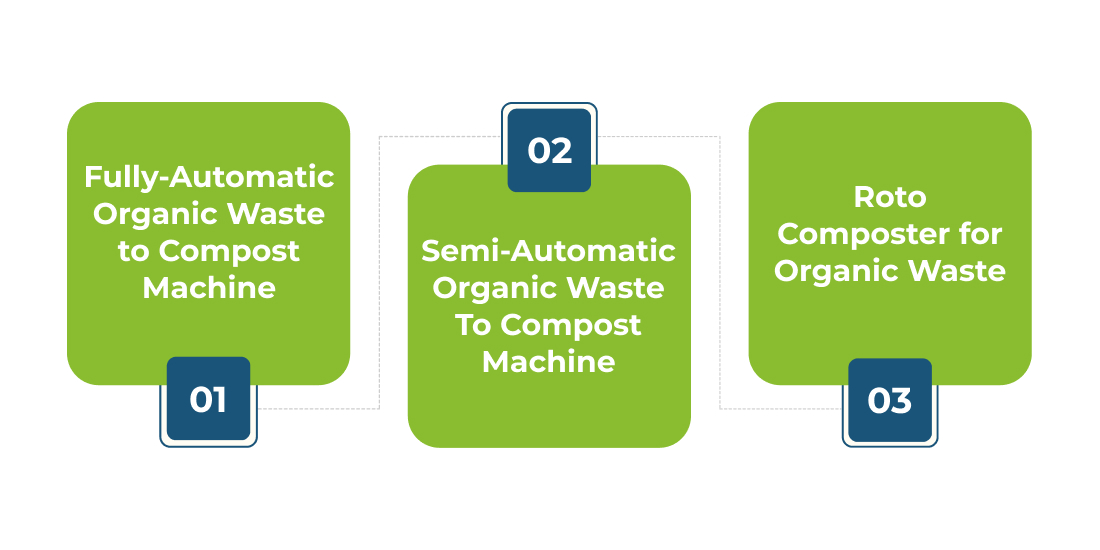
1. Fully-Automatic Organic Waste to Compost Machine

Fully-Automatic compost machines represent the most advanced organic waste converter machine in terms of technology. The purpose of these machines is to provide high volume disposal of organic waste by those who generate large volumes of organic waste, such as large municipal or airport operations or large corporate campuses. The operation of all stages of processing from receiving and mixing to aeration, temperature control and finally discharging with the least amount of human intervention possible. 

2. Semi-Automatic Organic Waste To Compost Machine

Provides an economical alternative to fully automatic systems. The semi-automatic systems usually have automated mixing, heating and aeration but may also have manual loading, longer curing time or another manual step for bulking agents addition.  The semi-automatic organic waste composting machine is the most appropriate choice for larger, mid-sized companies such as hotels, residential developments, and schools requiring large amounts of Organic Waste Conversion capabilities without the associated financial burden of purchasing a complete OWC.

3. Roto Composter for Organic Waste

The Organic Waste Rotating Drum (Composter) uses a special drum or vessel to rotate organic waste. Optimal contact between the composting material and oxygen via mechanical rotation speeds up aerobic process. Features including insulated tanks to retain microbial heat and special air vents are proposed for rapid composting with low odor.

Choosing Your Organic Waste Composter

The selection of the best Organic Waste Composter for your specific needs will require an examination of multiple Technical and Operating Parameters.

  • Capacity and Space: How many (kg) of Organic Waste are generated daily? Units are available from 50 kg/day for Small Business and Municipal applications up to 5,000 kg/day or greater. Also, automated Organic Waste Converter machines will provide much less required space than Traditional Methods of Organic Waste Conversion. 
  • Rate of Processing: Seek out units capable of converting Organic Waste in 24 hours or less. The quicker the conversion rate of Organic Waste, the better equipped your facility will be to handle changes in Organic Waste Volume.
  • Automation Capability: Systems completely Automated with regards to Shredding, Mixing, Heating and Curing will allow for minimal Operator Interaction and will therefore reduce Labor Costs and Human Error associated with Manual Processes.
  • Input Material Preparation Requirements: The preparation of Organic Waste to be placed into an Organic Waste Composting Chamber is critical to successful Organic Waste Composting; it is best if the Organic Waste has been previously shredded and dewatered. Therefore, look for vendors providing an Integrated System.
  • Quality of Output Material: It is expected that a well-designed Organic Waste Composting unit will produce High-Quality Organic Waste Compost that is Pathogen-Free and Nutrient-Rich and has Minimal Odor and meets all applicable Environmental Regulations.
  • Operational Maintenance and Support: No matter how good a piece of equipment may be, it will fail at some point without adequate support. As such, when purchasing an Organic Waste Composter, thoroughly review the service history of the manufacturer/supplier with respect to Response Time, Parts Availability and Operator Training so that you may ensure that your Organic Waste Composter runs continuously and efficiently. 

Managing food waste efficiently is easier when you understand how an organic waste composter transforms food waste into value?

Our Commitment to a Cleaner Future: Partnering with EnvCure Technocrat LLP

Ultimately, the success of a waste-to-wealth program depends upon having both the right technology and the right partner. There are many significant environmental and financial benefits to selecting the right organic waste composting machine for your company. At EnvCure Technocrat LLP we are committed to providing viable solutions to the environmental problems faced in India through our expertise in designing, manufacturing and servicing advanced technologies. Don’t simply manage your waste; generate wealth from your waste. Please contact EnvCure Technocrat LLP to schedule a meeting or consultation to begin the process of developing a comprehensive environmental sustainability plan for your organization.

FAQs Related to Organic Waste Composter

Q. What is an organic waste composter machine?

Ans. A mechanized system that converts kitchen and garden waste into compost or compost-ready material.

Q. How does an organic waste converter machine work?

Ans. It shreds, aerates, and biologically processes waste using heat, microbes, and controlled airflow.

Q. What maintenance is required?

Ans. Routine checks, occasional cleaning, and timely replacement of consumables, typically low to moderate effort.

Q. How do I choose the right machine for my site?

Ans. Match daily waste volume, waste type, footprint, automation level, service support, and expected ROI.

Organic Waste Composter Buying Tips from Leading Manufacturers

Organic Waste Composter Buying Tips from Leading Manufacturers

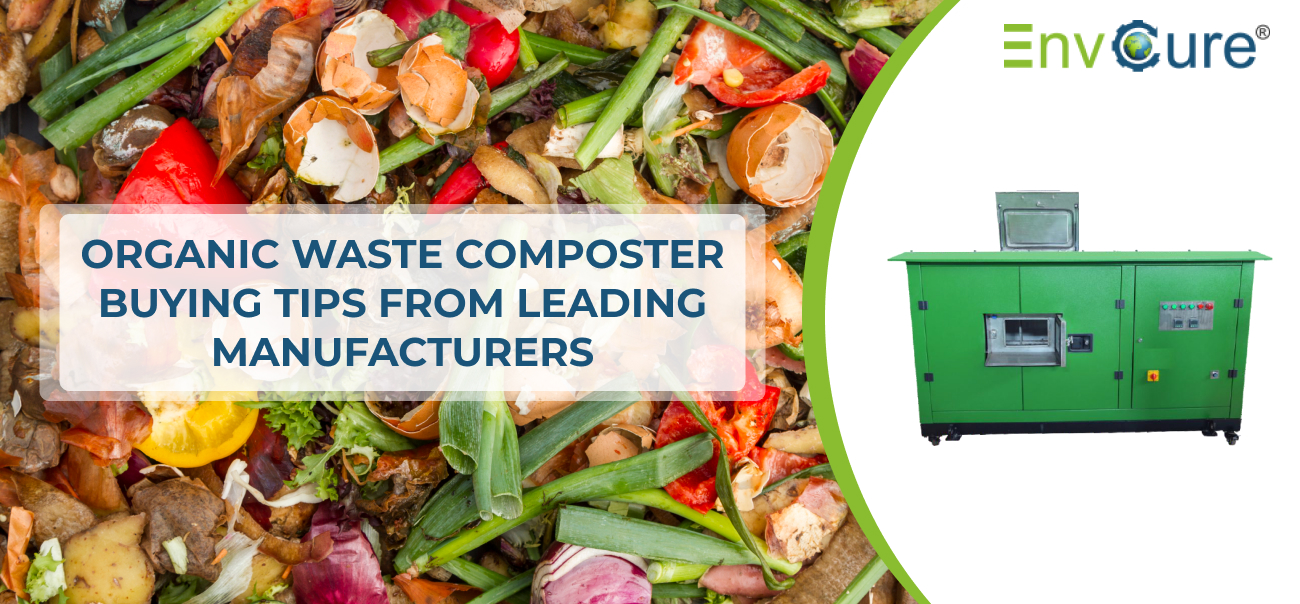
The right organic waste composter depends upon your business’s daily waste load, available space, and operating workflow. In this article,  we’ll discuss matching machines to your setup and compare the top features of leading manufacturers. Understand the costs versus returns and how these tools fit into effective systems. 

Overview: Buying Tips for Organic Waste Composter

  • The Organic Waste Composter transforms kitchen scraps and food waste into nutrient-rich soil in days, cutting disposal costs by up to 80% for hotels and restaurants.
  • Match capacity to daily waste output, go for odor-free designs, and select energy-efficient automatic composting machines from reputable Indian makers.
  • Compare shredding tech, processing speed, and after-sales support features to find the right food waste composting machine.
  • These organic waste composters facilitate decentralized collection from multiple sites, simplifying urban waste flows.
  • EnvCure Technocrat LLP offers full automation organic waste composting machines for commercial use. 

Why Organic Waste Composters Matter for Businesses Today

Food waste accumulates in eateries and hotels, raising disposal fees and creating more environmental strain. An organic waste composter tackles this head-on by turning scraps into compost, reducing volume, and producing a useful byproduct. Owners typically save on trash hauls and have a better green image with patrons. These machines comply with local rules and simplify routines across urban India. 

food waste composting machine

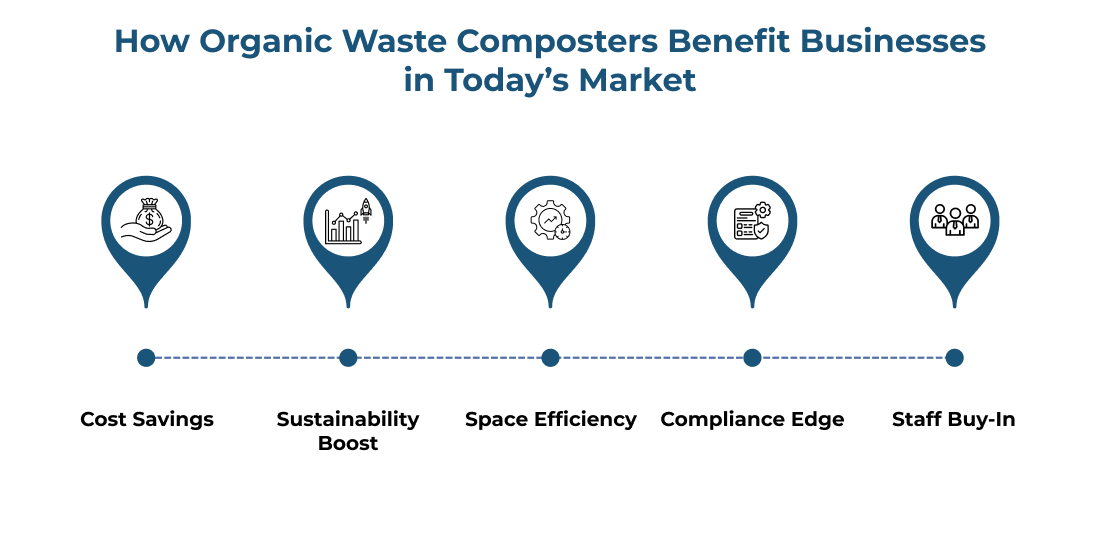
  • Cost Savings: Reduce hauling costs by 50-70%. Compost replaces landfill trips.
  • Sustainability Boost: Turn waste into fertilizer for on-site gardens or sales.
  • Space Efficiency: Compact styles slide into tight kitchen corners, allowing more floor space.
  • Compliance Edge: Align with municipal rules on organic diversion and avoid fines.
  • Staff Buy-In: Easy operation makes team adoption easy. 

Learn how an Organic Waste Composter turns food waste into value.

For Hotel and Restaurant Food Waste Management

Kitchens in hotels and restaurants are under special pressure: high volume scraps, tight spaces & hygiene rules. A solid food waste composter comes in here and handles everything from rice remnants to coffee grounds, eliminating odors or pests. Find models that include shredders that chop through tough bits like eggshells. 

  • Volume Handling: Select units that process 50-500 kg daily to cover peak meal rushes.
  • Hygiene Focus: Seal designs with filters prevent smells and pests in guest areas.
  • Quick Setup: Portable options with wheels allow station shifts.
  • Waste Variety: Shredders handle a wide range of materials from soft fruits to tough shells.
  • Tracking Tools: Output is logged for inventory control/monitoring. 

Top Features of Organic Waste Composter to Compare Between Leading Manufacturers

Pick out durable features when shopping for an Organic Waste Compost machine. Automation and durability are key terms promoted by top manufacturers, but differences become apparent in real use, for example, how a unit performs during monsoons or busy seasons. Compare these to your budget and space; the Best fits come from demos. Identify vendors with proven track records first – for fewer headaches down the road.

Feature What to Look For Example Benefit for Hotels/Restaurants
Capacity 25-1000 kg/day, with buffer for peaks Handles banquet surges without overflow
Processing Time 24-72 hours for initial breakdown Daily compost output for fresh use
Odor Control Carbon filters or sealed chambers Keeps dining areas guest-ready
Energy Use Under 10 kWh/day for midsize units Lowers utility bills in high-use spots
Automation Level Fully Automatic or Semi Automatic Frees staff for cooking, not monitoring
Shredder Integration Built-in blades for mixed waste Processes veggie-heavy loads smoothly

All of these characterize an industrial organic waste composter. Suppose a commercial composting system with smart sensors adjusts heat to minimize energy waste. Its users praise quiet operation – important in noisy environments. Compare warranties as well: Ideally, aim for 2-5 years for core parts. Try demos if possible; there’s nothing better than seeing a waste composter working with your scraps. 

If you handle large volumes of food waste, our blog on Organic Waste Compost Machines explains how bulk generators in India can meet SWM rules.

Composting Machine Manufacturers in India

There are many manufacturers in India producing localised organic waste composter for voltage fluctuations and high humidity. Companies in industrial hubs like Ahmedabad and Bengaluru provide low-cost, long-lasting solutions for commercial waste streams.

In Gujarat alone, EnvCure Technocrat LLP has over 100 installations across the country.  EnvCure’s EC-OWC series shredder and heater in a compact frame converts scraps into compost in 3-4 days, similar to the 250-kg model. It has proven to be a great success in apartments and eateries where you need only one attendant to run it. What makes them unique? 

  • Built for local needs,  voltage stabilizers and easy-access panels.
  • Machines can tolerate power dips & climatic stress thanks to local expertise.
  • Models ranging from small converters in cafes and housing societies through to industrial composters.
  • Strong support networks (installation, commissioning/maintenance) to minimize downtime.
  • Innovative products such as touch-screen controls, IoT/remote monitoring, or microbial accelerators.
  • Competitive pricing & flexible financing to reduce upfront costs.

Scouting reviews from operators in similar lines of business, similar geographic regions, may reveal reliability, service responsiveness, and/or total cost of ownership.

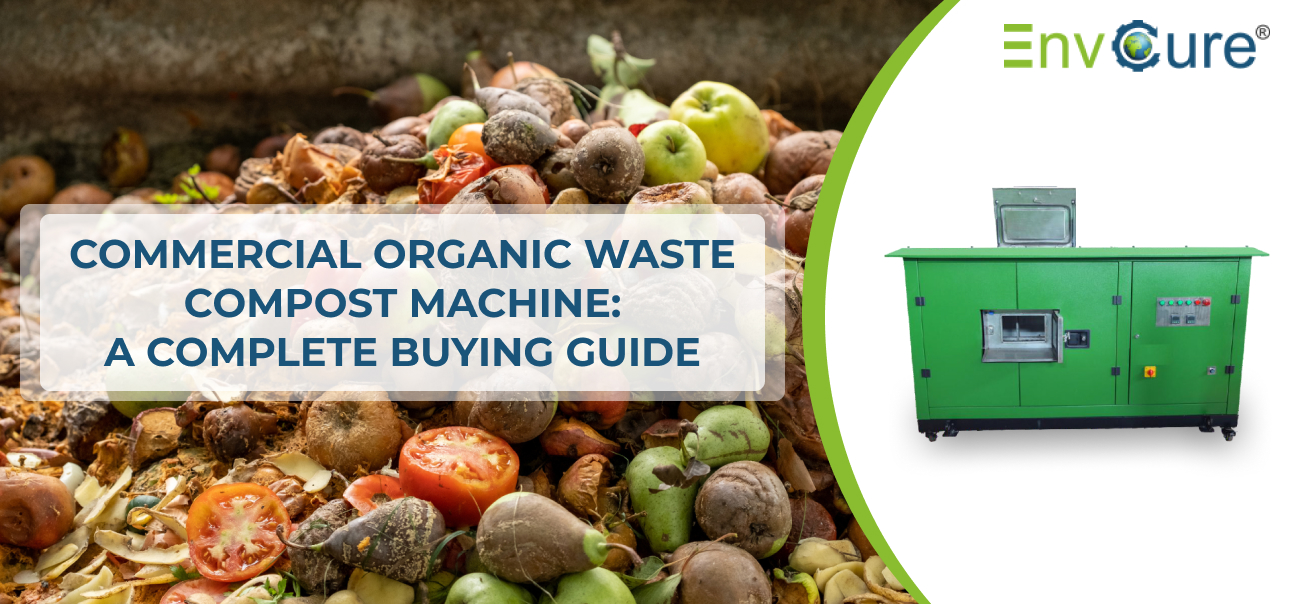
If you’re planning to invest in a composting system, our Commercial Organic Waste Compost Machine buying guide covers everything you need to know.

Installation, Training, and Ongoing Care

An organic waste composter works best when its setup is planned correctly. First, find a well-ventilated location near your waste handling point, where loading and regular checks can be easily achieved. The professional installers usually complete electrical and drainage connections in a few hours, after which staff are trained in daily operation. With a simple maintenance routine, most units run reliably and produce stable compost output. Facilities following these basics typically have low downtime and high throughput.

  • Site Preparation: Provide a level, nonslip floor; have a drain nearby; and provide ventilation for safe, spill-free operation.
  • Staff Training: A 1-2 hour session typically reviews loading patterns, control panel use, monitored parameters, and some basic safety steps.
  • Maintenance Routine: Weekly cleaning and periodic (quarterly, semi-annual) component replacement keep efficiency up and extend machine life.
  • Troubleshooting: Essential spares include filters or microbial mixes. Some machines include app-based alerts for early issue detection.
  • Scaling Up: With increasing waste volume, more units can be installed in tandem or linked to form a larger processing line.

food waste composting machine

Why EnvCure Stands Out in Organic Waste Solutions

We’ve covered everything from sizing up kitchen waste compost maker to comparing features across the top manufacturers. These tools reduce waste and costs while turning hotel and restaurant food waste management into garden gold. Want to make sustainability simple at EnvCure TechnoCrat LLP? Organic Waste Composter, such as EC-OWC 250, processes 250 kg daily with full automation and stress-free operations. Visit or call the best waste management experts and turn those scraps into something special – load by load. Reach out for a site assessment & quote today.  

FAQs Related to Organic Waste Composter

Q. What factors should I consider before buying an organic waste composter?

A. Consider capacity, input waste types, automation level, footprint, power and water needs, odor control, maintenance, warranty and after-sales support.

Q. How do I choose the right capacity for an organic waste composter?

A. Estimate average daily organic waste, add a 20–30% buffer for peaks, and choose a machine rated for that throughput or a modular system you can scale.

Q. What affects the price of an organic waste composter?

A. Price is driven by capacity, automation, technology, build quality, odour control and warranty, plus installation, shipping and civil works costs.

Q. Can installing a composter help me comply with local waste regulations?

A. Yes, composting reduces landfill waste and can support regulatory compliance, but you must confirm specific municipal/state requirements and reporting needs.

Q. How do I evaluate and compare manufacturers and suppliers?

A. Compare experience, client references, case studies, on-site demos, warranty and service networks, spare parts availability, and request itemised quotes covering installation and training.

Organic Waste Composter – Transform Food Waste into Value

organic-waste-composter

An onsite organic waste composter is a self-contained unit that changes food scraps and other biodegradable waste into very fine compost within a day or two. Instead of having the waste landfilled, businesses may do some conversion of kitchen or garden waste on-site, with a whole lot of advantage of odor reduction and reduction in waste volume, while producing very valuable soil amendment. Such composting machines are used by industries such as hotels, restaurants, hospitals, and corporate cafeterias to achieve sustainability targets and reduce waste hauling fees. Ready to reduce your waste bill costs? Request a quotation today and start through conversion from waste to wealth.  

Why Use an Organic Composting Machine?

Investing in an organic waste compost machine brings instant benefits:  

  • Cut Waste Disposal Costs: Organic waste composter cuts waste going to landfill by large volumes and thus holds fees for garbage pickup. The organic waste you would pay to dispose of is instead turned into compost you can either use or sell. As an industry report says, for every $1 spent on food-waste reduction, $7 can be saved in operating costs. 
  • Generation of Valuable Compost: The nutrient-rich compost is used for enhancing soil in gardens or agricultural land. Such a “waste-to-resources” movement therefore requires little or no commercial fertilizers. High-quality compost ensures a secondary source of income if sold directly to local farmers or gardeners.  
  • Regulatory Compliance: The on-site treatment of organic waste ensures a reduction of methane emissions from landfills while also meeting waste-management regulations. Such companies can claim green leadership through closure of food-waste loops, thereby improving their ESG and zero-waste badges.  
  • Odor and Pest Control: Modern composters are ergonomically designed systems, with air filters and air scrubbers, which are completely odorless and hygienic, keeping pests at bay away from kitchens and facilities. This in turn maintains hygiene, in addition to morale, among the employees of institutional kitchens and dining halls.  
  • Simple to Operate & Requires Low Maintenance: Commercial organic waste composter is, by and large, automatic. A fully automatic model will shred and mix the waste simply by pressing a button; the semi-automatic ones have fewer operator controls. All types greatly reduce manual labor as compared to the traditional compost pile.  

Such equipment can be strategic mechanisms in organic waste management. According to EnvCure, an organic waste composter “reduces the landfill waste and greenhouse gas emissions” with the ulterior aim of producing good compost which may be used for landscaping or resale. 

Can an organic waste compost machine help you meet SWM Rules? Find out here. 

How Organic Waste Composter Work

Organic composting machines use an aerobic (with oxygen) process of breaking down food waste in a short time. Normally the following steps are involved:  

organic-waste-compost-machine

  1. Feeding Waste: Food scraps are picked up in kitchens and canteens and fed into the machine through the hopper. (Waste like plastics or metals has to be removed first.)  
  2. Shredding & Mixing: Most units (especially the fully automatic ones) come with machinery inside to do an initial shredding of waste into tiny pieces for quicker digestion. The drum or internal mixing mechanism then keeps on agitating the materials to allow for even decomposition.  
  3. Composting Chamber: Placed inside a sealed, insulated chamber, aerobic microbes slowly break down the organic matter. Temperature sensors and aerators control temperature, aeration, and moisture for optimum processing. The output is much quicker than a simple compost heap, normally, it takes 24 to 48 hours to put something together.  
  4. Compost Output: This is a soil-like loam with which moisture drainage is considered different, and it is a free pathogen level. The machine removes any odors through its process, so there is no trace of bacteria in the output-its safe for all kinds of handling. The users can then scoop or dump the compost onto planters, gardens, or general landscaping.  

Modern organic waste composter transforms “trash” into a useful product. In actual operation, one pours in biodegradable waste, presses a button, and collects nutrient-rich compost moments later. (See How Organic Composting Machines Work in our guide for detailed diagrams.) 

Types of Organic Composting Machines

EnvCure and other manufacturers offer various organic waste composter models and capacities to suit any site. These key types are: 

  • Fully-Automomatic Compost Machines: Designed for large-scale operations (hotels, hospitals, institutions), these touch-screen models handle hundreds of kg per day. They feature integrated shredders, built-in odor control and automated cycles. They offer “push-button” ease – just load waste and let the machine do the work.  
  • Semi-Automatic Composters: Ideal for medium-sized facilities (restaurants, schools, corporate kitchens), these units combine elements of automation and manual operations. Operators may have to manually activate the mixing cycle in some instances. Semi-Automatic machines, being simpler and more energy-efficient, require less manpower.  
  • Rotary Drum-Composters: These are drum-type organic waste composter fit for restaurants, housing societies or campus-type places. A rotating drum design promotes thorough mixing. They are very good at handling moderate waste volumes with much reliability. 

Each type fits a different environment. For instance, a 150–200 kg/day fully-automatic model might perfectly suit a big hotel, whereas a cafeteria needs only a 50 kg/day semi-automatic composter. Table: Selecting by Capacity (below) helps ease the matching of size-to-need. 

Choosing the Right Organic Waste Composter Model

To pick the right organic waste compost machine: 

organic-waste-composting-machine

  • Waste Volume: Track your daily organic waste output. Pick a machine with equal or slightly higher capacity.  
  • Waste Types: Composters accept most food waste (vegetable/fruit scraps, cooked leftovers, paper napkins, garden trimmings). Very tough materials (large bones) may need pre-shredding. 
  • Space & Power: Verify the floor space and electrical supply needed. Fully automatic models may require higher voltage and a forklift for placement. Semi-automatics are smaller.  
  • Automation Level: Fully automatic units cost more upfront but save labor. Semi-automatic or drum composters cost less and still greatly reduce labor compared to manual composting.  
  • Odor & Safety: All EnvCure composters are enclosed and ventilated, so they are safe for indoor use (kitchens, basements) with minimal odor.  
  • Maintenance: Look for stainless steel construction and easy-access panels. Routine cleaning of the drum and unloading outlet keeps performance high.  
  • Our team can help size a system: we offer free site surveys and expert advice. 

Not sure which commercial composting machine to buy? This complete guide walks you through every step. 

Installation & Support

Installing an organic waste composter is straightforward. Trained technicians handle site preparation, placement, and startup. Most systems plug into a standard power outlet (or three-phase supply for larger machines). Key steps include:  

  1. Site Survey: We assess your loading area, power and drainage.  
  1. Delivery & Setup: Unit is craned or wheeled into place. Techs level it and hook up power/water.  
  1. Training: Your staff receives hands-on training in operating the composter.  
  1. Maintenance Plan: EnvCure offers annual service contracts. Regular check-ups ensure the machine runs at peak efficiency with minimal downtime.  

With basic care (emptying weekly, refilling water as needed, occasional cleaning), composters run continuously. Choosing a reputed vendor like EnvCure means ongoing support – spare parts, troubleshooting and 24/7 helpline keep operations smooth. 

organic-waste-composting

Product Comparison

Category  Capacity (kg/day)  Best For  Key Features 
Small-Scale Units  10 – 50 kg  Small cafés, hostels, offices  Compact design; minimal power; manual or semi-auto; portable models available. 
Medium-Scale Units  50 – 200 kg  Restaurants, hotels, schools  Fully or semi-automatic; built-in shredder; touchscreen controls; advanced odor control. 
Large-Scale Units  >200 kg  Large hotels, hospitals, institutions, municipalities  Industrial grade; high throughput; heavy-duty motors; remote monitoring options. 


All organic waste composter machines are custom quoted (Price on Request) and can be configured to serve different waste profiles. Please contact us for specification of models EC-OWC-250, EC-OWC-500, and many more.  

Start Composting Today

Choosing an EnvCure Technocrat LLP organic waste composter means you align with a reliable partner in sustainability. These units have handled the processing of organic waste at over 1,500 installations worldwide. Become a part of this green movement and create value out of your food waste.  

FAQS Related to Organic Waste Composter

Q: What types of waste can it handle?  

A: Our composters process most organic kitchen and garden waste: vegetable/fruit scraps, leftover cooked food, tea leaves, coffee grounds, bread, paper napkins and plant clippings. Avoid plastics, metals, glass or inorganic debris. Bone fragments and large poultry bones should also be pre-crushed or removed, as noted in our user guide. 

Q: Does the composter smell?  

A: No. EnvCure machines are odor-controlled – fully sealed and ventilated. Unlike an open bin, the aerobic process inside does not generate offensive smells. In fact, users report that indoor units produce little to no odor at all. 

Q: What maintenance is required?  

A: Very little. You’ll need to empty the finished compost and add water as instructed. Occasionally, the internal drum or filter may need cleaning. We recommend an annual service contract to replace any worn parts and check the aeration system. With our support, upkeep is minimal. 

Q: Can the compost be used safely?  

A: Yes, the output is fully composted and safe to use. It meets organic compost standards and can be applied to lawns, gardens or farms. Many of our clients use the compost on-site for landscaping or donate it to community gardens as part of green initiatives.” 

Commercial Organic Waste Compost Machine: A Complete Buying Guide

An Organic Waste Compost Machine is a great ally in efficient organic waste management. Be it a hotel, café, a complex apartment block, or an industrial setup, it is now crucial to route organic refuse through environmentally friendly means. This practice helps in remaining within the purview of environmental regulations, cuts down on hefty waste disposal charges, and better still promotes your green image. 

If you are seriously considering investing in an organic waste composting machine, then this article goes a step further in guiding you through the very process-as in, the working of these machines, choosing one that suits your need, and the benefits they accrue to your business.  

What Exactly Is an Organic Waste Compost Machine? 

In simpler terms, these are machines that turn biodegradable waste, such as food waste, vegetable peels, and garden clippings, into compost usable as a soil nutrient. While a regular compost heap can take weeks and sometimes a few months, an organic wastes compost machine takes only a day or two to churn out nutrient-rich compost. 

If you decide to embrace an organic waste composter, you can: 

  • Reduce landfill waste and greenhouse gas emissions 
  • Easily comply with environmental regulatory standards 
  • Prepare top-grade compost for landscaping or selling purposes 
  • Save on hauling fees and gain operational efficiency 

Types of Organic Waste Composting Machine: Which Fits Your Business? 

There’s no perfect type when it comes to compost machines. The following is just a brief list of the common composting machines used: 

Types of Composters  Ideal For  Key Features 
Fully Automatic Organic Waste Compost Machine  Large Hotels, Hospitals, Institutions  Touchscreen controls, inbuilt shredder, odor control, rapid composting 
Semi-Automatic Organic Waste Compost Machine  Medium Businesses, Canteens, Societies  Simple controls, energy-efficient, easy maintenance 
Roto Composter for Organic Waste  Restaurants, Schools, Housing Complexes  Rotating drum for efficient mixing, robust design 

Learn more in our blog, How Does an Organic Waste Composter Benefit Hotels and Restaurants? 

What to Consider When Buying an Organic Waste Composter 

A suitable organic waste composting machine would be just one that balances your needs with the machine’s properties. Keep these in mind: 

Capacity: Choose a machine that can process the amount of organic waste that is produced by you on a daily basis. 

Automation Level: Fully automatic models take away labor but usually require a higher upfront investment; semi-automatic ones tend to be less expensive and still efficient.  

Space: What installation space do you have available?  

Energy Efficiency: Choose machines that give you the maximum output with the minimum consumption of energy.  

Maintenance: Cleaning and servicing should be easy. 

Build Quality: Stainless steel or powder-coated rustproof finish. 

Odor & Pest Control: Advanced filters plus sealed chambers will keep away odors and pests. 

After-Sales Support: There should be good after-sales support with dependable customer service and maintenance support for a truly satisfying long-term experience. 

Read how an Organic Waste Converter Machine turns waste into resources. 

How To Choose an Organic Waste Composting Machine 

Some steps to help you would be:  

  1. Determine Waste Volume: Track your average daily generation of organic waste. 
  2. Know Your Waste Types: Are you primarily composting food scraps or garden waste or both?  
  3. Consider Your Business Size: Institutions large enough may want to consider fully automatic machines whereas cafés and small offices prefer the compact variety.  
  4. Set Your Budget: Weighing both the initial costs and long-term saving could be a great strategy.  
  5. Check Regulations: Make sure the machine is compliant with local environmental laws. 
  6. Consult Expert: Good suppliers can offer the best in-person advice alongside a site survey.  

organic waste composting machine

Making a Buying Decision Has Never Been Easier 

Starting off with an organic waste composter could not be simpler: 

Preliminary Consultation: Discuss your waste management goals and receive expert advice. 

Site Survey: Professionals come and carry out an assessment of your site to ascertain the machine best suited for your site. 

Product Selection: A range of models are presented to you for your selection. 

Quotation & Order: Receive your quotation and place an order. 

Delivery & Installation: Trained technicians install the machine. 

Training & Support: Hands-on training for your team, with support to follow. 

How Your Business Can Benefit by Switching to an Organic Waste Compost Machine  

The benefits speak for themselves: 

  • Environmental Impact: Keeping organic waste away from landfills cuts down on methane emissions and pollution.  
  • Cost Savings: Waste hauling bills go down while there is earning potential through compost sales.  
  • Regulatory Compliance: Be proactive in waste management regulations.  
  • Brand Image: Demonstrate your dedication toward sustainability and social responsibility. 
  • Operational Ease: Automation provides really easy time- and labor-saving strategies for waste management.  

Final Thoughts on Organic Waste Compost Machine 

Switching to an organic waste compost machine is one smart, environmentally friendly step that business owners can take for their businesses and for the world at large. Whether you would like a high-capacity, fully automatic system for a large facility or a small, compact, and camping machine for the tiny office, an answer is definitely there just for you. Teaming up with a trusted firm like EnvCure Technocrat LLP for expert guidance, custom-tailored recommendations, and reliable support would transform your organic waste into a cherished resource and place you along a green pathway. 

FAQs Related to Organic Waste Compost Machine 

Q: What type of waste should an organic waste composter deal with? 

A: The machines are meant to process all kinds of biodegradable kitchen and garden bio-waste: food scraps, vegetable peels, leaves, etc., so that they can be great for efficient organic waste composting. 

Q: Is the compost produced by an organic waste compost machine safe to use? 

A: Yes, compost produced by a good-quality organic waste composter is organic and very safe to use for landscaping and gardening applications. 

Q: What kind of maintenance is required for an organic waste composter? 

A: Your composter machine will need to be cleaned regularly, and occasional servicing will help keep it working well. Try to pick a supplier with all-inclusive after-sales support that can help with maintenance.