




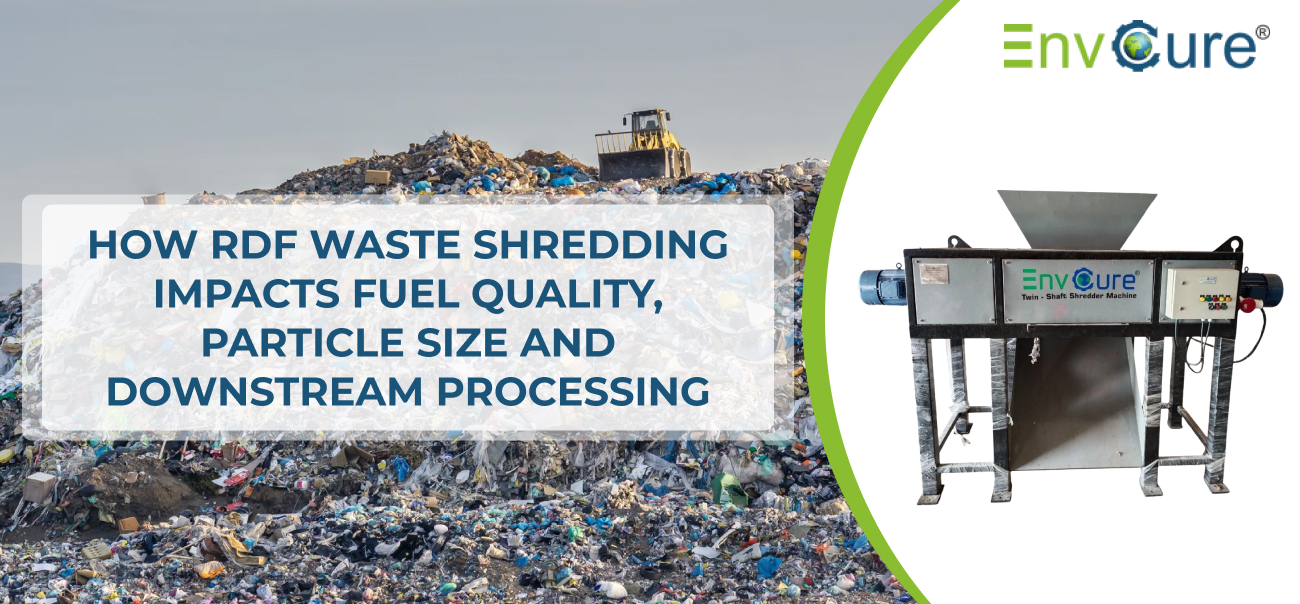

An RDF shredder machine is the first and most important step in turning mixed waste into a reliable fuel. Raw garbage is uneven, wet and full of items that burn badly, so it cannot go straight into a kiln or boiler. Shredding changes that. It decides how big the pieces are, how well they burn, and how smoothly every machine after the shredder will run.
In this article, we explain how shredding affects fuel quality, particle size and downstream processing, and what to look for when choosing equipment.
What is an RDF Shredder Machine and How Does It Work?
Refuse-derived fuel (RDF) is made from the dry, high-energy part of waste, such as plastics, paper, textiles and wood. An RDF shredder machine cuts this waste into smaller, even pieces so it can be used as a fuel in place of coal.
Core Components of an Industrial RDF Shredder
Every industrial RDF shredder has a few main parts: a feed hopper, heavy-blade rotors, a screen that controls final size, a drive and a discharge conveyor.
How Rotary Blades and Shearing Actions Process Complex Waste
Rotary blades work by tearing and shearing. Two slow-moving shafts pull waste inward, and the blades cut it between them. This works well on tough, mixed material like carpets, tyres, plastic film and bulky packaging.
A slow, high-torque RDF shredder machine also creates less dust and less risk of sparks than fast-spinning systems.
From the field: Plant operators often say that most RDF problems start before the kiln. Poor shredding at the start usually shows up later as blocked feeders, uneven flames and rising maintenance costs.
How Particle Size Control Directly Improves RDF Fuel Quality
Achieving Consistent Granulometry for Uniform Burning
Granulometry simply means the range of piece sizes in your material. When pieces are all about the same size, they burn at the same speed. This keeps flame temperature steady and avoids hot and cold spots in the kiln. Many cement plants prefer RDF below roughly 50 mm, though the exact limit depends on the plant’s own design.
Increasing Surface Area for Better Thermal Efficiency
Smaller pieces have more surface area for their weight. More surface means the fuel catches fire faster and burns more completely. Less unburnt material is left behind, so the plant gets more heat from every tonne.
Accelerated Drying and Moisture Reduction During Shredding
Shredding opens up waste and exposes trapped moisture. Wet material that was packed together can now release water faster, especially when paired with air drying or screening. Lower moisture is one of the easiest ways to improve fuel quality, and a well-set RDF shredder machine helps get there.
Boosting Overall Calorific Value (CV) of Alternative Fuels
Calorific value, or CV, tells you how much heat a fuel gives. Dry, evenly shredded RDF has a higher CV and burns more predictably. A good RDF shredder machine supports this by making the material easier to dry, screen and blend.
Our view: Shredding does not create calorific value out of nothing. It protects the value already in the waste by making it easier to dry and clean.
How Waste Shredding Protects and Optimizes Downstream Processing
Preventing Conveyor Clogs and Material Jamming
Long strips of plastic and tangled fabric wrap around rollers and block transfer points. Shredding cuts them into short pieces. A municipal solid waste shredder at the start of the line keeps conveyors moving with fewer stoppages.
Enabling Easy Magnetic Separation of Metals
When waste is shredded, metal pieces are freed from other materials. A magnet can then pull them out easily. Without shredding, metal stays trapped inside bundles and goes straight into the fuel.
Protecting Boilers and Kilns from Unshredded Inerts
Stones, glass and large metal pieces damage boilers and kilns. Many plants combine Trommel Screen waste separation with shredding, so fine soil and inerts are removed before the fuel is fed. Cleaner fuel means less wear and less ash, which is why a good RDF shredder machine is only one part of the line.
Improving Pneumatic and Mechanical Feeding Systems
Uniform shredded pieces flow well through pneumatic lines and screw feeders. Oversized pieces cause blockages.
Practical tip: Always match your shredder output size to your feeding system, not just your furnace. Many plants miss this and end up shredding twice.
Key Engineering Characteristics of an Industrial RDF Shredder
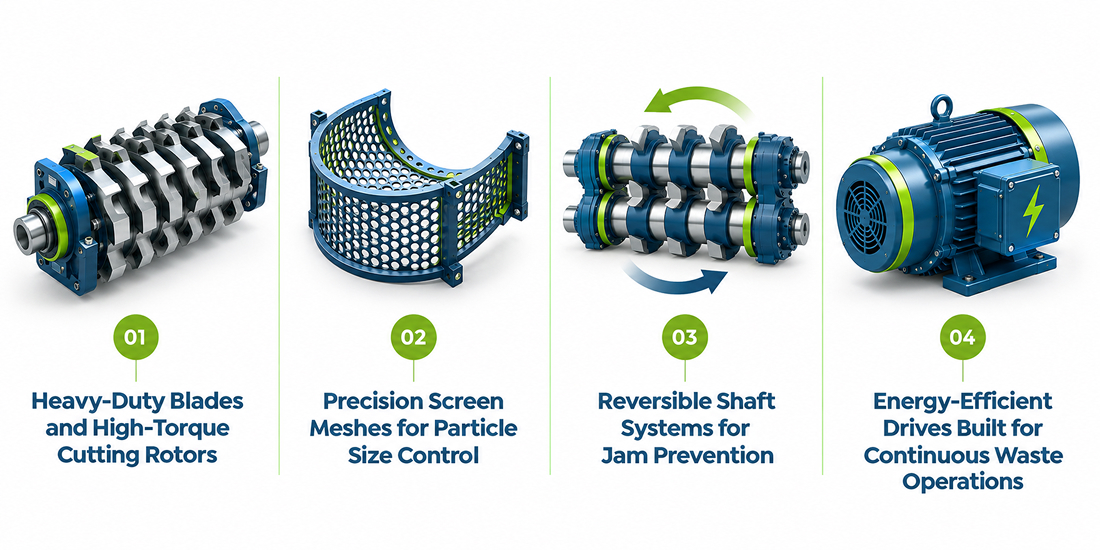
Heavy-Duty Blades and High-Torque Cutting Rotors
Blades take the most punishment in any industrial waste shredder. Hardened steel keeps its edge longer, and high torque lets the rotor push through dense material.
Precision Screen Meshes for Particle Size Control
The screen decides the final piece size. Replaceable screens let operators change the output size to match the needs of a kiln, boiler or gasifier.
Reversible Shaft Systems for Jam Prevention
When something hard enters the chamber, the shafts can reverse for a moment to clear it. This prevents damage and avoids stopping the whole line.
Energy-Efficient Drives Built for Continuous Waste Operations
Efficient drives lower power bills and handle long hours without overheating.
Major Industries Benefiting from Optimized RDF Shredding
Cement Kilns Utilizing RDF as Coal Replacement
Cement plants use RDF to replace part of their coal. They need steady particle size and low moisture, which makes a dependable RDF shredder machine essential.
Waste-to-Energy (WtE) Power Plants
WtE plants burn RDF to make electricity. Consistent fuel keeps boiler output stable and reduces tripping.
Municipal Solid Waste (MSW) Processing Facilities
Cities generate mixed waste every day. A municipal solid waste shredder opens bags and breaks bulky items so sorting can start. Many facilities use a municipal waste shredder machine as the first step before screening, while factories rely on an industrial waste shredder for scrap and packaging.
Industrial Boiler Operations and Paper Mills
Paper mills and factories with boilers use shredded RDF to cut fuel costs.
Why Choose EnvCure Technocrat LLP for High-Performance RDF Shredder Machines?
EnvCure Technocrat LLP is a Gujarat-based manufacturer of waste management equipment, including shredders, composting systems and incinerators. As a company, we focus on machines that work in real plant conditions.
Custom-Engineered RDF Shredder Machine Designs by EnvCure Technocrat LLP
Every plant handles different waste, so our municipal waste shredder machine and other models are built to order. We design each RDF shredder machine around the client’s material, output size and capacity. Our range includes industrial waste shredder models for factory scrap and waste shredder machine options for mixed municipal loads.
Superior Blade Durability for Tough Industrial and Municipal Waste
Blades wear fastest when waste contains grit, metal pieces or dense plastics. We use hardened blade materials and a design that makes replacement simple, which keeps downtime low.
Turnkey RDF Processing Solutions Designed for Maximum Fuel Recovery
EnvCure Technocrat LLP offers more than a single machine. We can plan complete RDF lines, from shredding and Trommel Screen waste separation to metal removal and conveying, so each stage supports the next.
Why Waste Management Plants Partner with EnvCure Technocrat LLP
Plants work with us because we listen to their site needs and support them after installation. You can learn more about our work at envcure.com.
Conclusion: Unlocking Higher Fuel Value Through Precise Shredding
Good RDF starts with good shredding. Controlled particle size improves burning, raises usable fuel value and protects everything downstream. Choosing the right RDF shredder machine, along with a reliable waste shredder machine setup for your waste type, helps any plant get more energy from its waste with fewer breakdowns.
FAQs: How RDF Waste Shredding Impacts Fuel Quality, Particle Size and Downstream Processing
1. How does an RDF shredder machine improve fuel quality?
An RDF shredder machine reduces waste into smaller, more uniform pieces, making it easier to dry, screen and burn. Consistent particle size helps improve combustion efficiency and supports reliable fuel performance.
2. What is the ideal particle size for RDF fuel?
The ideal particle size depends on the requirements of the kiln, boiler or waste-to-energy plant. Many cement plants prefer RDF particles smaller than approximately 50 mm, but the final size should match the equipment specifications.
3. How does waste shredding improve downstream processing?
Waste shredding reduces oversized materials and tangled waste that can block conveyors and feeding systems. It also helps separate metals more effectively and supports smoother screening, sorting and fuel transfer operations.
4. Which industries use RDF shredder machines?
RDF shredder machines are commonly used in cement plants, waste-to-energy facilities, municipal solid waste processing plants and industrial boiler operations. These industries use shredded waste as an alternative fuel to improve waste recovery and reduce dependence on conventional fuels.