





If you run a factory, recycling unit, or waste management facility in India, you have probably come across a Twin Shaft Shredder by now. This machine has become one of the most trusted tools for breaking down bulky, tough, and mixed waste into smaller, manageable pieces.
From plastic drums to old tyres to e-waste, it can chew through material that would jam a regular shredder in minutes. Here’s what it is, how it works, where it’s used across Indian industries, and how to pick the right one.
What Is an Industrial Twin Shaft Shredder?
Simple Definition of Dual-Shaft Shredders
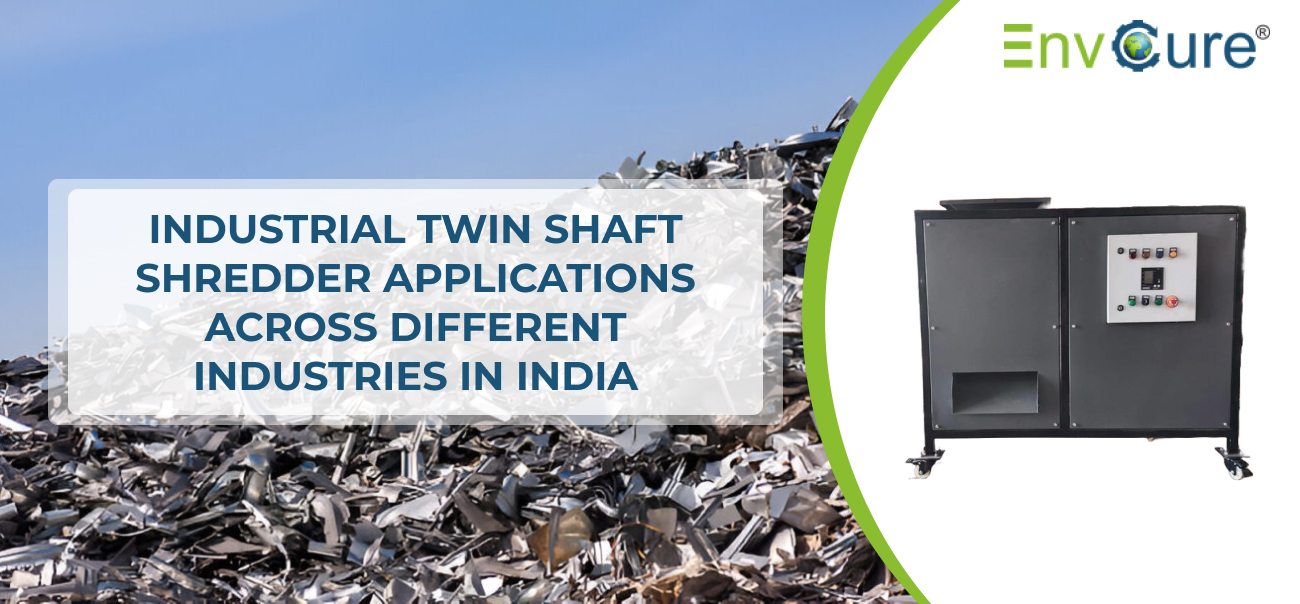
A Twin Shaft Shredder, also called a double shaft shredder, uses two rotating shafts fitted with interlocking blades to tear apart waste. Unlike a single-shaft machine, the two shafts rotate toward each other, gripping material and drawing it downward between the blades to shred it into consistent pieces.
It’s one of the most widely used industrial shredder machine types because it can handle almost anything, from soft plastics to hard metal drums.
Core Components and Structural Design
Every unit is built around two parallel shafts with hardened steel blades, a strong feed hopper, a heavy gearbox, and powerful motors. The frame is usually thick steel plating so it can absorb shock loads without bending.
A screen or grate is fitted underneath the shafts, and shredded pieces only fall through once they’re small enough to pass through its openings. This lets operators control the final output size to match what the next stage of processing requires.
Twin Shaft vs. Single Shaft Shredders
A single shaft shredder works fine for light, uniform material but struggles with mixed or bulky loads. A Twin Shaft Shredder is built for tougher jobs because the counter-rotating shafts pull material inward instead of pushing it away. This means it faces less jamming and provides higher throughput for irregular waste like tyres, drums, and construction debris.
For more details, read How a Waste Shredder Machine Cuts Costs and Reduces Landfill Volume.
How Does an Industrial Twin Shaft Shredder Work?
The Dual-Shaft Counter-Rotating Mechanism
In this mechanism, the two shafts spin toward each other, and the blades on each shaft overlap slightly. Material falling into the hopper gets pulled between the blades and sheared apart rather than smashed. This shearing action lets the machine handle mixed waste streams without needing pre-sorting.
Why High Torque and Low RPM Prevent Jamming
Most people assume shredders need to spin fast, but that isn’t true for a Twin Shaft Shredder. These machines run at low RPM with very high torque, applying enormous force slowly and steadily. That reduces jamming, cuts down wear, and lets the machine process dense or tangled material like cables and tyres without stalling.
Auto-Reverse PLC Protection and Safety Sensors
Modern designs from any serious shredder machine manufacturer include PLC-based auto-reverse. If the shafts hit unusual resistance, such as an uncuttable piece of metal, the system automatically reverses to clear the blockage and protect the motor and blades. Combined with safety sensors and emergency stops, this makes daily operation much safer.
Key Industry Applications of Twin Shaft Shredders in India
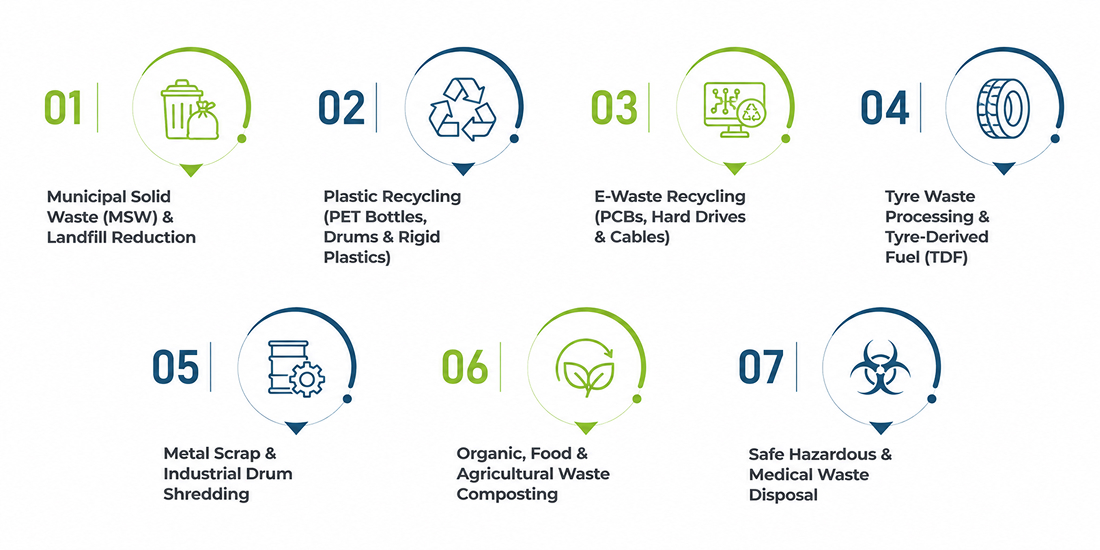
Municipal Solid Waste (MSW) & Landfill Reduction
Indian cities generate huge volumes of mixed waste daily, and a Twin Shaft Shredder reduces this volume significantly before it reaches a landfill, making it easier to transport and sort.
Plastic Recycling (PET Bottles, Drums & Rigid Plastics)
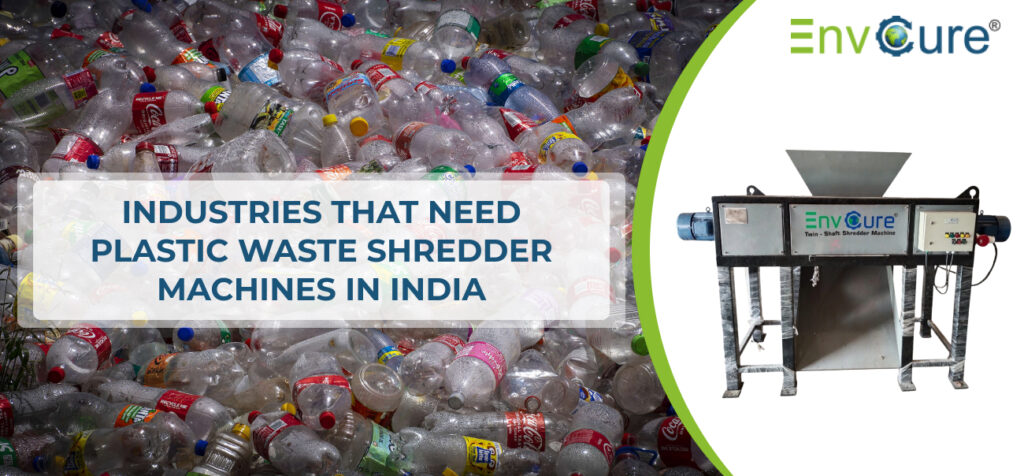
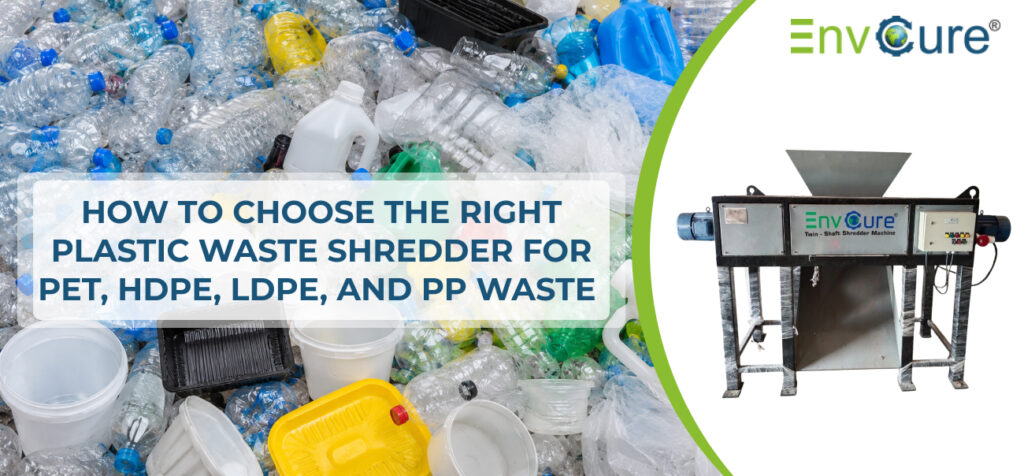
A waste shredder machine built for plastics breaks PET bottles, HDPE drums, and rigid plastic waste into uniform flakes ready for washing, melting, and reprocessing.
E-Waste Recycling (PCBs, Hard Drives & Cables)
E-waste is one of India’s fastest-growing waste streams, and industrial twin shaft shredders are commonly used to break down PCBs, hard drives, and cables so valuable metals can be recovered safely.
Tyre Waste Processing & Tyre-Derived Fuel (TDF)
Old tyres are notoriously hard to break down, but a Twin Shaft Shredder reduces them into chunks used for tyre-derived fuel or further processed into crumb rubber.
Metal Scrap & Industrial Drum Shredding
Factories dealing with metal scrap and steel drums rely on heavy-duty shredders to reduce this material into smaller, denser pieces that are easier to melt down or transport.
Organic, Food & Agricultural Waste Composting
Agricultural residue, food waste, and organic bulk material can be shredded before composting, which speeds up decomposition and helps facilities hit their targets faster.
Safe Hazardous & Medical Waste Disposal
For hazardous and medical waste, shredding is often required before incineration or safe disposal, since it destroys the original form and dramatically reduces volume.
Financial and Operational Benefits of Twin Shaft Shredders
Cutting Logistics Costs
Shredded waste takes up far less space than bulky waste, reducing transport trips and overall logistics costs.
Turning Raw Waste into High-Value Scrap
Uniform, shredded output typically sells at better rates than raw, mixed waste, since processed scrap is more valuable to buyers.
Low-Noise, Energy-Efficient Motor Operation
Because it runs at low RPM, a Twin Shaft Shredder tends to use less energy and generate less noise than high-speed equipment. That’s why it is a good option for industries near residential areas.
Extended Blade Life and Lower Maintenance
The slow, high-torque cutting action puts less stress on the blades, extending their life and reducing how often parts need replacing.
Meeting Indian Environmental & CPCB Norms
Using equipment from a proper industrial shredder machine manufacturer helps facilities stay compliant with CPCB guidelines, which increasingly expect waste to be volume-reduced before disposal.
How to Select the Right Twin Shaft Shredder
Step 1: Matching Capacity to Waste Volume
Calculate your daily waste volume in tonnes per hour first. This determines the size and power you actually need.
Step 2: Choosing Blade Material and Thickness
Blade material should match your waste’s toughness; metal drums need thicker, wear-resistant blades compared to soft plastics.
Step 3: Selecting Motor Power and Gearbox Type
Motor power and gearbox strength should match your material’s density so the machine doesn’t strain during continuous operation.
Step 4: Assessing Smart Automation Features
Look for PLC controls, auto-reverse, and remote monitoring. These reduce downtime and simplify daily operation.
Choosing the right RDF shredder machine is essential for efficient waste processing, consistent RDF output, and reduced operational costs.
EnvCure Technocrat LLP: Custom Shredder Solutions for India
Who Is EnvCure Technocrat LLP?
We are EnvCure Technocrat LLP, a Gujarat-based company that designs and manufactures waste management equipment for industries across India. As industrial shredder manufacturers with hands-on experience across plastic, e-waste, tyre, and organic waste segments, we know that no two facilities have identical shredding needs.
The EnvCure ECS TS Series Lineup
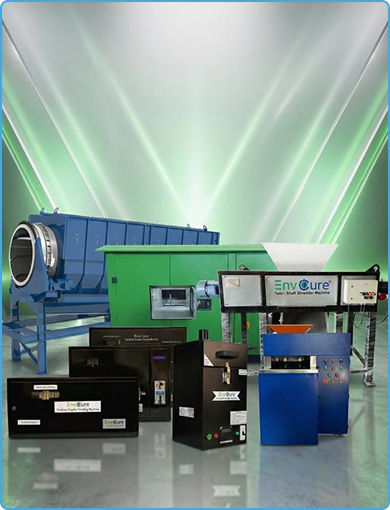
Our ECS TS series of Twin Shaft Shredder Machine units handles everything from light plastic waste to heavy industrial drums, giving customers the flexibility to pick a configuration that matches their exact workload.
Custom Blades, Motors, and PLC Automation
We custom-build blade profiles, motor ratings, and PLC automation for every shredder machine we manufacture, so the equipment fits the material our customers actually process rather than being generic.
Local Spares, Rapid Support, and High ROI
Because we manufacture and support our machines locally, customers get faster access to spare parts and service, keeping downtime low and helping our double shaft shredder units deliver strong ROI over their working life.
Conclusion
A Twin Shaft Shredder is no longer specialized equipment used by a handful of industries. It has become a practical necessity for anyone dealing with plastic, metal, e-waste, tyres, or organic waste in India. Its ability to handle mixed, bulky, tough material with minimal jamming makes it one of the most reliable investments a waste-focused business can make.
Whether you’re exploring shredding equipment for the first time or upgrading an aging machine, choosing the right industrial shredder machine manufacturer will make all the difference in how smoothly your operation runs.
FAQs Related to Twin Shaft Shredder
Q: What is an industrial twin shaft shredder used for?
A: An industrial twin shaft shredder is used to reduce bulky, tough, and mixed waste into smaller pieces for recycling. It handles municipal solid waste, plastics, e-waste, tyres, metal scrap, and industrial drums using two slow-turning, high-torque shafts.
Q: What materials can a twin shaft shredder process?
A: A twin shaft shredder can process plastics, PET bottles, drums, e-waste, PCBs, cables, tyres, metal scrap, wood, and organic waste. Its high torque and rugged blades let it break down hard, thick, and mixed materials with ease.
Q: Why does a twin shaft shredder use low RPM and high torque?
A: Low RPM and high torque let a twin shaft shredder grip and tear tough material without stalling or jamming. This slow, powerful action also produces less heat, dust, and noise, protecting both the material and the operator.
Q: How is a twin shaft shredder used in municipal solid waste management?
A: In municipal solid waste management, a twin shaft shredder reduces mixed waste volume, helps separate recyclables, and prepares refuse-derived fuel (RDF). This supports landfill reduction and helps Indian cities meet waste segregation and Smart City goals.
Q: How does a twin shaft shredder prevent jamming?
A: A twin shaft shredder prevents jamming using high torque, low speed, and auto-reverse PLC protection. When it detects an overload or blockage, the shafts automatically reverse to clear the jam, then resume, keeping the machine running smoothly.
Q: Do twin shaft shredders help meet CPCB norms in India?
A: Yes. Twin shaft shredders help industries meet CPCB and environmental norms by enabling proper waste segregation, recycling, and safe disposal. They reduce landfill dependence and support compliance with India’s solid waste and pollution control regulations.