




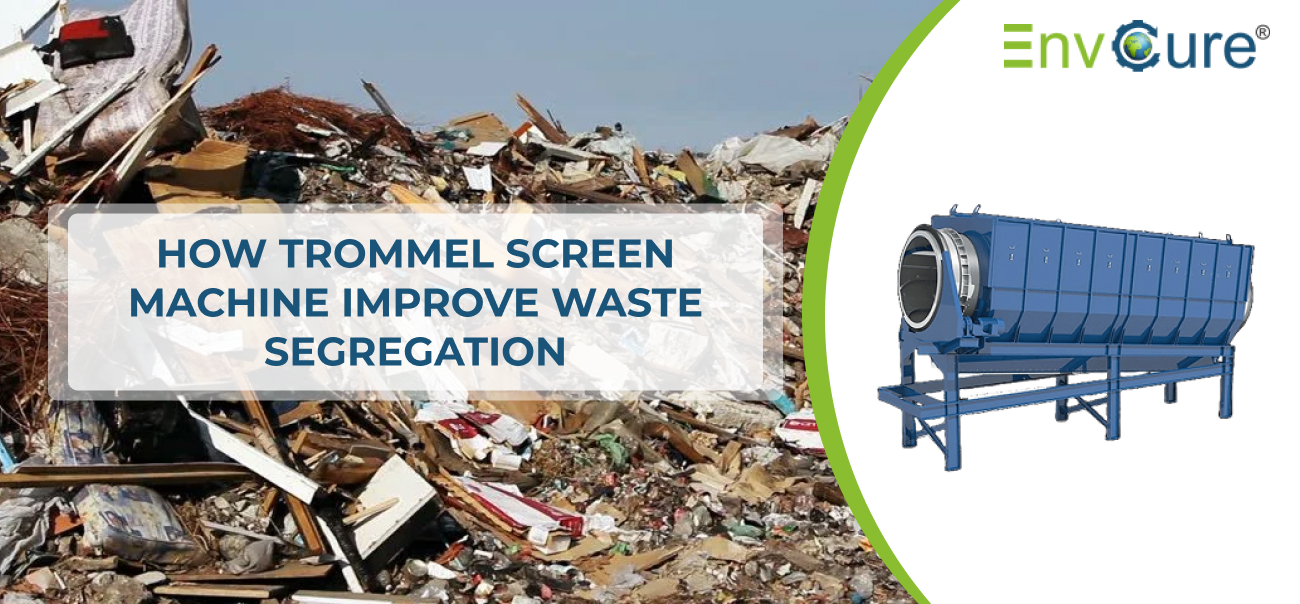

If you have ever watched a mountain of mixed garbage get sorted at a waste plant, chances are you saw a Trommel Screen Machine doing the heavy lifting. This simple but powerful equipment is one of the most trusted tools in waste management today, helping separate garbage quickly and cleanly.
Whether it’s a municipal body handling tons of household waste or a recycling unit sorting construction debris, this machine makes the whole job faster and far less messy than sorting by hand.
In this article, we’ll look at what a Trommel Screen Machine is, how it works, and why it matters so much for waste segregation across industries.
What Is a Trommel Machine and How Does It Work?
Definition of a Trommel Screen Machine
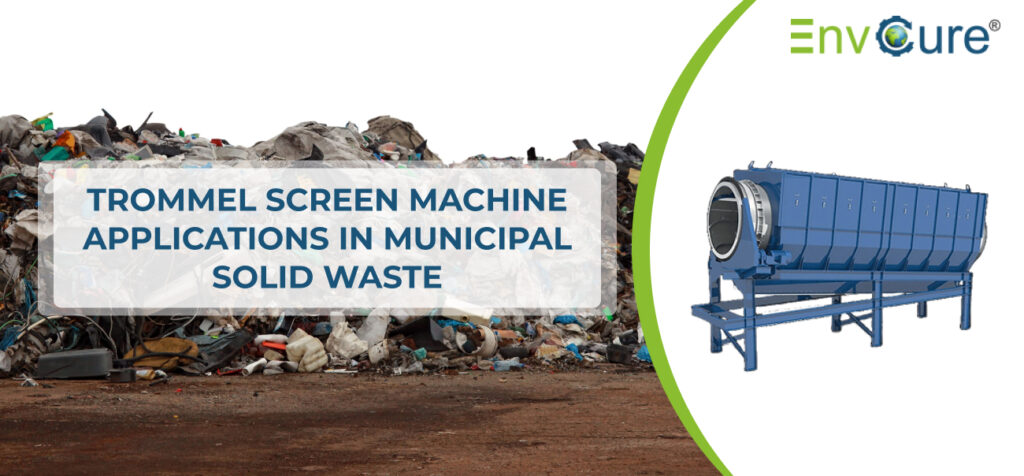
A Trommel Screen Machine is a rotating, drum-shaped sorting machine that separates materials by size. It looks like a large cylindrical cage made of mesh or perforated steel, spinning slowly at an angle. As waste is fed in at one end, the rotation and slope let smaller particles fall through the mesh while bigger items keep moving toward the other end.
How a Rotating Cylindrical Screen Separates Materials
As the drum turns, waste tumbles inside it much like clothes in a dryer. This action breaks up clumps and spreads material evenly across the mesh. Fine particles like soil and compost fall through almost immediately, while bulkier items such as plastics and metal scraps roll along until they reach the discharge end.
Learn more about the applications of trommel screen machines in municipal solid waste management and how they improve waste separation and processing.
Key Mechanical Components of a Trommel Machine
Rotating Drum Mesh and Hole Sizes
The drum is fitted with mesh panels of different hole sizes depending on the job. Smaller holes suit fine organic separation, while larger holes handle coarser waste. Many plants use swappable panels so one unit can handle several waste types.
Drive Mechanism and Inclined Angle
A motor rotates the drum at a controlled speed, and the cylinder sits on a slight incline. Gravity does much of the work of moving material from the feed end to the discharge end.
Feed Hopper and Discharge Conveyors
Waste enters through a feed hopper that spreads it evenly into the drum. Sorted fractions then exit on separate discharge conveyors, keeping the streams from mixing back together.
Key Benefits of Using a Trommel Screen Machine in Waste Processing
1. Efficient Separation of Waste by Size
Sorting Fine Organic Soil from Oversized Plastics
This is where Trommel Screen waste separation really shines: it divides fine organic material from larger, non-biodegradable items with real precision, which is a big help for composting facilities that need clean, plastic-free output.
Handling High-Volume Municipal Solid Waste Quickly
Municipal waste is rarely uniform, and sorting it by hand would take enormous time and manpower. A Trommel Screen Machine processes large volumes of mixed solid waste in a fraction of the time, which is why cities increasingly depend on it.
2. High Operational Efficiency and Low Maintenance
Self-Cleaning Drum Screens That Prevent Clogging
Many modern designs include self-cleaning brushes or scrapers that stop mesh holes from clogging with sticky or fibrous waste, keeping screening consistent through long shifts.
Continuous Processing with Minimal Downtime
Because the mechanical design is simple, a Trommel Machine generally needs less upkeep than more complex sorting systems. Fewer moving parts mean fewer breakdowns.
3. Versatility Across Different Types of Waste
Municipal Solid Waste (MSW)
MSW contains a mix of organics, plastics, metals, and paper. A Trommel Screen Machine handles this variety with ease, making it central to most MSW processing lines.
Construction and Demolition Debris
Construction waste often includes concrete chunks, wood, and soil. Trommel screening separates finer debris from bulkier material, helping recover reusable aggregates.
Bio-Mining and Legacy Landfill Mining
Old landfills are increasingly being mined to recover usable soil and recyclables. This setup is well suited for screening out degraded organic soil from mixed legacy waste through effective Trommel Screen waste separation.
Understanding how a trommel screen machine works can help industries choose the right screening solution for efficient waste separation and material processing.
Step-by-Step Guide: How a Trommel Machine Segregates Waste
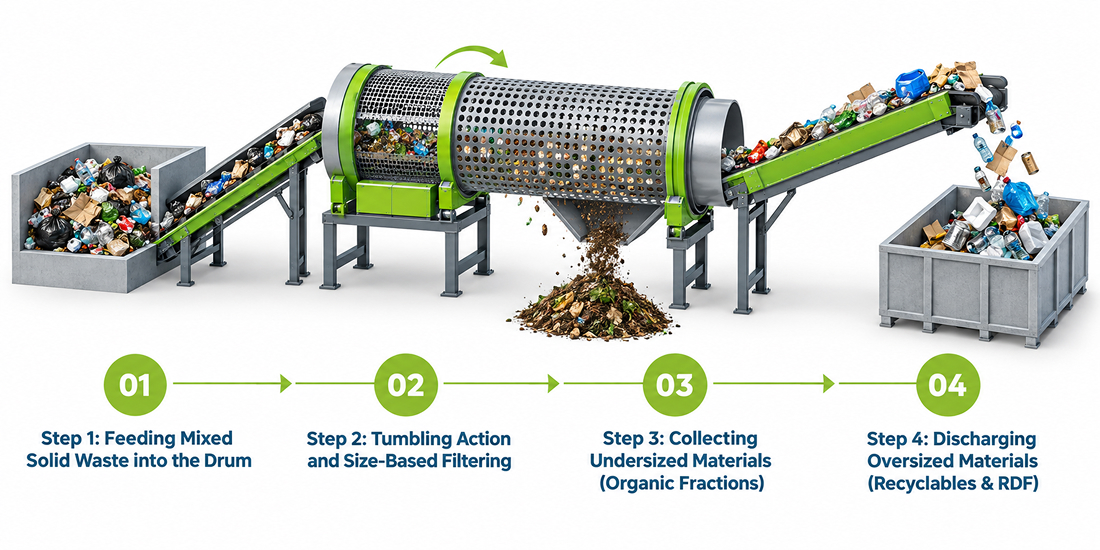
Step 1: Feeding Mixed Solid Waste into the Drum
Mixed waste is loaded into the feed hopper, which spreads it evenly across the rotating drum.
Step 2: Tumbling Action and Size-Based Filtering
As the drum rotates, waste tumbles and shifts, letting gravity pull smaller particles through the mesh while larger pieces stay on top.
Step 3: Collecting Undersized Materials (Organic Fractions)
Fine material that passes through the mesh, mostly organic soil, falls onto a conveyor below and is collected for further processing, such as composting.
Step 4: Discharging Oversized Materials (Recyclables & RDF)
Larger items that never pass through the mesh exit at the far end. These typically include recyclables like plastic and metal, plus material suitable for refuse-derived fuel (RDF).
Why Choose EnvCure Technocrat LLP for Trommel Screen Machine?
EnvCure Technocrat LLP is a Gujarat-based waste management equipment manufacturer with years of hands-on experience designing machinery for municipal and industrial waste processing, giving us a practical sense of what holds up in real plant conditions.
Advanced Engineering Solutions by EnvCure Technocrat LLP
As a waste solution company, we design our Trommel Screen Machine range using field-tested engineering, focusing on screening accuracy and long-term reliability. We also refine our drum and mesh designs based on real operator feedback.
Customized Screen Sizes for Municipal and Industrial Applications
Every waste stream is different, so EnvCure Technocrat LLP offer customized mesh and hole sizes for specific applications, from fine compost screening to coarse construction debris separation.
Heavy-Duty Construction Built for Maximum Durability
We build our machines with heavy-duty steel components designed for continuous operation in demanding environments, meaning fewer replacements and lower long-term costs for our clients.
Conclusion: The Future of Efficient Waste Segregation
As waste volumes grow across Indian cities and industries, efficient sorting technology is no longer optional, it’s essential.
A Trommel Screen Machine offers a practical, low-maintenance way to separate mixed waste into usable fractions, supporting composting, recycling, and landfill mining alike.
With the right manufacturing partner and a well-built Trommel Screen Machine, waste processing facilities can move closer to a cleaner, more sustainable future.
FAQs Related to Trommel Screen Machine
1. How is a trommel screen different from a vibrating screen?
A: Trommel screens rotate to tumble material gently and continuously, making them better for wet, sticky, or irregular waste. Vibrating screens rely on oscillation and suit drier, uniform material. Trommel resist blinding (hole clogging) far better under moisture.
2. What hole sizes are available in a trommel drum?
A: Drum hole sizes typically range from 10mm to 100mm+. Fine mesh (10–25mm) suits organic and compost separation; larger perforations (50–100mm) suit MSW and C&D sorting. EnvCure customizes drum specs per waste stream and application.
3. How much waste can a trommel machine process per hour?
A: Throughput depends on drum diameter, length, and incline angle — typically 5 to 50+ tons per hour for industrial units. Larger drums suit municipal-scale MSW plants; smaller units fit decentralized composting or bio-mining operations.
4. How much maintenance does a trommel screen require?
A: Routine upkeep covers drive motors, bearings, and screen mesh, with major servicing every few months under continuous operation. Self-cleaning drum designs cut clogging-related downtime significantly compared to standard vibrating or flat-deck screens.
5. Can a trommel machine handle both wet and dry waste?
A: Yes. The continuous tumbling action prevents the clogging that wet, sticky organic material causes in vibrating screens, making trommels suited to MSW, wet compost feed stock, and construction debris in the same operation.
6. What factors affect the cost of a trommel screen machine?
A: Cost scales with drum diameter and length, mesh material (mild steel vs. stainless), motor power, automation (hoppers, conveyors), and daily throughput capacity. Custom-engineered units for specific waste streams cost more than standard models.