




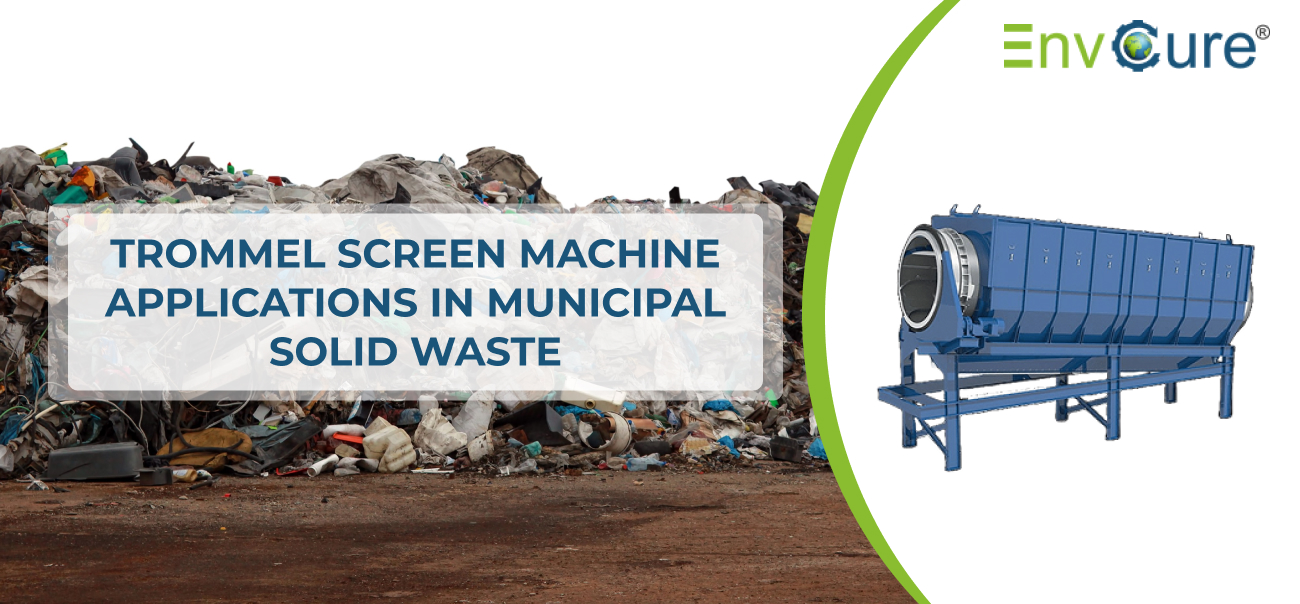

If you have visited a waste processing yard in India, you have likely seen a giant rotating drum sorting garbage into neat piles. That machine is a Trommel Screen Machine, and it is one of the most important tools used in municipal solid waste (MSW) management today.
As Indian cities generate more waste every year, and as pressure to meet Swachh Bharat and Smart City targets grows, corporations and private contractors rely heavily on this simple, dependable technology.
Here is what it is, how it works, where it is used, and why it matters so much for urban sanitation.
What is a Trommel Screen Machine?
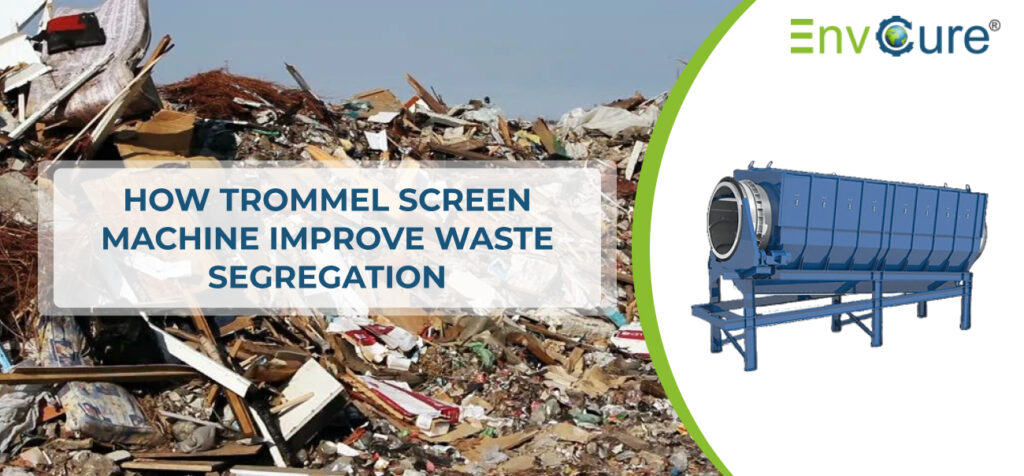
A Trommel Screen Machine is a large, slightly tilted, rotating cylindrical drum fitted with mesh or perforated screens. Mixed waste is fed into one end, and as the drum spins, material tumbles around and passes through the holes based on size.
Smaller particles like soil, sand, and organic fines fall through early, while larger items like bottles, cans, and textiles keep tumbling until they exit at the far end. It is a mechanical sieve at industrial scale, capable of handling tonnes of mixed waste every hour.
How Does a Trommel Screen Machine Work?
The working principle is refreshingly simple. Waste enters the drum, gravity and rotation do the sorting, and material is separated by size rather than type. This is what makes Trommel Screen waste separation so effective as a first step in almost any MSW line.
It turns a chaotic mixed load into two or three manageable fractions that downstream machines and workers can handle easily.
For the underlying mechanics, see our guide on how a trommel screen machine works.
Key Applications of Trommel Screen Machine in Municipal Solid Waste (MSW)
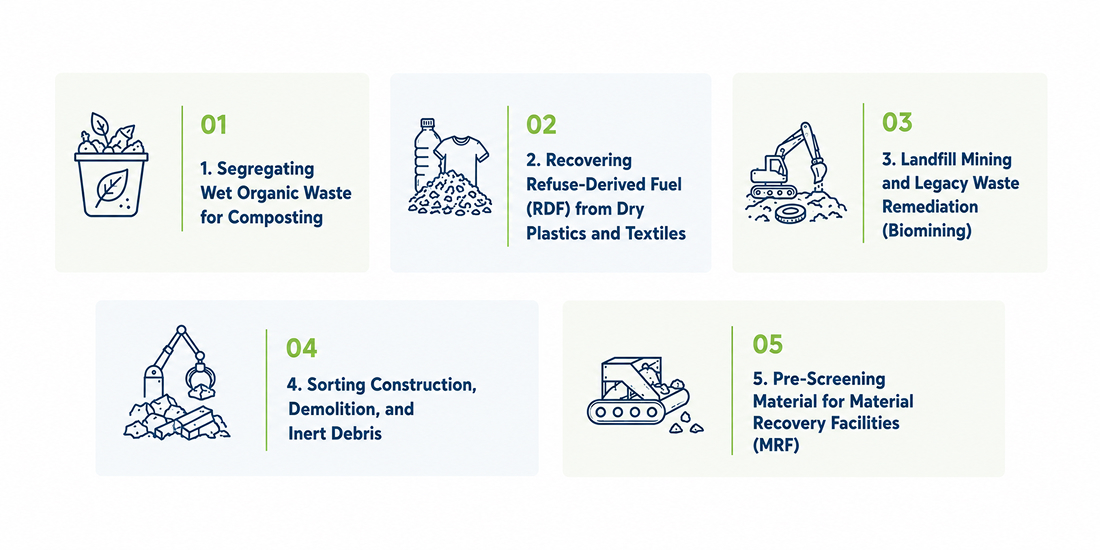
1. Segregating Wet Organic Waste for Composting
Indian household waste is often wet and organic-heavy, mixing food scraps and garden waste with dry recyclables. A Trommel Screen Machine separates this fine, wet fraction almost immediately, sending it toward composting or biomethanation while keeping dry material clean for further processing.
2. Recovering Refuse-Derived Fuel (RDF) from Dry Plastics and Textiles
Once organic fines are removed, the remaining dry plastic, textile, and paper waste has high calorific value, making it an ideal feedstock for refuse-derived fuel used by cement kilns and waste-to-energy plants. Efficient screening directly improves RDF quality.
3. Landfill Mining and Legacy Waste Remediation (Biomining)
Old, unscientific dumpsites are being excavated under landfill mining projects. A Trommel Machine plays a central role here, separating decomposed soil-like material from recyclables and combustibles buried for years, helping reclaim valuable land.
4. Sorting Construction, Demolition, and Inert Debris
Municipal waste often includes construction and demolition (C&D) debris and inerts like bricks and concrete. Trommel screens separate these heavier materials from lighter waste, so C&D material can be recycled into aggregates while the rest continues toward recovery.
5. Pre-Screening Material for Material Recovery Facilities (MRF)
Before waste reaches an MRF for manual or optical sorting, it needs pre-screening. A Trommel Screen Machine removes fines and oversized items so the MRF line only handles material within the right size range, improving accuracy and reducing wear on equipment.
How a Trommel Machine Separates Waste Step-by-Step
Step 1: Waste Loading via Hopper and Conveyor Belts
Mixed waste is loaded into a hopper, which feeds a conveyor that carries it steadily into the rotating drum, ensuring even, controlled flow.
Step 2: Drum Rotation and Tumbling Action
Inside the drum, waste tumbles continuously as the cylinder rotates at a controlled speed, breaking apart clumps and exposing smaller particles to the screen openings.
Step 3: Multi-Fraction Size Separation (Underflow vs. Overflow Output)
Material passing through the screen is called underflow, and it includes mostly fines, soil, and organics. Material that exits at the far end is overflow, which includes larger plastics, textiles, and rejects. Many modern units use multiple screen sections to create three or four fractions in one pass.
Step 4: Discharge of Sorted Recyclables and Heavy Inerts
Each fraction is discharged onto separate conveyors, ready for its next stage, which could be composting, RDF baling, recycling, or landfill disposal.
Key Benefits of Installing Heavy-Duty Trommel Screens in Dump Yards
High Throughput Capacity for Heavy Municipal Loads
A well-built Trommel Screen Machine processes large tonnages per hour, essential for cities generating hundreds of tonnes of waste daily.
Reduction of Manual Labor and Worker Safety Hazards
By automating the first stage of segregation, trommel screens cut down manual handling of raw, unsegregated waste, reducing health and safety risks for sanitation workers.
All-Weather Performance on Wet, Moisture-Heavy Waste
Unlike screening methods that struggle with monsoon-soaked waste, a robust trommel drum keeps tumbling and separating material even when damp, making it reliable across seasons.
Advanced Waste Solutions by EnvCure Technocrat LLP
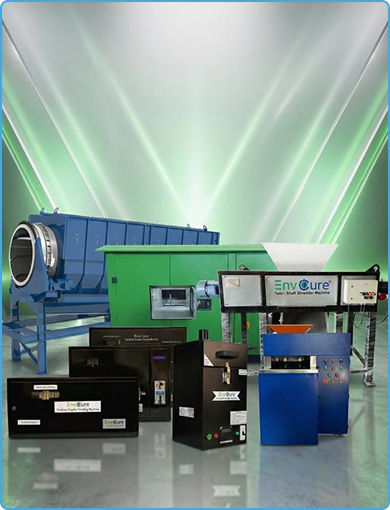
EnvCure Technocrat LLP is a Gujarat-based manufacturer of waste management equipment, including shredders, composting systems, and trommel screens, built for the realities of Indian municipal waste.
Over the years, we have worked with urban local bodies and private waste contractors to design equipment that holds up under heavy, mixed, and often wet loads.
Here is how our approach to trommel technology fits into that work.
Engineered for Smart Cities and Swachh Bharat Initiatives
As a company working closely with municipal bodies and private waste contractors across Gujarat and beyond, we design our Trommel Screen Machine range specifically to support Smart City and Swachh Bharat waste management goals.
Custom-Designed Trommel Machine for Indian Waste Profiles
Indian municipal waste is different from waste in other countries. It is wetter, more mixed, and less pre-segregated at source. That is why EnvCure Technocrat LLP’s trommel units are custom-engineered for these conditions, rather than generic imports adapted after the fact.
Heavy-Duty Build with Integrated Conveyor Systems
Our machines feature heavy-duty steel drums, wear-resistant screens, and integrated conveyor systems, giving operators a complete, ready-to-install screening line rather than a standalone drum needing separate handling equipment.
End-to-End Technical Support and Maintenance Services
Beyond manufacturing, EnvCure Technocrat LLP also provide installation guidance, operator training, and ongoing maintenance support, because a Trommel Screen Machine is only as good as the upkeep behind it.
Conclusion: Transforming Urban Sanitation Through Efficient Screening
From composting yards to landfill mining sites, the Trommel Screen Machine has quietly become a backbone of modern MSW management in India. Its simple, size-based sorting logic makes it adaptable to almost every stage of the waste processing chain, and its ability to handle wet, mixed, inconsistent waste makes it especially suited to Indian conditions.
As more cities invest in scientific waste processing, reliable trommel screen waste separation technology will only become more central to how urban India manages its garbage.
FAQs Related to Trommel Screen Machine
Q: How is a trommel screen used in municipal solid waste management?
A: In municipal solid waste management, a trommel screen separates wet organic waste for composting, recovers dry plastics and textiles as refuse-derived fuel (RDF), and sorts inert material. This reduces landfill volume and supports recycling and Smart City sanitation goals.
Q: Can a trommel screen be used for landfill mining and legacy waste?
A: Yes. Trommel screens are widely used for landfill mining and legacy waste remediation. They separate old dumped waste into soil-like compost, RDF, and inert fractions, reclaiming valuable land and helping cities clear legacy dump sites under biomining projects.
Q: What mesh size is used in a trommel screen for MSW?
A: The mesh size depends on the material being separated. Common MSW trommels use screens between 10 mm and 80 mm, smaller openings for fine compost and soil, larger openings for RDF and recyclables. Mesh is often chosen to match the specific waste profile.
Q: How does a trommel screen help produce refuse-derived fuel (RDF)?
A: A trommel screen separates dry, high-calorific materials like plastics, paper, and textiles from wet and inert waste. This lighter overflow fraction is collected and processed into refuse-derived fuel (RDF), which is used as an alternative fuel in cement kilns and power plants.
Q: What factors affect the cost of a trommel screen machine?
A: The cost of a trommel screen machine depends on its capacity, drum size, mesh configuration, build quality, and whether it is mobile or fixed with integrated conveyors. Sharing your daily waste volume and application with the manufacturer gives the most accurate quote.